Labour party

What Harriet Harman can do for us all

From our UK edition

Today's the day, I suspect, when it will really hit home with Labour that they are now in Opposition.  Attacking a government's legislative agenda isn't something they've had to do for 13 years.  And while you could say that the Brown machine acted as an opposition in government – geared to destroy its rivals – this is different terrain, with different priorities.  It will fall to Harriet Harman to lead the charge from 1430 onwards. The FT's Jim Pickard has some sensible advice for Labour's stand-in leader.  But the crucial point is this: "It will be tempting to slam 'Cameron and Clegg' for 'taking £6bn out of the economy' and 'risking a double dip recession'.

Coalition cuts: the IFS’s verdict is in

From our UK edition

So, the number-crunchers at the Institute for Fiscal Studies have worked their magic and delivered their verdict on today's spending cuts.  You can find their summary here, although the standout line is that the £5 billion in reduced borrowing implied by today's cuts is "less than a tenth of the fiscal repair job that Alistair Darling's March 2010 Budget forecast suggested will be needed over the next few years".  In terms of capturing just how much remains to to be done, it's a sobering remark.  But it's worth remembering that a Labour government wouldn't have made these extra £6 billion of cuts this year.

Undoing the spending of the last government

From our UK edition

In the table below, we consider how the budgets of various departments grew over the last Labour government. It spells out the very large rises in Health and Education (together, the rises in these two departments accounted for 61 percent of the total rise in departmental expenditure over the period). And we can see that other departments, such the Foreign Office, experienced cuts. Then, in the later columns, we consider what percentage falls today’s cuts represent and what proportion of the total rises since 2004/5 they undo.  We see that the largest cuts fall on CLG communities, down by 7.3 percent, reversing 74 percent of the rises over the last Parliament.

The big week ahead

From our UK edition

After the historic events of the past two weeks, it seems odd to say that the next few days are the most important of the coalition government so far.  But, until the emergency Budget on 22 June, there's little that will hold quite so much significance as tomorrow's announcement on spending cuts and the Queen's Speech on Tuesday. This will be a major chance for the coalition to get more of the public onside for a programme which is set to last years. In which case, it's unsurprising to read that the government will sweeten the medicine of cuts by hastening through some of its most radical, positive policies before summer recess.  School reforms, a Great Repeals Bill, and Parliamentary reform – all are expected to be introduced in double-quick time.

Cameron should seek the common ground

From our UK edition

Last weekend, David Cameron had few rebels at all in his party. This week, he has 118. The vote on the 1922 Committee membership was a free vote, of course, so this can by no means be compared to a proper, whip-defying Commons rebellion. But we have seen there are scores who are not prepared to support the leadership automatically. As I say in my News of the World column today it was unnecessary to draw such a dividing line over a party that badly wants the coalition to succeed. True, Tony Blair bossed his party about. But Blair earned the right to when he won a landslide victory. His message was “if you follow my modernising path, we get mass popular support”.

Is the Labour Party Thinking Seriously About Downing Street or Planning to Become BNP-lite?

From our UK edition

I have yet to get really excited about the Labour Party leadership race. I was deeply depressed by the manner of Andy Burnham's entry into the fray. Too many Labour politicians and activists were over-impressed by talk of immigration on the doorstep. They think that because the subject was raised again and again, then it is the key to Labour's failure and therefore its potential future success. The point is that the issue was raised in 2001 and 2005, but Labour knew it would win on both occasions on so chose to ignore what its core voters were saying about foreigners. They believed they had their votes in the bag. That was probably a mistake, although the core vote seemed to hold up rather well even in 2010 considering what a useless campaign Brown ran.

Dodging Iraq

From our UK edition

Disowning the Iraq War: that's the task which Ed Balls and Ed Miliband have a set themselves today, as part of their continuing efforts to distinguish themselves from the Blair and Brown years.  In interview with the Telegraph, Balls says that the public were misled by "devices and tactics" over the case for war.  And, in the Guardian, Ed Miliband argues that the weapons inspectors should have been given more time, and that the conflict triggered "a catastrophic loss of trust in Labour".  He has since claimed that he would have voted against the war at the time.

A Labour leadership candidate needs to take on Balls over spending – and quick

From our UK edition

A week ago, I wondered whether the Labour leadership contest might produce a "cuts candidate": someone prepared to responsibly debate the fiscal situation as part of their campaign. But, as Danny Finkelstein has noted, none of the candidates so far has even mentioned the deficit, let alone suggested solutions for trimming it. Their wilful silence on the issue is starting to look bizarre, to say the least. The worry, though, is that it will also prove dangerous.  So long as the d-word doesn't get a look in, Ed Balls is blissfully free to do what he does best, and bang on misleadingly about "investment vs cuts".

The civil service talks cuts

From our UK edition

Jonathan Baume is fast becoming one of the political celebrities of the LibCon era.  If you recall, he's the union chief who revealed that the senior civil servants had written letters to Labour ministers in concern at spending decisions made close to the election.  And now he's popped up again, with more unflattering comments about the previous administration.  Speaking at his union's annual conference, he said that "new ministers and MPs must begin to display the personal and moral integrity that was so obviously lacking in the previous Parliament, even within the Cabinet."  Hm, I wonder who he could mean.

The Labour leadership contest gets interesting

From our UK edition

Tales of the expected and the unexpected this morning, as two more names enter the Labour leadership fray. The first is the expected one: Andy Burnham, who announces his bid in an article for the Mirror. And the unexpected one is ... Diane Abbott, who revealed her intentions on the Today programme earlier. That thud you heard afterwards was the sound of a thousand jaws hitting the ground in Westminster. Both will, I suspect, do much to improve the contest as a spectator sport. Abbott will have no qualms about attacking the record of the Blair and Brown years. And neither, it seems, will Andy Burnham.

David Lammy: Why Cameron has triumphed

From our UK edition

With Ed Balls and John McDonnell announcing their candidatures for the Labour leadership, it's clear that Labour's soul-searching period has now begun in earnest.  Speaking in front of the cameras just now, Balls reeled of the lines that he's been priming over the past week: "listening ... immigration ... listening ... beyond Blair and Brown," etc.  While McDonnell was keen to separate himself from the other candidates, describing them as the "sons of Blair and the sons of Brown". Both of them might care to read David Lammy's appraisal of where it went wrong for Labour – and where it went right for Cameron – in tomorrow's issue of the Spectator.

Is scorched earth politics now a thing of the past?

From our UK edition

Is the new government marching across scorched earth?  They certainly claim so, and now they seem to have the civil service backing them up.  Speaking to the Beeb this afternoon, Jonathan Baume, the leader of a civil service union, said that senior civil servants had written "letters of direction" to Labour ministers in concern at the spending decisions they took in the final months of their government.  As Baume put it: "It's not a decision that is taken very often to ask for such a letter of direction, which is why it is regarded something of a nuclear option. So when it happens it tends to be a big spending decision, where the civil service believes this is not the right thing to do." Good to know, even if only in retrospect.

Bercow remains Speaker, as Parliament reconvenes

From our UK edition

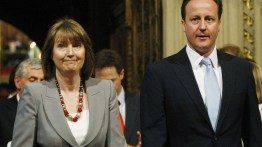
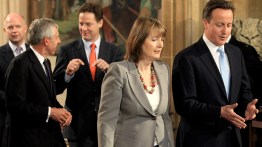
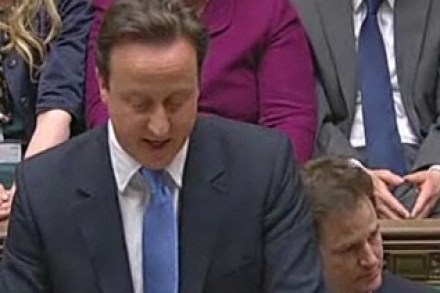
David Cameron sat alongside Nick Clegg on the government benches, with Harriet Harman two sword-lengths away as leader of the Opposition.  Even though the coalition has been around for a week now, it took the images from the Commons this afternoon to bring home just how extraordinary recent politics has been.  I mean, even the SNP's Angus Robertson got to make a speech now that the Lib Dems aren't a party of opposition.  This, plainly, is going to take some getting used to. They were all witness, today, to the re-election of John Bercow as Speaker.  In the end, it was easy for the Buckingham MP, as the "ayes" heavily outweighed a handful of "nos," and he was duly "dragged" to the Speaker's chair without a formal vote.

We should judge Bercow at the end of this Parliament

From our UK edition

Well, the news that Sir Menzies Campbell is lobbying to be made Speaker – as revealed by Iain Dale last night – certainly adds a dash of spice to proceedings.  But I'd still expect John Bercow to comfortably survive any re-election vote today.  On paper, all the arithmetic works in his favour.  And there's a sense that many Tory backbenchers are holding their fire for bigger battles with the party leadership ahead. But does Bercow deserve to stay?  I must admit, I'm rather ambivalent about the issue: I didn't really want him as Speaker, but I didn't really not want him as Speaker either.  And after his solid enough first year in the Speaker's chair, my thinking remains more or less the same now.

If Ed Miliband is the Answer, What is the Question?

From our UK edition

Election post-mortems are always interesting and often fun. Take the speech Ed Miliband made to launch his campaign for the Labour leadership. While paying due attention* to Labour's achievements in government, it still reads as an indictment of the party's record in office. Consider these snippets: We must start by understanding the country we seek to lead again. ...[T]he truth is that as government wore on we lost that sense of progressive mission and of being in touch with people’s concerns. As time wore on we came to seem more caretakers than idealists—more technocratic than transformative. And when political parties lose that sense of idealism and mission they become much more vulnerable to the currents of events.

The Labour leadership battle: tribalism vs anti-tribalism

From our UK edition

While we're on the subject of the Labour leadership, it's worth reading James Purnell's article in the Times today.  I know, I know – he's left Parliament now.  But Purnell is close to Team Miliband (the Elder), so I imagine some of his thinking might show up in the campaign.  In which case... One thing that jumped out at me was Purnell's attitude to the coalition government.  Sure, he attacks it as "only symbolically progressive," but he doesn't dismiss it out of hand.  Indeed, he even suggests that coalition might be a good thing: "Gently, too — we should give credit to Mr Cameron and Mr Clegg for the way they formed this coalition. I thought that they would find it hard to get anywhere beyond a grudging minority agreement.

David Miliband sets out the fraternal dividing lines

From our UK edition

David Miliband is one of those politicians who speeches improve when you read them on paper, his delivery still distracts more than it adds. If the Labour party is going to pick the Miliband who is the more natural platform speaker then David hasn’t got much of a chance. But if they want the Miliband who is more prepared to think about why Labour really lost then David might well be their man. On Saturday, Ed Miliband talked about how Iraq, a ‘casualness’ about civil liberties and a failure to regulate the banks properly had cost Labour the election. This might be Ed Miliband’s genuine analysis but it is also what Labour members want to hear: Labour lost because it wasn’t Labour enough.

Why Labour is still within striking distance

From our UK edition

Things are looking good for Cameron – his coalition has 60 percent approval rating, he has managed to persuade the Lib Dems to support what always was a liberal Tory agenda. There is plenty for Conservatives to celebrate, especially on welfare reform and education. But, still, things could be a lot worse for the Labour Party than they are now. I say in my News of the World column today that, rather than being “out for a generation” as Tory strategists were hoping only a month ago, Labour remains (amazingly) in striking distance of winning the next election. And there is no telling when that election will be. Clegg and Cameron say their pact will last until 2015 – but only a tenth of voters believe it.

A lesson for all new MPs

From our UK edition

Ed Miliband has given a surprisingly good speech this morning: free from all the junk language that his older brother has a weakness for. But he raises an interesting question: Why did Gisela Stuart win in Birmingham Edgbaston? Why did Karen Buck win Westminster North? Why did Andy Slaughter win in Hammersmith? Might it have been because all three of these politicians were, at one point, thorns in the flesh of their government? That they all at times campaigned, on principle, against the Labour government? As I said in The Times yesterday, the German-born Ms Stuart was a committed foe of the EU Constitution - who denounced it, and the Lisbon Treaty, as loudly as she could.

Ed Balls follows Ed Miliband’s lead

From our UK edition

So fraternal rivalry it is, then, as Ed Miliband prepares to announce his leadership bid at a Fabian Society conference today. And, reading his interview with the Guardian, it's clear that Ed Balls is soon going to follow suit. Two Eds, two leadership bids, and much shared rhetoric about "listening" to voters. But the similarities don't end there. The passage where Ed Balls argues in favour of "progressive universalism" – a welfare system which stretches to the middle classes – echoes an interview that Ed Miliband gave to the Guardian in March. Both claim that it's important to make sure tax credits and other benefits reach those higher up the income scale. And both claim that Tory plans to trim back the welfare state are damaging to this goal.