Labour party

IDS shows how arguments are won

From our UK edition

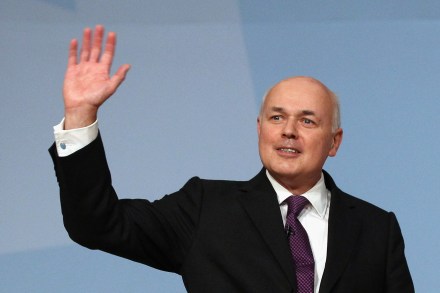
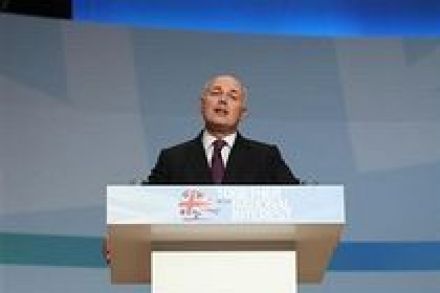
For years, I have complained that the Conservatives have timidly stayed within Labour’s intellectual parameters, arguing that they need “permission” to make certain arguments and need to stay within the limits of what the public find acceptable. Such intellectual timidity confined them to opposition: they can never win, playing by Labour rules. Iain Duncan Smith is breaking free of this. It may be rash to predict it now, but I believe he is on the brink of a breakthrough in the way that welfare is regarded in Britain. This victory in a battle of ideas could be the greatest single blow against poverty in a generation. The extent of this was crystallised by Polly Toynbee in the Guardian yesterday.

Whatever happened to Labour’s economic message?

From our UK edition

For some weeks now, Labour have struggled to project a clear voice on the economy. You can see what they've been trying to do: pitch themselves as an alternative to immediate, deeper cuts, whilst also accepting the requirement to deal with the deficit. But, as I've said before, this all too often comes across as nervous equivocation; a kind of "on the one hand, on the other hand" stuttering that won't persuade many observers either way. You sense that Team Miliband have tried to correct this in recent weeks, with a few punchier performances, but, even then, mistakes and deceptions have greased into their offering. Anyway, I mention this because Alan Johnson's interview with the Times (£) today only adds to the confusion.

The Poetry of Opposition

From our UK edition

Hosannas are due to Danny Finkelstein and Iain Martin for finding and publicising this poem written by Chris Bryant, Labour MP for the Rhondda and a shadow justice minister. It's about The Cuts and why They Are A Bad Thing. Make of it what you will. Supine by Chris Bryant One arm stretched out behind my head, dipped back, I push the other through the water’s swirl And past my thigh before the next attack, Propelling me, with languorous aqueous grace I could not possibly repeat at pace. The rhythm of the stroke, as lengths unfurl, Calms down my daily work obsessions, Inspires free-style inquisitive reflections, About what happens when we all cut back. Above me, on the polycarb’nate roof A single leaf is twisting in the gale.

Johnson’s deceptions and out-of-date figures

From our UK edition

Oh, how Labour enjoy misleading the public about their record on the public finances. Ed Miliband did it a couple of weeks ago, with some very loose rhetoric about how the previous government had "paid down the debt". And now Alan Johnson's at it, with a fiery speech at the RSA which reheated many of the themes in his recent New Statesman article. The passage that struck me was this: "In 2007/08 as the crisis hit, we have the second lowest debt level in the G7 reduced by 14 percent in the 10 years we'd been in office... …The year before the crisis hit we were borrowing 2.4 percent of GDP compared to the 3.4 percent we inherited from Ken Clarke." Some points: 1) Second lowest debt level in the G7.

Labour’s Woolas trouble

From our UK edition

This Phil Woolas business is fast becoming a rather large problem for Ed Miliband. Those Labour MPs who are organising a fighting fund for Woolas are effectively defying the party leadership. Remarkably, he is on course to raise £50,000 by Friday. There is a whole slew of explanations for why Labour MPs are, to borrow a phrase, standing by Phil. First of all, the idea of judges overturning election results isn’t popular. Second, he’s a well-liked and sociable colleague, and no one who has fought a Lib Dem has much sympathy with their complaints about dirty tactics. But after these explanations, we move into more murky territory.

PMQs live blog | 10 November 2010

From our UK edition

VERDICT: Earlier today, I wrote that the coalition "has few better defenders of its cause than Nick Clegg". You wouldn't have guessed it from this PMQs performance. Harman had him on the back foot over tuition fees from the off, and he struggled to give concise, clear answers in return. A pity, because Clegg is right when he says that the coalition has a better policy than Labour's messy graduate tax – yet there was too much waffle, and too little directness, from him today. The deputy Prime Minister was better when he blazed with anger over Labour's hypocrisy. But, on the whole, this was a bout to cheer the Labour benches. 1233: And that's it. My verdict shortly.

Time for Sir Humphrey to retire

From our UK edition

The British government is 99.9999999 percent staffed by apolitical Civil Servants with the statistically irrelevant remainder being political appointees. The Sir Humphreys, rather than being pushed around, are very much in charge. Too much in charge. Ministers get only two Special Advisers - or SpAds - each who are placed away from the Minister's office and in the beginning of the Government's term often had to fight to even join meetings with their bosses. Some are knowledgeable experts other researchers with little experience beyond a few years in an MPs office. In what looks like a partisan broadcast from Cabinet Secretary Gus O'Donnell, Rachel Sylvester in The Times (£) says "Civil servants can help think through and implement policy in an ordered way.

The new welfare consensus

From our UK edition

The New Statesman's George Eaton has already homed in on the key passage from James Purnell's article in the Times (£) today, but it's worth repeating here. According to the former welfare minister, he pitched something like Iain Duncan Smith's Universal Credit to Gordon Brown, and the reception it received catalysed his departure from government: "Before I resigned from the Cabinet, I proposed a similar plan to Mr Brown. But he was scared that there would be losers, and his refusal to give me any answer made me think that there was no point in staying inside the Government to try to influence him." This is of more than simple historical interest, not least because it suggests why both Labour and the coalition are where they are on welfare.

Delay in Oldham is good news for the coalition

From our UK edition

The longer we go before a date is set for the Oldham East and Saddleworth general election rerun, the better it is for the coalition. This delay allows the Tories to give the Lib Dems a head start; Nick Clegg’s party can pour resources into the seat while the Tories do very little until a date is set. There will be a Tory candidate in this election, but I doubt that a Tory victory would be a cause for celebration at CCHQ or in Number 10. The Tory leadership knows that a bad result for the Lib Dems would make their coalition partners jumpy and make it harder for the coalition to govern effectively. A confident Liberal Democrat party would make Cameron’s life a lot easier than one more Tory MP.

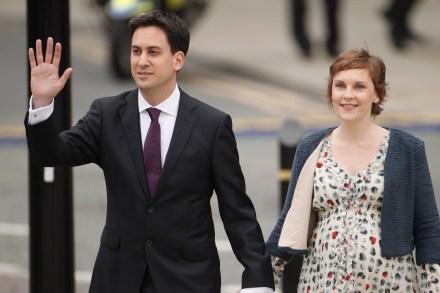
Congratulations to Ed Miliband and Justine Thornton

From our UK edition

Congratulations to the Labour leader and his partner on the birth of their second son. Miliband will now take two weeks of paternity leave, during which time Harriet Harman will step into his brogues, etc. Here's the official statement: "Ed and Justine are overjoyed at the birth of their second child and can't wait to introduce the new arrival to his big brother, Daniel. Both are keen to pass on their thanks to the NHS staff at the hospital.

A day of electoral positioning

From our UK edition

Away from turbulent priests and the welfare battle, there have been important changes to electoral politics today. The coalition partners will fight one another in Oldham East and Saddleworth. The seat is a three way marginal, which was number 83 on the Tories’ target list – precisely the sort of seat they’ll need to win in 2015. However, as James noted on Friday, the Liberal Democrats’ need is greater at the moment. Already, tongues are wagging that a pimpled Etonian is destined to journey north of the Watford Gap, safe in the knowledge that gallant defeat will ensure he is the next Prime Minister but three. Enter Nigel Farage, opportunistically.

The Coulson saga rumbles on

From our UK edition

Andy Coulson had a chat and a Bath Oliver with the Met recently. Rejoice! The News of the World phone tapping story continues. The allegations against Coulson do the government no favours. But, even if, in a hypothetical drama, Coulson were to be charged I doubt many would care. I don’t deny the seriousness of the offences already committed by employees of News International, but it’s a very tiresome story and saturation point has been reached. So the usual suspects make little impact when they call for Coulson to resign, fall on his sword, take the rap or whatever cliché they happen to adopt. Coulson needn’t resign because there is no case against him. The government’s inability to communicate a growth strategy is another matter.

Waiting for welfare reform

From our UK edition

After a summer of sporadic announcements, IDS’ welfare reforms will be published in a white paper next week. As in 1997, when Tony Blair urged Frank Field to think the unthinkable, there is consensus on the need for radical welfare change. IDS has earned respect as a moral and pragmatic reformer, and he attracts goodwill from across the House. The Liberal Democrats, Nick Clegg and Steve Webb particularly, were ‘vital’ in securing a spending concession from George Osborne, whilst Douglas Alexander has described IDS’ plans and ‘noble’ and pledges to support principle that welfare should be a safety net, not a vocation. He warms to the theme in today’s Guardian.

From the archives – striking matters

From our UK edition

This week, there have been calls for certain public sector strikes to be made unlawful, Tube strikes and, today, the firemen have called off their strike having ‘listened to the concerns of the public’. It is all so 2002. Go To Blazes, The Spectator, 26 October 2002 Any public sector union contemplating a strike is best advised to start by targeting children’s bookshops. It is remarkable how groups of workers who first impinge on the consciousness through the pages of nursery books manage to command greater public affection and higher wage settlements than those who do not. Nurses and train-drivers have done particularly well out of recent pay disputes.

Alan Johnson: this time it’s personal

From our UK edition

Alan Johnson has been more comic than cutting during his spell as shadow chancellor. It's not so much that he's doing a bad job, but rather that he's taken a singular approach to the biggest political issue of the day. Where Labour MPs have wanted moral outrage, he has delivered easy quips. Where the public might expect self-confidence, he has chosen self-deprecation. It may be charming, but the question is: does it win votes? Which is why it's intriguing to see Johnson change course today, via a surprisingly spiky article in the New Statesman. There is, so far as I can tell, not one intentional gag in the entire piece – but a sizeable dollop of coalition baiting. Johnson calls for a new mantra from his party: "Labour's record was good".

Cameron’s bad news day

From our UK edition

Yesterday, Nick Robinson set out why the past week may count as David Cameron's worst in office so far. It's not a great news day for the Prime Minister today, either. First up is a new report from the Commons public accounts committee. Its headline finding relates to the last government, but has stark implications for this one: only £15 billion of the £35 billion of savings identified in the 2007 Spending Review have been implemented, and only 38 percent of those have come from "definitely legitimate value-for-money savings". In other words, all those efficiency savings may not be as straightforward as you were led to believe - even if there are efficiencies to be made. Osborne & Co.

Obama vs Labour

From our UK edition

Compare and contrast and be reminded, yet again, that the United Kingdom and the United States play by different rules. During his press conference this afternoon - on which more later - Barack Obama took great care to reiterate his opposition to tax increases for "middle-class" Americans (ie, those earning under $200,000 a year). Increasing taxes, he said, would "take money out of the system". In Britain, however, the Labour party has spent the last year telling everyone that cutting spending means the government is "taking money out of the system" -  a proposition that invites one to wonder if Labour believes that raising taxes would be "putting money into the economy." You can certainly argue that both positions are reasonable, even correct.

Why Ed Miliband was being deceptive over debt

From our UK edition

"Remember, our government paid down the debt before the crisis hit." That's what Ed Miliband said in a speech last Friday, and I took exception to it at the time. My point was, admittedly, quite blunt: how could the Labour leader make such a claim when debt was around £500 billion in 2006, and rising? So I'm glad that the excellent Full Fact blog has since looked into the matter, and come down broadly on my side – giving Miliband a 2-out-of-5 rating on their truth scale. But some of their wider points are worth developing, which is why I'm returning to the topic now. First, though, the observation that I made on Friday. Here's a graph which shows our national debt throughout the Labour years.

Music hall act fails to cut it next to suave Etonian

From our UK edition

Miliband’s in a mess. He makes it far too easy for Cameron to portray him as a hypocritical opportunist who sidles up to PMQs every week with lame soundbites and incoherent policies. How come? Perhaps because he sidles up to PMQs every week with lame soundbites and incoherent policies. Today he tried to unsettle the PM with the news that ‘members of his government’ (ie LibDems) ‘have given cast-iron guarantees that they would vote against a rise in tuition fees.’ This isn’t a Cameron problem. It’s a Clegg problem. Right issue, wrong tactics. Cameron had no difficulty adopting a noble but weary expression and praising his coalition partners for taking ‘courageous decisions’ in ‘difficult’ circumstances.

Hardly vintage stuff from Ed and Dave

From our UK edition

Neither Ed Miliband nor David Cameron had a good PMQs. Cameron let his irritation at questions about the appointment of his campaign photographer to a civil service post show. It was also a bit rich for him to criticise a Labour MP for asking a question scripted by the whips when Tory MPs ask patsy questions with monotonous regularity, I counted at least four in this session alone. But the regular shouts of ‘cheese, cheese’ from the Labour benches were clearly riling the Prime Minister. But it wasn’t a good session for Ed Miliband either. His delivery was rather halting and he stumbled on his words far more than he usually does. His jokes didn’t quite come off either.