Kazakhstan

Bones, bridles and bits – but where’s the horse?

From our UK edition

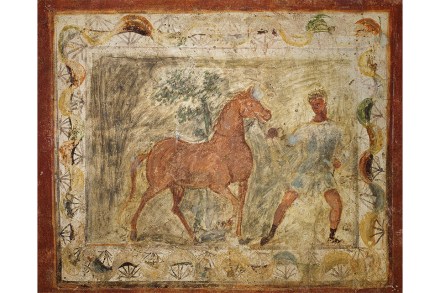
The German cultural scientist Ulrich Raulff has written that horses have as many meanings as bones. In the archaeologist William Taylor’s new history of horses and humans, we meet all those bones. Found in thawing permafrost, in caves, and buried ceremonially in graves in Siberia and Chile, the bones are cracked open by Taylor to show how the horse evolved in the Americas before its early encounters with human hunters. Does a 5,000-year-old worn tooth tell us it once chomped a bit? Does damage to vertebrae indicate a rider? Then came domestication, transforming the species from near extinction to tool and symbol on every major landmass on the planet. After that, horses and their keepers created empires, paced epically long trade routes – and brought plague from the steppes.
Barron Trump for the NBA Draft?

Can Barron Trump dunk? That’s the question posed by one opportunistic sportsbook this week, who started taking bets on which college the former president’s youngest son will play basketball at (their top choices I are the U and St. John’s at +300). The company is also offering odds on whether he’ll be drafted by an NBA team and in which round. So could he make it? On the one hand, at 6’7”, he’s the same height as NBA All-Star Luka Dončić — and, through his mother, the same nationality. On the other hand, Barron is on the record as preferring soccer.

barron trump

Russia isn’t just losing influence in Ukraine

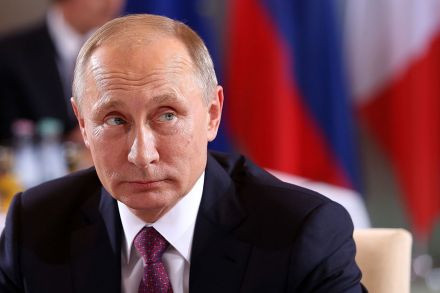
If Vladimir Putin’s goal is to reestablish Russian influence, his ambitions are on track for another major setback. Far less high-profile than the war in Ukraine, a slow and quiet revolution has been brewing south of Russia’s borders in Central Asia and the Caucasus. These nations, members of the former Soviet Union, have traditionally been in Russia’s sphere of influence. That, however, is now changing. At the start of the year, it looked like Russia was ascendant. Putin had over 150,000 troops waiting to invade Ukraine, and was receiving a steady stream of Western visitors pleading with him to step back. When Kazakhstan was engulfed in popular protests, Putin stepped in and deployed about 2,500 Russian troops after an appeal by the Kazakh president to help quell the unrest.

Where will the war in Ukraine go next?

Almost every night in Russia, it seems, a government building bursts into an unexplained fire. Fuel depots, office buildings, infrastructure hubs — and once a bridge. No doubt people have their theories. Insinuation abounds. "Karma is a cruel thing," one Ukrainian official has said on Telegram. But in the main, both the Russian government and Ukraine maintain an eloquent silence. The metaphor is apt. The fires are an unexpected consequence of Russia’s war in Ukraine, an eventuality, no doubt, that no one in the Kremlin inner circle anticipated, or planned for. And yet they burn merrily nonetheless.

Hunterston’s closure is the nuclear accident no one noticed

From our UK edition

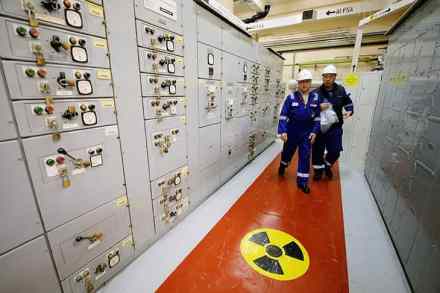
So farewell, Hunterston B, the nuclear power plant on the Firth of Clyde that shut last week after 46 years’ service. It will be followed this summer by Hinkley Point B in Somerset and in 2024 by Hartlepool and Heysham, leaving the UK with just four nuclear stations boasting five gigawatts of generating capacity between them — when they’re not suffering extended ‘outages’ for maintenance and repair. That compares with 15 stations and 13 gigawatts, meeting a quarter of UK electricity demand, at the UK’s mid-1990s nuclear peak. Meanwhile, the 3.

Haunted: the spectre of revolution is stalking Putin

From our UK edition

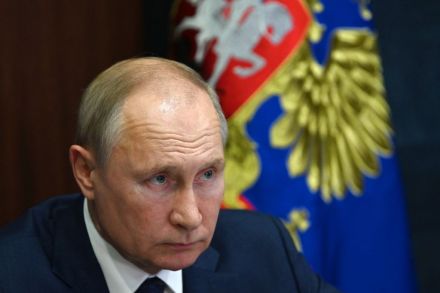
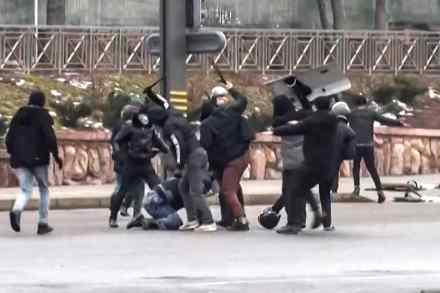
A spectre is haunting the former Soviet Union — the spectre of people power. Every time it appears, Vladimir Putin leads an unholy alliance of all the reactionary autocrats of the former Soviet space to try to exorcise it. Last week, Putin sent 3,000 Russian paratroopers to Kazakhstan at the request of its president to crush a sudden revolution that left at least 160 protestors and 12 security officers dead. For the time being, it looks like Putin’s timely intervention — as well as an internet shutdown that paralysed protestors’ ability to coordinate — has successfully quelled the flames.

Was the Kazakhstan uprising an attempted Jihadi takeover?

From our UK edition

The Kazakh uprising is over. The stench of burnt-out vehicles and bombed out buildings in Kazakhstan’s most populous city and former capital, Almaty, has begun to dissipate. Life is returning to normal. Banks have reopened. Salaries and pensions are being paid. The internet is up and running again. Almaty airport is expected to reopen today. As the fog of war lifts some clarity about these events is beginning to emerge. Officials have reported that 100 businesses and banks were destroyed along with 400 vehicles. Seven policemen died and hundreds more were wounded; 8,000 people have been arrested. Some 164 civilians were killed. The government of President Kassym-Jomart Tokayev has survived and with some ease as it turns out.

Central Asia’s geography after America’s defeat

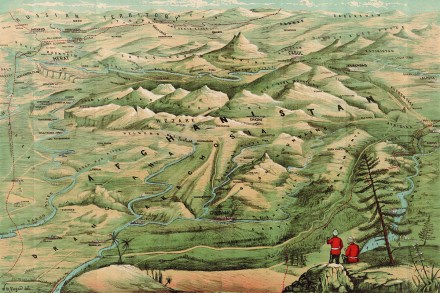
However much it is denied, we still live in an imperial age, at least metaphorically. Just as the withdrawal from Afghanistan registers the momentary decline of the American empire, it registers the momentary rise of the Russian and Chinese ones. America failed in Afghanistan because its military, while capable of fighting high-tech wars on land and sea, could not fix complex Islamic societies on the ground. Indeed, Afghanistan demonstrated how the deterministic elements of geography, culture and ethnic and sectarian awareness can vanquish Western ideals of democracy and individual liberty.

central asia

Is Kazakhstan capable of transitioning to democracy?

From our UK edition

In the dramatic ‘reveal’ of Roman Polanski’s Chinatown, the lead character, private dick Jake Gittes (Jack Nicholson) violently extracts the identity of the young girl hidden in the house of Evelyn Mulwray (Faye Dunaway). Evelyn, after being beaten and thrown across the room by Gittes, explains, ‘She’s my sister and my daughter’. The penny drops and Gittes realises that Evelyn has had a daughter by her father. Incest is shocking enough in a film. When incest allegedly involves Nursultan Nazarbayev, the former president of Kazakhstan, and his daughter Dariga, the speaker of Kazakhstan’s Senate, the revelation is jaw-dropping. The reveal of this hard-to-believe accusation was even more extraordinary.

A bailout for the arts is good – but reopening would have been better

From our UK edition

The government’s £1.57 billion lifeline for the cultural sector was bigger than most practitioners were expecting — and drew a chorus of approval from arts panjandrums lined up to offer quotes on the end of the DCMS press release. A nifty media exercise, then, and a smart deployment of the Hank Paulson ‘big number’: when the US treasury secretary unveiled his $700 billion bailout package in 2008, a staffer admitted the number had been pulled out of the air simply because it sounded huge.