Journalism

Beware the ‘sourdough effect’

From our UK edition

As the joke goes, there are two ways to become a top judge. You can study law at university, then enter one of the Inns of Court as a trainee barrister, before embarking on a period of pupillage. If all goes well, you may be called to the bar. Play your cards right and you might take silk, and then as you reach your fifties, with a following wind, you may be invited to become a judge. Ten years later, with a few widely admired judgments under your belt, you may reasonably claim to be a ‘top judge’. If I am to endure the peculiarly dysfunctional queue at Gail’s, I want choice. Where is the cornbread? The alternative is to become a minor local magistrate and get caught in flagrante with a farm animal.

My plans for The Spectator

From our UK edition

Shortly after Boris Johnson was selected as the Conservative candidate for Henley, he invited me to lunch at The Spectator. It was, he said, to be an intimate affair. The magazine’s then proprietor, Conrad Black, had made it known that he expected Boris to stand down as editor now that he was embarking on a political career. Speculation as to who might succeed him was intense among ambitious young journalists. And I was one of those at the time who harboured secret hopes. Was this invitation a sign of favour, a laying-on of hands, the anointing of an heir? On arriving at lunch I discovered that there were other guests. Three of them. All of whom were fellow hacks who had also been either tipped as Boris’s successor or had welcomed their names being canvassed.

The assassination of Georgi Markov bore all the hallmarks of a Russian wet job

From our UK edition

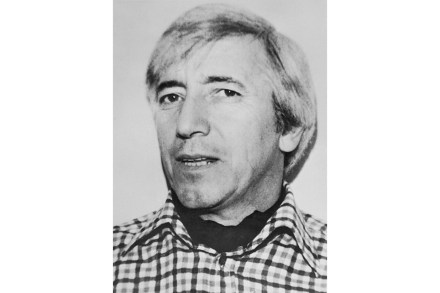
In September 1978 Georgi Markov, a Bulgarian émigré writer, waited at a bus stop on Waterloo Bridge on his way to work at the BBC World Service. Feeling a sting in his right thigh, he looked round to see the man behind him picking up his apparently fallen umbrella. The man apologised in a foreign accent and hastily crossed the road where he hailed a taxi. Markov felt feverish that night, was admitted to hospital and within four days was dead. ‘The bastards poisoned me,’ he told doctors, as they struggled to identify what was wrong with him. ‘The bastards poisoned me,’ Markov told doctors, as they struggled to identify what was wrong with him What was wrong was ricin, a poison with no antidote.

If only Britain knew how it was viewed abroad

From our UK edition

A London-based foreign correspondent is probably not the target audience of Michael Peel’s latest book. Indeed, what Peel (himself a former Financial Times correspondent in Lagos, Abu Dhabi, Bangkok and Brussels) discusses in eight lively, well-researched chapters won’t come as a surprise to any of his UK-based foreign colleagues: how Britain is perceived abroad; and how little it seems to permeate the national consciousness. This blindness – or the British inability to realise how they appear to others, as opposed to the image they have of themselves – often has foreign correspondents pulling their hair in disbelief. If only Britain knew how it was seen! One senses that Peel’s return to London from Tokyo after 13 years of foreign postings must have felt like a crash landing.

Nellie Bowles critiques progressivism and the media that covers it

One of many fascinating things to be learned from Morning After the Revolution: Dispatches from the Wrong Side of History, by former New York Times correspondent Nellie Bowles, is the process by which someone gets canceled. I was of course familiar with the concept of cancel culture and figured it meant blackballing the wicked, but I’d never gotten a clear idea of how the thing was actually done. On the evidence of Bowles’s book, it means going on Twitter (OK, X) and posting derogatory tweets (X-pressions, whatever) about the offending party contemporaneously with others doing the same thing.

Bowles

The joy of hanging out with artists

From our UK edition

Lynn Barber is known as a distinguished journalist, but what she always wanted to do was hang out with artists. This book feels like a marvellous cocktail party, packed with the painters and sculptors Barber has interviewed over the years: Howard Hodgkin, Phyllida Barlow, Grayson Perry, Maggi Hambling. Sarah Lucas and Tracey Emin eye one another warily from opposite sides of the room; Salvador Dali’s ocelot weaves between the guests; everyone, naturally, is smoking. Lucian Freud is a no-show – though having refused Barber’s many interview requests, he did send a scrawled note explaining he had no wish to ‘be shat upon by a stranger’. Feuds and gossip are the making of any gathering, and A Little Art Education is not a book of art criticism.

There are three sides to every story

From our UK edition

The psychologist Daniel Kahneman, who died last month aged 90, was perhaps most famous for his dictum that: ‘Nothing in life is as important as you think it is when you are thinking about it.’ This is often known as the focusing illusion. The theory explains, say, why a recent Lottery winner with bad toothache may, in the moment, be little happier than a skint person with bad toothache, since in both cases their attention is focused on the pain, not their financial situation. When Trump rails about ‘fake news’, I suspect this resonates with voters much more than journalists actually realise It is an important bias to understand, not least because it gives us a vital and often overlooked insight into media bias.

The depressed press

There is a recurring type of incident that reflects the insularity of today’s media class: “Everyone was talking about it, but no one reported it.” There is no stronger indictment of contemporary media bias — it doesn’t arise just out of partisanship, nor out of opposition to reporting stories that displease our ruling class. It reaches the point of actively lying and covering up things any average American knows to be true. The most prominent recent example is found in the reaction to Special Counsel Robert Hur’s findings regarding Joe Biden’s hoarding of classified documents.

press fake news media consultancy journalism

Why the luxury life feels alien

My path to “media personality” (puke) and cultural commentator was not the usual one. I didn’t get a degree in Journalism or Broadcast Journalism or Communications. I didn’t go to Harvard or Columbia or Syracuse or Yale. In fact, I didn’t get a degree at all. This sets me apart from almost everyone in old-guard media — and were it not for new media and more importantly, social media, I would still probably be excluded by most of the establishment gatekeepers. Our mainstream media and late-night television rooms are dominated by people who went to Ivy League schools. The Harvard Lampoon guys. The Columbia School of Journalism kids.

luxury

A mother-daughter love story

From our UK edition

In Splinters, the American novelist and essayist Leslie Jamison leaves behind the issue of her addiction and recovery – the subject of her previous memoir, The Recovering (2018) – and takes us through her pregnancy, experience of childbirth, marriage, divorce and post-separation dating life. Each stage of her journey is related with the author’s trademark love of the telling detail: On the postpartum ward my window ledge filled up with snacks from friends: graham crackers, cashews, cheddar cheese, coconut water, oranges with tiny green leaves. Someone hands her a form to fill out. ‘Did I want bone broth?’ We can assume she does, as bone broth appears later on. Much of Splinters recounts her marriage to the author Charles Bock – referred to throughout as ‘C’.

Is Courier Newsroom really fighting fake news?

"We are not the Fox News of the left,” says Tara McGowan. “We are legitimate journalism.” We are sitting in the lobby bar of the Edition Hotel in Manhattan as McGowan tells me about Courier, the network of local-news outlets she founded in 2019 after a successful career in Democratic politics. Courier, in McGowan’s telling, “is a network of pro-democracy newsrooms across the country that reach passive news consumers where they are with good factual local news and reporting.” McGowan rejects allegations that Courier is a partisan political operation masquerading as a news outlet. Courier isn’t pro-Democratic Party, she says. It’s “pro-democracy.

courier

The Spectator film critic who transformed cinema

From our UK edition

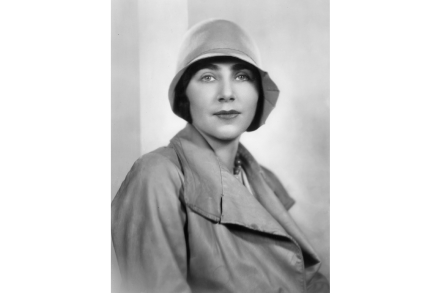
‘Going to the pictures is nothing to be ashamed of,’ insisted the film writer Iris Barry in 1926. But it certainly wasn’t something to be proud of, either. To the cultural cognoscenti of the 1920s, Barry admitted, the cinema was barely an art at all – about as aesthetically significant as ‘passport photography’. And for much of polite society, seeing a film was done in secret, if at all. So it was a considerable boost for the fledgling medium when, 100 years ago, the word ‘cinema’ began to appear for the first time in this country above its own regular column, with its own dedicated critic, in the arts pages of The Spectator. Attending to this young art form was the even younger Barry.

Washington Post reporter comes after citizen journalists

Most of the time, single posts on Twitter/X aren’t worth rebuking with an entire piece, but Washington Post media reporter Paul Farhi laid out an absolute banger this weekend when he lamented the idea of “citizen journalists” not being as professional, trained or equipped as he or his colleagues at major news outlets like the Post, New York Times or CNN. The idea that citizen journalists are not every bit as capable as journalists employed by these outlets (and others) is ridiculous and should be rebuffed.Farhi posted, “Someone invented the phrase ‘citizen journalism’ a few years ago to describe amateurs doing the work of pros. Yes, it occasionally works, but probably no more often than ‘citizen cop,’ ‘citizen attorney’ or ‘citizen soldier.

Nikole Hannah-Jones almost goes back to work

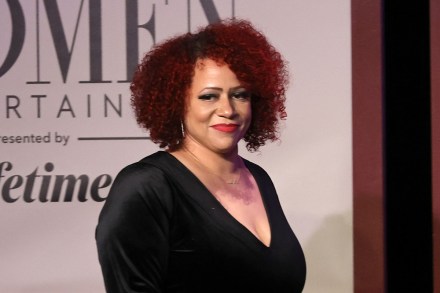
Nikole Hannah-Jones, author of the "1619 Project”, almost brought herself to lift a finger in defense of affirmative action — almost. She took to Twitter on Thursday to denounce the recent Supreme Court ruling striking down affirmative action. The anger was not strong enough, though, to make it worth picking up the pen. Hannah-Jones tweeted: “Was going to write an essay about it, but why even bother. (Also, Clarence Thomas is actually irrelevant here. So thanks but no thanks)” The Wall Street Journal’s new editor-in-chief has criticized the work ethic of the paper’s staff, but clearly the New York Times is not much better — Hannah-Jones wrote her last piece for the paper in February 2023, which itself was the first in two years.

europe nikole hannah-jones

Fun and games at the TLS

From our UK edition

‘When everyone appears to be of one accord in thinking the right thing, go the other way.’ This was, broadly speaking, the maxim by which J.C. wrote his weekly N.B. column for the Times Literary Supplement, after inheriting it from David Sexton in 1997. Tonally different to the rest of the paper, N.B. under J.C. became a place where a contrary spirit found its expression in a series of ongoing, in-joking set pieces. From updates on the latest grammatical or linguistic dicta in the (mythical) TLS Reviewer’s Handbook, ‘perambulations’ among bookshops in search of forgotten or out-of-print works, and a set of satirical prizes, such as the Jean Paul Sartre Prize for Prize Refusal, the column was a friend as well as ‘a dependant’ for its author.

‘Rent-a-pap’: inside the murky relationship between paparazzi and celebrities

The clamor of voices, the snapping of shutters, the dazing glare of bulb after bulb. A celebrity is whisked into a waiting car by a no-nonsense staffer, holding back the throng so they can make their escape. But just how easy is it to cause this scene? This week, I put on my most refined accent and dialed the number of a photo agency to find out.  “Hi, I’m a publicist and I have a new client looking to move from London to LA.” “What kind of client?” “She’s done a lot of reality TV and she’s a fashion influencer, mainly on TikTok. I’d prefer not to name her at this point.” “Ok. What are you looking for?” “I was — we were — hoping to create some buzz around the move, something that’ll get her into the papers.

paparazzi rent-a-pap

How VICE lost its cool

Last week I was at a writers' party in Miami, a city at the cutting edge of tech, finance, the creator economy and nightlife. Naturally the writers were talking about themselves. I asked someone what he would do if he didn’t have to worry about pageviews or proprietors or the other pressing concerns of the modern media. “Think VICE, when it was good,” he replied. To me, VICE when it was good is the girl’s bum on the fiction issue from 2008. It’s Michael Moynihan’s raspy voice reporting from South Korea. It’s the floppy hair of the one super-hot reporter I knew that smoked filterless roll-ups. VICE was where the cool kids at the back of the bus would grow up to write, the place that you would daydream about working for as a young reporter.

vice

Biden’s pre-written questions present a crisis of confidence

Joe Biden has held the fewest press conferences and interviews of any president since Ronald Reagan. And now we’ve learned that when he is allowed to take questions, they appear to be pre-selected, approved by White House staff and agreed to by reporters in the White House pool. Yesterday, while appearing alongside South Korean president Yoon Suk-yeol, Biden fielded a question from Courtney Subramanian of the Los Angeles Times. A photojournalist captured a notecard in Biden’s hand that showed an avatar of Subramanian, the words “Question 1” and a pre-written text of the question she asked the president.So how does a question from a White House reporter make it to the president of the United States’ hands before she even asks it?

Read all about it: 12 of the best novels about journalism

From our UK edition

A recently published novel, Becky by Sarah May, is the latest in a long tradition of fiction based on journalism – and a good excuse to think again about the great books from that sub-genre. May’s is a curious hybrid of the life story of News UK CEO Rebekah Brooks and a repurposing of Vanity Fair. George Cochrane, reviewing it for The Spectator, called Becky ‘a good novel dwarfed by a great one’.  He was referring to the Thackeray, but he might just as easily have been talking about another classic English novel: Evelyn Waugh’s Scoop. That comic masterpiece from 1938 is the book against which all other fictional evocations of journalists and journalism are judged – and is almost invariably the first on any list of the best of such books.

The Katie Porter scandal everyone is ignoring

Katie Porter, darling of the liberal media, is having a rough couple of weeks. The California congresswoman has recently been accused of: firing an employee who allegedly gave her Covid; using racist language, and fostering a hostile workplace. These are explosive allegations to be levied against a high-profile Democrat, yet the general public would never have heard of any of them were it not for an anonymous Instagram account that did the job of the entire DC press corps. “Rep. Katie Porter fires staffer after both test positive for COVID,” Dear White Staffers posted last week, sharing Signal messages purporting to be from Porter’s now-former staffer where the congresswoman berated her employee. “Well you gave me Covid,” Porter’s messages read.

katie porter