Journalism

A brief history of harlots

From our UK edition

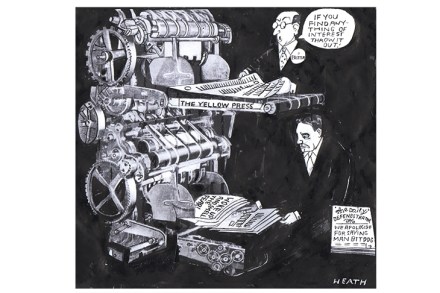
I write this as a follow-up to last week’s essay on muzzling after making whoopee. I’m on my way to Patmos, an island so difficult to get to, it has kept the great unwashed away. From now it is the only island I will grace with my presence, until the next time, that is. It was Kipling who quipped about journalists having ‘power without responsibility’. He then added the phrase ‘the prerogative of the harlot throughout the ages’, which was repeated by Stanley Baldwin, not Stanley Johnson. Comparing hacks to harlots is, of course, unfair to the girls. Some of them have risen to the highest offices in the past due to their discretion, whereas the only journalist I know who made it to the top is our very own Boris.

How I missed the Matt Hancock story

From our UK edition

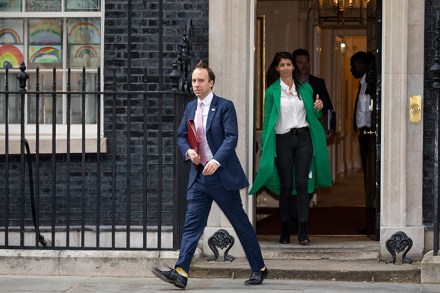
I want to apologise: I have let myself down. I let others down too, and I’m sorry. Not because, Matt Hancock-style, I breached social distancing guidelines with a steamy office affair — but because I missed the scoop. I was sent a compromising picture of the then health secretary and his mistress almost a week before the Sun newspaper sensationally revealed their relationship — and I did not believe it was him. Having never knowingly undersold my ability to break big stories, this is embarrassing to say the least.

What would ‘sensitivity readers’ have made of my student scoops?

From our UK edition

‘Whatever you do, don’t call them snowflakes,’ Caroline said the last time I spoke to Oxford students. ‘That’s not a grown-up way of conducting a political debate. It’s like calling you a gammon.’ She’s right, of course, but by God they make it hard. This week we learned that the Oxford University students’ union is planning to elect a ‘consultancy’ of ‘sensitivity readers’ to scrutinise articles in student newspapers before publication to make sure they won’t offend anyone. If the union has its way, the editor of Cherwell, one of Oxford’s oldest student publications, won’t have final say over what’s published in the weekly paper.

The Sun goes down

From our UK edition

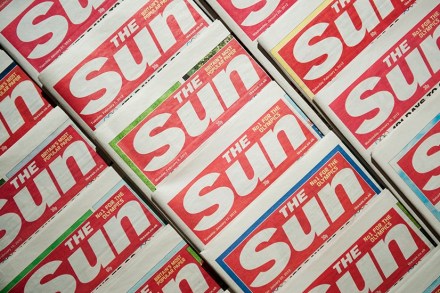
A couple of weeks ago Ally Ross, the longtime TV critic at the Sun, was summoned to the managing editor’s office. Such confrontations normally involve expenses. At the Daily Express in the 1950s one Middle East correspondent submitted his — one camel: £125. The narrow-eyed managing editor pointed out that if the camel was bought, it must have been sold, and they would be grateful if the claim was adjusted. Another form turned up 30 minutes later — burying a dead camel: £200. This conversation with Ally was not about money. It was much more serious. It was solemnly explained to him that he had used the word ‘woke’ in his column — and it had been decreed on high that ‘woke’ was synonymous with racial injustice.

Out-scooping the men: six women reporters of the second world war

From our UK edition

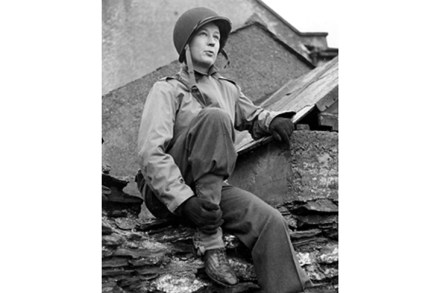
Two war correspondents were hitching a lift towards Paris in August 1944 when a sudden wave of German bombers forced them to dive for cover. What the hell were they doing trying to cadge a ride when ‘war correspondents have their own jeeps and drivers?’ an American officer barked at them as his car screeched to a halt beside the shallow crater they had commandeered. ‘We happen to be women,’ Ruth Cowan replied steadily, as she straightened up and shook off the dust along with his words. Cowan was the first female journalist attached to the US army but, as a woman, she was denied the official facilities provided for the men of the press. At the outbreak of hostilities, British female correspondents were prohibited from combat zones.

Why the media is melting down

It’s 2021, and as your new Spectator media columnist I’m here to tell you that the American media is a disaster. It’s not that there aren’t still many exceptionally talented reporters and editors doing good work, against all odds — there are. It’s that the overall scene is being destroyed. Newspapers are on the verge of extinction. Newer, supposedly more agile online-only outlets are shedding staff or shuttering as well. No one has come close to developing a replacement for the funding model that kept journalism humming along nicely until the internet came along and broke everything. Of course, the destruction has birthed creation. Journalistic startups pop up frequently, though few do anything that seems worthwhile and sustainable.

Media

The problem with Equity’s anti-racism guidelines

From our UK edition

‘Rouse tempers, goad and lacerate, raise whirlwinds.’ Those were the words that Kenneth Tynan, the most celebrated drama critic of the 20th century, had pinned above his desk. During my five-year stint as The Spectator’s theatre critic I did my best to follow that philosophy. But according to a new set of guidelines devised by Equity and embraced by the National Union of Journalists, reviews should be ‘balanced, fair and designed to be productive’. Any critic living by that credo would be more likely to raise a yawn than a whirlwind. The guidelines, part of Equity’s anti-racism campaign, have been developed to help critics ‘challenge their own biases and to encourage responsible writing about race’.

Read all over

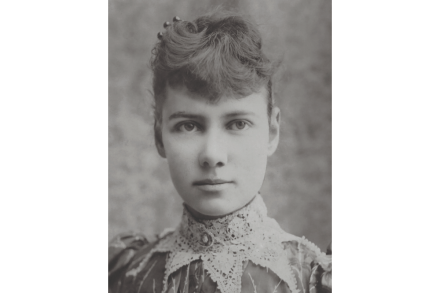
In the 1880s a new group of women was entering newsrooms. Not content to write society sketches or cover the fashionable hats of the season, they went for bold reporting — often going undercover or participating in other dramatic ‘stunts’. The antic that launched Nellie Bly’s career in 1887 was getting admitted as a patient on Blackwell’s Island in New York, then an insane asylum for women. She had told the editor of the New York World she would do anything fora job on the paper, and this was what she was assigned. She went to a boarding house under an assumed name, pretended to be unhinged and was duly committed. Rescued after 10 days by a representative from the World, her exposé of the indignities suffered by patients in the asylum was a sensation.

sensational

Journalism is pure madness

On January 21, a Canadian online news outlet called the Tyee published a hit piece on Angelo Isidorou, a 24-year-old journalist for the Post Millennial, another online Canadian magazine. Isidorou had made himself a target by becoming a board member of the Non-Partisan Association, a municipal political party in Vancouver which, in spite of its name, is center-right. Isidorou’s sin, as captured on the Tyee’s front page, was that he had been photographed ‘flashing a symbol favored by hate groups’. The symbol in question was the thumb-to-index-finger ‘OK’ sign, which according to the Tyee’s reporter is a ‘widely recognized white power signal’.

journalism

One of the lucky ones: Hella Pick escapes Nazi Germany

From our UK edition

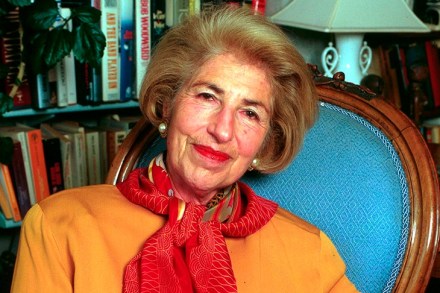
Hella Pick is one of that vanishing generation of Jewish refugees who arrived in Britain on the eve of the second world war, courtesy of the Kindertransport. An only child of separated parents, born and brought up in Vienna, she was luckier than most: her mother got out soon afterwards. Her grandmother, who remained, died in Theresienstadt. Early life in the UK was not easy for refugees from Nazism. Visas were only granted to those who had an offer of work, and just about the only work permitted to them was domestic service, which must have been particularly galling for people like Hella’s mother who had once been prosperous. Young Hella was relatively fortunate.

Confessions of an accidental foreign correspondent

From our UK edition

Perhaps you remember footage of the wave. It was mostly from traffic cameras, mute but darkly mesmerising. Millions of gallons of Pacific seawater upended by a 9.0 earthquake and hurled irresistibly inland. A few days later I saw what that meant, turning a corner in my hire-car to find the road blocked by a trawler that had been washed ashore. This week, Japan has commemorated the tenth anniversary of the tsunami which killed 15,000 of its people. A seismic tragedy which begat a man-made disaster. Inundated by water, part of the Fukushima nuclear reactor blew up, producing the worst radioactive leak since Chernobyl. It wasn’t long before scores of foreign journalists flew into Tokyo, with a brief to get to the worst affected areas.

The dangers of televising lobby briefings

From our UK edition

Like a tongue searching for an absent tooth, I keep wondering if I’m missing anything from my two decades as a lobby hack. Friends, of course, and perhaps the vast, grey field of sloping slate as seen from the Times’s parliamentary office. That empty and silent space, the roof of Westminster Hall, seemed austere and indifferent, a mental refuge from the babble beneath and within. The opposite aspect, towards the crumbling guts of the Palace of Westminster, elicits more complicated memories. I arrived in the press gallery aged 30 to take a job as Westminster correspondent for a clutch of provincial papers. On my first day my new colleagues took me to tea at 4 p.m. in the dining room. There was also a bar with its own barflies and a barman named Clive.

Joan Didion’s needle-sharp eye never fails

From our UK edition

Most collections of journalism are bad. There are two reasons for this: one is that they are usually incoherent and the other is that they are, perversely, far too coherent. The pieces are pulled from their original contexts — newspapers, magazines — and thrown together with others they have no relation to beyond a common author. But (the too-coherent problem) most authors only have one or maybe two ideas to work through, so you end up doing the intellectual equivalent of walking a dozen rounds of the garden when you had hoped to be hiking off into a grand new landscape. I don’t know what Joan Didion’s one or maybe two ideas are, and I’m not sure she could even be boiled down to anything like that.

Watch: Boris on the problem with journalists

From our UK edition

What's the phrase? Poacher turned gamekeeper? Boris Johnson was once the arch poacher — a journalist at the Telegraph before taking on the editorship of Mr S's own illustrious publication. Now it seems Mr Johnson has discovered what it feels like to be at the other end of public scrutiny.  On a press trip to a south London school, the PM mourned the fact journalists are 'always abusing or attacking people'. Instead, he explained to a slightly bemused school child, that 'a lightbulb went off in [his] mind' and that instead, he decided to give politics a go. Nothing to do with childhood dreams of being 'world king' eh?  https://twitter.com/DanielHewittITV/status/1364192217850650627?

The decline of American journalism

From our UK edition

The latest absurdity in American journalism is the forced resignation of the veteran New York Times reporter Donald McNeil Jr for uttering the word ‘nigger’ in front of a group of teenage tourists on a Times-sponsored trip to Peru. It has been justly ridiculed by many sane conservatives and even some courageous liberals. Although the infraction happened more than a year ago, calls for reason have had no practical effect against the demands online and inside the Times that McNeil be fired after the Daily Beast revealed the teenagers’ complaints. McNeil’s own defence is that he used the racial epithet as information with the high school students, not as an insult. This cut no ice with the hanging judges of Times-world.

A conciliatory P.J. O’Rourke is not the satirist we know and love

From our UK edition

There was an acidic bravura and beauty in P.J. O’Rourke’s early journalism and a gleefulness in the ease with which it raised ire. Hitherto, satirists — and especially American ones — had tended to come from the left, none more so than O’Rourke’s mentor Hunter S. Thompson, who campaigned long and hard for George McGovern in 1972. Not Patrick Jake. He sprung like a jubilant, potty-mouthed leprechaun from a country which had fallen back in love with itself after the self-flagellating miseries of Vietnam, Watergate and Tehran.

Lockdown might bring the Dickensian Christmas back into fashion

From our UK edition

I feel like a prisoner, making daily marks on the cell wall to chart the approach of freedom. But will it be freedom, or will we be on parole, obliged to wear a tag and subject to re-incarceration at authority’s whim? Such thoughts do not encourage equanimity. On that subject, I remember a delightfully splenetic political column by the late — alas — Alan Watkins, published a generation ago. As Christmas approaches, even the most acerbic hack feels obliged to relent and sound a little more like Fezziwig, a little less like Scrooge. Perhaps because he was never given to excessive astringency, Alan did not relent. He was complaining about secretaries, who were then numerous in newspaper offices.

The journalists who scripted the golden age of Hollywood

From our UK edition

When talkies appeared in 1927, Hollywood went searching for talkers to write them. It turned to men like Herman J. Mankiewicz: to journalists. The greatest screenwriters of the golden age were journalists first; unlike novelists, they thrived in Hollywood — at least professionally. Good films and good journalism need brevity; novels don’t. Reading about F. Scott Fitzgerald struggling at MGM, 12 years after The Great Gatsby, is brutal, like trying to watch a man learn to walk. The film Mank, by David Fincher, tells the story of how Mankiewicz and Orson Welles created Citizen Kane — for which they shared an Oscar for the screenplay in 1942 — and how they bickered over the credit.

The author in full: Tom Wolfe

I was introduced to Tom Wolfe in the late 1970s, a year or two after I had begun my journalistic career as the literary editor at National Review, by Timothy Dickinson — an Oxford man working for Lewis Lapham, then editor of Harper’s — who was (as he doubtless remains) the sole ambulatory compendium of the British Museum. As Wolfe was fond of Middle Eastern cuisine, we met for lunch at a Lebanese place in Manhattan’s Garment District. While saying goodbye on the sidewalk out front of the restaurant after the meal, Timothy dropped his walking stick which was headless; only the screw that had once fastened the missing head in place protruding from the top of the shaft.

tom wolfe

Never a dull sentence: the journalism of Harry Perry Robinson

From our UK edition

Is Boris Johnson a fan of Harry Perry Robinson? If he isn’t, he really ought to be. Reading this absorbing biography, I was struck by how much they have in common — especially in their early lives. Both men went to public school, then on to Oxford, then into journalism, where they proved incapable of writing a dull sentence. They both divorced and remarried — and were also American citizens, for a while. Both dipped a toe into politics, but while Boris took the plunge, Harry stepped back and remained a jobbing hack until his dying day, the finest journalist of his generation. The biggest difference, however, is that Harry was born in 1859, which is why you’ve probably never heard of him. I certainly hadn’t until I read Joseph McAleer’s fascinating book.