Japan

Portrait of the week: Mo Farah’s secret, hot weather warnings and hot competition for the Tory leadership

From our UK edition

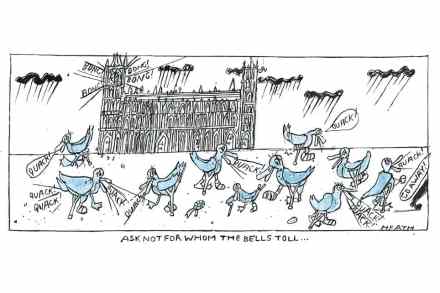
Home The Conservatives began the process of finding a new leader, which involves balloting MPs and then sending two names for party members to choose between. Eight candidates initially qualified for the process set out by the 1922 Committee, by gaining nominations from 20 MPs: Kemi Badenoch, Suella Braverman, Jeremy Hunt, Penny Mordaunt, Rishi Sunak, Liz Truss, Tom Tugendhat and Nadhim Zahawi. Grant Shapps, Rehman Chishti and Sajid Javid withdrew before the off. Ben Wallace, the Defence Secretary, a fancied contender, had decided not to stand, as had Steve Baker, who was not widely fancied. Michael Gove (whom Downing Street had denounced a week earlier as a ‘snake’ when the Prime Minister, attempting to hold on to power, sacked him) did not stand, and nor did Priti Patel.

Shinzo Abe was Japan’s indispensable conservative

Shinzo Abe, who was assassinated today while electioneering, was his country's indispensable man. Prime minister of Japan for much of this century, from 2006 to 2007 and 2012 to 2020, Abe's stature on the world stage eclipsed that of other post-war Japanese leaders, just as his time in office surpassed them all. For a taste of the shock of his murder, look back to the surprise and incredulity which met his resignation from office in the pandemic's worst days. Plagued by a debilitating health condition which had earlier caused him to leave office in 2007, Abe concluded he did not have the stamina left to rule.

Enough with the 1970s comparisons

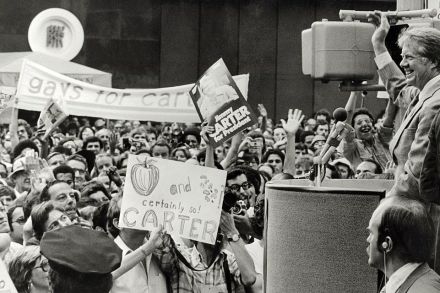
The media are abuzz these days about a purported “return to the 1970s.” Generally speaking, such chatter is not intended kindly, for many today would likely agree with the sardonic assessment of the Seventies made by the editors of New West magazine as that decade wound down: “It was the worst of times, it was the worst of times.” And not just because of the popularity of bell-bottom pants, platform shoes, and disco music. In the Seventies, we had problems far more troubling — more troubling even than the pop group ABBA. For starters, we saw a quadrupling of real oil prices between 1973 and 1979. We suffered high rates of both inflation and unemployment, which hitherto varied inversely, leading to the creation of the portmanteau “stagflation.

1970s

Watch out for Ukrainian social media propaganda

Stop me if you’ve heard the one about the Ukrainian beauty queen who volunteered to fight the invading Russian forces. If you’ve been on social media these past few weeks, you’ve probably seen the striking photo of the woman clad in tactical gear and holding a rifle. “We are living in a materiel world, and I’m a materiel girl,” the stunner says to the viewer through her steely glare. Or the one about the Japanese ambassador to Ukraine kitted out in his ancestor’s samurai gear and ready to defend his adopted homeland? You’ve surely heard about the “Ghost of Kyiv,” a Ukrainian fighter pilot who has been terrorizing his Russian counterparts, accomplishing the feat — uncommon in contemporary air combat — of becoming an ace.

propaganda

In Japan, being a token westerner is big business

From our UK edition

About ten years ago I was interviewed in Tokyo for a job as a fake Catholic priest, performing wedding ceremonies for Japanese couples who wanted the aesthetics of a Christian service without all the hassle of actually being Christian. In a room cluttered with tacky plastic religious paraphernalia I watched a training video of the company’s ‘top man’, an American Tom Cruise-lookalike in a cassock, ‘marrying’ a young couple. I was offered the job and it paid well but, fearing I might fluff my lines, collapse into giggles or, worst of all, come face to face with an ex-girlfriend approaching down the aisle, I turned it down.

London’s best Japanese bars

From our UK edition

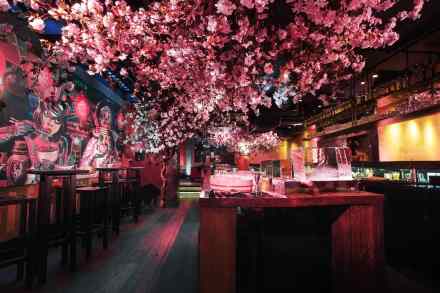
Japan’s influence on the way we drink cannot be overstated. An entrenched culture of artisanship and craft combined with a love of the good life has made Japan a force to be reckoned with in the noble field of boozing. As a fellow island nation with a similar appreciation for the hard stuff, we Brits have taken a serious interest in how our Japanese cousins get their drink on. In London today, traditional fare like sake and shochu, as well as finely honed interpretations of single malt and gin, feature prominently on our cocktails lists. There’s never been a better time to drink Japanese-style in the city and these are some of the best places to do it.

Could Covid finally end the tradition of Japan’s dreaded ‘bonenkai’ parties?

From our UK edition

John Updike described America as a ‘vast conspiracy to make you happy’. Japan, a wonderful place to live in many ways, at times seems like the opposite; if not a vast conspiracy to make you unhappy, at least anxious, uncomfortable, and exhausted. This is especially true for those legions of salarymen and women sighing inwardly at the dread prospect of the ‘bonenkai’: the obligatory end of year company party.  It comes as little surprise to learn that many Japanese loathe these jamborees, which they have to attend, whether they like it or not. A survey for the Asahi Shimbun newspaper suggests many regard bonenkai as unpaid overtime, and would rather head home to their families, or bed.

Is climate change scepticism growing in Japan?

From our UK edition

Fumio Kishida, the newly-installed Japanese prime minister, could have been forgiven for giving COP26 a miss. The opening ceremony in Glasgow coincided with the general election he was fighting back home. But Kishida, having won the election, did make the trip, where he gave a speech broadly but not unreservedly supportive of international efforts to cut Co2 emissions. The reward for his restrained tone and tepid assurances? Japan was named ‘fossil of the day’ by the Climate Action Network group, an ‘honour’ bestowed on countries deemed insufficiently devoted to the cause.

The enduring power of Japan’s doomsday cults

From our UK edition

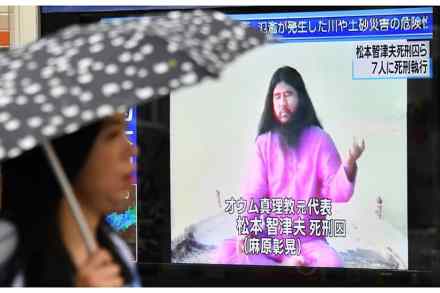
 Tokyo It is now 26 years since the doomsday cult known as Aum Shinrikyu (‘supreme truth’) carried out the worst domestic terrorist attack in Japanese history. Led by their leader Shoko Asahara, Aum released sarin gas on to the Tokyo subway, killing 13 and injuring 6,000. It remains the only time a weapon of mass destruction has been deployed by a private organisation. The details were sickening: one woman had to have her eyes surgically removed because the nerve gas fused her contact lenses on to them. Despite Asahara’s execution in 2018, the death cult has (somehow) survived, changing its name to Aleph and spawning two splinter groups. Aleph is small but appears to be in rude health, with 1,650 members, considerable cash reserves and several properties.

Portrait of the week: Fishing friction, Greta’s singalong and terror in Tokyo

From our UK edition

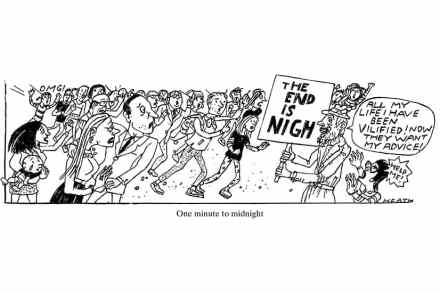
Home Boris Johnson, the Prime Minister, told delegates to the 26th Conference of the Parties to the United Nations Framework Convention on Climate Change (COP26) in Glasgow: ‘It’s one minute to midnight on that doomsday clock and we need to act now.’ He left the conference the next day. British companies would have to publish plans on reaching net zero by 2050. India said it would reach net zero by 2070. Greta Thunberg, aged 18, stood in Govan Festival Park leading a chorus of ‘You can shove your climate crisis up your arse’ to the tune of ‘Ye cannae shove yer grannie aff a bus’.

Maybe Hawaii should be independent

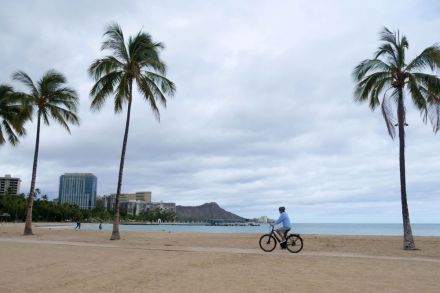
When you’re a writer, there’s no such thing as a vacation — there’s just visiting a new place with the potential to gather more material. Lucky for me, my most recent destination happened to be Hawaii. It’s a fascinating place, and if you didn’t already know it was a US state, it would be easy to mistake it for a distinct English-speaking country, albeit one with obvious and deep American influences. Oahu, the most urbanized island and home of the capital city of Honolulu, is shaped by an idiosyncratic mix of native Hawaiian, East Asian and midcentury American culture. Hawaii resembles a Pacific Island nation at least as much as it does the American mainland.

Will Mako and Kei be the Japanese Harry and Meghan?

From our UK edition

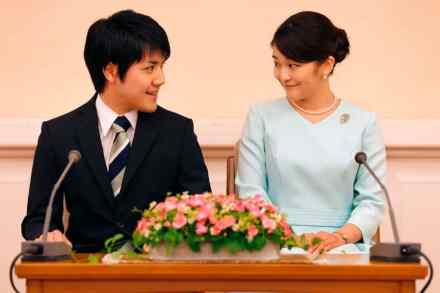
A young royal, seen as a potential future star, falls in love with a commoner and chooses to leave the gilded cage and a life of dutiful service to marry and live a ‘normal’ life in America. The match is controversial for various reasons, not least the royal’s mental health and the non-royal’s family problems; but, after a certain amount of reflection, the marriage goes ahead. The couple settles into a new life stateside, and… Sound familiar? The tale of Princess Mako, the 29-year-old niece of Japanese emperor Naruhito, and her fiancé Kei Komuro is a sort of miniaturised inverted Japanese version of the Meghan and Harry story, albeit with a few twists.

China’s war on effeminate men

From our UK edition

A rectification notice from China’s state censor earlier this month included a peculiar admonition to ‘resolutely oppose’ effeminate men on television. The note stood out in the otherwise dry document. Its other targets — people with ‘poor morals’ or ‘lacking solidarity with the party and nation’ — make sense within Beijing’s authoritarian logic. But it’s hard to conceive of pretty boys in eyeliner joining the party’s long lists of revolutionary enemies. The term used for effeminate men in the notice — niangpao — is vague, but the National Radio and Television Administration is counting on its broadcast partners to know what it means.

Why is Toyota so popular with the Taliban?

From our UK edition

While Taliban posing with newly acquired US military hardware has been a searing humiliation for America in recent days, here in Japan the debacle in Afghanistan has led to a different source of embarrassment. A recurring image of coverage from Kabul is of Toyota pick-up trucks ferrying gun-toting fighters around the city. It has given the iconic company’s management a serious PR problem, and not for the first time. The Taliban have been favouring the sturdy and reliable Japanese ‘Land Cruisers’ since the 1990s, but it is also the vehicle of choice for Al Qaeda and Isis. The appeal seems to be the suitability for rough terrain and the ease with which the trucks can be retrofitted with gun placements, or in other ways customised for combat or intimidation.

Farewell, Yoshihide Suga, Japan’s unloved leader

From our UK edition

Japanese prime minister Yoshihide Suga has fallen on his sword. Suga announced today that he will not be seeking reelection as leader of his party (the LDP), in effect resigning as prime minister in the process. The decision came without warning but wasn’t a huge surprise: Suga’s government is polling horribly at the moment and it was feared that the dour and unpopular leader would be a significant drag on his party’s prospects in the upcoming general election. Suga’s farewell after just a year in the job makes it feel like the good old days again, when a revolving door at the prime ministerial residence in Nagatacho saw Japanese premieres enter and exit at a rate of about one a year.

The rise and fall of the yakuza

From our UK edition

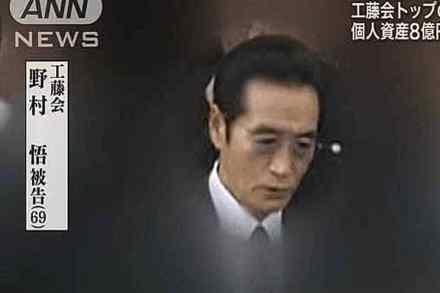
For the first time in history, an organised crime ‘yakuza’ boss has been sentenced to death in a Japanese court. Satoru Nomura, head of the Kudo-kai group in Fukuoka, was found guilty of murder and three assaults after a trial held without a jury due to fears of possible intimidation. If a planned appeal fails, he will be hanged. We’ll find out about it after it happens. What makes the case remarkable is that no evidence was presented linking Nomura directly with the crimes he was accused of. The judge nonetheless concluded that they took place on his orders and had the confidence to deliver the ultimate sentence. The case marks a new low in the seemingly terminal decline of the once fearsome crime syndicates.

Would Japan defend Taiwan from a Chinese attack?

From our UK edition

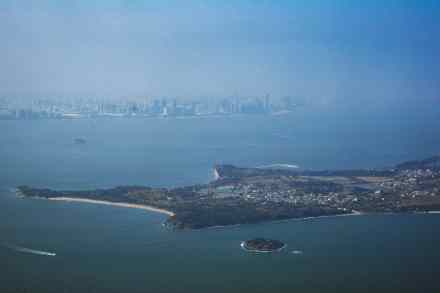
In a parliamentary debate in early June about Covid, Japan’s prime minister Yoshihide Suga said that Australia, New Zealand and Taiwan had been 'imposing strong restrictions on privacy rights.’ Whether by mistake or on purpose, Suga had crossed the Rubicon of acceptable China-Japan diplomatic language by implying that Taiwan was a country. If it was a mistake, it was one he repeated several times. China’s response was immediate. A foreign ministry spokesman, Wang Wenbin, accused Suga of a flagrant breach of ‘the Sino-Japanese Joint Statement and its solemn and repeated commitment of not seeing Taiwan as a country.

Is Japan about to enter a ‘London-style lockdown’?

From our UK edition

Just like the Olympics, which ended a fortnight ago, the Paralympics is set to commence amid a drumbeat of doom. Japan appears to be in the middle of a Covid renaissance, with around 5,000 new cases a day in Tokyo. The games will take place, like the Olympics, in a ‘state of emergency’ that now covers 84 per cent of the country. But how serious is the situation, and what exactly does 5,000 daily cases mean? Like much of the vaccinated world, the majority of the afflicted this time round appear to be younger people and overall deaths in Japan remain extremely low.

Samurai nights in Aizu

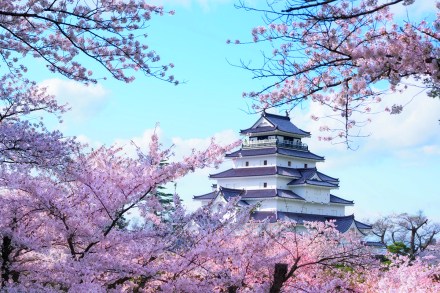
I started my visit to Japan’s north country deep in the mountains, in hot water in a bath the size of a swimming pool. Quietly simmering, I was intrigued to notice that the glass which formed the outside wall was not misted up, though the water was steaming. Through the darkness I could make out trees, bushes and the glint of the lake below. I waded over and reached out my hand, only to discover that there was no wall. One side of the bath was entirely open to the air. For the Japanese no journey, particularly to the north, is complete without soaking in as many hot springs as possible. The mineral-rich waters are the upside of the geological turbulence that brought about the devastating tsunami of March 2011. Today everyone knows the name ‘Fukushima’.

aizu

In defence of Olympic football

From our UK edition

Spain takes on Brazil today in the final of the men’s Olympic football tournament. Not interested? Well, if so, you’re probably not alone — Olympic football has a popularity problem. For decades it has suffered from unfavourable comparisons with the big Fifa and Uefa behemoths to the extent that many see the whole thing as a bit of a waste of time. I disagree, and I will be tuning in. For one thing, to dismiss the tournament as an irrelevance is historically ignorant. Olympic football (and excuse my appalling sexism but I’m confining myself to the men’s game here) predates the World Cup by 30 years and for a couple of decades was the de facto world championship, playing a valuable role in building the foundations of the international game.