James bond

The astonishing truth about 007

From our UK edition

The novel as a form is a fundamentally capitalist enterprise. It was invented at the same time as capitalism – Robinson Crusoe tots up his situation in the form of double-entry bookkeeping. Its interests dwell on the disparate and unequal natures of human beings and feed off rivalry, social transformation, moneymaking, profit and loss. No rigid feudal society has managed to create an effective school of novelists; and having once struggled through Cement, Fyodor Gladkov’s classic of socialist Soviet literature, I would say that systems dedicated to forcible equality also struggle.

No one wants a more sensitive James Bond

From our UK edition

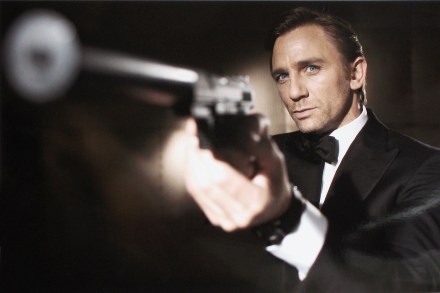
Men do not come to see James Bond movies for the sensitive brooding of an ageing spy. They come for the car, the bikini and the volcano. This is apparently lost on some people in Hollywood – the same people who occupy the unfortunate position of actually making James Bond movies. The Daily Telegraph reports: 'The next James Bond films will have bigger roles for women and a more sensitive 007, according to the producers.' Variety quotes producer Barbara Broccoli saying 'Bond is evolving just as men are evolving', adding: 'I don’t know who’s evolving at a faster pace.' I have a difficult time believing that any fan of James Bond ever expressed a desire for the greatest secret agent in the history of film to be more in touch with his feelings.

There is no best martini

What’s the best suit? To an American, it’s something from Brooks Brothers. Classical, democratic and made with high quality. To a Brit, it might be something from Henry Herbert or Gieves & Hawkes, a tailor-made garment from Saville Row, cut from perfect navy. But a suit can be just as good when rendered in draped, colorful cloth by the late Edward Sexton, or a hot corset-blazer blend by H&M and Mugler. There is no universal best suit. There’s just the best suit for the man or woman who wears it. And so, I come around to the refined blazer of beverages: the martini. In the pages of our July magazine, Chilton Williamson, Jr. wrote about his effort to “search of the perfect martini.

martini

Oppenheimer and the triumph of Christopher Nolan

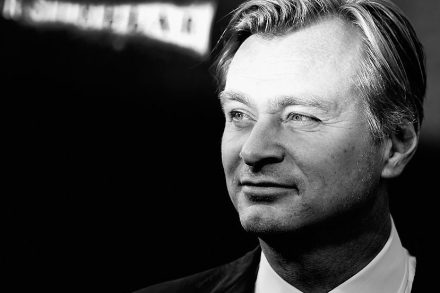
The Barbenheimer phenomenon — thought of by many as just idle chatter on the internet — has enduring power. Last weekend, Barbie and Oppenheimer earned a combined $511 million in global box office receipts; an unprecedented number where neither film is a superhero picture or a sequel. Barbie made more money, on the grounds that it’s an hour shorter and is PG-13 rated, but the vast box office success of the R-rated Oppenheimer, which made over $170 million in its opening weekend, is testament both to Barbenheimer excitement, and to the film’s very own brand: its powerful writer-director-producer, Christopher Nolan.  James Cameron aside, it is hard to think of any filmmaker who wields such power and influence in contemporary Hollywood.

Christopher Nolan

Phoebe Waller-Bridge is a franchise murderer — and Indiana Jones is her next victim

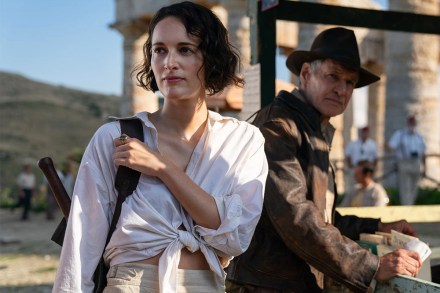
Phoebe Waller-Bridge must be destroyed before it's too late. The short-bob comedienne fond of wall-breaking and lazy edits has, in very short order, emasculated and destroyed multiple franchises thanks to the overwrought praise for her adaptation of her one-woman show, a descriptor that should itself elicit a bit of vomit in the back of the throat. Not content to politicize Star Wars as an irritating droid in Solo or to chop off the balls of James Bond in Daniel Craig's swan song whose name no one remembers, Waller-Bridge has now set her sights on a firmly American man to take down: Indiana Jones, whose fifth edition box office she will eradicate in spite of all the goodwill of these United States. https://twitter.

phoebe waller-bridge

Mission: Impossible makes the Daniel Craig Bond movies seem anemic and dull

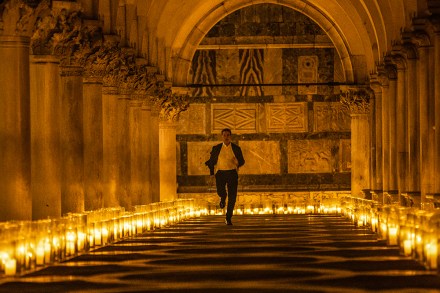
The British comedian, actor and author Charlie Higson is famous internationally for being one of the writers that has carried on the mantle of Ian Fleming by writing novels and stories that continue James Bond’s adventures, most recently On His Majesty’s Secret Service, published to coincide with King Charles III’s coronation. Yet in a recent interview with the Sunday Times of London, Higson was openly dismissive of the recent Daniel Craig-starring 007 films. He said “I went to see No Time to Die with my oldest boy, Frank, who is thirty, and he said, ‘That felt like a Bond film made by people who are embarrassed to make a Bond film.’ You had to watch two films in advance to know who such-and-such is and you think, ‘Oh, fuck off with that.

mission: impossible

How boredom begat James Bond

From our UK edition

It is sobering to think that if Ann Rothermere had been a less enthusiastic painter, James Bond might never have existed. In January 1952, Lady Rothermere and Bond’s creator Ian Fleming were on holiday at Goldeneye, his house in Jamaica. Tension crackled in the air. He and Ann had been lovers since 1939. Her husband, Viscount Rothermere, chairman of Associated Newspapers, had recently divorced her. The news had reached the gossip pages of the Daily Express. The scandalous couple had discussed marriage — with some urgency because Ann was pregnant — but Fleming’s expectations of marital bliss were slim. ‘I can promise you nothing,’ he told her. ‘I have not an admirable character. I have no money. I have no title. Marriage will be entirely what you can make it.

Do James Bond’s would-be censors have a point?

James Bond may have battled the nefarious forces of SMERSH, SPECTRE and other international terror organizations, but surely he has never faced quite so implacable a foe as the sensitivity reader. Following in the footsteps of Roald Dahl, the wholesale revision of whose books led to international outrage, Ian Fleming’s Bond novels, which have been re-released to mark the seventieth anniversary of the first publication of Casino Royale, have undergone their own exercise in alteration. But is it an egregious travesty à la Dahl, or — whisper it — might someone have had an idea arising from nobler motives?

bond

How to holiday like James Bond in Sardinia

From our UK edition

Posing as a marine biologist and with Soviet agent Anya Amasova posing as his wife, James Bond checked into Hotel Cala di Volpe in the The Spy Who Loved Me (1977). Their mission: to gather intelligence aboard super-villain Karl Stromberg’s secret underwater lair, somewhere in the Tyrrhenian Sea between Sardinia and the Italian mainland. In the meantime, they stay in a spacious suite with exposed wooden beams and open ocean views (where Amasova also vows to kill Bond when the mission is over). When I stayed at Cala di Volpe this year, I saw no villainous marine lair, just Tommy Hilfiger’s super yacht. The hotel has retained its Bond glamour through the years and offers the super-rich (and some super-famous) a more private experience than St Tropez or Monaco.

James Bond and the Beatles at war for Britain’s soul

From our UK edition

‘Better use your sense,’ advised Bob Dylan: ‘take what you have gathered from coincidence.’ John Higgs is a master of taking what he can gather from coincidence – or, as he would insist, synchronicity. From the filigree of connections and echoes in the KLF (Discordianism through the lens of 1990s pop provocateurs) to the psychogeography of Watling Street to more recent deep dives into William Blake, he confronts the modern Matter of Britain: who wields power, and who resists it? Love and Let Die starts with another perfect coincidence, namely that it was 60 years ago – to be precise, 5 October 1962 – that saw the first Beatles single appear in shops and the first James Bond film appear in cinemas.

The secret to exploring Istanbul

Two weeks before Covid began to hit Europe, I stood in the Basilica Cistern beneath Istanbul, steadily getting dripped on. Built during the reign of the Emperor Justinian I in 532, just before another deadly pandemic — the plague of Justinian — the cistern lies beneath Istanbul’s tourist hotspot, and despite it being damp, dark and having stands of 007 merchandise at its entrance and exit, it is one of the most enchanting places in a city that has captivated its visitors for over a thousand years. "If the Earth were a single state," Napoleon once pronounced, "Istanbul would be its capital," and upon visiting you begin to understand why.

istanbul

Hollywood, fist-fights and getting canceled

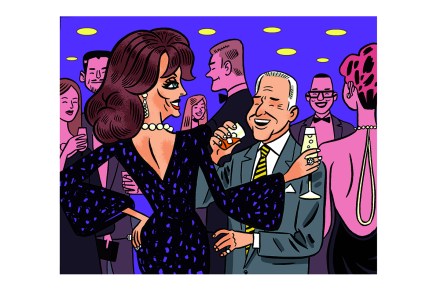
Introductions Scene: a drawing room in London. When the recording starts, Taki is already mid-anecdote... Taki: I was sent out to Monte Carlo to speak to Roger Moore. The Spectator offered to pay all my expenses. I said thank you, I’ll pay my own. I went and had a terrific drunken dinner with Roger who really spilled the beans, cos we were buddies. I came back. The tape was empty because I’d never turned the recorder on. Joan: I’d known Roger since I was fifteen, because my father was a big agent in London and I came back from school — oh, fourteen actually, because I left school at fifteen — and there’s the most gorgeous man I’ve ever seen standing there. He came over and said, “How do you do? You must be Joan, my name is Roger Moore.

Joan Collins

What does ice cream have to do with ‘late capitalism’?

From our UK edition

‘More to my taste is Trockenbeerenkapitalismus,’ said my husband with an intonation that indicated a joke. The joke was a play on the German Spätkapitalismus, ‘late capitalism’. There is also a German wine category called Spätlese, ‘late harvest’, and another, when the grapes are exposed to noble rot and allowed to wither on the vine, called Trockenbeerenauslese. Hence the joke. I do not encourage this sort of thing. But late capitalism deserves no encouragement either. It is generally used to mean anything thought unpleasant about life in western society.

What the Russians thought of James Bond in the 1960s

From our UK edition

Last year I wrote a piece about James Bond for the ‘Freelance’ column of the Times Literary Supplement. All true Bond lovers — of the novels, I mean — know that he lived in a ‘comfortable flat in a plane-tree’d square off the King’s Road’, as Ian Fleming described it in Moonraker. Further internal evidence in Thunderball indubitably established that it was Wellington Square — but there was considerable mystery and doubt about exactly which house contained the Bond apartment. In my article I claimed to have identified it as No. 25, based on a certain amount of sleuthing and, I thought, convincing circumstantial evidence. No.

Fit for 007: the filmic destinations that feature in Bond

From our UK edition

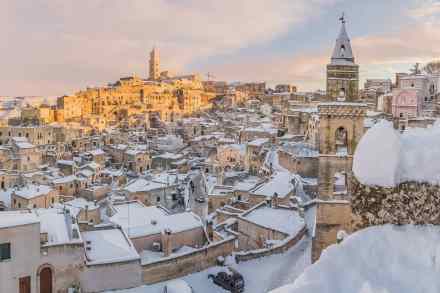
Birds eye shots of Aston Martins cruising along hairpin roads, steamy scenes on chalk-white beaches: the choice of James Bond filming locations has the power to put new holiday destinations on the map. Here we round up the best places to visit from No Time To Die - and rediscover old favourites from the archive. Puglia, Italy Some of the most nail biting scenes in the latest film involve Bond jumping from an aqueduct into a ravine to escape his pursuers then hurtling round the sidestreets of an ancient Italian town on a motorbike. Most of the scenes are shot around the UNESCO World Heritage Site of Matera in southern Italy. Known as The City of Caves, it sits on a rocky outcrop with troglodyte settlements carved into its base.

Drinking with James Bond

James Bond’s most impressive talent is not his prowess as a spy or his skills of seduction. It’s his ability to always get exactly what he wants at the bar. In the 1954 novel Live and Let Die he orders a round of Old Fashioneds while on a train to meet Felix Leiter, his CIA opposite number. Not only does the buffet car make them for Bond, they even have his preferred brand of bourbon, Old Grand-Dad. You try pulling that sort of thing on the Acela from Penn Station to DC. ‘Sorry Solitaire, they wouldn’t do us a cocktail, but I’ve got a cup of Lipton’s and a bag of pretzels.’ We’d all like to drink like Bond but, lacking his miraculous powers, we need to be in the right sort of bar to do it.

bond
bond

Turning the page on James Bond

The much-delayed 25th James Bond film, No Time To Die, is finally limping onto the big screen. There are gadget-packed car chases, scarred supervillains and revelations as to the loyalties of supposedly sympathetic characters, but there are also new, socially-conscious elements. Lashana Lynch plays a PoC 00-agent who is very much Bond’s equal at spycraft. Fleabag’s Phoebe Waller-Bridge has been parachuted in as a script doctor, to notify us that this is a post-#MeToo Bond. Without a simultaneous release on a streaming service, Daniel Craig’s swan song as Bond will stand or fall on its theatrical performance.

no time to die bond

The spy’s the limit

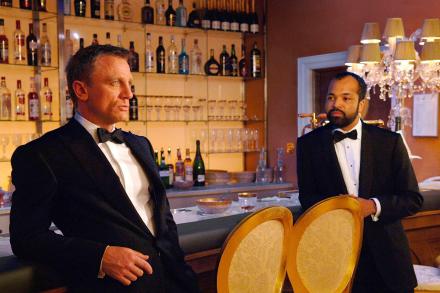
No Time to Die is Daniel Craig’s last mission as James Bond. Clocking in at well over 180 minutes, it might more accurately be called No Time to Pee. The epic length and general air of slothful despair derive from the picture’s tortured development. Mess and confusion are the inevitable product of two directors, platoons of writers, a tangled residue of multiple plotlines and the star’s blatant misery at being once again vacuum-packed into a tuxedo one size too small. ‘We did our best,’ Daniel Craig has said repeatedly in promotional interviews. M wouldn’t accept that, so why should we? Bond begins No Time to Die with plenty of time to die. He has retired with his heart broken and the rest of him in little better shape.

The spy movies that rival 007

From our UK edition

If No Time to Die and the inevitable 007 re-runs on ITV haven’t already sated your appetite for Bond-style espionage thrills, there’s a veritable smorgasbord of spy movies available to assuage your hunger. Some of the actors who portrayed Bond also essayed secret agents of a different stripe, with Sean Connery (The Russia House), Pierce Brosnan (The Tailor of Panama), Daniel Craig (Munich, Archangel) and Timothy Dalton (Permission to Kill, The Rocketeer) all dabbling in non-007 cloak and dagger roles. For such a long-lasting and successful franchise, it’s perhaps odd that the producers (Eon) haven’t yet contrived to release any 007 film spin-offs.

What James Bond and Aristophanes have in common

From our UK edition

So James Bond is back, doing exactly what he always does, inviting the audience into a fantasy world for the pleasure of wondering ‘What if?’ In this respect, Bond films resemble the work of the world’s first recorded comic poet, the Athenian Aristophanes (c. 440-380 bc). His premise was that Athens’s problems could be solved only by little people of no importance, not the greedy, vain and incompetent leaders in the public eye. So the scene was set for the hero(ine) to put them firmly in their place. One favourite subject for his comic fantasies was the long war between Athens and Sparta (431-404 bc). Take three examples. In 421 bc Aristophanes sent a farmer Trygaeus up to heaven on a dung-beetle to find Peace and restore her to earth.