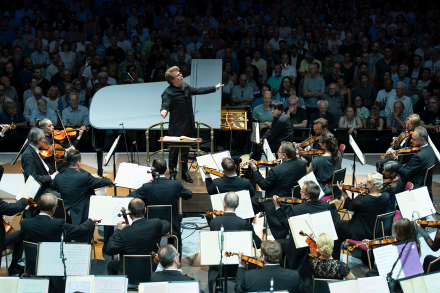
Jakub Hrusa

The joy of Martinu’s symphonies

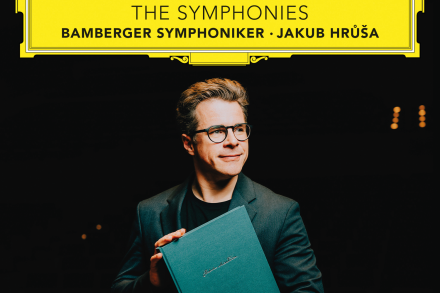
Grade: A– What, more Martinu? It feels like no time since the Pavel Haas Quartet was persuading us that there might, after all, be more than we’d suspected in the chamber music of this patchy but fascinating Czech composer. Now here’s the chief of the Royal Opera, Jakub Hrusa, with a symphony cycle, and it’s starting to look as if Martinu is having a moment. To older record collectors, there’s still something oddly authoritative about seeing the yellow Deutsche Grammophon cartouche above an earnest conductor photo. Stand up straight: it’s on DG. This is serious. Hrusa is certainly serious; very much the thinking man’s maestro, he’s even published a collection of essays on Martinu.
Anna Netrebko’s still got it

In the opera world, you’re never far from a Tosca and last week we had two of them, both brand new. That’s healthy: any opera company with a functioning survival instinct is wise to maintain a stock of solid, revivable Puccini favourites. Critics yawn, academics snipe, but Puccini prevails because the simple fact is that Tosca is a straight-up banger. I took a Tosca virgin to the first night in Cardiff. She hadn’t read a synopsis or done any of those homeworky things that novice opera-goers are told they should do, but which they really, really shouldn’t need to. ‘This is bloody marvellous, isn’t it?’ was her reaction after Act Two. Welsh National Opera has acquired the American Psycho-ish updating that Edward Dick originally directed in 2018 for Opera North.

A lively showcase for a great central European orchestra at the Proms

As the Proms season enters the home straight, it’s moved up a gear, with a string of high profile European guest orchestras. First up was the Czech Philharmonic playing Suk’s Asrael Symphony under Jakub Hrusa before moving on to Janacek’s Glagolitic Mass the following night. These grand, glittering monuments of Czech music were garnished with a couple of relative rarities – Dvorak’s Piano Concerto, played by Mao Fujita, and the Military Sinfonietta, composed in 1937 by (the then 22-year-old) Vitezslava Kapralova, who died at the age of 25. It’s unmistakably the work of a young composer. Xylophone?