Israel

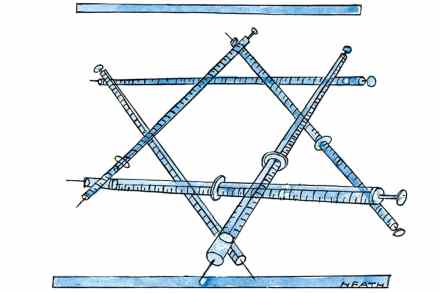
Does this Israeli study support Britain’s one-dose strategy?

From our UK edition

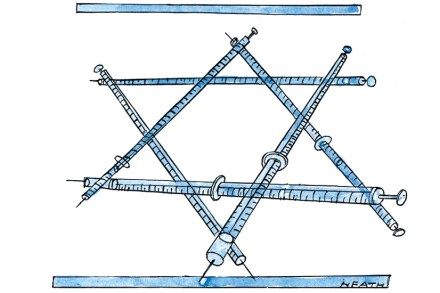
Is the British approach of prioritising first doses of Covid vaccines and not promising a second dose until 12 weeks later compromising our ability to fight the disease? It is not a moot point, with several EU figures asserting that it is a risky route to take. As I wrote here a couple of weeks ago, as far as the AstraZeneca/Oxford vaccine is concerned, what evidence we have supports the practice of delaying a second dose until 12 weeks after the first one; the vaccine is more effective that way. However, a question mark has continued to hang over the Pfizer/BioNTech vaccine. There is limited data on the most effective dosing regime in this case because the phase 3 trials did not experiment with delayed doses – everyone involved was given a second dose 21 days after the first.

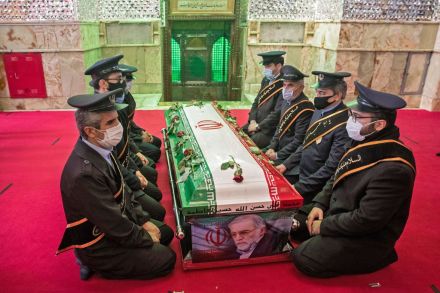
Revealed: how Mossad eliminated Mohsen Fakhrizadeh

From our UK edition

The Mossad is not known for its touchy-feely approach. Whether it was the kidnap of Adolf Eichmann in the sixties, hunting down and executing the Black September terrorists in the seventies and eighties, or dispatching a Hamas chief while disguised as tennis players in a Dubai hotel in 2010, the agency has built a reputation as the most feared secret service in the world. Yet its underlying moral imperative in this most morally difficult of professions must not be overlooked. Former Mossad chief Meir Dagan used to show spies about to embark on a mission a photograph of his grandfather kneeling in front of Nazi soldiers before they shot him. This sense of ethical purpose has always been at the heart of the agency, even when it has been driven to play dirty.

What’s the problem with BBC Arabic?

From our UK edition

It’s easy to forget that your BBC licence fee does not only fund content that you and your family consumes. In addition to the output aimed at domestic audiences, your annual payment of £157.50 funds a host of foreign language services aimed at projecting British impartiality and soft power overseas. The largest of these is BBC Arabic. Launched as a radio station in 1938, it was the first of the BBC’s non-English experiments, and the most successful. Today encompassing television, radio and online, the channel reaches more than 40 million people every week. That’s both an influential audience and a shedload of British money.

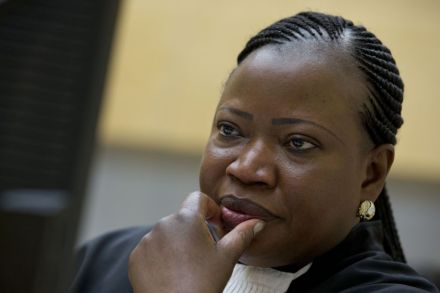
The ICC is playing politics by targeting Israel

From our UK edition

Sovereignty, that old-new friend, is in vogue again thanks to Brexit and the advances made by nationalists across Europe and the United States. Those of us who lament these developments should not regret the reassertion of national sovereignty, for it is intimately linked to democracy and self-determination and provides domestic legitimacy for the kind of liberal, cooperative world order we wish to see. If you want a strong international community, you need to have strong, confident nation-states in which people believes their country can be active in the world without losing its sense of self.

Could an Israeli-Saudi peace deal be imminent?

From our UK edition

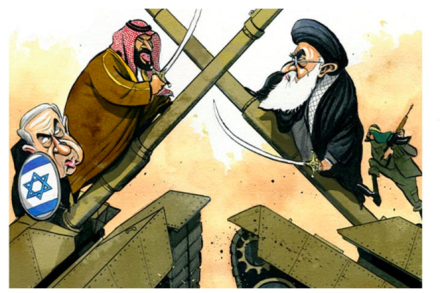
The Israeli-Saudi peace deal is, to coin a phrase, oven-ready, a source close to the negotiations told me this week. After many months of covert meetings, the detail has been agreed and the Israelis are ready to commit. All that’s needed is for the Saudis to sign on the dotted line. This means that an alliance could be sealed within six months. Of all the Arab-Israeli peace agreements, a Saudi deal would be the most significant. The Gulf kingdom is a huge country that comes close to bordering Israel, and, as such, is of great strategic weight. It is the largest economy in the Middle East. And as the custodian of Islam’s two holiest sites – Mecca and Medina – it is a serious contender for the title of leader of the Muslim world, and the main counterweight to Iran.

How effective has the Covid vaccine been in Israel?

From our UK edition

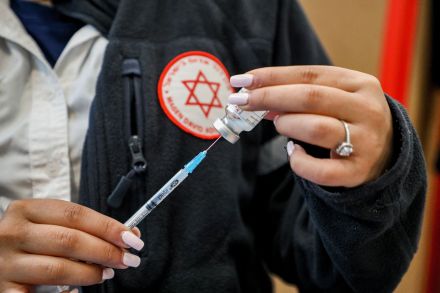
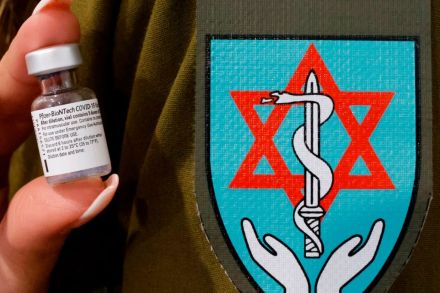
The world’s eyes are on Israel at the moment, as the country continues its phenomenally fast roll-out of the Pfizer vaccine. As of yesterday, the country had vaccinated a third of its population with at least one dose, which means we are starting to find out vital information about the vaccine’s effectiveness and how it works in the real world. So what have he learned about the vaccine so far? First some statistics: as of yesterday, 78 per cent of people over the age of 60 in Israel will have received at least one dose of the Pfizer vaccine. 58 per cent of the over-60s are over 14 days from their first dose, meaning they should have some immunity from the disease and 30 per cent of the over-60s have already received their second dose.

Are there any mountains left unclimbed?

From our UK edition

Bad service Economic growth fell by 2.6% in November, the month of the second lockdown, compared with falls of 7.3% in March and 18.8% in April. The pandemic has achieved what has eluded recent governments, in rebalancing the economy away from services. Since February: — Services have contracted 9.9%— Manufacturing has fallen 4.9% — Construction is up 0.6% The most affected sectors of the service economy were: — Hair and beauty: 24.4% of businesses reported zero turnover— Pubs: 27.4% reported zero turnover Source: ONS Unclimbed peaks A team of Sherpas made the first winter ascent of K2, the world’s second-highest mountain. Are there any mountains left to climb?

Netanyahu’s shot at election success

From our UK edition

For Israeli critics of Benjamin Netanyahu, myself included, these are rather difficult times. It’s hard for us, or anyone, to deny that he appears to be leading the world in vaccinations against Covid-19. In less than four weeks, two million Israelis — my parents and many friends among them — have received their inoculations. A project spearheaded by the Prime Minister himself promises a return to almost normal life. I’m under 50 and have no underlying illnesses, but am still confident of getting my own vaccine in a couple of weeks. Our world-beating jabbing speed means we have covered 20 per cent of the population. Britain, which has made far more progress than any other European country, has covered less than 5 per cent.

What Amnesty International gets wrong about Israel’s vaccine programme

From our UK edition

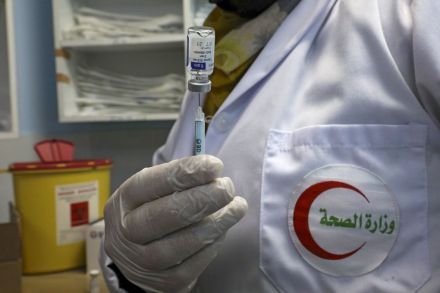
Israel's remarkable vaccine rollout has been deservedly praised. But not everyone is full of goodwill. Depressingly and inevitably, commentators and human rights groups have queued up to find a reason to condemn the Jewish state.  Israel, which is leading the world in the speed of the rollout, has been accused of ‘excluding’ the Palestinians from getting the jab and giving it to ‘settlers’ instead. 'Denying Covid-19 vaccines to Palestinians exposes Israel’s institutionalised discrimination,' Amnesty International has claimed. To people familiar with stories about bogeyman Israel, this is an easy narrative to get behind. But it fails to account for a simple fact: the Palestinian leaders themselves haven’t complained.

The Arab-Israeli conflict may finally be over

From our UK edition

The dawn of the new year is rising on a world that would have been unrecognisable 12 months ago. The scourge of Covid, the fall of Trump, the resolution of Brexit; all have carved history in unpredictable ways. But nowhere has seen greater changes than the Middle East, where, for the first time, people are daring to believe that the Arab-Israeli conflict is over. In January 2020, Israel was as isolated as ever in the region. Its ‘cold peace’ agreements with Egypt and Jordan, which were not matched by affection on the street, were as good as it got. The Arab League’s notorious threefold rejectionism — no to peace, no to recognition, no to negotiation — seemed unmovable.

How Israel became a world leader in vaccination

From our UK edition

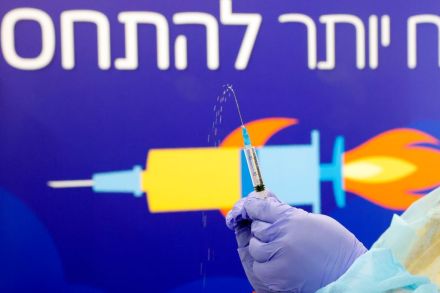
On a cold night three days before the end of the 2020 I drove down to Jerusalem’s Pais Arena. The area is usually a sports venue, next to Jerusalem’s stadium and mall, but in December it was transformed into a centre for mass vaccinations, open from morning till ten in the evening. By the first day of 2021 Israel had vaccinated more than 1 million people in two weeks, an unprecedented number, making the country a global leader in vaccinating against Covid-19. I was one of those who received the first jab of the Pfizer vaccine. Israel’s path to this milestone has been a rollercoaster of lockdowns and struggles over the last year. Back in February 2020 the country was on alert for the spread of the coronavirus.

Britain is right to pursue closer military ties to Israel

From our UK edition

There’s a group called Palestine Action whose raison d’être is to throw red paint over the British offices of Elbit, an Israeli high-tech arms company, in an orchestrated attempt to hound it out of the country. Five members of the ‘direct-action network’, which has links to Extinction Rebellion, armed themselves with paint pots and climbed onto the roof of the Elbit offices in Staffordshire in September. Activists also targeted sites in London, where they not only hurled paint over buildings, but also over several Jewish people, who had gathered to stage a peaceful counter-demonstration.

A Sudan-Israel peace deal could be Trump’s crowning achievement

From our UK edition

Twitter is not always kind to the Jewish state. But the peace accord between Israel, UAE and Bahrain that was signed in Washington in September has opened the floodgates to a social media love-in. In one video, recently shared by Ivanka Trump, an Israeli called Amit Deri expresses his astonishment at finding produce from his country in a food market in Dubai. Elsewhere, in pictures that were shared thousands of times, a vast Emirati flag is seen projected onto the façade of Tel Aviv’s city hall. Even Israel's prime minister Benjamin Netanyahu has got involved, posting in Arabic this week to mark UAE’s national day, alongside a video in which he referred to the Arab state as ‘our new friends’. These were not empty tweets.

Why this Iranian assassination is all about Trump

From our UK edition

The news that Iran’s top nuclear scientist, Mohsen ‘father of the bomb’ Fakhrizadeh-Mahabadi, met his end in a hail of bullets near Tehran today comes as no surprise. As with so many things these past four years, this is all about Trump. Whoever carried out the hit, it is all but certain that Trump gave it the nod. Once again, he is trying to put a stamp on the Middle East that Biden will find difficult to scrub out. His actions would hardly be without precedent; Obama, Clinton and Reagan all made last-gasp moves in the region to shape it in their image. But none of these Presidents were anywhere near as belligerent or pro-Israel. First there was intense speculation that Trump was building up to a last-minute attack on Iran.

Will Israel attack Iran before Trump leaves office?

We should pay attention when someone like H.R. McMaster, the former national security adviser, says that ‘it’s a possibility’ Israel will attack Iran’s nuclear facilities before President Trump leaves office. McMaster was using a television interview to tell a future Biden administration it would be a mistake to revive the Iran nuclear deal, which he said had been ‘a political disaster masquerading as a diplomatic triumph’. Israel’s prime minister, Benjamin Netanyahu, has always argued that the agreement — ‘based on lies’ — gives the ayatollahs cover to build a nuclear bomb.

iran

King Bibi’s pandemic problem

From our UK edition

‘They are S-C-A-R-E-D’. So said Binyamin Netanyahu in a famous 1999 election campaign speech, referring to the media. Now he is the one who is scared. The political mastermind who has been Prime Minister for the past eleven years stands to lose his crown. Israel's political crisis of 2019-2020 saw three general elections without producing a clear winner. Eventually, asserting a need for national unity to combat the pandemic, Bibi masterfully managed to form a coalition under his leadership while dividing the main opposition party, Blue and White. Under the rotation agreement, Bibi is to step down after two years and be replaced by Blue and White leader, Benny Gantz.

Is AppleTV’s Tehran the new Fauda?

From our UK edition

If you love Fauda — and of course you do — you’re in for a long wait for season four, which isn’t due to arrive on Netflix till 2022. That’s why I had such high hopes for Tehran, which is written by one of Fauda’s co-authors Moshe Zonder. What, after all, could there possibly be not to like about a hot female Mossad agent struggling to survive after a botched mission in the hostile Iranian capital, where all Israelis are seen as emissaries of ‘Little Satan’? It starts promisingly, once you’ve got over the technical difficulties of signing up to Apple TV. (For some reason, my characters now speak with English subtitles but in German. The other options it gives me are all the Latin languages but not English.

Pompeo’s principles

‘Come in.’ Burly, brisk and maskless, Mike Pompeo indicates a chair before the marble fireplace. ‘It’s all right if we’re six feet — or two meters — apart.’ We are meeting at the State Department the day after Pompeo’s return from Qatar, where US negotiators have opened discussions with the Taliban and other Afghan factions on an end to the war in Afghanistan. It’s also the day before the signing of the Abraham Accords between Israel and the UAE and Bahrain. Cheerful and perhaps a little tired, Pompeo exudes forceful confidence: a man who knows what needs to be done. As Secretary of State since 2018, Pompeo has been the strategist who has translated Trump’s generalities into the specifics of policy.

What Bahrain’s deal with Israel really means

On September 15, representatives from the oil-rich Kingdom of Bahrain will meet Israeli leaders at the White House to sign a historic peace deal. It will normalize relations between the Muslim state and the Jewish one, not long after the United Arab Emirates concluded a similar pact. Expect more such 'normalization deals'. They supplement other White House initiatives, such as the deal it brokered between Serbia and Kosovo, which includes both countries establishing closer relations with Israel. The deals are significant for several reasons. First, they represent a common regional front against the Iranian threat, which has been developing beneath the surface for some time.

bahrain

Award the Nobel Peace Prize to Jared Kushner. Seriously!

In these pages last year, I suggested that while the President’s son-in-law may not be a great geo-strategic mind, we should give Jared Kushner a chance to give peace in the Middle East a chance. After all, to paraphrase President Trump’s message to African American voters, what do those suffering Middle Easterners have to lose after close to two decades of failed US military interventions in the area that brought about chaos and bloodshed? Needless to say that I was bombarded with dismissive messages from pals who are proud members of Washington’s ‘foreign policy community’. They thought I was out of my mind and/or trying to land a job in the Trump administration.

jared kushner