Islam

Clegg collides with Cameron over extremism

From our UK edition

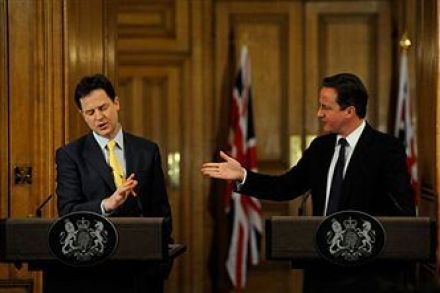
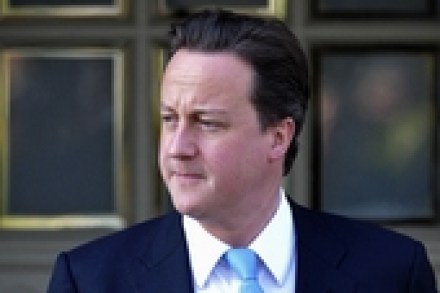
Nick Clegg’s speech in Luton today on extremism is a challenge to large parts of David Cameron’s remarks on the subject in Munich just last month. Indeed, even the venue of the speech can be seen as a rebuke to Cameron who was attacked for giving a speech on Islamic extremism on the same day that the English Defence League was marching in Luton. Cameron’s speech, which was one of the best of his premiership, argued that ‘the ideology of extremism is the problem’ and that terrorism’s ‘root lies in the existence of this extremist ideology’.

Queen’s gambit

From our UK edition

Is Queen Rania of Jordan turning into the Marie Antoinette of Jordan? She is loved in the West, and seen as the very model of a modern Muslim monarch. But in Jordan she's viewed with increasing resentment. As the Arab Spring shakes thrones all over the Muslim world, Mary Ann Sieghart jetted off there to find out – and the results are in this week's magazine. I thought CoffeeHousers may appreciate a preview. We all Queen Rania's her background: a Palestinian beauty, hailed by Oprah as an "international fashion icon," who speaks up for women's rights. But, as Mary Ann writes: "If she mingled at parties with Hollywood stars, her people read about it online.

A landmark judgment for the security services on torture

From our UK edition

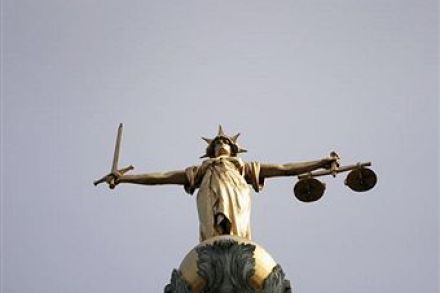
The Court of Appeal made a momentous judgment this afternoon. It was hearing the appeal of Rangzieb Ahmed, the first man to be convicted on terror-related charges in this country, for which he is serving 10 years. Ahmed’s appeal was based on the allegation that British security services had been complicit in his torture and that the evidence for his conviction, gained by Pakistan’s ISI, was obtained by a series of extreme measures culminating in the slow removal of his finger nails. The appeal judges rejected Ahmed’s suit, saying that there was no evidence that his nails had been pulled out or that British officers ordered beatings. Ahmed’s claims had been proved ‘not to have occurred’.

Eastern promises | 18 February 2011

From our UK edition

Events in Bahrain are yet another reminder of why the supposed choice between stability and democracy is a false one. The idea that in the medium to long term backing a Sunni monarchy in a Shiite majority country is a recipe for stability is absurd. If this was not enough, by backing the minority monarchy the West is ensuring that, for obvious reasons, the opposition to it will become radicalised and anti-Western. The West is where it is. It, sadly, cannot start again from scratch in the Middle East. But it cannot allow itself to continue being the allies of those who brutally repress the aspirations of their own peoples - a policy that would ensure this troubled part of the world grows even more hostile to Western interests.

Egypt: Now the Hard Work Begins

From our UK edition

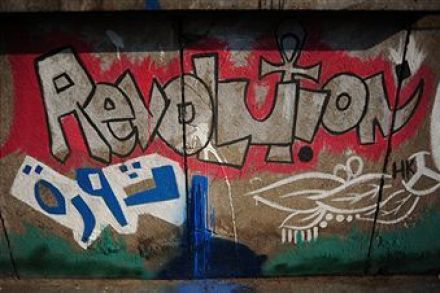
Well, well, well, how the worm turns. I refer the Honourable Gentleman to the post I wrote some hours ago. Again, it's worth noting that this is just the end of the beginning, not the beginning of the end. The Pessimists may yet be proved right but this, at last, is a day for the Optimists. There's no guarantee that Egypt can build the kind of future that will satisfy the economic and political aspirations of its people but nor is it inevitable that it will swap secular authoritarianism for religious authoritarianism. At the moment, and today at least, one of the losers from this process is Osama bin Laden.

Egypt becomes freer

From our UK edition

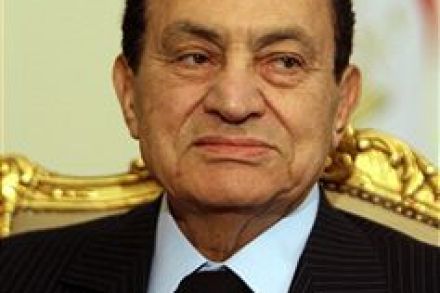
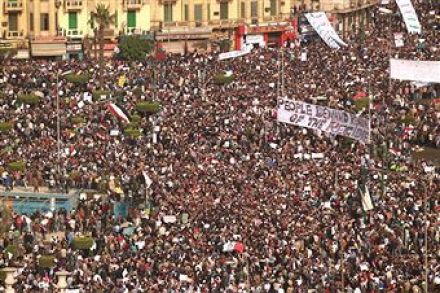
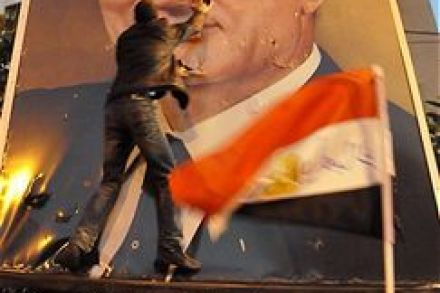
The world does really end with a whimper, not a bang, as T.S. Eliot said. After 31 years in power, seventeen days of protests, more than 300 dead and a shouting match between the US administration and its one-time Egyptian ally, it looks as if Hosni Mubarak will be leaving office tonight. Twitter is atwitter with news that the Egyptian strongman will soon make a TV appearance during which he is expected to hand power to newly-anointed Vice-President Omar Suleiman. Expect Tahrir Square to erupt in a festival of freedom, as the heroic, web-enabled protesters savour their unlikely but amazing victory. But while Egypt’s revolution has been more successful than many in the US and British believed it could be, it is not yet the time to celebrate.

Hope on the Nile: Islam Does Not Have All the Answers

From our UK edition

Not to grant him guru status or anything but I'm glad that Reuel Marc Gerecht has at last weighed-in on the Egypt Question. I've mentioned his writing before and think him one of the most interesting, and in some ways provocative, middle-east analysts. Even if you disagree with him, his ideas are worth serious consideration. His view that President Obama could usefully say "We are not scared of muslims voting" seems persuasive to me. So too his conclusion that it is time to "put an end to the West’s deleterious habit of treating the Middle East’s potentates respectfully and the Muslim citizenry like children." He writes: Mr. Bush’s distastefulness helped to blind Westerners to the momentous marriage of Islamism and democratic ideas.

Cameron was right to give the speech he did

From our UK edition

David Cameron’s speech yesterday was one of the most important he has given as Prime Minister. I’d urge you to read the whole text just to see how absurd some of the opportunistic, party political attacks on it have been. As I say in The Mail on Sunday, they’ll be a huge amount of resistance in Whitehall to the course that the PM is charting. But he is surely right that state money and recognition should not be going to any group that does not promote integration and believe in the liberal values on which this country is based. To do anything else would be fundamentally illiberal. A lot of the criticism of the speech seems to come down to the idea that this is an issue best not discussed. This idea is toxic.

Cameron signs up to muscular liberalism

From our UK edition

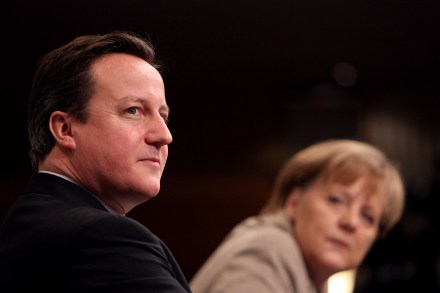
"State multiculturalism has failed." Angela Merkel put voice to that sentiment last October. Now it David Cameron's turn to do the same. In a speech in Munich today, the Prime Minister has taken a rhetorical torch to Islamic extremism. "Frankly," he says, "we need a lot less of the passive tolerance of recent years and much more active, muscular liberalism." It is, at the very least, a significant political moment. What Cameron is doing here – as explained by Charles Moore and Paul Goodman – is publicly signing up to a philosophy of the world. It is a philosophy that rejects the idea that extremism should simply be contained. Instead, it says that extremism must be fought – and that means engaging in a battle of ideas.

EXCLUSIVE: On the streets of Cairo

From our UK edition

Alastair Beach is on the ground in Cairo. Here is his report for Coffee House: As the imam rounded off his midday Friday sermon, the ring of more than three hundred riot police encircled the worshippers. It was no ordinary congregation. A stellar assortment of Egyptian directors, actors and political bigwigs were assembled in an enormous crowd on the pavement outside the Mustafa Mahmoud mosque in Mohandiseen, Western Cairo. Over the loudspeaker, the imam drew polite applause from the listeners when he praised protestors who had turned out for the initial demonstration in Egypt’s uprising a week last Tuesday. But then he put his foot in it. “Democracy should involve free speech but without the trouble,” he intoned solemnly in Arabic.

Come on Europe; support the freedom you claim to love

From our UK edition

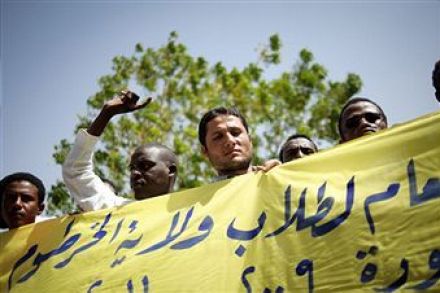
The Middle East is being rocked to its authoritarian core, as pro-democracy protesters defy Hosni Mubarak’s regime for the eighth day in a row. They want an end to his 31-year-rule and, to judge by their continued defiance, are unlikely to accept anything else than his departure. The events, however, have placed European governments in a quandary. Should they back the protests? Support what has been a friendly regime? Or sit uncomfortably on the fence, talking about the need to show restraint and start reforms but standing back from actually supporting regime change, in case the transition becomes violent or the outcome problematic? So far, it looks like the EU prefers sitting on the proverbial fence.

The Failure of Realism: Diagnosis Without Any Prescription

From our UK edition

These two posts by Melanie Phillips on the situation in Egypt are very useful. Clarifying, even. They merit a response not because it's Melanie and she's a neighbour but because she publishes a view that's more widely held than you might think if you only consulted the broadsheets and the BBC. It may, I think, be summarised as: Barack Obama is throwing Mubarak under the bus and we'll soon have Tehran on the Nile. A lot of people believe this or fear it the most probable outcome. They may, alas, be proven right. I'm struck, however, by their certainty that the Muslim Brotherhood will soon be running Egypt and, furthermore, that the Muslim Brotherhood in power will behave and speak in just the way it has in opposition. Perhaps this too will prove the case.

Glenn Beck: Performance Artist

From our UK edition

Even by our good friend Mr Beck's standards this is an impressive, virtuoso display. Twelve minutes out of your day but worth it, I promise you. Pick your own favourite moment. I'm torn between his wondering if Russia might invade western europe (perhaps Putin could run Belgium?) and his suggestion that protests in the UK (tuition fees) and Ireland (no money) are somehow part of a Muslim Brotherhood plot. Also: he says Italy is "on fire" but I think that's only true of Silvio Berlusconi and even then only in a Humbert Humbert sense...

Life on the Nile?

From our UK edition

The risks of the status quo are always safer and more appealling than the uncertainties of the new, the unfamiliar and the unpredictable. So it wasn't a great surprise to discover Vice-President Joe Biden saying last night that, all things considered, he wouldn't refer to Hosni Mubarak "as a dictator" or outgoing White House press secretary Robert Gibbs insisting that Washington has no interest in "taking sides" in the struggle between the sclerotic Egyptian regime and the protestors. Depressing, perhaps, but not surprising. Like everyone else, the White House is waiting to see what happens today. Everyone agress that Mubarak's regime is rotten and that the 82-year old dictator (sorry, Mr Biden) cannot endure forever.

Will Mubarak Fall?

From our UK edition

A week ago, that would have seemed a foolish question. But after thousands of Egyptians have taken to the streets for two consecutive days of protest, even Hosni Mubarak is beginning to look vulnerable. It has placed the West in a dilemma, in a way that Ben Ali's fall did not. For years, the fear has been that President Mubarak is the lesser of two evils. Though authoritarian, Mubarak's Egypt is a pro-Western state willing to live with Israel and combat Islamist terrorism. On the hand, the Muslim Brotherhood opposition, which shares an ideological wellspring with Al Qaeda, is a grave threat to Western security.

In this week’s Spectator | 27 January 2011

From our UK edition

The new issue of The Spectator is out in the shops today – subscribers can read it online, or on Kindle/iPad – and here are a few pieces that I thought might interest CoffeeHousers.   1. The death of meritocracy. Social mobility - or the lack thereof - is a subject that no political party feels comfortable with. And why? For the very good reasons that Andrew Neil outlines in the cover story of this week's Spectator. One vignette is that when Cameron's inner circle convened to discuss the recent school sports fiasco, the conversation turned to who played which positions in the Eton Wall game. If you missed his documentary last night, and even if you didn't, it's a must-read.   2. Why Cameron should adopt a King's Speech strategy.

Blast at Moscow airport

From our UK edition

A suicide bomber has killed more than thirty people at Moscow airport. This is the third major terrorist attack on Russian soil in the last year. Islamist groups were responsible for the previous two attacks and, I imagine, will claim proprietorship this one also. It is a telling reminder that the domestic threat faced by Russia and NATO are becoming more aligned, which should lead to greater co-operation between the two in the coming decade. Already, NATO Secretary General, Anders-Fogh Rasmussen (not a man to cower before the pernicious Islamist menace) has said that his organisation will stand together against terrorism.

Extremism – not just violent extremism – is the problem

From our UK edition

Charles Moore has an important piece in the Telegraph today criticising Baroness Warsi’s muddle-headed speech [a speech which interestingly doesn't appear on her page on the party website]. In it, he reveals that the Prime Minister himself has been devoting much thought to the question of how to deal with Islamic extremism. Charles writes that Cameron will give a significant speech on the matter in the next few weeks in which he’ll argue that the government and society need to tackle extremism per se, not just violent extremism. This is welcome news. To say that extremism only becomes a problem when it turns violent is to miss the point. If you only ever address the symptoms you’ll never cure the disease.

A bad morning for the government<br />

From our UK edition

This morning has not been a good one for the government. There’s been an embarrassing admission that 28 days detention will simply lapse on Monday, the Conservative party chairman is delivering a speech that the vast majority of Conservatives think is muddle-headed at best, and the Prime Minister finds himself in a public debate with the mother of a quadriplegic child. 2011 was always going to be a hard year for the government but what should worry Downing Street is that two of these problems are self-inflicted. The whole counter-terrorism review should have been finished before 28 day detention expired. The fact that it has not been makes the government look like it can’t work to a deadline and is drifiting in a crucial area of policy.