Islam

Do Israel’s critics think there are not enough dead Jews?

From our UK edition

   Jerusalem It’s the moral equivalence which is so devastating. When Egypt this week proposed its ceasefire in Gaza, a BBC presenter asked whether both sides would now conclude that there was no point carrying on with the war. From the start, restraint has been urged on both sides — as if more than 1,100 rocket attacks on Israel in three weeks had the same weight as trying to stop this onslaught once and for all. Israel has been bombing Gaza solely to stop Hamas and its associates from trying to kill Israeli citizens. But for many in the West, the driving necessity is not to stop Hamas but to stop Israel. Moral equivalence morphs instantly into moral bankruptcy.

Whatever happened to ‘Bring Back Our Girls’?

From our UK edition

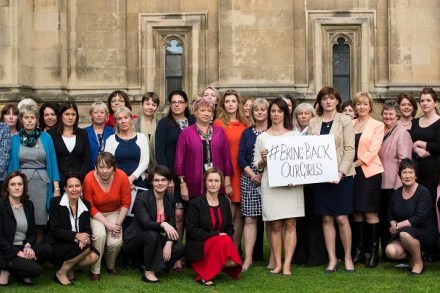
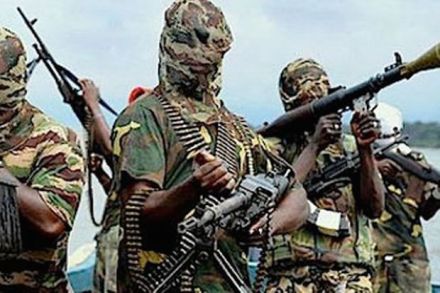
Whatever happened to ‘Bring Back Our Girls’? I only ask because it’s now three months since Twitter and all other social media, Michelle Obama, Christiane Amanpour, David Cameron etc. joined a hashtag group to ask Boko Haram to give back the hundreds of Nigerian schoolgirls they had kidnapped. It almost filled the news cycle for a couple of weeks. And yet nothing seems to have happened. That was April. This is July. The Nigerian security forces continue to appear incompetent. The foreign dignitaries who signed up to the social media campaigns haven’t done much more. And the newspapers, 24-hour media and assorted celebrities seem to have just, well, moved on. Still. Another week. Another fad. Ping. Pong.

The eternal allure of the Caliphate

From our UK edition

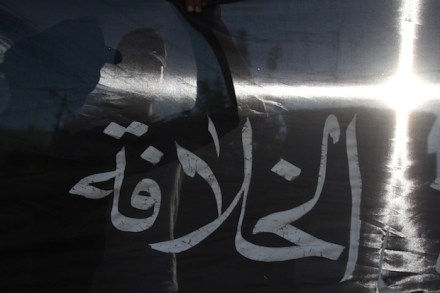
There’s nothing like a caliphate to rally disparate groups. The Sunni Islamic organisation ISIS has recruited fighters from all over the world with its dream of a single Muslim state, which now apparently exists in parts of Iraq and Syria. Across Europe, young men are packing their bags and heading to the east to join the jihadis. It’s an odd thing to want to do, but there’s something about a caliphate. In India in the 1920s, thousands of Muslims rallied behind the idea of a caliphate to support the Ottoman Caliphate. It was surprising because the Muslim population in India had never shown unity or indeed any fondness for Turkey. In fact many of them had fought against the Turks.

Baghdad notebook: “Things were better in Saddam’s time”

From our UK edition

In the passport queue at Baghdad airport, my heart sinks. This place vies with Cairo for the title of most venal airport in the Middle East. Our luggage is minutely examined by the Mukhabarat, or secret police, then customs. Early morning becomes mid-afternoon. Our papers (scrupulously in order) lie unattended on a desk. Eventually, a customs man, with a large moustache and belly hanging over his belt, waddles over. ‘We cannot stamp these today,’ he says. ‘We will have lunch now, and then we will sleep. Come back tomorrow. Or the next day.’ Our bags are moved into a room piled high with luggage seized from other TV crews: flak jackets, lights, someone’s camera and editing gear. ‘How much?’ asks our fixer, wearily.

Let’s face it – Ray Honeyford got it right on Islam and education

From our UK edition

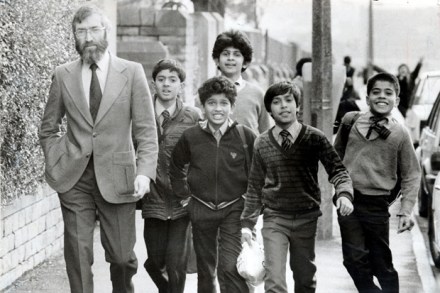
Thirty years ago, as editor of the Salisbury Review, I began to receive short articles from a Bradford headmaster, relating the dilemmas faced by those attempting to provide an English education to the children of Asian immigrants. Ray Honeyford’s case was simple. Children born and raised in Britain must be integrated into British society. Schools and teachers therefore had a duty, not merely to impart the English language and the English curriculum, but to ensure that children understood and adhered to the basic principles of the surrounding society, including racial and religious tolerance, sexual equality and the habit of settling conflicts by compromise and not by force.

Murderous Islamists or Islamophobia?

From our UK edition

I have a nominee for idiot of the week. I had never heard of him until yesterday, but he is one ‘Andreas Krieg’ who the Daily Mail has referred to as ‘a Middle East security analyst at King's College London in Qatar.’ Mr Krieg was quoted in a story on the violence in Iraq, Syria, Kenya, Nigeria and elsewhere. This included stories so bloodthirsty that it is hard to look at some of the pictures which accompany the text. It should also be remembered that most of the victims of this violence are Muslim. And so are all of the perpetrators. So how, on being asked for a reaction to all this bloodshed does our noble academic respond?

Spectator letters: VAT and sugar, Boris Johnson and cricket, whisky and bagpipes

From our UK edition

Sugar added tax Sir: Julia Pickles (Letters, 14 June) suggests a sugar tax to combat the obesity epidemic and discourage food manufacturers from adding sugar to everything from bread to baked beans. A more realistic alternative might be to simply adjust the VAT rules: currently, VAT is levied on essentials such as loo paper, toothpaste and washing powder, presumably because they’re considered luxuries. Items such as breakfast cereals, however, are VAT-exempt, even though many are more than 30 per cent sugar and should really be in the confectionery aisles. Levying VAT on products with, say, more than 20 per cent added sugar and removing it from others could form a revenue-neutral policy for better health.

The bloody battle for the name Isis

From our UK edition

‘This’ll make you laugh,’ said my husband, looking up from the Daily Telegraph. For once he was right. It was a letter from the Pagan Federation complaining that the acronym Isis ‘is likely to form an inadvertent association in the minds of hearers between Sunni jihadists and followers of the goddess Isis’. These ‘may be caught up in unintended fallout’. They are not the only ones. Apart from the army of bloodthirsty Islamists, Isis is a centre for scientific research at Harwell, near Oxford; a group of schools teaching English; an ‘end to end’ professional photographic service in Clerkenwell; a private equity investor; and a seven-seater from Toyota.

The Left’s blind spot with Islam: opposing bigotry does not mean liking a religion

From our UK edition

I agree with something Owen Jones has written, a confluence of beliefs that will next occur on September 15, 2319. Addressing the subject of Christian persecution, he argues in the Guardian: ‘It is, unsurprisingly, the Middle East where the situation for Christians has dramatically deteriorated in recent years. One of the legacies of the invasion of Iraq has been the purging of a Christian community that has lived there for up to two millennia. It is a crime of historic proportions.

Britain is not alone in its mad attitude to Islamism

From our UK edition

There is a tendency in Britain to think we are alone in our national madness. So I thought I would cheer everyone up on this lovely weekend by pointing out that one of the big stories in the Netherlands this week has been whether or not a pro-ISIS demonstration should be allowed in the Hague. The demonstration was planned to take place outside the Iraqi Embassy. There are of course some who are strongly pro-ISIS in the Netherlands. There are also some who are against. Most importantly there is also a political class which has been carefully weighing up the alleged undesirability of ISIS with the historic Dutch tradition of free speech. I suppose we must wish the Dutch people well in these deliberations.

Isis on social media

From our UK edition

Yesterday evening, I returned home, made a cup of tea and slumped down to catch up on the day’s news. A piece on Twitter caught my eye. Posted by Channel 4, it was titled ‘#Jihad: how ISIS is using social media to win support’. Click. Soon I was learning about how ISIS was calling for global support via a sophisticated social media campaign, branded the ‘one billion campaign’. Click, click. Onto YouTube, where I found graphic videos recorded and uploaded by ISIS members. Click, click, click. Ten minutes later, and I was on Twitter, being recruited by jihadis to come join them. Clearly, I am not about to head to Syria or Iraq. But I was struck by how quickly I found material asking me to show support and help the cause.

The Security Services have lost track of 1 in 4 of those who’ve gone to fight in Syria

From our UK edition

We have just had a second intelligence failure on Iraq. The speed and extent of ISIS's sweep into the country took the UK governnment by surprise. Whitehall was not alone in this. As I reveal in the magazine this week, when representatives of the US Joint Chiefs of Staff came to London recently, Iraq was way down their agenda. What makes this intelligence failure so worrying is that we are relying on the security services to keep track of the 400-odd Britons who have gone to fight with ISIS in Syria and Iraq. Senior government figures believe that of those who have gone to Syria and then returned to the UK, the authorities have lost track of one in four of them. This reveals the sheer scale of the domestic threat that we face.

America and Britain could save Iraq’s Christians – it’s just they don’t care

From our UK edition

The Syro-Iraq war, as the firestorm should probably now be called, rages on, with the sword of Damocles hanging over us in Britain. Some 400 British Muslims are fighting with ISIS – only 150 fewer than the number of Muslims in the whole British Army – and we can be pretty sure of blowback when they return home. Afterwards I imagine we’ll have the politicians lecturing us about how this has nothing to do with Islam and then those bizarre ‘one London’ style posters will appear all over the capital; and 90 per cent of the media coverage will be on the danger of Islamophobia – cue footage of football hooligans waving flags.

Spectator letters: Islamophobia, breast-feeding and Bach

From our UK edition

Rational fear Sir: An interesting contrast between the articles by Douglas Murray and Innes Bowen on Islamic influence in the UK (‘Save the children’, 14 June), and the one by Matthew Parris. Mr Parris sees no essential difference between faith schools. But Christians do not on the whole advocate holy wars against non-Christians, or demand that adulterous women be stoned to death, or that anyone who insults their religion should be beheaded. True, there was a time when the Church might have done all these things, but that was hundreds of years in the past and we are now more enlightened. Recent events in Syria and Nigeria, and now in Iraq, do not inspire confidence in Islamic moderation. But any criticism is immediately seized on as Islamophobia.

The Spectator’s notes: Diana’s bed, Boris’s dirty trick and Prince Philip’s mystery tie

From our UK edition

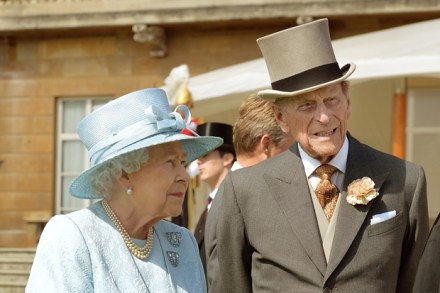
On Friday night, I went to Althorp, childhood home of Diana, Princess of Wales, to speak at its literary festival. My first duty was to appear on the panel of the BBC’s Any Questions? in a tent there. It was 30 years to the month that I had first been on the programme. Then it was at Uppingham School, presented by David Jacobs, and the panel included Roy Hattersley and Esther Rantzen. This time, it was presented by Jonathan Dimbleby, and the panel was George Galloway, Nigel Evans (the Tory MP who did not rape any men), and a beautiful woman called Rushanara Ali, the Labour MP for Bethnal Green and Bow. She was nine years old when I put in my first appearance. In all that time, the show has changed very little.

We need to know much more about ISIS’s ‘British’ jihadists

From our UK edition

The social media exchanges of British jihadis in Syria and Iraq, as just revealed, are perfectly riveting, don’t you think? Fancy worrying about things like where to leave your luggage and internet connections when you’re a jihadi. There’s scope here for TripAdviser. But when it comes to jihadists from Britain, I’d rather like a bit more pertinent information about them than their currency exchange problems.

Pakistan’s ISI accused of subverting media freedom

From our UK edition

Media freedom is under attack in Pakistan, declared Hamid Mir, one of Pakistan’s most prominent journalists. He had six bullets pumped into him by bike riders in Karachi on 19 April. TV anchor, Raza Rumi, was similarly attacked in Lahore in late March. In May 2011, investigative reporter Saleem Shahzad was murdered following his allegations of links between the Pakistani military and al-Qaeda. These are just three of the many Pakistani journalists who’ve been victims of a wave of threats and violence in recent months and years.

The Middle East’s own 30 Years War has just begun

From our UK edition

In January, Douglas Murray explained in The Spectator how relations in the Middle East were becoming increasingly tense. With northern Iraq now in turmoil, following the advance of Islamist militant group Isis, Douglas's insight seems prescient. Syria has fallen apart. Major cities in Iraq have fallen to al-Qa’eda. Egypt may have stabilised slightly after a counter-coup. But Lebanon is starting once again to fragment. Beneath all these facts — beneath all the explosions, exhortations and blood — certain themes are emerging. Some years ago, before the Arab ‘Spring’ ever sprung, I remember asking one top security official about the region. What, I wondered, was their single biggest fear?

Spectator letters: The trouble with religion, alternatives to HS2, and whisky-drinking dogs

From our UK edition

A history of persecution Sir: Colin Brown (Letters, 7 June) ignores some good reasons for keeping religion out of society. Small groups of believers are fine, but not totalitarian dictatorships. The early Christians were treated as heretics until 313 ad, when Constantine made what became the Roman Catholic Church the official religion of the Roman Empire. The church promptly started persecuting all other religious groups. In the Middle Ages the Church let loose the Inquisition and decimated civilised communities such as the Albigensians. As for his statement that ‘all religions have provided society with ethical and moral rules’, how ethical were the laws and morals that subjugated women and slaves and persecuted anyone who questioned the authority and dogma of the Church?

Now that Iraq really is threatened by jihadists, should we intervene?

From our UK edition

The war on terror has gone not necessarily to our advantage. For the second time in a dozen years the land of Abraham has been invaded by a partly-British army, although this time it is composed not of regular soldiers but of bearded lunatics from Crawley. The Islamic State in Iraq and the Levant, an Islamist offshoot so extreme that even al-Qaeda thinks they’ve taken things a bit too far, now controls a huge swathe of Syria and Iraq, roughly in the region of 40,000 square miles, or 4.0 Wales on the International Wales Scale. That makes Sunnistan larger than an independent Scotland and with a great deal more oil. The failure of the Americans to nation-build was epitomised by the fact that a US-trained Iraqi army of 30,000 fled from just 800 ISIS militants in Mosul.