Isis

Freedom is our best weapon against Isis

From our UK edition

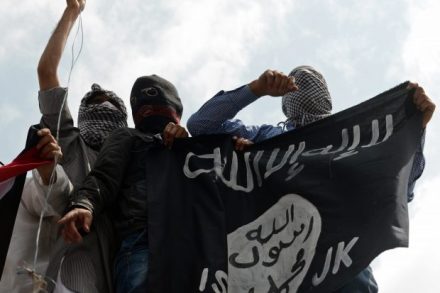
Of all the guff churned out about Isis, the refrain that we are engaged in a 'clash of civilisations' and 'battle of ideas' is uniquely moronic. Isis doesn't want civilisation. As for a battle of ideas - what ideas? Isis doesn't have any, unless you count an apocalyptic fight to the death in Dabiq or Rome. We are reliably informed that Isis includes some very intelligent people who spend years planning terror attacks. Yet it took the, ahem, 'conflicted' Mohamed Bouhlel - that brave warrior who defecated on his own daughter's bed - months to plan his terror attack, which consisted solely of getting in a lorry and putting his foot down. Has any moment more succinctly captured the utter hatred of these brainwashed idiots than the moment Bouhlel's truck accelerated into the crowd?
The Spectator Podcast: Marriage for one

From our UK edition

An increasing number of women are entering into the institution of marriage with their dream partner: themselves. In her cover piece this week, Ariane Sherine investigates the women who have brought a new literalism to saying, 'I do'. But is this just a quirky fad? Or are we witnessing a profound social change? Lara Prendergast speaks to Ariane and Spectator editor Fraser Nelson on this week's Spectator podcast. Ariane tells Lara: 'There are an increasing number of women who have decided, because they don't have a man - or maybe some of them don't want a man - that if they can't find Mr Right, well, I'm going to embrace myself and marry myself and it's going to be a really positive and self-affirming ritual. I'm going to invite all my family and friends and have my big day, man or no man'.

Super human

From our UK edition

‘We think we’re in charge of this stuff but we’re not,’ said Quincy Jones, the composer, arranger, jazz trumpeter, musical genius. He was talking to Julian Joseph at the Montreux Jazz Festival for Jazz Line-Up on Radio 3 (Saturday). ‘It’s divine intervention.’ Jones, who masterminded Michael Jackson’s Thriller as well as countless other hits, film scores (including The Italian Job and The Color Purple) and his own ‘Soul Bossa Nova’, was remarkably sanguine about his extraordinary career. His enormous self-confidence was there from the start. Finding himself in Paris in the 1950s touring with a big band, he decided to stay on so that he could study with Nadia Boulanger and learn how to write for a symphony orchestra.

The Spectator podcast: The real hate crime scandal | 6 August 2016

From our UK edition

Since the vote for Brexit, the media has fallen over itself to cover the apparently large upswing in the number of ‘hate crimes’ being reported. One of the trends noted is a particularly high occurrence of such incidents in areas that voted 'Leave'. In his Spectator cover piece, Brendan O’Neill argues that there is an ‘unhinged subjectivity’ to hate crime reporting, which has skewed statistics in favour of self-critical moralisation. So, has there really been a post-Brexit surge in hostility towards minority groups or is our metric for recording these crimes simply off-kilter? Brendan O’Neill joins Kevin O’Sullivan, who was recently cleared after spending 20 months defending himself from a hate crime allegation, and Lara Prendergast to discuss.

The Spectator podcast: The real hate crime scandal

From our UK edition

Since the vote for Brexit, the media has fallen over itself to cover the apparently large upswing in the number of ‘hate crimes’ being reported. One of the trends noted is a particularly high occurrence of such incidents in areas that voted 'Leave'. In his Spectator cover piece, Brendan O’Neill argues that there is an ‘unhinged subjectivity’ to hate crime reporting, which has skewed statistics in favour of self-critical moralisation. So, has there really been a post-Brexit surge in hostility towards minority groups or is our metric for recording these crimes simply off-kilter? Brendan O’Neill joins Kevin O’Sullivan, who was recently cleared after spending 20 months defending himself from a hate crime allegation, and Lara Prendergast to discuss.

Clueless in Syria

From our UK edition

The other day I was speaking to a Kurdish journalist who was held in Isis captivity for ten months. He and a colleague had had the bad luck to run into an Isis checkpoint in Syria. ‘How do you perform the midday prayer?’ they were asked after their car was waved to a halt. Unable to answer — they were not believers — they were immediately beaten around the head. Then one of the jihadis from the checkpoint was put into the back of their car and they were told to drive to the Isis base. The fighter had a pistol pointed at them the whole time, which was superfluous because he was also wearing a suicide belt. ‘Make a move and I’ll detonate myself,’ he said. ‘We’ll all die together.

The Spectator’s Notes | 28 July 2016

From our UK edition

At the beginning of his war memoirs, Charles de Gaulle famously wrote, ‘All my life I have had a certain idea of France’ and its ‘eminent and exceptional destiny’. It was not only an abstract concept: the picture in his mind was of ‘the Madonna in mural frescoes’. What is President Hollande’s certain idea of France? Presumably it cannot be the Madonna, since Hollande is the child of French laïcité, which creates an unbridgeable gulf between religion and the republic. But what happens when, in the name of one religion, men in France enter the temple of another and slit the throat of a priest, as happened this week near Rouen?

Portrait of the week | 28 July 2016

From our UK edition

Home The collapse of BHS after Sir Philip Green had extracted large sums and left the business on ‘life support’, with a £571 million pension deficit, was ‘the unacceptable face of capitalism,’ said a report by the Business and the Work and Pensions select committees of the House of Commons. The British economy grew by 0.6 per cent in the quarter ending in June. A man was shot dead at a commercial pool party in Headley, Surrey, organised by Summerlyn Farquharson, known as the Female Boss Krissy, and the Jamaican reggae artist Jason White, known as Braintear Spookie. HMS Ambush, a Royal Navy Astute-class nuclear-powered submarine, was in a ‘glancing collision’ with a merchant vessel while submerged off Gibraltar.

Europe’s summer of terror

From our UK edition

How is your Merkelsommer going? For now, Britain seems to be missing the worst. True, a couple of men of Middle Eastern appearance tried to abduct a soldier near his base in Norfolk for what was unlikely to have been an interfaith dialogue session. But Britain’s geographical good fortune, relative success in limiting weapons and our justified scepticism of the undiscriminating ‘open borders’ brigade mean that we have so far been spared the delights of what Angela Merkel’s growing army of critics refer to as her summer of terror. Douglas Murray and Haras Rafiq discuss Europe's summer of terror: It is now a fortnight since Mohammed Lahouaiej-Bouhlel shouted ‘Allahu Akbar’ and ploughed a truck along the Nice seafront, killing 84 people.

French politicians have a major problem on their hands

From our UK edition

Today's attack was the 7th Islamist terrorist atrocity in France since January 2015. Two hundred and thirty six people have been killed by Islamist terrorism there in the last 18 months. This attack might only have killed one innocent person but it was a particularly brutal event: an 84-year-old priest had his throat slit while celebrating Mass. It was an attack that was designed to shock and to divide, to make it impossible to ignore the religious element of this act of terrorism. Douglas Murray and Haras Rafiq discuss Europe's summer of terror: The two terrorists were shot dead by police before they could kill their other hostages, two nuns and several members of the congregation.

Courageous Kemp

From our UK edition

Before I set about reviewing Ross Kemp: The Fight Against Isis (Sky 1), I thought I’d have a glance to see whether other critics had been as impressed as I was. Clearly the flip groovester from the Guardian — who opened, inevitably, with a jaunty quip about Grant from EastEnders — had seen a very different documentary from the one I saw. Otherwise, he could not have failed to be moved by Kemp’s heartbreaking interview with the Yazidi woman from Sinjar who’d recently escaped from Isis. Her 10-year-old daughter squatted beside her — only survivor of the five children she had had when Isis captured her town.

After the Nice attack, Michel Houllebecq’s nightmare vision edges closer

From our UK edition

I only got around to reading Michel Houellebecq’s Submission last month, a darkly amusing book about how France destabilises as it is caught between Islamic and nativist violence. It is, even by French standards, extremely pessimistic, but then who can blame them? When I visited France last summer, I noted just how many heavily armed police there were, even in the obscure western region we were staying at; more than I’d seen in any European country apart from Northern Ireland. The owner of the campsite, who was also a local official, explained that they were expecting something terrible to happen. Which it has done, twice now, this latter atrocity worse in many ways as it involved children.

High life | 22 June 2016

From our UK edition

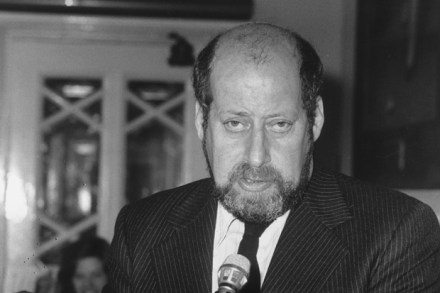
I always thought the Freuds a pretty sordid bunch, and after the latest revelations it seems I wasn’t far off. I first met Clement Freud when John Aspinall employed him as an adviser for food and wine. He was lugubrious and aggressive, and none of us punters liked him one bit. He was not a gambler but talked as if he were a big one. While crossing the Atlantic on board the QE2 back in 1974, he tried to pRlay the tough guy with me over — yes, you guessed it — a lady, but it didn’t work. But there’s no use giving him the business now that he’s dead, so all I will say is that I found him just a bit less loathsome than his painter brother and leave it at that.

Rise of the atrocity exhibitionists

From our UK edition

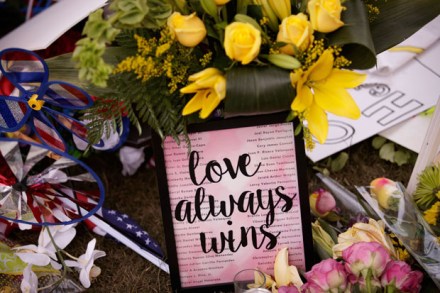
Life is speeded up. It used to be that when a hideous atrocity occurred people waited a day or two, even a week, before co-opting it into their political armoury. Now it happens while the smell of cordite is still in the air and before the blood has dried. There is a breathtaking shamelessness about it and a certain narcissism, if not outright solipsism and an eagerness to demand a sort of acquired victim status. The revolting murders in an Orlando nightclub are a case in point. Some 49 people dead and 53 injured after a Muslim, presumably what we are enjoined to call a radical Muslim, ran amok with a gun.

From the Tate to Palmyra: to preserve great art, let it decay and regenerate

From our UK edition

Strolling around Tate Modern’s recent Alexander Calder exhibition, something bothered me. Calder is best known for creating mobile, rather than static, sculptures; most of his pieces were intended to move, but some were now sitting lifelessly by the gallery’s white walls. It’s hard to appreciate how radical Calder’s kinetic art was in its time. Hergé, who owned one of Calder’s sculptures, put it best: 'I don’t know if you are familiar with his "mobiles". They consist of elements of light metal, assembled by thin wires. When hung from the ceiling, the slightest draught will make them move. They are graceful, light and extraordinarily poetic.' They sure are, or were.

The great pretenders

From our UK edition

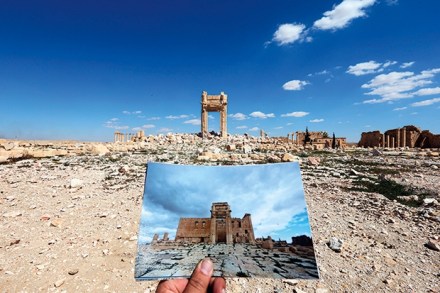
There is fakery in the air. And maybe the French are done with deconstruction. A drone operated by a French archaeology consultant called Iconem has been languidly circling Palmyra, feeding back data about the rubble with a view to reconstructing the ruins and giving the finger to Daesh. Cocteau said he lies to tell the truth. Iconem flies to tell the truth. In April, an exhibition called The Missing: Rebuilding the Past opened in New York which examined ‘creative means to protest preventable loss’. It was timed to coincide with the temporary erection of a frankly underwhelming two thirds-scale replica of the Palmyra Arch in Trafalgar Square, London. It goes to Times Square, New York, in September.

Portrait of the week | 26 May 2016

From our UK edition

Home The government published a Treasury analysis warning that an exit from the EU would plunge Britain into a year-long recession and could cost 820,000 jobs. David Cameron, the Prime Minister, speaking with George Osborne, the Chancellor of the Exchequer, at B&Q’s head office in Hampshire, said that leaving ‘would be like surviving a fall then running straight back to the cliff edge. It is the self-destruct option.’ Downing Street said that leaving the EU would make an average holiday for four people to the EU £230 more expensive. Gillian Duffy of Rochdale, the nemesis of Gordon Brown, the former Labour leader, spoke in favour of the Leave campaign.

Number 10 might be more confident than ever of EU referendum victory, but they’re still trying to load the debate dice

From our UK edition

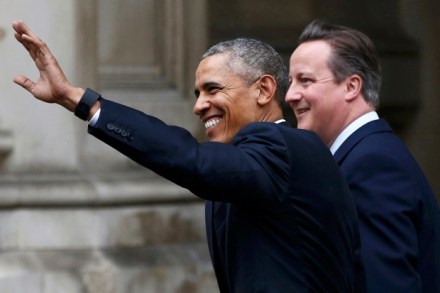
Downing Street is more confident than it has ever been that the EU referendum will be won. It is not just Barack Obama’s full-throated warning against Brexit that is responsible for this, but—as I say in my Sun column this morning—the sense that they have got the argument back onto their home turf of the economy. Indeed, it was striking how much Obama talked yesterday about the economic benefits to Britain of EU membership and the single market. The fact that this was his main message, rather than Western unity against Putin and Islamic State, shows which argument Number 10 thinks is working.

A genocide is underway in Iraq and Syria. Why won’t the government recognise this?

From our UK edition

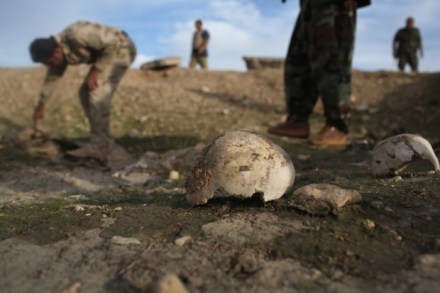
Later today the House of Commons will vote upon a motion expressing belief that a genocide is underway against Christians, Yazidis and other ethnic and religious minorities in Iraq and Syria. The motion, proposed by Fiona Bruce MP, is supported by a large number of MPs from all parties. The Government is expected to oppose, as they did when a similar measure was debated in the Lords. At the time of writing, party enforcers are rumoured to be whipping MPs on the payroll to abstain from the vote. This is an old parliamentary tactic intended to undermine the legitimacy and clout of the measure under consideration by reducing the number of MPs going through the lobbies (about 150 are on the payroll). Surprised by this Machiavellian scheming? You shouldn’t be.

‘You even stop thinking of your own family’: meet the Isis fighters addicted to amphetamine

From our UK edition

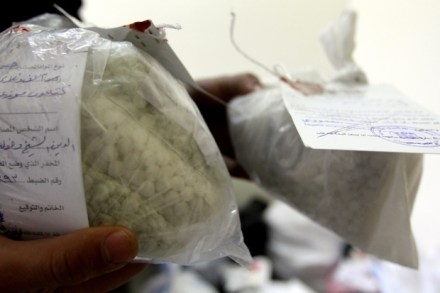
'We would fight them, slaughter them,' Aadheen told me. 'The moment we take a pill we would stop thinking about anything.' The pill he's referring to is Captagon, an amphetamine that's said to fuel some of the brutality associated with Isis. In November last year, Turkish authorities seized 11 million Captagon pills on the Syrian border. In the same month, a Saudi prince was arrested after two tonnes of Captagon pills were found in cases being loaded onto a private jet. Aadheen is a former Isis member; he's now a drug addict in hiding. We met late at night in a safe house arranged by his dealer, close to the Syrian border. Aadheen sat silently in the corner, gently rocking back and forth. He was waiting for his next fix.