Isis

Will Gordon Brown’s critics finally admit he was right about al-Qaeda’s ‘major terrorist plot’?

From our UK edition

There are not many things to celebrate about Gordon Brown’s time in office. He was a vilified leader; often quite rightly so. His Home Secretary, Jacqui Smith, did not fare much better. However, a recent terror trial in New York showed that the criticism they received was not always deserved. On 8 April 2009, a large terrorist cell based in northwest England was arrested. The cell had been dispatched to the UK by al-Qaeda in 2006 in preparation for an attack, the majority entering the UK on bogus student visas. The plot is thought to have involved a car bomb attack against Manchester’s Arndale shopping centre, with a team of suicide bombers ready to detonate their devices among fleeing civilians.

Portrait of the week | 5 March 2015

From our UK edition

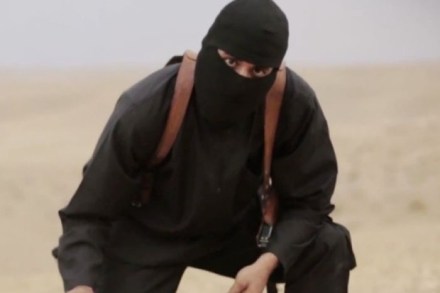
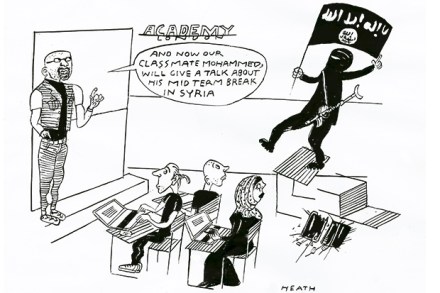
Home The man seen in several Islamic State videos of hostages being beheaded, nicknamed Jihadi John by the British press, was revealed as Mohammed Emwazi, aged 26, born in Kuwait but raised from the age of six in London. He was said to have had help with anger management at his secondary school, Quintin Kynaston Academy in St John’s Wood. An advocacy group called Cage produced a recording of him complaining that MI5 had questioned him after he had to turn back from a ‘safari’ in Tanzania in 2009. General Raymond Odierno, the chief of staff of the US army, said he was ‘very concerned’ about British defence cuts. Lance Corporal Joshua Leakey of the Parachute Regiment was awarded the Victoria Cross for bravery in Afghanistan.

If ‘non-violent extremists’ can’t express their views at universities, where can they?

From our UK edition

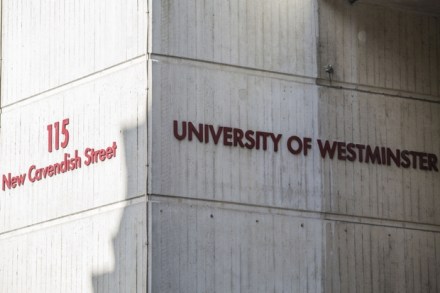
Last month, the government’s Counter-Terrorism & Security Bill became law. One provision is the legal obligation it places upon ‘specified authorities’ to ‘prevent people from being drawn into terrorism’. ‘Specified authorities’ includes universities, whose vice-chancellors made several interventions as the legislation made its way through Parliament. The Education (No.2) Act of 1996 places a duty on universities and colleges to ‘ensure that freedom of speech within the law is secured for members, students and employees of the establishment and for visiting speakers’.

The assault on IS-held Tikrit could trigger sectarian war in the region

From our UK edition

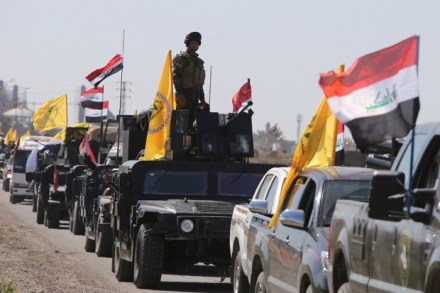
The Iraqi military’s attempt to retake Tikrit from Islamic State tells us several things about the current politics of the region. First, the Iraqi state is heavily reliant on the Iranians for military assistance. The Iranian Fars News Agency has reported that this assault is being backed by the Iranian Revolutionary Guard including the commander of its elite Quds Force, Maj. Gen. Qasem Soleimani. Reuters says that Soleimani can be seen directing operations from a hill and that his presence is crucial in terms of controlling the Iraqi Shi’ite militias, many of whom are Iranian trained. Second, there is a danger that Islamic State might succeed in precipitating the sectarian war within Islam that it so desperately wants.

If Isis doesn’t like Twitter, it should invest in its own tech companies

From our UK edition

Isis has a new bête noir: Twitter. Employees at the social media company have received death threats, as has Jack Dorsey, the co-founder of Twitter. Why? Because the site has been blocking accounts linked to the group. In retaliation, Isis members posted an image on the website JustPaste.it which warned that Dorsey and co had 'Become a target for the soldiers of the Caliphate and supporters scattered among your midst!’ The message reads: ‘You started this failed war … We told you from the beginning it’s not your war, but you didn’t get it and kept closing our accounts on Twitter, but we always come back. But when our lions come and take your breath, you will never come back to life.'   Punchy stuff.

MI5 didn’t make Jihadi John; he made himself

From our UK edition

Poor Mohammed Emwazi. One day he’s your average 'beautiful' young man, nose buried in his computer studies books, looking for a job and looking for love. The next he’s being harassed by the security services, so intensely that — BOOM — he weeps and wails his way to the deserts of Syria where he changes his name to Jihadi John, dons an Islamic ninja outfit and starts chopping people’s heads off. Happy now, MI5? See what you did? Shame on you for pushing this studious, handsome London lad to become the Charles Manson of the Middle East. That, at least, is a rough outline of the script being hawked by the organisation Cage.

Why the apologists for the Islamist far right must make Jihadi John a victim

From our UK edition

Islamic State allows its adherents to be both cultists and psychopaths: an L. Ron Hubbard and a Fred West rolled into one. The reasons why young men want to travel across the world to fight its wars and lend a hand to the murder of its victims ought to be brutally and boringly obvious. Psychopaths are always less complicated, less rewarding, less interesting than their victims. They're not hard to explain. Where is the difficulty about Abelaziz Kuwan , for instance? His case opens ISIS: Inside the Army of Terror by Michael Weiss and Hassan Hassan.

Nobody will dare satirise the multiculturalism that allows Islamism to flourish

From our UK edition

So, 'Jihadi John' is Mohammed Emwazi, a young Kuwaiti immigrant from Queen’s Park in north-west London, another first-rate product of the British education system. Queen’s Park is one of those very mixed areas of London; the expensive Victorian properties are filled with people who 10 years ago might have lived in Notting Hill and 10 years before that Kensington. There are also lots of scary housing estates too. It's also part of the greatest Arabian Diaspora that extends out of Edgware Road and into the districts of Westminster and Brent; previous Jihadi John suspect Abdel Bary was an aspiring rapper from nearby Maida Vale who was last seen tweeting a picture of himself holding a head beside the caption 'chillin' with my homie or what's left with him'.

Portrait of the week | 26 February 2015

From our UK edition

Home Sir Malcolm Rifkind, the former Conservative foreign secretary, resigned as chairman of Parliament’s Intelligence and Security Committee and promised not to stand for Parliament in May after he and Jack Straw, the former Labour foreign secretary, were suspended from their parties. This followed their being separately secretly filmed apparently offering their services for payment to reporters from the Daily Telegraph and Channel 4’s Dispatches programme pretending to be acting for a Chinese company. Ed Miliband, the Labour leader, declared that Labour candidates would in future not to be allowed to have second jobs.

Monitoring social media is easier said than done

From our UK edition

The three British girls who packed their bags and took a flight to Turkey have apparently crossed the border into Syria. Their intention seems to be to join the Islamic State and it looks like they may have succeeded. It emerged over the weekend that there had been contact between one of the girls and Aqsa Mahmood, a Scottish woman who travelled to Syria herself. Initially communicating through Twitter, it appears Mahmood played a role in their journey to Turkey and now into the heart of the conflict in Syria. Criticism turned on the security services: according to Aamer Anwar, the lawyer for the family of Aqsa Mahmood, they are not even doing the ‘basics’ to prevent this kind of migration.

How do bright schoolgirls fall for jihadis? The same way they fall for Justin Bieber

From our UK edition

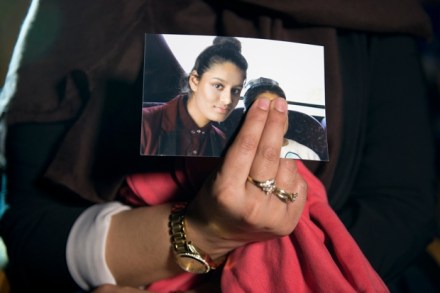
How could they? How could girls brought up in the wealthy West abandon their families and their own bright futures to join Isis, a gang of vicious thugs? It’s not just our girls, either, they’re sneaking off to Syria from across Europe and America too, teenagers, bright ones typically, set on becoming sex slaves in a war zone. London’s latest runaways — Shamima, Amira, Kadiza — were pupils at Bethnal Green Academy and the headmaster there, a Mr Keary, echoed most people’s reaction when he shook his head and said: ‘I don’t understand it. It doesn’t make sense.’ But Mr Keary’s wrong, most people are wrong. It does make sense. Let your outrage subside and it’s pitifully easy to see what draws these idiots to Islamism.

The Syrian-bound schoolgirls remind us that feminism isn’t for everyone

From our UK edition

There is much to be said for Rod Liddle’s view that the fuss over the aspiring jihadi brides from the Bethnal Green Academy is getting on for preposterous and we shouldn’t, to put it mildly, over-exert ourselves to get them back. One takes the point, though I think in fairness we should spare a thought for those on the receiving end of the Isis recruitment drive, viz, the unfortunate indigenous communities in Syria and Iraq who are on the sharp end of Islamic State’s advance. I don’t know how many of the Assyrian Christians who didn’t manage to get away from the Isis attack this week on villages in north Eastern Syria were teenage or prepubescent girls, but I’d be a bit concerned about them myself.

To be ‘groomed’ is to gain instant victim status

From our UK edition

A minor point, I suppose, but one worth noting. It was stated on the BBC and in the liberal press that these three girls who have scuttled off to Syria for a spot of beheading and FGM had been 'groomed'  by radical Islamists. A word not used when it is young men who head off to fight for Isis. A word, which in its current – and terribly, terribly overused – meaning immediately confers victim status upon whoever it is who has been 'groomed'. This was pointed out to me by a chap called John Locke in a debate about the girls on a social media website, and it was a very accurate and prescient observation. I daresay that in the BBC’s next report they will not merely have been 'groomed', but will also have been 'vulnerable'.

Want to stop nice British girls going to Syria? Then show them the X-rated ‘Joy of Jihad’

From our UK edition

I'm with Rod on the wannabe jihadi brides going to Syria.  The whole official approach demonstrated by the BBC et al is just the same as the government-sponsored videos that crop up on YouTube urging people not to join Isis: a sort of 'please don't go, we're better together' pleading. https://www.youtube.com/watch?v=oIR-mBviTNI But if we really do want to stop young people going out, why not put a bit more grit into it?  A bit more stick as well as carrot?  Why waste this massive amount of airtime just to say that these poor girls didn't know what they were doing, are nice girls really etc. Why not use it to actually put others off going by promoting a far more realistic campaign?

Should we actually be worried about the Syria-bound schoolgirls?

From our UK edition

Are you terribly worried about those three London 'schoolgirls' who have gone off to fight for the Islamic State in Syria? I must admit I haven’t lost an awful lot of sleep over it. The BBC ran the story at interminable length on Sunday night, the implication seeming to be that we should strain every sinew to get the poor mites back home to their loving and undoubtedly well-integrated community. I don’t think they should be allowed back in any way, as it happens. And by and large, the more similarly disposed Muslims who feel an attraction to Isis actually go to Syria, the better, frankly. Or is this callous and unfeeling of me?

Isis are just very un-progressive Open Border fanatics – we need an Atatürk to fight them

From our UK edition

If you haven’t already seen it, I recommend reading this fantastic essay by the Atlantic’s Graeme Wood on What Isis Really Wants. He takes the time to look into the theology of the ‘so-called Islamic State’, as the BBC insists on calling them (I can’t remember ‘so called Irish Republican Army’), and there is no doubting the theological link. To single out just one passage: 'Many mainstream Muslim organizations have gone so far as to say the Islamic State is, in fact, un-Islamic. It is, of course, reassuring to know that the vast majority of Muslims have zero interest in replacing Hollywood movies with public executions as evening entertainment.

Julius Caesar could teach Isis a thing or two

From our UK edition

Isis disseminates videos of beheaded captives to spread simple terror. Julius Caesar knew all about it. In his diaries of his conquest of Gaul (58–51 bc), he constantly acknowledges the power terror wielded. When it became clear, for example, that in 58 bc he would have to take on the powerful German king Ariovistus who had crossed the Rhine into Gaul, his ‘whole army was suddenly gripped by such a panic that their judgement and nerve was seriously undermined’. Caesar, naturally, rallied the troops and in the ensuing engagement drove Ariovistus’ army back across the Rhine with massive losses. Ariovistus had been a ‘friend of Rome’. That is what Caesar did to ‘friends’ who threatened him. In 55 bc, two other German tribes crossed the Rhine.

Islamic State will flourish if the West picks sides in Libya

From our UK edition

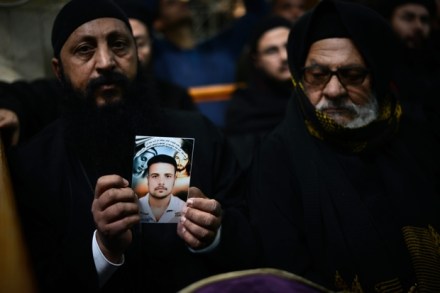
Conventional wisdom suggests that Islamic State and its affiliates have mastered social media. Yet the group's real talent lies in dominating the traditional media cycle and using sensational violence to goad its enemies into overreactions. Hours after Isis released one of its more gruesome videos showing the beheading of 21 Egyptian Coptic Christians on the shores of Sirte, Egyptian fighter jets pummelled several Isis targets in Derna. The Egyptians claim to be fighting the terrorists by propping up General Khalifa Haftar’s anti-Islamist Operation Dignity. However, if the Egyptians want a UN-resolution authorising international military intervention in Libya, this must be resisted.

Why Islamic State will be defeated more easily than al Qaeda

From our UK edition

One consequence of Islamic State’s barbarity is that we know relatively little about it. This is what makes Graeme Wood’s piece about it in the Atlantic, based on extensive conversations with its theological supporters, so interesting. The mind-set of Islamic State is well illustrated by this discussion from its official magazine that Wood cites: 'In October, Dabiq, the magazine of the Islamic State, published “The Revival of Slavery Before the Hour,” an article that took up the question of whether Yazidis (the members of an ancient Kurdish sect that borrows elements of Islam, and had come under attack from Islamic State forces in northern Iraq) are lapsed Muslims, and therefore marked for death, or merely pagans and therefore fair game for enslavement.

Britain must assist Iraqi Kurds in their fight against Isis

From our UK edition

The implosion of Iraq and the durability of Islamic State will be major headaches for new ministers in May. Their required reading should include recent and substantial reports from the foreign affairs and defence select committees, respectively on UK policy towards Kurdistan and the response to Isis. My reading of the stark picture painted by these two reports is that Isis benefitted from two main policy errors. Firstly, the West didn't intervene sufficiently in Syria when it had the chance. The moderate opposition to Assad was marooned, and then supplanted by Isis, except in Syrian Kurdish areas. Secondly, America's departure from Iraq in December 2010 was not delayed as many hoped.