Isis

Why are politicians trying to boss the BBC around?

From our UK edition

One of the most striking things about the debate in the Commons this afternoon on Britain and International Security was that rather than debate the complexities of intervening in Syria, a lot of MPs were very keen to talk about the name of the terror group the government might take action against. MP after MP from all sides of the House rose to complain about the BBC’s decision not to call the group ‘Daesh’, and started to hatch a powerful plan to gang up on the broadcaster and use ‘Daesh’ anyway, until the corporation relents. Alex Salmond even went so far as to say that ‘we could actually achieve something together’ - not in combating the terror group per se, but at least in getting the BBC to rebrand it. Same difference.
If only more people joined Islamic State

From our UK edition

Here’s the headline from the Daily Mail: Family of 12 from Luton - including a baby and two grandparents who are suffering from diabetes and cancer - feared to have joined ISIS  It undoubtedly says something about me that my first reaction upon reading the story was: yay – result! That’s saved us all quite a few bob, no? Carry on like this and we might clear the national debt. I have no sympathy for, or empathy with, these people. Except a slight suspicion that by joining Islamic State, they are probably doing the right thing. By their own lights. Would that more might follow. These people have looked at Britain and thought – nah, don’t want that. So off they go to ally themselves with people more of their own frame of mind. Why is this not a good thing?

You can’t take the Islam out of Islamic State

From our UK edition

At last, British politicians have been galvanised into action by the appalling events last weekend in the Tunisian resort of Sousse, in which 38 people were murdered by an Islamist terrorist. Yes, yes, about time, you might be muttering to yourself — but credit where it’s due, please. They may be a little late to the party but at least they have arrived. A convocation of 120 of our MPs, including Boris Johnson, have demanded strong and forthright action.

Cameron wants the UK to be more ‘intolerant of intolerance’

From our UK edition

The minute’s silence before David Cameron’s statement to the House gave proceedings in the Commons this afternoon a particularly sombre air. When Cameron spoke at the despatch box, he announced a national minute’s silence at noon on Friday to remember those killed in Tunisia. He also said that there was, as yet, no evidence that Friday’s attacks in Tunisia, France and Kuwait were coordinated. He did, however, confirm that an emergency exercise drill on how to deal with a terrorist attack will take place in London in the next few days.

We assume British Muslims support British values. Do they?

From our UK edition

Let’s put the question very bluntly: do British Muslims affirm British values, or are they outsiders to our way of life? Or, even more bluntly: can we trust them? It is important that we learn to answer this question with nuance, and not in a self-righteous and simplistic way. A week before the Tunisian carnage, David Cameron implicitly raised the question, when he said that too many mainstream Muslims were equivocating, seeming to condone Islamic State and to disparage the West –this 'paves the way for young people to turn simmering prejudice into murderous intent', he said. His comments, and his planned counter-extremism bill, were strongly condemned by commentators, and also by his former party chairperson Sayeeda Warsi.

‘Religion of peace’ is not a harmless platitude | 27 June 2015

From our UK edition

The West’s movement towards the truth is remarkably slow. We drag ourselves towards it painfully, inch by inch, after each bloody Islamist assault. In France, Britain, Germany, America and nearly every other country in the world it remains government policy to say that any and all attacks carried out in the name of Mohammed have ‘nothing to do with Islam’. It was said by George W. Bush after 9/11, Tony Blair after 7/7 and Tony Abbott after the Sydney attack.

Isis in France? Decapitated body found next to jihadist flag

From our UK edition

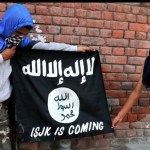
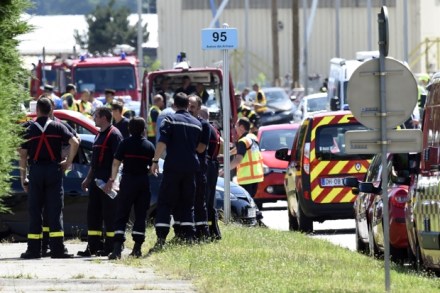
Five months after the Charlie Hebdo attack, a man has reportedly been found decapitated in a factory building in Saint-Quentin-Fallavier near Lyon. Details are still coming through, but it seems that that one assailant, who has been arrested, claimed to be a member of Islamic State and reports suggest he was 'known to the security services'. It appears that the murdered man's head was found 30 feet away from the body, 'covered in Arabic writing' and hung on a fence next to an Islamist flag. France is still reeling from the effects of the co-ordinated Islamist attack which took place in and around Paris earlier this year, and saw 17 people killed.

Portrait of the week | 25 June 2015

From our UK edition

Home Tens of thousands took part in a demonstration in London against austerity, and thousands more in other cities. Russell Brand was heckled for being too right-wing: ‘Fuck off back to Miliband,’ protestors in Parliament Square cried. David Cameron, the Prime Minister, explaining his thinking on further benefit cuts: ‘There is what I would call a merry-go-round: people working on the minimum wage having that money taxed by the government and then the government giving them that money back — and more — in welfare.’ The government sold more shares in the Lloyds Banking Group, bringing its ownership to less than 17 per cent.

Western idealism is making the jihad problem much worse

From our UK edition

I’ve just been reading Jonathan Sacks’ excellent new book, Not in God’s Name, which sets out to explain why people kill for religion. Although he explores the theology of the Old Testament, Rabbi Sacks also looks at evolution and evolutionary psychology to explain the unending human tendency to have in-groups and out-groups. This will be familiar to people who have read The Righteous Mind or Big Gods, which the former chief rabbi cites. What’s especially interesting is that he argues that the prevailing ideology of the west – a sort of liberalism that aims at abolishing identity and replacing it with individualism – is actually part of the problem.

High life | 18 June 2015

From our UK edition

When I founded the American Conservative 13 years ago — the purpose being to shine a light on the neocon shenanigans that led to the greatest American foreign policy disaster ever — Pat Buchanan and I held a press conference in the Washington DC Press Club to herald the event. There were reporters galore, and I could tell from their expressions that it wasn’t going to be a friendly session. Buchanan went first and held his own. Then came my turn. A hatchet-faced female hack in the first row asked me if Saudi money was behind me. ‘I wouldn’t accept Saudi blood money if it meant bedding Romola Garai,’ answered the modern Homer (I had seen a preview of I Capture the Castle featuring a nude Romola). ‘What do you mean by that?’ she said.

Coffee Shots: Introducing ‘ISIS Schools’

From our UK edition

Earlier this week the chief inspector of schools Sir Michael Wilshaw warned that schools needed to show Muslim pupils that they are valued by society in order to stop them running off to join ISIS. So Mr S was surprised to hear that there is an 'ISIS school' operating in Greenwich: On closer inspection, the school is one of a number of 'ISIS schools' based in Britain and Canada, teaching English to foreign students. Mr S suspects it's time they considered a rebrand, starting with their name.

Telling young men that ISIS is ‘dangerous’ will only encourage them to go

From our UK edition

'The dreams in which I’m dying are the best I’ve ever had' When we were both sixteen, my then-best friend Dave carved the above lyric on his school desk. It was from the song 'Mad World' by the band Tears for Fears and we both thought it ineffably cool. It’s a line that elegantly evokes the self-pity and nihilism that afflicts so many teenaged boys. Every decade has songs that hit a nerve because they are similarly doom-laden and grandiose. But the important point is that many adolescent boys fantasize about death, killing and suicide – melodramatic, shocking gestures that might free them from their sense of powerlessness as they flail between childhood and the adult world.

Portrait of the week | 11 June 2015

From our UK edition

Home David Cameron, the Prime Minister, said of the EU referendum: ‘If you want to be part of the government, you have to take the view that we are engaged in an exercise of renegotiation to have a referendum and that will lead to a successful outcome.’ This caused a certain amount of uproar, with newspaper headlines saying things like ‘PM: Back me or I will sack you.’ Mr Cameron the next day said: ‘It’s clear to me that what I said yesterday was misinterpreted.

Why does no one blame Cameron for Libya?

From our UK edition

Call me petulant, but I’m not sure Britain is getting enough credit for our fine, fine work in Libya. The Islamic State, so recently present only in the semi-mythical lands of Syria and Iraq — places you see on the news, but don’t really have to believe in — has now set up residence a short hop away from Italy, in the Libyan town of Sirte. Which is, just to be clear, a hell of a lot closer to Italy than we are. Maybe one-and-a-half times the stretch of a Hull– Zeebrugge ferry. We did that. Well done everybody. Top marks all around. Also, Derna. That’s another town they’ve got. I’d never heard of Derna before, but apparently, Isis has held it since last October.

The Christian communities helping to heal Iraq’s wounds

From our UK edition

Iraq remains a dangerous and difficult place for everyone there but especially for its religious and ethnic minorities.  Assassinations, kidnappings for ransom, expulsions from villages and towns of whole communities and illegal occupation of properties remain common throughout the country. The Ecumenical delegation of bishops, which went to Iraq recently, as guests of the Chaldean Catholic Church, heard horrendous stories of people being frog-marched out of their houses, villages and towns, their property confiscated by ‘Islamic State’ or simply taken over by erstwhile neighbours.  Women and children are missing and many of the younger men were simply murdered.

Portrait of the week | 28 May 2015

From our UK edition

Home A Bill to enable a referendum on whether voters wanted Britain to ‘remain’ in the European Union figured in the Queen’s Speech. Another Bill prohibited any rise in income tax rates, VAT or national insurance before 2020. Tenants of housing associations would be given the right to buy their homes. Provision for Scottish devolution was promised in fulfilment of the recommendations of the cross-party Smith Commission. A ‘powerhouse’ in the north was to come into being through cities being given powers over housing, transport, planning and policing. Laws on strikes would be tightened. Red tape for business would be reduced, and a new quango set up to invigilate late payment to small businesses. Apprenticeships would be encouraged and childcare expanded.

The will to fight

From our UK edition

[audioplayer src="http://rss.acast.com/viewfrom22/defeatingisis/media.mp3" title="Andrew Bacevich and Douglas Murray discuss how ISIS can be crushed" startat=39] Listen [/audioplayer]War is a contest of wills. Although determination alone does not guarantee final victory, its absence makes defeat all but inevitable. Way back in the 1770s, Britain lost most of its north American colonies because rebellious Americans cared more about gaining their independence than George III and his ministers cared about preserving their empire. Today, if Isis fighters care more about creating their caliphate than Iraqis do about preserving their country, then Iraq may be doomed.

How to defeat a caliphate

From our UK edition

[audioplayer src="http://rss.acast.com/viewfrom22/defeatingisis/media.mp3" title="Andrew Bacevich and Douglas Murray discuss how ISIS can be crushed" startat=39] Listen [/audioplayer]Last Sunday Isis raised their black flag over Palmyra. Below the flag, in the days that followed, the usual carnage began: beheadings, torture, desecration. Syrian state TV has reported that over 400 civilians have been killed already, and the big question globally has become: how could this have happened? What went wrong with the Iraqi and Syrian troops? Isn’t there anything the West can do? Lord Dannatt, the former head of the army, has called on the British government to ‘think the previously unthinkable’ and send troops.

Smash Isis now

From our UK edition

[audioplayer src="http://rss.acast.com/viewfrom22/defeatingisis/media.mp3" title="Andrew Bacevich and Douglas Murray discuss how ISIS can be crushed" startat=39] Listen [/audioplayer]For months, the White House has been saying that it has Isis on the run. Yet each week the world sees that Isis is only running forwards. Last week, the US state department briefed that Isis was ‘a significant threat to all of our partners in the region’ and ‘a significant threat to the [US] homeland. We’ve never seen something like this. This is a formidable, enormous threat.’ Which is fine as an observation. But governments aren’t only in a position to make observations.