Iraq

Chilcot resists pressure from MPs to speed up the Iraq Inquiry

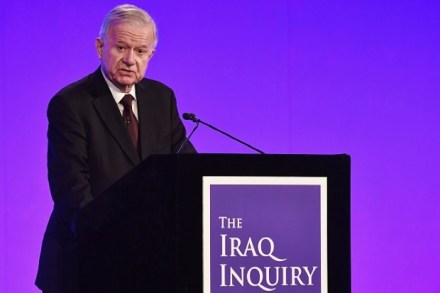
Sir John Chilcot doesn’t seem all that bothered by the threats of censure from politicians over his lengthy Iraq Inquiry. In a statement released this afternoon, Sir John dismissed the demands from No.10, MPs and the media to produce his report, or even a timetable for producing the report. He explained that the process of letting those criticised in the report respond— known as ‘Maxwellisation’ — is still on going and won’t be rushed: ‘Individuals have not been given an open-ended timescale and Maxwellisation is not a process of negotiation. The Inquiry has remained in control of its deadlines throughout the process. In some cases, the response sent to us required detailed and

Corbyn’s remarks on Iraq and Isis are a preview of the fireworks to come if he wins

Tories are rubbing their hands with glee at the prospect of Jeremy Corbyn winning the Labour leadership contest. Two stories that have broken this morning show precisely why. Returning to the Iraq war — always a comfortable topic for Labour — Corbyn has told the Guardian he would apologise to the British people for the ‘deception’ of the war: ‘Let us say we will never again unnecessarily put our troops under fire and our country’s standing in the world at risk. Let us make it clear that Labour will never make the same mistake again, will never flout the United Nations and international law ‘ ‘The endless delay on the Chilcot inquiry is wrong. But

Michael Fallon: ‘Iraqi forces are slowly but surely beginning to push ISIL back’

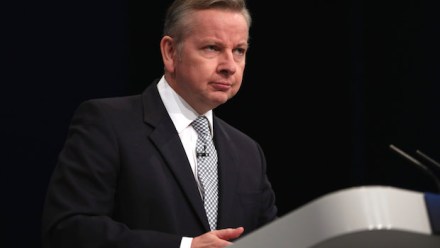
Is the government set to bring bombing Islamic State terrorists in Syria before the Commons soon? The Defence Secretary Michael Fallon has announced that the RAF’s Tornado aircraft will be kept in service until 2017 for air strikes against the Islamic State, to ‘ensure we maintain this crucial operational tempo’. On the Today programme, Fallon explained that the aircraft have ‘proven their worth’ and have helped Iraqi forces in the fight against ISIL: ‘The Iraqi forces are slowly but surely beginning to push ISIL back. They have recaptured Tikrit, there is a campaign going on at the moment to liberate Ramadi. They are recruiting to both the army and to the

The hatred directed at Tony Blair shows just how big Labour’s problem has become

I know that the comments beneath online newspaper pieces aren’t exactly where you go if you want sane, balanced opinion, but the forum which followed the Guardian’s news story about Tony Blair’s speech yesterday nevertheless took me aback. Appropriately enough, there were 666 comments when I read them. And how many had anything positive to say about the former Prime Minister?  I counted one, possibly two, if you count calling him a ‘charismatic commentator’ before saying you think he is out of touch. It has been clear since around 2002 that Blair has been seen on the left as a generally negatively influence, but is there really no-one among Labour’s grassroots

We’ve always messed up the Middle East. Let’s stay out, for once

I suppose I should cease carping. We got a Blue Labour budget (except for the ludicrous stuff on inheritance tax), and far better than anything we would have got under my party, Labour. And at least the Prime Minister is addressing the issue of Islamic ‘extremism’. Yes, I suppose, I would concur that taking away the passports from juvenile wannabe jihadis is a good idea. Just about. A horrible part of me thinks they should be taken away once they have left the country, though. Certainly that should apply to the adults. Encourage them to go, then nullify their passports. However, to disavow our own role in facilitating the Islamic

Keep the cops away from the radical clerics, be they Christian or Muslim

If you want to see our grievance-ridden, huckster-driven future, looks to Northern Ireland, which has always been a world leader in the fevered politics of religious victimhood and aggression. Just as the Tories and much of the politically-correct liberal centre think they can force us to be nice by allowing the cops to arrest those who ‘spread hate but do not break laws’ (in George Osborne’s sinister words) so Northern Ireland has all kinds of restrictions of ‘hate speech’ to police its rich and diverse tradition of religious bigotry. I suppose it was inevitable that they would catch 78-year-old Pastor James McConnell of the Whitewell Metropolitan Tabernacle in North Belfast.

When will George Osborne commission a war memorial for soldiers?

We learn today that George Osborne will say in his Budget that he’s using the fines he’s collected from bankers to build a memorial to terror victims. I find this juxtaposition rather odd: why link terrorism to banking? Why not just be honest: that any memorial will be funded from the the same tax pool as everything else? But moreover, I do wonder where this memorial will go.  We’re told that the Chancellor will consult with the relatives of the victims before agreeing a location. These memorials do serve a purpose: they become part of the world our ministers operate in; part of their daily lives. Most politicians will know

Aid is no substitute for defence, and Michael Fallon knows it

It’s been obvious for a while that the Prime Minister is exasperated by the way American and other allied officials – including President Obama himself – keep expressing concern about Britain’s rapidly shrinking defence capabilities and the prospect of yet more defence cuts. David Cameron also dislikes being reminded that he lectured other Nato leaders about meeting the alliance’s minimum of spending 2 per cent GDP on defence, when by any honest calculation the UK is not going to meet that target. He hasn’t responded directly to the multiple warnings from Washington. This is presumably because overtly contradicting the President, the Secretary of State and Secretary of Defence of the United States could

Spy if you must, but don’t give the game away

The Snoopers’ Charter. I ought to care about this. I’m a sort of libertarian. I believe in personal freedom. I’m a trustee of Index on Censorship. The state as Big Brother is everything I’ve always fought in politics. So why can’t I quite summon the requisite indignation? Why do I find all this Edward Snowden stuff vaguely irritating? Why does the crusading column for the Times, railing against state surveillance, somehow keep failing me, though time and again I’ve opened my laptop and tried to make a start? Partly, I think, because as a longstanding and vehement opponent of British military adventuring in Iraq and Afghanistan, I’ve believed (and always

The hardest man of all

From the unpromising and desperately unforgiving background that forged his iron will and boundless ambition, Temujin (as Genghis Khan was named at birth) rose to build an empire that was to range from Korea and China, through Afghanistan, Persia and Iraq and eventually to Hungary and Russia, constituting the largest contiguous land imperium in history. His was an extraordinary, epic story and Frank McLynn does it full justice in a vivid, page-turning biography. The author portrays well the extreme hardship of the nomadic life for Genghis as boy and man on the arid Mongolian steppe, where temperatures range between 100 degrees Fahrenheit and minus 43, and where ‘one can be

Why does no one blame Cameron for Libya?

Call me petulant, but I’m not sure Britain is getting enough credit for our fine, fine work in Libya. The Islamic State, so recently present only in the semi-mythical lands of Syria and Iraq — places you see on the news, but don’t really have to believe in — has now set up residence a short hop away from Italy, in the Libyan town of Sirte. Which is, just to be clear, a hell of a lot closer to Italy than we are. Maybe one-and-a-half times the stretch of a Hull– Zeebrugge ferry. We did that. Well done everybody. Top marks all around. Also, Derna. That’s another town they’ve got.

The Christian communities helping to heal Iraq’s wounds

Iraq remains a dangerous and difficult place for everyone there but especially for its religious and ethnic minorities.  Assassinations, kidnappings for ransom, expulsions from villages and towns of whole communities and illegal occupation of properties remain common throughout the country. The Ecumenical delegation of bishops, which went to Iraq recently, as guests of the Chaldean Catholic Church, heard horrendous stories of people being frog-marched out of their houses, villages and towns, their property confiscated by ‘Islamic State’ or simply taken over by erstwhile neighbours.  Women and children are missing and many of the younger men were simply murdered. The refugees are at pains to point out that the story of

Portrait of the week | 28 May 2015

Home A Bill to enable a referendum on whether voters wanted Britain to ‘remain’ in the European Union figured in the Queen’s Speech. Another Bill prohibited any rise in income tax rates, VAT or national insurance before 2020. Tenants of housing associations would be given the right to buy their homes. Provision for Scottish devolution was promised in fulfilment of the recommendations of the cross-party Smith Commission. A ‘powerhouse’ in the north was to come into being through cities being given powers over housing, transport, planning and policing. Laws on strikes would be tightened. Red tape for business would be reduced, and a new quango set up to invigilate late

The will to fight

[audioplayer src=”http://rss.acast.com/viewfrom22/defeatingisis/media.mp3″ title=”Andrew Bacevich and Douglas Murray discuss how ISIS can be crushed” startat=39] Listen [/audioplayer]War is a contest of wills. Although determination alone does not guarantee final victory, its absence makes defeat all but inevitable. Way back in the 1770s, Britain lost most of its north American colonies because rebellious Americans cared more about gaining their independence than George III and his ministers cared about preserving their empire. Today, if Isis fighters care more about creating their caliphate than Iraqis do about preserving their country, then Iraq may be doomed. At Saratoga in 1777, a scratch force of American Continentals and militiamen defeated 7,000 regulars under the command of

How to defeat a caliphate

[audioplayer src=”http://rss.acast.com/viewfrom22/defeatingisis/media.mp3″ title=”Andrew Bacevich and Douglas Murray discuss how ISIS can be crushed” startat=39] Listen [/audioplayer]Last Sunday Isis raised their black flag over Palmyra. Below the flag, in the days that followed, the usual carnage began: beheadings, torture, desecration. Syrian state TV has reported that over 400 civilians have been killed already, and the big question globally has become: how could this have happened? What went wrong with the Iraqi and Syrian troops? Isn’t there anything the West can do? Lord Dannatt, the former head of the army, has called on the British government to ‘think the previously unthinkable’ and send troops. He’s right that air strikes are no substitute

Smash Isis now

[audioplayer src=”http://rss.acast.com/viewfrom22/defeatingisis/media.mp3″ title=”Andrew Bacevich and Douglas Murray discuss how ISIS can be crushed” startat=39] Listen [/audioplayer]For months, the White House has been saying that it has Isis on the run. Yet each week the world sees that Isis is only running forwards. Last week, the US state department briefed that Isis was ‘a significant threat to all of our partners in the region’ and ‘a significant threat to the [US] homeland. We’ve never seen something like this. This is a formidable, enormous threat.’ Which is fine as an observation. But governments aren’t only in a position to make observations. They — and the US government in particular — should be

Away from the herd

 Erbil, Iraq The Kurds here are fighting Isis — everyone knows that. Most of us are at least peripherally aware that the brave Peshmerga (Kurdish militia) have proved an effective force against the Islamists, and we cheer them on. What we don’t realise is that as they battle the world’s latest bogeyman, the Kurds are also simultaneously suffering from another sort of crisis. Traditionally the Iraqi Kurds are nomadic pastoralists. They’ve herded sheep since biblical times, leading their flocks from the mountains to the lowlands and back. The passion they feel for their land is rooted in this pastoral tradition. It’s a weird irony, then, that as their dream of

Diary – 23 April 2015

Lunch with the man who hanged Saddam. My irrepressible old Baghdad friend Mowaffak al-Rubaie, Ealing neurologist turned Iraqi national security adviser, is on top form. This may not be unrelated to the news that the noose with which he hanged Saddam is up for auction. Interested buyers are said to include Kuwaiti businessmen, an Israeli family, a bank and an Iranian religious organisation. Mischievous tales are circulating about an offer of $7 million being rejected. Hearing Rubaie relive Saddam’s execution reminded me of the late Sir Wilfred Thesiger recalling how he shot up a tent full of sleeping Germans during the Allied campaigns in North Africa. ‘It felt like murder,’

The Plame game

Nothing is capable of undermining American democracy more than its legal system. Amid the plea bargains, perp walks and 95 per cent conviction ratings for some crimes, one feature of the system stands out as particularly rank — the role of ‘special prosecutor’. A new piece of evidence relating to a high-profile conviction eight years ago provides a perfect demonstration. The case relates to a legal dispute spanning President George W. Bush’s period in office. In late 2003 the situation in post-war Iraq had already begun to go horribly wrong. In the US, many who had eagerly supported the invasion and warned of the risks of WMD were flaking away