Iraq

No one wants to join the military anymore

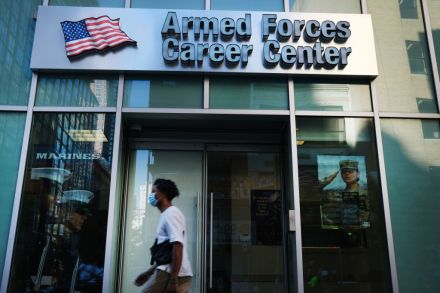
Last week marked the 246th birthday of the United States. This year also marks, according to Lieutenant General Thomas Spoehr of the Heritage Foundation, when we “question the sustainability of the all-volunteer force.” As reported in late June by NBC, all branches of the military are falling short of their 2022 recruiting goals. The Army, for instance, has met only 40 percent of its enlisted recruitment target for the fiscal year, which for the military services ends on September 30. Those in the Pentagon tasked with attracting candidates have listed reasons they are struggling to meet their mission: lack of eligibility, Covid restrictions putting a damper on outreach, competition from a robust civilian employment market, and a lack of a desire to serve.

military

Secret bioweapon labs are Putin’s MacGuffin 

Some commentators have already noted the strange homology between Russia’s evocation of “secret bioweapon labs” in Ukraine and the US evocation of Saddam Hussein’s weapons of mass destruction, which in both cases were used to justify military attack. It’s not that the US was unsure if Saddam had WMDs; they positively knew he did not have them, which is why they risked a ground offensive in Iraq, rather than sticking to air bombing. The nonexistent Iraqi weapons of mass destruction perfectly fulfill the role of a “MacGuffin” in Alfred Hitchcock’s films. A MacGuffin is “an object, event, or character in a film or story that serves to set and keep the plot in motion despite usually lacking intrinsic importance,” per Merriam-Webster.

bioweapon labs

Did the realists underestimate Putin?

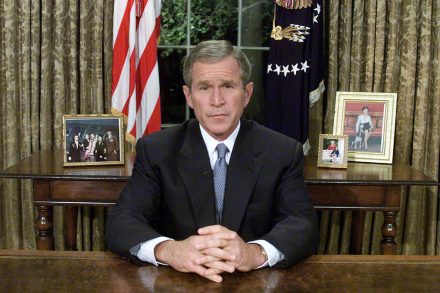
Liberal internationalists, neoconservatives and NeverTrumpers are having the time of their lives these days, ridiculing anyone on the political right who has ever said a good thing about Vladimir Putin. Those “Putin groupies” as a Wall Street Journal columnist described them, include former Italian prime minister Silvio Berlusconi, far-right French presidential candidate Marine Le Pen, Hungarian prime minister Viktor Orbán and, of course, Trump himself. Trump described Putin as a “genius” and said he was a better president than Barack Obama — and he isn’t the only American president to compliment the Russian leader. President George W. Bush said about Putin, “I looked the man in the eye. I found him to be very straightforward and trustworthy.

putin

Is Putin nuts?

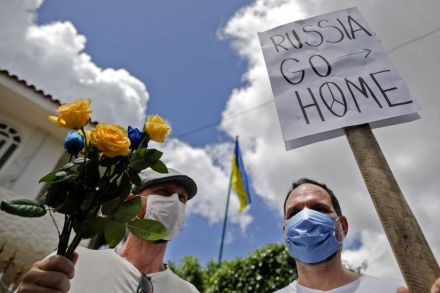
As Russian forces level Ukrainian cities with artillery, missiles and airstrikes, there's a concerted effort to get inside the mind of Vladimir Putin: from pundits, former US national security officials and current heads of government. What could possibly get the man to stop the bombardment and support a ceasefire? Is Putin intent on conquering all of Ukraine? Or is there some combination of concessions the Ukrainian government and the West could offer that would end the war and bring about a full Russian troop withdrawal? The fact is none of us know what Putin’s endgame is. Putin’s own advisors, especially those kept out of the inner circle, may not even understand what the Russian leader is planning.

crazy nuts

Noninterventionists never win arguments

I’ve been thinking about where I was on the eve of the US invasion of Iraq in 2003, and my memories of the event are quite depressing. What have we learned? As a research fellow at the Cato Institute at that time, I was working with other analysts preparing research, authoring commentaries, publishing op-ed articles and giving interviews to the broadcast media, warning about the consequences of the coming American military conquest in the Middle East. It's not polite to toot one’s own horn, but we were right.

terror

The Ukraine invasion is nothing compared to Iraq

Of the war in Ukraine, New York Times columnist Thomas Friedman writes, “Our world is not going to be the same again because this war has no historical parallel.” In the very next sentence, he describes the Russian invasion of Ukraine as “a raw, eighteenth-century-style land grab by a superpower,” thereby acknowledging that the episode actually has innumerable historical parallels — just not ones that Friedman cares to acknowledge as legitimate. Friedman figures prominently among those claiming to have divined the essential character of the present age. His key finding: tech-driven globalization has rendered old-fashioned power politics obsolete. The rules of the game have changed irrevocably. Practically speaking, nations have no choice but to submit.

invasion iraq

As with Iraq, so with Russia

Against the backdrop of the Ukraine crisis, we have been bombarded with many historical analogies. Leading the list are the 1961 Berlin standoff and the 1962 Cuban Missile crisis. And then there is that all-time favorite, the 1938 Munich Agreement. Those crises should certainly not be regarded as ancient history. But then why go back 60 or 80 years when you can walk down memory lane? Like, say, when an American president was trying to rally the public and mobilize international support in the name of using military force against an alleged bloodthirsty dictator who was supposedly threatening Western geostrategic interests and challenging its liberal democratic values?

Return to Iraq

The land around Erbil, the capital city of the Kurdistan region of northern Iraq, is mostly beige, flat and seemingly endless. The mountain has seen a lot of action. The terror group ISIS remains dug in around it and the Kurdish peshmerga, with whom I recently spent time, continue to battle against them. Iraq. Two syllables, almost two decades of conflict. When people think of Iraq they think of several things: the disastrous 2003 war, oil (like all Arab countries in the popular imagination), ISIS and, if they’re a bit older, the mustachioed features of Saddam Hussein that stood, in the early years of this century, for the type of dictator painted as the West’s greatest threat. I think of all those things, too. But they’re leavened by something else: family.

iraq

Biden’s big UN whopper

President Joe Biden walked into the grand UN General Assembly chamber this morning with a list of asks, an appeal for greater cooperation among the world’s great powers and a bit of controversy trailing behind him. Biden’s first UN address came at a difficult time in American diplomacy. The European Union, led by an irate France, is livid over a $60 billion US-Australian nuclear submarine deal that European leaders view as skeevy and duplicitous. And last month’s American troop exit from Afghanistan remains a sore point for contributing nations in the Nato coalition, some of which wanted more time to evacuate their own nationals. Biden, however, sidestepped all of these disputes.

un

How America squandered its moral authority in Iraq

Day by day, you could almost see America’s moral authority draining away in Iraq. The weapons of mass destruction that the US had invaded the country to find didn’t exist. And it sometimes seemed as if a monstrous trick had been played on American troops: they were promised a welcome with ‘flowers and sweets’; they got roadside bombs and suicide attacks. In 2004, a year after the invasion, a 19-year-old Marine — outside the US for the first time in his life — looked up at a minaret sounding the call to prayer and asked me: ‘What are they saying? “Kill Americans?

iraq

We are all Donald Rumsfeld

Donald Rumsfeld died this week — and it’s just so easy, isn’t it? It’s so convenient to dance on the grave of the man who helped bring about the disastrous Iraq war. For Rumsfeld, the old dictum, de mortuis nihil nisi bonum, seems to have been discarded almost from the start. The obituaries, mostly in left-leaning publications like the Atlantic and the Daily Beast, have been downright vicious. Rumsfeld was George W. Bush’s first defense secretary who, alongside Dick Cheney, pushed hard for deposing Saddam Hussein after 9/11. Because of this, he’s been labeled a war criminal. He’s been held responsible for hundreds of thousands of deaths, both in Iraq and in Afghanistan where he refused to accept a Taliban surrender.

donald rumsfeld

Donald Rumsfeld succeeded at everything — so why did he fail in the end?

What kind of man was Donald Rumsfeld? A successful one, by almost every measure. Ivy League scholar-athlete, captain of Princeton’s football and wrestling teams. Successful candidate for office, easily reelected to Congress twice before he left to join the Richard Nixon administration. There he proved a success at navigating both the federal bureaucracy and the internal politics of the scandal-consumed administration. He survived Nixon’s resignation and soon became Gerald Ford’s chief of staff — and after that, the youngest man ever to serve as secretary of defense, taking charge of a newly-minted all-volunteer force whose morale and discipline were in shambles after Vietnam.

donald rumsfeld

Adios, AUMF

Saddam Hussein was executed at the gallows in 2006 — but the Authorization for the Use of Force used by the US military to topple his regime in Iraq is still alive and kicking, a legacy the Pentagon has been loath to bury along with that war. That legislation, passed in October ahead of the March 2003 invasion of Baghdad, authorized then-president George W. Bush to use the Armed Forces of the United States ‘as he determines to be necessary and appropriate’ in order to ‘defend the national security of the United States against the continuing threat posed by Iraq; and enforce all relevant United Nations Security Council Resolutions regarding Iraq’.

aumf

The dark Prince

‘No modern US war would be complete without the involvement of Blackwater founder Erik Prince,’ wrote journalist Jeremy Scahill in his seminal book Dirty Wars. That was back in 2013. Since its founding in 1997, Blackwater, Prince’s private military outfit, has been reincarnated several times under different names. But Prince has stayed the same. Iraq, Afghanistan, Libya, Somalia — Prince, a very 21st-century mercenary, has wreaked havoc in all these places. He comes, he spoils, he leaves a mess that is impossible to clear up. Take Libya.

prince

Pita Shack flashback

Friday afternoon in the Pita Shack diner in the northern suburbs of Austin, Texas and I was surrounded by Iraqis. There was even a picture of a sweet-looking Marsh Arab girl in her papyrus boat hanging on the wall. It was all unexpected but strangely familiar, stirring memories of Delta-30’s turret-scanning the junction of Red 11 in downtown Al Amarah back in 2004. During the first Gulf War in 1991, the Maysan province around Al Amarah was the site of local uprisings against Saddam Hussein. In retaliation he drained the region’s marshes to deprive the local Marsh Arabs of the waters on which their livelihoods and 6,000-year-old culture depended.

pita shack

What is the US Navy doing in the Persian Gulf?

American alliances and security commitments tend to live on long after the world has changed. Many of our far flung military bases are legacies of a Cold War that ended decades ago. With the collapse of the Soviet Union, the Nato alliance became all but obsolete, so it eagerly embraced conflicts in the Balkans, Libya, Syria and other locations far from the Central European theater it was originally designed to protect. However, none of these holdover security commitments seem as absurd as US military operations in the Persian Gulf during a COVID-19 oil market.As recently as last month, the United States was keeping two aircraft carrier battle groups deployed near the Persian Gulf.

navy persian gulf

Will coronavirus lead to a US war with Iran?

In a roundabout way, coronavirus may have been responsible for the deaths of two American service personnel and a British soldier in a rocket attack in Iraq on Wednesday. This triggered a prompt US military retaliation — American forces launched strikes at five sites in the early hours of this morning — and the prospect now is of an escalation while the rest of the world is consumed with a global health crisis. What's going on? It was Gen. Qasem Soleimani’s birthday on Wednesday and a Shiite militia — probably Kataib Hezbollah — chose to mark the occasion by firing Katusha rockets at Camp Taji, the US base just north of Baghdad.

war with iran coronavirus

The Middle East mess has nothing to do with Donald Trump

Last week, like millions of others across the globe, I emerged blinking and stumbling from my fallout bunker to assess the destruction wrought by World War Three. There were a few surprises in store. Nukes had failed to rain from the sky. Critical infrastructure remained intact. Rationing was not yet in force. People still weren’t going to see Cats. World War Three, historians will note, consisted of: an assassination, a poorly organized funeral, the histrionic launching of a few sketchy rockets, an Everest of bad tweets and the downing of a passenger plane. But one thing remained as permanent as the second law of thermodynamics: all of this was Donald Trump’s fault.

middle east messs

So much for de-escalation

‘We are not looking to start a war with Iran,’ said defense secretary Mark Esper today. ‘We are looking to finish one.’ Iran just replied by firing off at least a dozen missiles at American targets in Iraq in an effort supposedly dubbed Operation Martyr Soleimani. It doesn’t mean all out war yet — but all the Trump administration’s talk about ‘de-escalating’ the situation sounds like hot air. As I write, the details of Iran’s retaliation are unclear — we don’t know if the strikes were aimed at American troops or infrastructure. Is it a face-saving measure? A decoy? Why did Iran attack Erbil and Al-Asad, rather than more obvious US bases? Have the fortified American defenses at these bases worked?

de-escalation al asad iran
fierce revenge

Iran begins its ‘fierce revenge’

Details are still coming in as I write and the facts have not been confirmed, but it seems that ballistic missiles have been fired from inside Iran at US military targets in Iraq. A statement on Iran's official news media said: 'The fierce revenge by the Revolutionary Guards has begun.’ It went on to say that ‘tens’ of ground-to-ground missiles were fired in what the Iranian military is calling ‘Operation Martyr Soleimani’. That is of course a reference to the US assassination of Qasem Soleimani, head of Iran’s Quds Force and the country’s most popular general. ABC News quoted a US official as saying that the facilities hit included a base in Erbil in northern Iraq and Al Asad Air Base in western Iraq.