Iraq

All-American heroes

Whatever Mitt might think, if there’s one thing that makes us proud to be British, it’s the fact we’re not American. Alright, it’s true we don’t have a black president but we still think we’re cooler: less brash, more sarcastic and ready to give Tim Berners-Lee a starring role in the Olympic show. The differences are particularly obvious when it comes to the holy trinity of American life: guns, god and portion sizes. And Ben Fountain’s debut novel – at the age of 48, he’s a honed late developer after the excellent short story collection Brief Encounters With Che Guevara (2006) – rips into all three over-indulgences. In Billy Lynn’s Long Halftime Walk,

The return of the Tony Blair Show

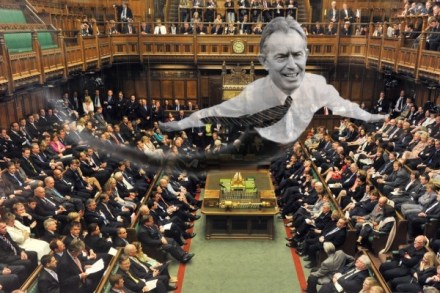
The Tony Blair Show was back in town today. The former Prime Minister was clearly less nervous in front of this inquiry than he was in front of Chilcot; there was little of the passion and intensity in his voice that there was that day as he defended his decision to take the country to war. But Iraq, again, provided the most memorable moment of his appearance so far as a protestor burst into the courtroom and accused him of being a ‘war criminal’. (The ease with which security was breached both in Parliament for Murdoch’s select committee appearance and today at Leveson is something that should worry us more

War is War: Horrid But Not Shocking

Commenting on the publication of photographs of American soldiers in Afghanistan posing with the severed limbs of their dead Afghan opponents, Andrew Sullivan says this is “What Empire Does”: The sickening pictures speak for themselves. At what point will we recognize that inserting ourselves into places like Afghanistan and Iraq will change us, has changed us, and will change us. Mercifully, this latest inhuman excrescence is not government policy, as at Abu Ghraib. But it exposes even more deeply the inherent failure and moral corruption of occupying Afghanistan and the need to withdraw sooner rather than later. Oh please. This is what war does to men at arms. As Toby

Behind Galloway’s grin

George Galloway has tragically demonstrated that sectarian politics are now alive and well in Britain.  The other week Ken Livingstone appeared at a London mosque and promised to make London a ‘beacon of Islam’ and last week went on to dismiss Jews as unlikely to vote Labour because they are ‘rich’. Now we see Galloway flying in to one of the country’s most divided areas to sweep the Labour party aside in what he has termed ‘a Bradford spring.’ Much can — and should — be said about this depressing, and predictable, turn of events.  But for now I’d just like to make two quick observations. The first regards the

Hitchens vs Galloway

Since he has previously been elected in Glasgow and London, I don’t know if it is so astonishing that George Galloway won a by-election in Bradford. Anyway, if you have a couple of hours to spare ou might enjoy this debate between Galloway and Christopher Hitchens. As Christopher put it: “The man’s hunt for a tyrannical fatherland never ends. The Soviet Union let him down, Albania’s gone. Saddam’s been overthrown. But on to the next, in Damascus.” Quite.

From the archives: journalists under fire

This week brought the sad news of the deaths of two journalists — Marie Colvin and Remi Ochlik — in Syria. As a testament to their bravery, here’s a first-hand insight into the dangers of war reporting written for The Spectator in 1991 by Con Coughlin, who was covering the Gulf War for the Sunday Telegraph. Trying to sleep in a gas mask, Con Coughlin, The Spectator, 26 January 1991 Con Coughlin in Saudi Arabia explains how journalists survive Saddam’s Scuds Thanks to Saddam Hussein and his Scud missile batteries, our lives are dictated by the wail of air raid sirens. For the thousand or so journalists who have congregated

Uncertainty reigns in Syria

The Syrian situation is worsening by the day. Now the Arab League has pulled back its monitors in recognition of their failure to ease the violence. Foreign Secretary William Hague has said he is ‘deeply concerned,’ while the Gulf states are pushing for the whole mater to be referred to the UN Security Council. But the chances of a ceasefire and the start of a transition are low. The Russian government is growing tired of Bashar al-Assad but does not want to condone any kind of intervention, which they think is likely if the matter is referred to the UN Security Council. Russia still regrets backing the Libya resolution, believing

The FCO must do more to stem the bloodshed

The Foreign Office has kindly responded to my Telegraph piece from last week, which suggested that they could do more to confront the religious cleansing sweeping the Middle East. In an extended version of a letter he has sent to the paper, the Foreign Office minister Alistair Burt says that his department is doing plenty: ‘Concrete examples include: Iraq, where the Prime Minister and Foreign Secretary have raised religious freedoms and where the FCO is funding a further meeting of the High Council of Religious Leaders; Algeria where I recently met a delegation of Christian leaders to discuss the challenges they are facing; Egypt where the Deputy Prime Minister has

Stopping Maliki’s coup

The year is ending not with a successful US withdrawal from Iraq — as President Barack Obama claims — but with what amounts to a coup d’etat by the country’s Shiite prime minister (and former ally of the US) Nouri al-Maliki. Less than 24 hours after the last US soldier left Iraq, the country’s Sunni vice-president Tareq al-Hashemi was wanted on charges that he led death squads, in a case most observers think could reignite the sectarian slaughter of 2006-07. Violence in Iraq has subsided since 2006-07, when Sunni insurgents and Shiite militiamen killed thousands of civilians each month — but, without U.S. troops to act as a buffer, many

Saladin: hero or infidel?

In Baghdad in the 1980s there was a children’s book published called The Hero Saladin. The cover bore an image of Saddam Hussein, identified, in what his biographer drily describes as ‘the second and longer part’ of the book, as ‘Saladin II Saddam Hussein’. Given that Saladin was actually Kurdish — and knowing what we do about Saddam’s respect for that section of his population — the gesture seems even more crass and insolent than it might otherwise. But then, it’s also absolutely standard. Jinnah was Saladin. Assad was Saladin. Saladin is, in modern Arab and Muslim political mythology, more icon than historical figure. If the anti-imperialist rhetoric of the

Remember the living | 11 November 2011

Every time a politician suggests a introducing a flag-waving British national day, the idea falls flat. We already have one: 11 November, Remembrance Day, where we remember our war dead and resolve to help the living. In my Daily Telegraph column today, I talk about how the government can better serve the tens of thousands who have come back from active service in Afghanistan and Iraq.   Britain is, for the first time since the post-war years, a nation with a large veteran community. And we’re still not quite sure how to handle it. The Americans are: they had Vietnam, and learnt the hard way about post-traumatic stress disorder (PTSD)

From the archives: A nuclear Iran

This week there were rumblings that war with Iran may be closer than most people thought. In a piece for the Spectator in 2004, Andrew Gilligan argued that even with a nuclear bomb, Iran would not be a threat to us: The case for not attacking Iran, Andrew Gilligan, 27 November 2004 Do the last few days remind you of anything, by any chance? Presidential heavy breathing about a ‘rogue’ Middle Eastern state; a supporting chorus of exiles with dramatic new claims; and a senior member of the US government bearing intelligence which turns out to be more spin than spine-chilling. Less than a month after the presidential election, the

Foreign Policy Hogwash

As a general rule any time you read an article asking that foreign policy be recalibrated to take greater account of the “national interest” you can be sure that you’re dealing with blather and hokum and platitudes and a deliberate misrepresentation of whatever the other mob got up to when they were in power. Sadly Dominic Raab’s contribution to a new book, presumptiously titled After the Coalition, proves all this all too well. I say sadly because Raab, a freshman Tory MP, is sound on a good number of issues I care about, civil liberties most especially. Nevertheless, his piece, reprinted by the Telegraph, is rotten. Let’s count the ways.

From the archives: 9/11

This Sunday marks the tenth anniversary of the terrorist attacks on 11 September 2001. Here is the article Stephen Glover wrote for The Spectator in response: “The terrorists want us to believe the world has ended. We must not fall into their trap.”, Stephen Glover, 15 September 2001 As those who are old enough remember what they were doing when President Kennedy was shot, so we will all recall what we were doing when we heard about the attack on New York. I was reading the controversial new book about Tina Brown and Harry Evans, which I had planned to write about for this column. Then my elder son rang

Blair returns to warn of the dangers of Iran

With the tenth anniversary of 9/11 approaching, Tony Blair has given an interview to The Times. What’s making news is his—to my mind, accurate–warnings about just how dangerous it would be for the Middle East for the Iranian regime to get a nuclear bomb. But what struck me about the interview was how much easier Blair believed things would be in Afghanistan and Iraq than they have been.  He tells the paper that: “What that means is that you can knock out, militarily, the regime, but then when you’re engaged in the process of nation building afterwards, it’s not like nation building was in, say, the Balkans or Eastern Europe.” “You know,

Need Libya be another Iraq?

“It’s not over yet.” That has become the government’s Libyan mantra, delivered with a tone of sombre sobriety. However, James Kirkup reports that, in private, ministers are cock-a-hoop, already dreaming of photo-ops and triumphant flyovers. You wonder what Ed Llewellyn makes of the celebrations. Allegra Stratton has written a revealing profile of David Cameron’s chief-of-staff, ‘the most powerful man you rarely hear about’. Llewellyn is a foreign policy expert, a veteran of tours in the Balkans and the Far East. Stratton says he is: ‘Discreet personally and cautious politically, he will have insisted on megaphone caution from the PM and his cabinet ministers who duly took to the airwaves.’ I’m told that diplomats share

Libya: mission accomplished?

If David Cameron breaks his holidays yet again, you’ll know it’s because he expects Gaddafi to be a goner pretty soon. It’s been a busy old night in Tripoli, with Twitter reports suggesting that Gaddafi is already dead. Mind you, William Hague et al have learned to treat Twitter reports with a mountain of salt. Let there be no doubt: Cameron pushed for the Libyan intervention, averting what looked certain to be a massacre in Benghazi. The Prime Minister took a principled stand. In so doing, he reminded the world that the West can still intervene when it so chooses and will not stand by to watch slaughter. This was

The Lib Dems try to exploit phone hacking

The phone hacking saga continues interminably.  Simon Hughes appeared on Sky News earlier in the day to discuss the latest revelations. He refused to condemn David Cameron for entertaining Andy Coulson at Chequers and turned on Tony Blair instead. He said: “I’m much more critical of the fact that under the Blair era we knew, and this will all come out in the public inquiry, we knew that Blair flew just before the 1997 election to the other side of the world to meet Murdoch, we know that Tony Blair, three times in the ten days before the Iraq war was declared, was in touch with Rupert Murdoch” The Iraq

The military’s ECHR concerns

Earlier this week, there was a European Court of Human Rights ruling that is worth dwelling on. To summarise: the Court held that the UK’s human rights obligations apply to its acts in Iraq, and that the UK had violated the European Convention on Human Rights in its failure to adequately investigate the killing of five Iraqi civilians by its forces there. The judgment overturns a House of Lords majority ruling four years ago that there was no UK human rights jurisdiction regarding the deaths. The obligation on soldiers to protect the vulnerable during military operations is not, of course, new. It underlies the Geneva Conventions of 1949 (as well