Internet

Why are all these IT systems failing?

From our US edition

CNN is reporting that the classified internal network of the National Security Agency, America’s electronic eavesdropping service, is down. This is the seventh major American system to fail in six days. Nobody has found an attacker. Three of the failures began as routine upkeep. Edward Gibbon, the 18th-century English historian, filled six volumes of The Decline and Fall of the Roman Empire and blamed barbarians and Christianity. His American successor might point toward a Windows fix and a router in El Dorado, Arkansas. Let’s briefly run through each of the failures: Markwayne Mullin, the Homeland Security Secretary, says he is 98 percent certain there was no cyberattack 1.


Does the internet turn us into perverts?

From our US edition

There’s an old meme about a guy who wants to have sex with his toaster. Before the internet, the guy keeps this fetish to himself and gets called politically incorrect names if he doesn’t. After the internet, he finds a community of people who also want to get freaky with household appliances. Eventually, his ability to connect with other toaster-lovers destroys his life. The internet, the great enabler that it is, tricks you into believing that it’s normal – healthy, even – to want to have sex with a toaster. Others argue that even more pernicious than showing us we’re not lone perverts, the internet has addicted us to novelty.

I’m addicted to forgotten 4chan

From our US edition

I spent a recent Tuesday night trying to find a quiz. Specifically, I was hunting down the original “How woke are you?” quiz that Jezebel ran in 2016, which I needed for a footnote. I found the page. The quiz was gone. It had run in an embedded widget from a quiz service (qzzr.com), and that widget no longer loads. All that was left was a blank box where the quiz used to be. Woke 1 was craaaaaaazy, and it was memory-holed in an unmarked grave. It was about halfway through writing my forthcoming book, The Left Can’t Meme: How Comedy Wins Culture Wars, that I realized I was writing a history book. I’m not sure why this wasn’t evident to me when I pitched the book, or until I was about 30,000 words deep. Probably because it’s part memoir and memoir is easy.

What if the internet stopped?

The news of sustained, AI-enabled cybersecurity events pummeling the internet until the whole thing finally clears out like an abandoned mall brings me great relief. To be clear: I don’t particularly love the idea of your bank account or mine being drained by swarms of rogue agents or some infrastructural vulnerability in the supply chain/the electrical grid/grocery stores/hospitals (or, God forbid, all of the above) putting us in mortal peril. I don’t love the new product that Jack Dorsey’s company, Block, has just unveiled: an eerily realistic voice app – replete with the natural lulls, oohs, ums and vocal fry of a human woman.

‘I’m in love with a 2D character’

From our US edition

Perhaps you’ve heard of Akihiko Kondo before. He’s the Japanese man who “married” the Vocaloid character Hatsune Miku, a computer-generated pop singer in a formal – though not strictly official – ceremony in 2018. He wore a tuxedo, she a handmade dress and veil, and 39 guests turned up to watch. Kondo’s marriage has been covered in the media dozens of times and it’s often treated as a one-off human-interest story – the kind of thing published so readers can gawk at it and say, “Oh, that’s weird.” Kondo’s story isn’t unique, though. Romantics have fallen in love with fictional characters throughout history and they continue to do so, both in Japan and elsewhere.

Macron won’t stop at a social media ban for children

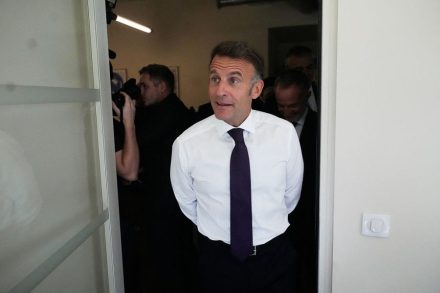
France has become the first European Union country to ban social media access for under 15s. The National Assembly passed a Bill Tuesday evening that will prevent children using platforms such as TikTok and Snapchat. The Bill also bans the use of cell phones in high schools. In a message on X, a jubilant President Emmanuel Macron hailed the legislation and expressed his gratitude to MPs, who approved it by 279 votes to 81. “It’s up to the Constitutional Council to rule, then on to action to make this measure concrete and protect our children online,” he said. Macron would like the legislation to take effect from September, the start of the new school year, but first the Bill will be examined by the Constitutional Council, the highest constitutional authority in the Republic.

social media ban

The chaotic truth about Russia’s internet blackouts

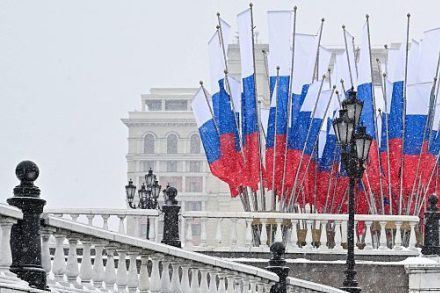
From the modern metropolises of Moscow and St. Petersburg to Arkhangelsk on the permafrosted northern coast and Khabarovsk on the Chinese border, for over a week now, Russian cities have been experiencing unprecedented interruptions to mobile internet coverage. Ostensibly for security reasons, the rumor mill has inevitably cranked out all kinds of alternative explanations, from fear of a coup to preparations for a comprehensive imposition of state control on the "runet," Russia's online world. Notions that Vladimir Putin fears some imminent coup can most quickly be laid to rest. There is dissatisfaction with the continuing war and its economic consequences, but nothing to suggest anything more serious.

russian

Jeffrey Epstein: pro gamer

From our US edition

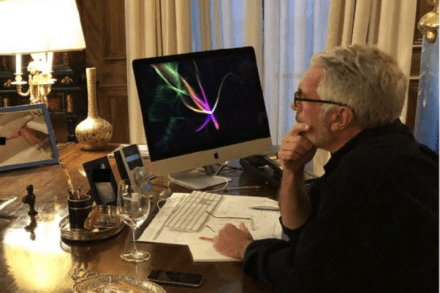
One of the many mysteries surrounding the Epstein saga is Jeffrey Epstein the man. Beyond simple hedonism, his motives seem inscrutable – and how did he make his money anyway? The latest cache of released Epstein files has shed new light on his character. Part of what emerges is Epstein the compulsive video gamer, who was banned from online play due to abusive behavior and who liked to cruise anonymous online forums for odd genres of pornography. A December 2013 automated email to Epstein from Xbox Live (the online multiplayer feature for the Xbox console) informed him that he had been banned from the service due to “harassment, threats, and/or abuse of other players.

Epstein

My father gave me the internet

From our US edition

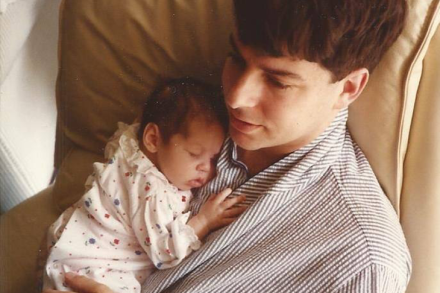
My father went into the kitchen for a cookie, then disappeared into his home office for a phone call. He was arranging a surprise for my mother – hired waitstaff for Christmas Eve dinner, one of the biggest our family would have hosted. Then he died. It took 15 seconds. We found him within minutes. The waitstaff called back 11 times over the next two days. I thought they were debt collectors. Finally, I went into his office, where we had found him, picked up his phone, and yelled, “He’s gone! Stop calling!” That’s how I learned what he’d been doing. They were trying to confirm. And in the corner of my eye, on his bookshelf: Irish Folk and Fairy Tales by W.B. Yeats.

father internet

No sex please, we’re Gen Z

For many years now we have all been agonizing over the fertility crisis. Why aren’t the kids having kids? It’s become a sort of parlor game, the swapping of the various theories. Is it the cost of living? Microplastics? Eco-anxiety? Tight underwear, I heard the other day, and snorted with scorn even as I tipped my son’s stretch-cotton briefs into the bin. But now another, rather more fundamental explanation for the baby shortage has emerged. It’s not just that younger generations aren’t having babies – it turns out they aren’t really having sex at all. The Atlantic was first to properly examine this trend among young Americans, in a terrific piece which gave a name to the phenomenon: the Great Sex Recession.

Has QAnon been vindicated?

From our US edition

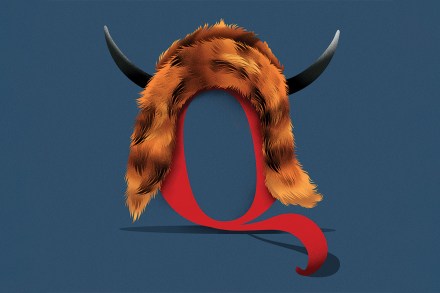
QAnon is the online movement spawned by Q, a poster on the anonymous message board 4chan. In October 2017, they began leaving a series of gnomic posts riven with strange imagery – “drops.” Claiming to be a US official with a high-level security clearance, Q informed fellow users that the United States was secretly controlled by a clique of pedophiles and traitors encompassing much of the Democratic party and the intelligence services. But Donald Trump, who had recently been elected president, was alive to the danger. With the aid of friendly “deep state” elements, Trump was working behind the scenes in a grand effort (“The Plan”) to expose the cabal that would culminate in a day of action (“The Storm”) in which its members would be arrested and executed.

The perils of Catholic social media evangelism

From our US edition

Jesus, it could be reasonably observed, recruited a motley cast to serve as the first heralds of the gospel. An endlessly squabbling band of fishermen, with a few tax collectors and zealots thrown in, the biblical narratives have them endlessly jockeying among themselves for prominence and status before they, to a man, flee when the going gets tough and their Messiah gets arrested. In the two thousand years since, the Catholic Church has done its best to balance the inevitable imperfections of its messengers with the perfect truths they are supposed to announce. It’s not always an easy task – and as with so many other things, the internet has made it much more complicated.

Catholic

What folklore can teach us about our online lives

From our US edition

Irish folklore spoke of many worlds. There was the world of fields and hearths and then there were the hidden places where the non-material lived: the Sídhe mounds, the sea-realm of Manannán mac Lir, the land of youth called Tír na nÓg and, finally, the land of the dead. These worlds coexisted with ours. A woman might leave butter on the windowsill, lest the fairies sour the churn. A new mother would avoid complimenting her baby – at least, not too loudly – for fear he would be kidnapped by the Good Neighbors and replaced with a changeling. My first real boyfriend’s father blamed every family misfortune on their decision to cut down a hawthorn tree.

folklore

Nihilism is destroying young minds

From our US edition

Sandy Hook was supposed to be the tipping point in our national conversation about mass shootings. This wasn’t a shopping mall or movie theater. It wasn’t a high school. We could imagine this happening at a high school. We had seen that before. But we could not imagine anyone shooting six-year-olds. It was so monstrous that it seemed beyond the realm of possibility. Since that day, 13 years ago, the killings have continued and their settings have shifted. Earlier this month, a gunman opened fire at a Turning Point USA event, fatally shooting conservative commentator Charlie Kirk. In the past year or so, 15-year-old Natalie Rupnow killed a teacher and a fellow student in Madison, Wisconsin, before taking her own life. Solomon Henderson opened fire in a Nashville school cafeteria.

young

America’s ‘fringe’ has taken over the country

From our US edition

Another day, another public execution. The talking heads on television and Twitter tell us not to worry too much: America is still strong. They repeat this sentiment after every waking nightmare. These horrific events are not the norm, they say. They’re just the actions of a few people on the “fringe.”  But what is the American “fringe”? The “fringe” tried to incinerate the country in 2020. The “fringe” tore down statues of George Washington and Abraham Lincoln. The “fringe” control the universities and has spent years indoctrinating kids with discriminatory dogmas. The “fringe” created the policies that let violent, mentally ill men prowl the streets and kill refugees. The “fringe” killed a healthcare CEO at sunrise in December.

Robin Westman and the unstoppable tide of ‘slop violence’

From our US edition

On Wednesday, doing my laundry, I decided to turn on the TV for the first time in decades. Breaking news: a school shooting in Minnesota. It’s been years since a story like this made me cry. How could you cry at every mention of gun violence when you live in a place like the Midwest? I have been aware of gun violence in schools since I was a child myself. I remember first hearing about a school shooting when I was six years old. A little boy had shot his sister. I cried and cried and cried – I cried for the child that died, and I cried for the child who’d killed her. It remains one of my most traumatizing memories. The last shooting that made me cry was Sandy Hook. I was at dinner when a friend showed me Adam Lanza’s photo on his phone. Twenty first-graders dead.

robin westman

Lives upended: TonyInterruptor, by Nicola Barker, reviewed

‘Is it any good?’ a friend asked when he saw I was reading this book. ‘Yes,’ I said, ‘but it’s full of wankers.’ By that stage I was only up to page 24, but the remaining 184 pages did nothing to fundamentally alter my view. There is nothing intrinsically wrong with this. The works of, say, Geoffrey Chaucer and Jane Austen, not to mention thousands of others, would be considerably poorer if all the tiresome people were filtered out. But it does make it hard to read TonyInterruptor for more than 30 pages at a stretch. One has to pinch the bridge of the nose and go for a little walk.

Essex-boy Elegy: J.D. Vance meets the Bosh man

From our US edition

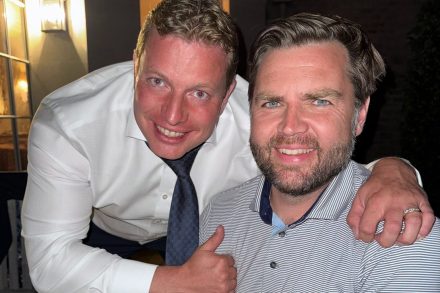
Vice President Vance is currently receiving visitors at an 18th-century Georgian manor in the Cotswolds, an implausibly quaint patch of the English countryside. Petitioners so far have included James Orr, the Cambridge academic and right-wing activist, Robert Jenrick, likely the next leader of Britain's Tories, and Nigel Farage, likely the next UK Prime Minister. Also on the list was one Thomas Skinner, a gregarious wide boy from East London turned e-celebrity turned patriotic influencer. After a stint as a pillow and mattress merchant Skinner, 34, found fame as a contestant on the 15th series of the British version of The Apprentice.

Thomas Skinner JD Vance

A global MAGA crusade against web regulation?

From our US edition

“Censorship is not how we do things in Western civilization”. So said Congressman Scott Fitzgerald (R-WI) of the United Kingdom’s new Online Safety Act (OSA). Its effects on free expression are “dangerous and needs to be addressed,” possibly by means of an international “united front”. The Congressman was fresh from meetings with British and Irish lawmakers and US tech firms, held as part of a House Judiciary Committee fact-finding mission to investigate the impact of the OSA and the European Union’s new Digital Marketing Act on American businesses. The main event was a one-on-one between Committee chair Jim Jordan (R-OH) and Peter Kyle, the United Kingdom’s Secretary of State for Science, Innovation and Technology.

Online Safety Act

The UK censorship files: Jim Jordan’s crusade against Britain

From our US edition

The British Empire may be gone, but there is one area where the UK has not lost its global ambitions: online censorship. The latest vehicle is the Online Safety Act (OSA), a behemoth internet regulation law whose vast provisions are steadily coming into force – and increasingly drawing the ire of the Trump administration as it starts to impact US tech firms.  Under the OSA, “Britain has the power to shut down any platform” that breaks its content regulation rules, boasts secretary of state for technology Peter Kyle. The latest stage of its implementation began last week with new mandatory age-verification measures for social media platforms.  The Act is already curtailing what can be read online in the UK.

Free speech