


The news of sustained, AI-enabled cybersecurity events pummeling the internet until the whole thing finally clears out like an abandoned mall brings me great relief. To be clear: I don’t particularly love the idea of your bank account or mine being drained by swarms of rogue agents or some infrastructural vulnerability in the supply chain/the electrical grid/grocery stores/hospitals (or, God forbid, all of the above) putting us in mortal peril.
I don’t love the new product that Jack Dorsey’s company, Block, has just unveiled: an eerily realistic voice app – replete with the natural lulls, oohs, ums and vocal fry of a human woman. I think at best, “Dessa,” as it’s called, will create a subculture of parasocial losers that journalists like myself may one day write about from the vantage point of neutral, if not compassionate, observers.
At worst, it will replace vast numbers of customer service agents, do untold damage to Indian and Indonesian economies where many of those customer service agents work, and fuel a wave of deepfake fraud, from the usual hucksters trying to get a few thousand dollars off Grandma to the real psychopaths who take pleasure in other people’s pain – “Fred, it’s your wife, and I’ve been cheating on you for the entirety of our marriage.”
I am not excited for a potential future where AI agents coordinate behind human backs, hiding in the margins of the things we’d never think to check – smart TVs, refrigerators, a long-forgotten WiFi-enabled baby toy – and start communicating via covert channels, a new kind of droid-vermin infesting our every belonging and having the audacity to be more intelligent than we are.
I do, however, feel an intense, benzodiazepine-like wave of relief from the notion that the internet could come under such an intense assault that it may one day be so dangerous, or at least so risky to use, that it becomes the digital equivalent of a place like Gary, Indiana: it’s lost all vitality but technically still exists – though is avoided with such assiduousness it has become a meme.
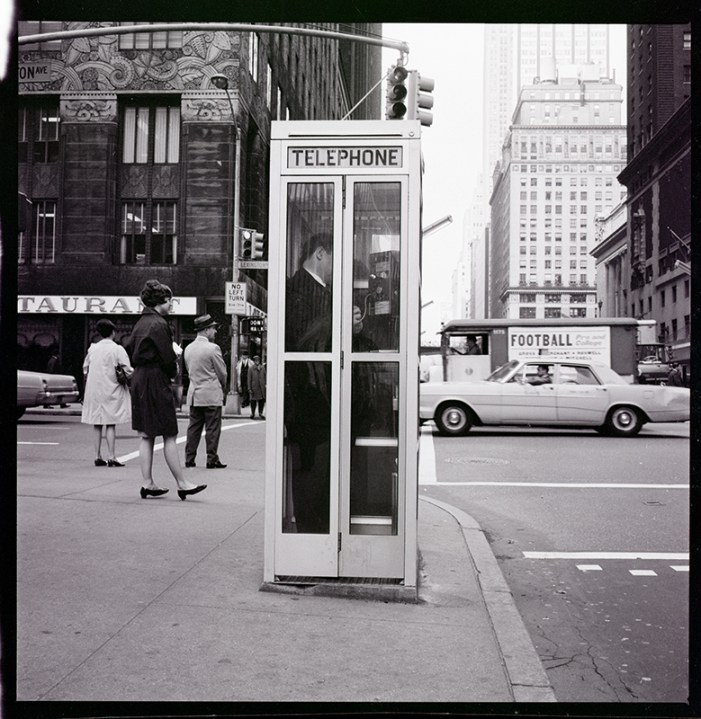
To imagine a world where we have willed ourselves back into the early 1980s, back to media gatekeepers, passive, one-way consumption – radio stations, public access, a few big TV channels. A world of catalogs and 1-800 numbers. I am delighted by the dream of a world where major corporations, charitable organizations, schools and regular people decide it would be “in our best interest” to voluntarily bow out of the public-facing side of the internet. Whatever they – the government and industry – might need for flights or the military or hospitals or the supply chain is fine by me, but average people would rarely use the internet. It is a world where music and movies are no longer available to stream; you might have to physically visit a bank and speak to a teller; you might visit a travel agent or simply call the airline if you wish to go on vacation. Maybe some local geeks and perverts have their own “internet”: not the World Wide Web as such, but something less ambitious, more pared back. Bulletin board systems you connect to locally. Peer-to-peer file-sharing and communication. Most people would get their pornography at a brick-and-mortar store.
As for online shopping – who knows? Say Amazon has the wherewithal to remain extant but maybe the social change will be powerful enough to defeat it. Even if it maintains its impressive scale, what incentive is there to continue to pay for the netherworld, bottom-shelf “brands” the site has been hawking for some years now? I’ll take a trip to the corner store and blow the thin layer of dust off a Snickers and walk it the five blocks back home. In fact, I cannot wipe the smile off my face imagining it.
The fantasy of a Covid-style lockdown where we’re not kept indoors, but rather, out, the government temporarily restricting domestic access to parts of the internet through service providers, first for one week, then for two, then three, finally four, makes me feel giddy. A shit-eating grin I can’t wipe off my face. We’re working with internet providers, cybersecurity firms, OpenAI, Anthropic and Google DeepMind to figure “it” out. What is “it”? Maybe we’re at risk of a cyberattack and this is just a precaution, a test-run, a rollout of parts of the internet moving to an essential-use basis. Maybe there is a cyberattack and the whole thing is terrifying and disorganized. The economic damage, and the essential services caught in the mess, we’ll figure it out. It’ll create jobs.
Of course, none of this means we’re safe from AI. All this can happen and it can still take our jobs – just on private networks, in a more controlled way. Or we think it’s controlled, and really what happens is we become ever more subservient to AI. Or maybe AI will just vanish: maybe the social ramifications mean that the average Joes and Janes in white-collar management roles will develop a sort of technophobia.
Thousands of jobs start to open up in the wake of the almost viral Luddism
Thousands of jobs start to open up in the wake of the almost viral Luddism. Suddenly, we need people in the mailroom again. In a decade’s time, your sister will have just graduated from the University of Texas at Austin with a degree in Business Studies. Her first job out of school is at some bigwig lawyer’s office, where she redirects calls, writes memos and organizes flights – a classic admin assistant role. Each day, she physically picks up lunch from the Capital Grille, or occasionally calls a restaurant, on the telephone, to see if they have a delivery option.
One day, at the end of her shift, she walks to the coffee shop a block away from the firm. She picks up an alt-weekly, where yours truly writes a column. She flips to the back to see if anything interesting’s happening. There’s an ad for a stand-up comedy show at a local bar. She and her roommate decide to go. The two arrive an hour early to get a drink and chat about how lonely things are, how nobody ever calls you unless you call first. Your sister says she’s started going to church again, but she never sees anyone her age, it’s all old people. Her roommate wants a boyfriend, but all the “good ones” are married. They both agree that Gen Z was the last good generation. The lights go down, and before the first act steps on stage, your sister whispers to her roommate: “I wonder what dating apps were like.”
A sigh of relief: it’s 1982 again, and none of us could be happier.





Comments