Inflation

Trump has betrayed voters on inflation

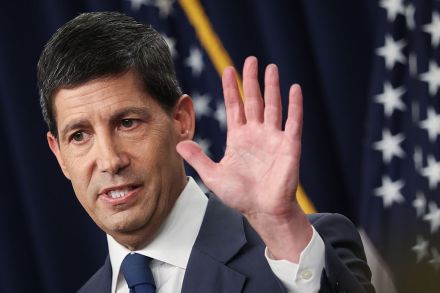
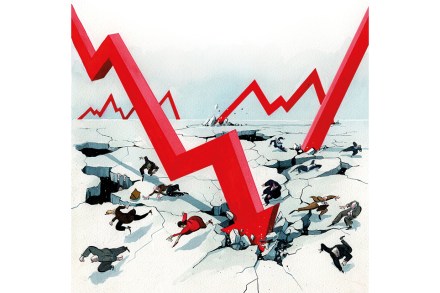
“I love inflation,” said Donald Trump earlier this month, when asked about the latest increase in the Consumer Prices Index to an annualized 4.2 percent. But the power of the President’s positive thinking cannot overwhelm the enormous threat that rising prices pose to his legacy. The new figure is more than an inconvenience or a technicality. It could bring about a sharp change in the political order. Rising costs will likely prove to be Trump’s undoing and present the Democrats with a free hit for November’s midterms and beyond. There was one reason above all others why Trump returned to the White House in 2024: high inflation during the Biden years. His 2016 slogan, “Make America Great Again,” morphed into “Make America Affordable Again.

How to save American farming

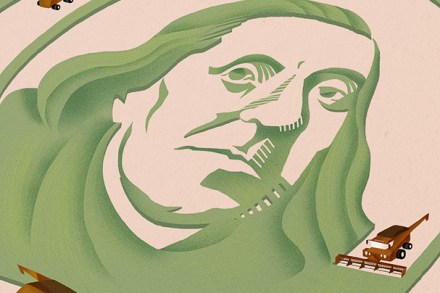
Farm bankruptcies in the US have risen by 50 percent in the past year. Soybean farmers lost an average of $100 per acre in 2025, according to the Department of Agriculture, while corn growers are set to lose $150 per acre this year. Meanwhile, the national beef herd is at its lowest level since 1950 and retail prices have jumped by 40 percent in the past 18 months. Normal businesses would diversify away from corn or soybeans and try to profit from the rising price of beef, as well as goods such as eggs and tomatoes. They would, in other words, react to the changing realities of the market. But American farms are not normal businesses. Most of my fellow farmers are stuck in a world of perverse incentives, from government subsidy and bailouts to financialized capital and farmland.

subsidy

What went up – and down – in 2025?

From our UK edition

Erasmus in England The government is to rejoin the Erasmus scheme, which allows students at British universities to spend time studying in other European countries, with reciprocal opportunities for EU students. How did Desiderius Erasmus’s own studies in England go? — In 1499 he spent two months at St Mary’s College, Oxford, where he attended John Colet’s Bible classes and also learned skills in horsemanship. His trip ended in financial disaster, however, when customs officials confiscated his gold and silver while he was leaving England. — From 1511 to 1515 Erasmus was a Professor of Divinity at Cambridge, where he studied and taught Greek. But he was far from happy with his accommodation at Queens’ College, which he complained was cold and draughty.

Is Trump becoming a lame-duck president?

American presidents face an inescapable dilemma as soon as they are reelected. Because they cannot run again, they find it increasingly difficult to dominate the national agenda. This constitutional limitation makes it increasingly difficult for presidents to “herd the cats” in their own party, filled as it is with prospective successors, and to defeat the opposing party, which sees the golden opportunity of winning the next midterm election. Those upcoming elections almost always go against the party-in-power since it is far easier to mobilize angry, negative voters than satisfied, complacent ones. Donald Trump is fighting tenaciously to postpone the impact of these indelible features of American politics, but he cannot escape them entirely.

The ‘affordability’ delusion

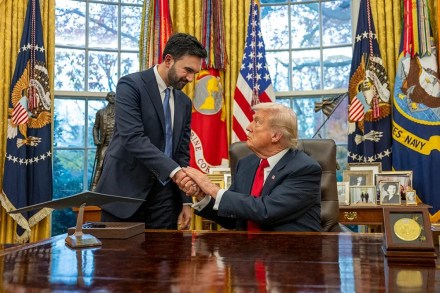
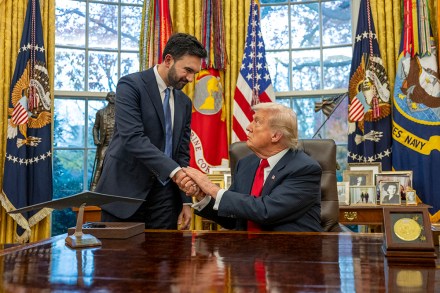
During last week’s excruciating Oval Office make-nice between an insultingly buddy-buddy American President and a fraudulently obsequious New York City mayor-elect, the contest was over which pol was the more patronizing. At one point Trump graciously granted his petitioner permission to call him a "fascist" while clearly implying the guy’s OTT campaign rhetoric had been embarrassing. Donald Trump sat regally on his throne, patting Zohran Mamdani’s arm while commending "Attaboy!" as if petting a golden retriever that had fetched a ball. For his part, Mamdani stood mutely by the Resolute desk with cartoonish humility, hands over crotch. This cowed performance of beta-male submission was meant to disguise who’d got a leg over whom.

Affordability

What’s Trump got to do with the price of turkey?

During last week’s excruciating Oval Office make-nice between an insultingly buddy-buddy American President and a fraudulently obsequious New York City mayor-elect, the contest was over which pol was the more patronising. At one point Trump graciously granted his petitioner permission to call him a ‘fascist’ while clearly implying the guy’s OTT campaign rhetoric had been embarrassing. Donald Trump sat regally on his throne, patting Zohran Mamdani’s arm while commending ‘Attaboy!’ as if petting a golden retriever that had fetched a ball. For his part, Mamdani stood mutely by the Resolute desk with cartoonish humility, hands over crotch. This cowed performance of beta-male submission was meant to disguise who’d got a leg over whom.

It’s the cost of living, stupid

Earlier this month, the Republicans lost their first set of elections after Donald Trump’s victory last year, proving once again that without Trump, the GOP is cooked. Because yes – it really is all about him. Are you a narcissist if the world actually does revolve around you? Or are you just right? The problem for the GOP is that they need Trump to win, but Trump loves watching them lose without him. OK, maybe he is a narcissist. What’s clear is that the 2024 election was not the final boss. It didn’t destroy wokeism. You have to picture the spider in The Lord of the Rings, Shelob, crawling back into her cave after being stabbed by Samwise. Is she injured? Yes. Dead? No. She will probably be back to kill you.

trump economy

What was Graham Platner inking?

Has anyone seen Graham Platner’s tramp stamp? “I grew up as a little punk rock kid listening to Dead Kennedys and Dropkick Murphys,” Graham Platner, the front-runner for the Democratic nomination for the open Maine Senate seat said yesterday at a town hall in Ogunquit. He neglected to include the information that as a little punk rock kid he attended Hotchkiss, a private boarding school in Connecticut that currently costs more than $70,000 a year for tuition and meals, whose alumni include the founders of Morgan Stanley and Lehman Brothers. Such details rarely appeal to the common people. Platner, who runs an unprofitable oyster farm, served eight years in the Marines after high school.

Platner

The Wall Street Crash never ceases to fascinate

From our UK edition

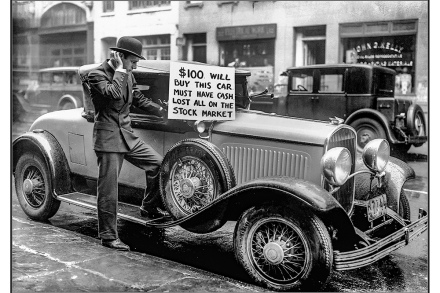
When Winston Churchill dined with the crème de la crème of American finance in New York on 28 October 1929, a facetious toast was made to ‘friends and former millionaires’. Despite a 13 per cent drop in the Dow after another day of market turmoil, the assembled banking titans felt they wouldn’t just survive the maelstrom, they would make more money from it. Churchill, whose finances were perennially chaotic, had caught stock market fever and lost today’s equivalent of almost $1.5 million. On returning to England, he declared the Wall Street crash ‘only a passing episode in the march of a valiant and serviceable people’. In the end, US stocks fell almost 90 per cent between their 1929 peak and 1932.

Bessent’s private message reveals a Milei gamble

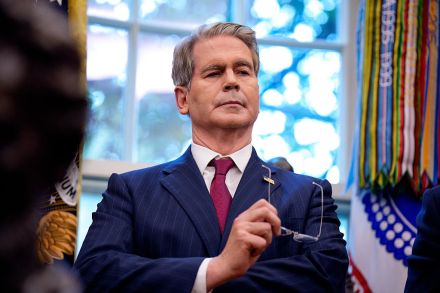
The first lesson for Treasury Secretary Scott Bessent is that digital photography has totally changed politics, as wiser practitioners have long since realized. You might have got away with reading private communications in public 30 years ago, but you can no longer do so. The second lesson is that if you build an administration on the promise that you will always serve the American interest, certain foreign policy decisions become difficult. Bessent has been caught reading a message on his phone from Agriculture Secretary Brooke Rollins expressing her anger at the Trump administration’s deal to establish a $20 billion loan facility with Argentina, or "the Argentine" as Rollins prefers still to call it.

Bessent

Ed Davey pitches himself as the anti-Farage

From our UK edition

11 min listen

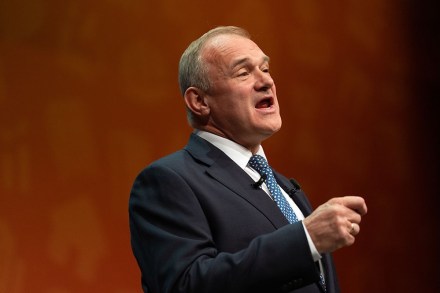
The Liberal Democrat party conference in Bournemouth has concluded with a speech from leader Sir Ed Davey. While the current crop of Liberal Democrats are the most successful third-party in 100 years, they have faced questions about why they aren't cutting through more while Reform is. It's something Davey is aware of and – hoping to exploit how divisive the leader of Reform is – he sought to pitch himself as the anti-Farage. Will it work? Plus, more bad news for the Chancellor. Labour had pledged to aim for the highest growth in the G7. New figures from the OECD did upgrade their global growth forecast, including for Britain, but projected that the UK would see the highest inflation across the G7. How bad is this for Rachel Reeves?

Don’t bring back British Rail

From our UK edition

The theme of my holiday reading has been the insidious ways in which the vanities and fetishes of rulers harm the interests of citizens. I started with 1929, Andrew Ross Sorkin’s new history of the Wall Street crash, which I’ll be reviewing elsewhere ahead of its release in October –my point here being not about whether President Herbert Hoover and the US Federal Reserve mismanaged that market cataclysm and its aftermath, but rather the fact that my zero-value, plain-cover ‘uncorrected proof’ copy of the book was held up by French customs for almost three weeks for want of a ‘commercial tax ID number’ on the packaging label. ‘A common post-Brexit headache,’ the publisher shrugs.

How many homes in England have air conditioning?

From our UK edition

Suit cases Volodymyr Zelensky again failed to wear a suit and tie to a meeting at the White House, in spite of being asked to do so – although Donald Trump did say he looked ‘fabulous’ in his black button-up suit. What did Allied leaders wear to the great conferences in the second world war? — Cairo 1943: Winston Churchill wore a white suit with bow tie; Franklin D. Roosevelt a lounge suit with striped tie; and the Chinese leader Chiang Kai-shek a military uniform. — Tehran 1943: Churchill and Stalin both wore military uniform; Roosevelt wore a pinstriped suit. — Yalta 1945: The photo session was held outside in cold weather. Churchill wore a thick civilian coat, FDR a cape over a lounge suit, and Stalin a military greatcoat.

Portrait of the week: Inflation up, hosepipes off and grants for electric cars

From our UK edition

Home Sir Keir Starmer, the Prime Minister, agreed with President Emmanuel Macron of France that Britain could return perhaps 50 asylum seekers a week to France and accept in their place the same number of applicants through a regulated system. To celebrate, 573 people arrived that day in England in small boats, bringing the total for the week ending 14 July to 1,387. Moygashel Bonfire Committee in Co. Tyrone defended the placing of an effigy of a small boat with 12 migrants on a bonfire to usher in 12 July. Britain had, it was revealed, offered asylum to thousands of Afghan soldiers and their families caught by the accidental publication of their application for asylum in 2022; their resettlement was kept secret by a government super-injunction.

Why is Britain’s economy so unhealthy?

From our UK edition

20 min listen

The Spectator’s economics editor Michael Simmons is joined by the outgoing boss of the Institute for Fiscal Studies Paul Johnson and the CEO of the Resolution Foundation Ruth Curtice to understand why Britain’s economy is in such a bad place. Given it feels like we are often in a doom loop of discussion about tax rises, does this point to a structural problem with the British economy? And why are the public’s expectations so out of line with the state’s capabilities? Michael, Paul and Ruth talk about whether it’s fair for Labour to claim they’ve been ending austerity, the extent to which the effects of the covid-19 pandemic are still being felt and if tax rises are inevitable.

The unforgiving history of student loans

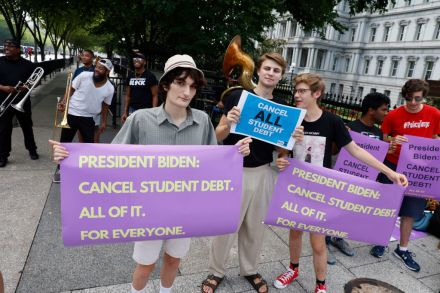
Republicans in the House are considering a bill to make major changes in federal student loans for college, and President Trump is floating the idea of making colleges responsible for borrowers who fail to repay. For decades student loans and their repayment are never far the center of controversy, but it wasn’t always that way. I grew up in the era before massive student debt. Student loans were available in 1971 when I went off to college, but they didn’t dominate the terrain like a Tyrannosaurus rex. They were more like Barney, the joyful purple denizen of PBS, who had a ferocious appetite for public funds but had not yet evolved into the carnivore who preys on the livelihoods of college graduates.   But the student-loan monster had already been born.

student loans

Deals, deals, deals vs China, China, China

How was your Liberation Month? It’s been almost 30 days since Donald Trump stood in the Rose Garden of the White House and announced a shocking set of massive tariffs on the world. The event caused huge convulsions in the economic universe: trillions were wiped off the stock market and, under huge pressure, Trump did agree to a 90-day pause on reciprocal tariffs. After that he exempted electrical goods, though his standard 10 percent remains, and the heads of most financial analysts are still spinning trying to figure out what it all means. Yet for all the angst and the apoplexy, yesterday the S&P 500 index closed just 1 percent down from where it was at the beginning of the month.

Can Trump fix eggflation?

"You can’t make an omelette without breaking eggs" is a maxim attributed to leaders on both sides of the French Revolution. "Move fast and break things" is today’s equivalent, emanating from Silicon Valley and amply demonstrated by Donald Trump and Elon Musk in their approach to government and geopolitics. "You can’t make omelettes at all if you can’t afford eggs" might be the next variant: inflation and scarcity afflicting America’s favorite breakfast have become a major political issue. In brief, a dozen US eggs used to cost $2 or less but by January this year the supermarket price was $5 and rising – in some places $9 was reported, rationing had to be introduced and Mexican suppliers were spotted smuggling truckloads across the border.

eggs

What’s RFK Jr. really up to?

Health Secretary Robert F. Kennedy Jr.’s program to Make America Healthy Again (MAHA) appears to be ahead of schedule. At the start of the month, the burger chain Steak ’n Shake announced that it would be frying its food in beef tallow rather than seed oils — and other major restaurant groups are following suit.This week, Kennedy, who hates seed oils and processed foods, rewarded Steak with an almighty PR stunt. He sat down with Fox News’s Sean Hannity to enjoy a burger (Hannity had two) at a branch in Florida. “People are raving about these French fries,” said JFK’s nephew. “They’re amazing,” Hannity agreed.It remains to be seen if the “RFK-ing” of fast food will achieve substantial results.

rfk

Will better-than-expected inflation numbers calm the markets?

Has Donald Trump’s return to the White House triggered a second round of inflation? Not yet, according to the Bureau of Labor Statistics, which revealed this morning that the consumer price index rose to 2.8 percent in February — 0.1 percent less than markets had expected. The rise is being described as "stable," as annualized core inflation (which excludes more volatile prices like food and energy) rose to 3.1 percent — also a smaller rise than expected. While inflation on the year is ticking up slightly, it remains in the ballpark of what has been expected.