Inflation

Home truths: the crushing reality of the mortgage crisis

From our UK edition

In December Jeremy Hunt hosted a mortgage summit, attended by lenders and the Financial Conduct Authority, to discuss rate woes. At the time, the numbers were at least moving in the right direction. During Liz Truss’s 49-day premiership, the FCA expected interest rates to rise to 5.5 per cent, an increase which was forecast to put 570,000 people into mortgage payment difficulty. Once Rishi Sunak and Hunt undid Truss’s mini-Budget, things looked calmer: a 4.5 per cent peak was expected, and 356,000 people were due to be in difficulty. Hunt was still struck by the figure. Horribly high, he thought. The Chancellor used the meeting to lay the foundation for regulatory changes that could be used in the future to help struggling mortgage-holders.

Portrait of the week: Boris locked out, mortgage misery and Titanic submarine search

From our UK edition

Home Boris Johnson, the former prime minister, was ritually buried by the House of Commons voting by 354 to seven to approve the Privileges Committee report that found he had lied to parliament about observing coronavirus regulations. He would have been suspended for 90 days had he not left parliament; as it was, his pass to enter the Houses of Parliament was withdrawn. Rishi Sunak, the Prime Minister, having remembered an important long-standing engagement, was among 225 MPs who were absent or abstained. David Warburton, an MP who sat as a Conservative until last year, said he was leaving the House. In the King’s birthday honours, Sir John Bell, Ian McEwan and Dame Anna Wintour were appointed Companion of Honour.

Brexit could fix inflation

From our UK edition

Has food price inflation finally peaked? Figures released by the British Retail Consortium (BRC) this morning reveal that food prices were up 15.4 per cent in the past 12 months, down from 15.7 per cent in the year to April. Last week’s figures from the Office of National Statistics also showed a small fall, from 19.2 per cent in March to 19.1 per cent to April. The BRC’s methodology is different from the ONS’s, not only in that it tends to produce slightly lower figures but that it also runs slightly ahead. The inflation story has subtly changed, from being one led by energy prices to being dominated by food prices Over the past few months, the inflation story has subtly changed, from being one led by energy prices to being dominated by food prices.

Is it time for the £100 note?

From our UK edition

Thanks to the recent spike in inflation, never have indisputable luxuries such as Sharwood’s mango chutney or Anchor butter quite so tested the domestic purse strings. The sad truth is, however, that it’s much worse than you think. Because unlike the watched kettle, the frog of devaluation hasn’t just arrived at a nice simmer, it’s begun to boil over. And mango chutney at £4.10 a jar is but the tip of the iceberg. For the long view consider the BBC’s new drama, Ten Pound Poms, about Brits who emigrated to Australia in the 1950s for the princely sum of a £10 processing fee. These days the closest you’ll get to Australia for a tenner is a four-pack of Castlemaine XXXX – and there probably won’t be much change from that either.

Portrait of the week: Rioting in Cardiff, rising migration and falling inflation

From our UK edition

Home A crash in which a 15- and a 16-year-old boy riding on an electric bike were killed led to rioting, the burning of cars and attacks on police in the Ely estate in Cardiff; social media had said the deaths followed a police chase, which the police denied. But video evidence seemed to show a chase. During the riot, one of the boys’ mothers posted a Facebook message: ‘Please I beg you all to stop and let my son be moved to hospital so I can see him.’ A woman hit on 10 May by a police motorcycle escorting the Duchess of Edinburgh died.

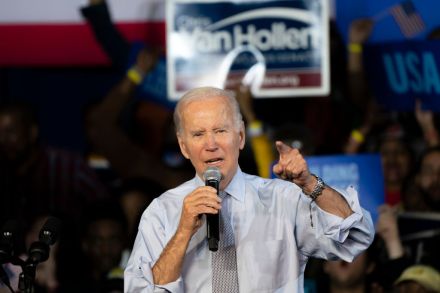
Doesn’t America deserve better than a Trump-Biden rematch?

Joe Biden is considering making his re-election announcement as early as Tuesday.  After months of teasing his inevitable run with awkward comments like telling Al Roker he will be pushing out Easter eggs, it would seem the moment is upon us.   So what does this mean for 2024?   Well, there’s still a long way to go. And as 2016 showed us, primaries make for plenty of surprises. Still, even with the unknowns, there’s a good chance that we end up with a 2020 re-rerun: former president Donald J. Trump versus President Joseph R. Biden. Because that worked out so well for everybody last time!  There are plenty of problems currently plaguing the country, from inflation to train derailments.

america trump-biden

Joe Biden’s Ireland trip is all about Joe Biden

Joe Biden’s Ireland trip is all about Joe Biden Half a century since he was sworn in as a US senator, the Biden brand is a well-established series of safe bets: a fondness for aviator sunglasses, a hankering for chocolate chip ice cream. Also high on the list: conspicuous displays of Irishness. The second Irish-American president is fond of quoting Heaney and Yeats. He may be the only teetotaler who enjoys St. Patrick’s Day, which he says is his favorite holiday.  And so much about Biden’s trip to Ireland this week is unsurprising. After landing in Belfast last night, the president this morning had a quick cuppa with British prime minister Rishi Sunak and gave a speech to mark twenty-five years since the Good Friday Agreement.

joe biden ireland

Cost-cutting in the kitchen with Budget Bytes

Have you heard about the latest food trend sweeping the nation? It’s called “whimpering over your grocery bill.” In the early days of 2023, Americans are spending 70 percent more on eggs than one year ago. Chicken, dairy and bread prices outpaced inflation as well, increasing by double-digit percentages. What’s an adventurous home cook to do? The answer is Budget Bytes, a website I first turned to as a broke twenty-two-year-old with a galley kitchen in Queens. I didn’t know, before an acquaintance tweeted a link to a coconut vegetable curry, that you could make a tasty, filling meal, complete with leftovers, using almost entirely canned or frozen goods. Budget Bytes taught me to cook.

budget

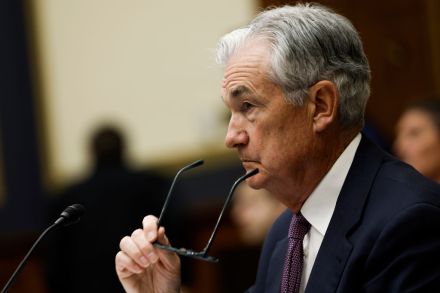
Powell pays for past mistakes

Powell pays for past mistakes In the summer of 2020, Fed chair Jerome Powell could not have been clearer. “We’re not thinking about raising rates,” said Powell, before doubling down: “We’re not even thinking about thinking about raising rates.”   Things, as we now know, turned out a little differently. The months marched on, and with the Biden administration determined to spend, spend, spend, inflation went from “high class problem” to “transitory” to the biggest problem facing the US economy. Powell and his Fed colleagues went from not thinking about thinking about raising rates to, well, raising rates. From virtually zero around this time last year to 4.75 percent as of January.

jerome powell

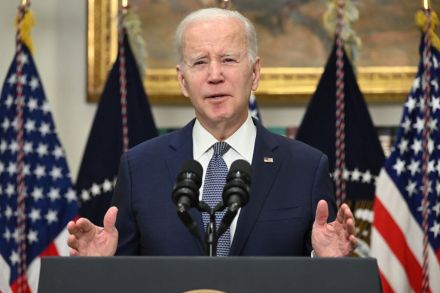
Biden will never let Silicon Valley fail

After a bank run on Silicon Valley Bank left the institution in ruins, the Federal Reserve announced it would make whole the bank’s customers, including those with uninsured deposits in excess of $250,000, which should have made them ineligible for the Deposit Insurance Fund. President Biden promised the American people that this was not a bailout because no losses would be borne by taxpayers — a claim the Wall Street Journal assessed as a “whopper.” But the debate we should be having is not over the definition of the authorities' actions, but how to judge them morally — especially given how the Fed has been trying to tame inflation for the past two years.

After the cryptocrash

Spare a thought for Miami nightclub owners. In recent years, they rode the cryptocurrency wave, raking it in by catering to the fragile egos of geeky crypto bros eager to flaunt their newfound wealth. Now, in the midst of the cryptocrash, business has slowed dramatically. “Out of the blue, all these kids from crypto started coming down and spending a lot of money — like, an insane amount of money,” one of the city’s nightlife impresarios told the Financial Times recently. Now, he said, they have “completely disappeared.” If empty nightclub tables in South Beach are an amusing but indirect indicator of the crypto slowdown, a more immediate warning sign was the spectacular implosion of FTX, the world’s largest cryptocurrency exchange, late last year.

crypto

Why the Biden stock market is even worse than you think

If you’re the sort who rarely checks your 401K and other investment accounts, you may be blissfully unaware of what a dismal year (plus) its been for the stock market. Many prominent media personalities, particularly ones on CNBC, promised us that Biden would be a boon to the stock market because Trump was too erratic. But while the market started hot in 2021, it's mostly been ice cold ever since, with a few fake rallies thrown in to tease us. How bad has the Biden era been for stocks? Consider some numbers I crunched prior to the market opening on December 12.

How to survive the ‘permacrisis’

Are we in a permanent state of crisis? The Britain-based lexicographers at the Collins Dictionary think so. Last month they chose “permacrisis” as their word of the year. Defining the neologism as “an extended period of instability and insecurity,” Collins explained that their selection “sums up quite succinctly how truly awful 2022 has been for so many people.” It’s easy to see why the word has particular resonance for the Brits, now onto their third prime minister this year. But the sense that we are stuck in an endless cycle of crises is a global one. As 2022 draws to a close, the world faces a daunting set of overlapping disasters.

permacrisis

Democrats’ last gambit: a corporate windfall tax

Inflation continues to be the economic story of the day. While Democrats try to divert attention to the job market, and many Republicans seem more interested in appealing to “gut feelings” on issues like crime, the latest polling shows that rising prices remain top of mind for most voters. To the extent that the Biden administration is talking about inflation, it’s generally been to downplay the latest numbers (at least when not accidentally highlighting it with ill-fated tweets that take credit for historically high Social Security cost-of-living adjustments). But there is another talking point that some Democrats are taking as an alternative: big corporations are to blame, and windfall taxes are the solution.

Tim Ryan’s phony ‘moderate’ persona

Tim Ryan is cunning. Facing an ultra-tight race against J.D. Vance for Ohio’s US Senate seat, Ryan is hedging his bets by running as a Republican on the Democratic ticket. Ryan strikes me as willing to do and say whatever it takes to win — more so even than your average career politician (he is 49 years old, has served in the US House since 2003 and was in the Ohio State Senate before that). Lately, in an attempt to appear “moderate,” Ryan has been adopting Republican talking points and throwing his own party under the bus. But a trip down memory lane shows Ryan for what he really is: someone who voted “with President Biden and House Speaker Nancy Pelosi 100 percent of the time this Congress,” and only voted in line with President Trump 16 percent of the time.

Poverty is a major issue in the midterms

My friend here in rural Pennsylvania is the director of our local anti-hunger program. It’s orchestrated through the YMCA and has been ongoing for years, mostly providing supplemental food for rural children. But the program started running at full throttle when Covid hit in March 2020, and now, more than two years later, my friend tells me they’re doing about 25 food distributions a month — more than they were doing at the height of Covid. What’s more, he’s seeing twice the number of people lining up for free food, and 85 percent of those people have jobs. “When people think of hunger, they think of poverty,” my friend says.

gadgets

Kitchen tables versus kitchen tablets: the real election divide

It’s useful to think of this election as a contrast between how, in the simplest understanding, people see the world from two very different perspectives. It’s simple, but it’s important. There was a line on the edge of my memory the other day from a certain victorious congressional candidate: Carry the word throughout this district, the word we said was true: that we do stand for the people who push a grocery cart and worry about the grocery prices, that we do stand for the people who care about this country and their children's future.

White House deletes tweet bragging of Biden’s role in inflation crisis

You know the Democrats are grasping at straws when you see the White House Twitter account praising President Biden for this year’s increased Social Security checks. Particularly, Cockburn is at pains to point out, as the increase in Social Security is indirectly indexed to inflation. "Seniors are getting the biggest increase in their Social Security checks in ten years through President Biden's leadership," the White House bragged on Tuesday. Even Twitter's in-house moderators were taken aback, deigning to slap a "context" label on the post. After helpful users added the missing context on Wednesday, the White House's tweet mysteriously disappeared. How curious!

inflation

Why are Democrats so obsessed with the abortion 1 percent?

Amid 40-year-high inflation, dwindling investment portfolios, and 20-year high mortgage rates, the Democratic Party appears most concerned with protecting the abortion rights of rape and incest victims. I live in Florida, and almost every day in recent weeks, I've gotten at least one flyer warning me that one Republican candidate or another wants to “imprison victims of rape.” Last week, I got three different flyers about “extremist Audrey Henson,” a young Republican candidate for the Florida House of Representatives, all concerning her alleged support for criminalizing abortion, even in cases of rape and incest. One featured an image of a book supposedly written by Ms. Henson with the title, “Why I am Pro-Life as a Millennial Woman.

The lesson of 2022: energy is our lifeblood

This has, so far, been a year of hard lessons. Spiraling inflation has given households an expensive economic refresher course. A land war in Europe has offered an unwelcome reminder of old geopolitical and military truths. But arguably the most important lesson of 2022 concerns the point at which these economic, military and geopolitical considerations converge: energy. On this vital issue, the West has suffered from an epidemic of amnesia in recent years. Too often energy security has either been taken for granted by policymakers and voters, for whom the last energy crisis had become a distant memory, or actively disparaged by an environmental movement whose hardline hostility to fossil fuels has become received wisdom in polite circles.