India

Gandhi’s killer is more loveable than his victim: The Father and the Assassin reviewed

From our UK edition

Dictating to the Estate is a piece of community theatre that explains why Grenfell Tower went up in flames on 14 June 2017. The abandoned block stands, like a cenotaph, a few minutes’ walk from the social club where the show is presented. The local council never cared much for Grenfell’s 120 families. Plans to destroy the tower and expand the estate – with higher rents, of course – had long been under discussion. A one-bedroom flat in west London goes for half a million pounds so there were profits galore to be made. ‘A gold mine for the council,’ said one developer, ‘and they don’t even have to dig for gold.

Why does India get a free pass for supporting Russia?

From our UK edition

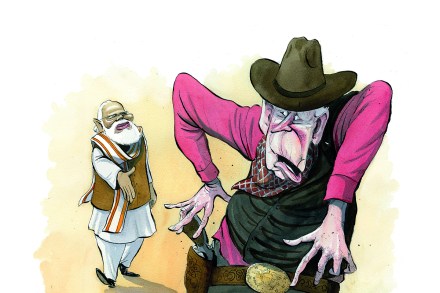
When Russia invaded Ukraine the Indian government rapidly launched ‘Operation Ganga’. This was not a military operation, nor did it aim to supply Ukraine with weapons – it was an operation to extract the 500 Indian students stranded in Ukraine. After Prime Minister Narendra’s Modi’s video call with Putin, the Russian president ordered his invading army ‘to ensure the safe exit of Indian nationals from the armed conflict zone.’ The Indian government quickly dispatched civil servants, not weapons, to Poland, Hungary and Romania to assist their fleeing citizens. Since February more than 22,000 have been repatriated. Otherwise, Modi’s attitude to Ukraine has been decidedly non-committal.

What Ukraine means for Asia

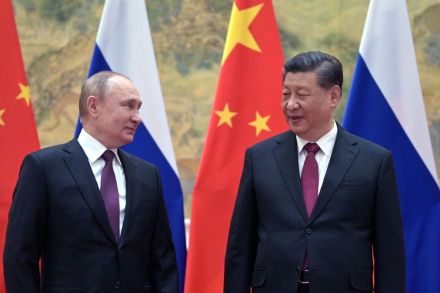
If Asia has entered the debate over the war in Ukraine, it is primarily through questions over the role China is purported to be playing in supporting Russia. Given the now-infamous declaration of a “partnership without limits” by Vladimir Putin and Xi Jinping during the Beijing Olympics just weeks before the invasion, many observers have searched for signs of Chinese aid, military or economic, to Russia in the conflict. The scope of devastation in Ukraine and the probable war crimes being committed by Russian troops understandably mean less attention has been paid to how the conflict might affect geopolitical stability in the Indo-Pacific region. The exception is Taiwan — there has been considerable speculation over the influence of Ukraine on Beijing’s calculations there.

asia

Could the Ukraine war save Taiwan?

From our UK edition

The phrase wuxin gongzuo – ‘working with your mind on Ukraine’ – has been trending on Chinese social media network Weibo. Essentially what it means is ‘distraction from work because you’re obsessed with the war’. One blog that monitors the site, What’s on Weibo, reports that shortly after Russia’s invasion of Ukraine a page with updates on the conflict had received more than two billion views. Censorship, of course, limits what Chinese social media commentators can say, but there is clearly plenty of sympathy for the dying civilians and fleeing refugees.

TB is back with a vengeance

From our UK edition

If you were a teenager before 2005, one reminder of tuberculosis in British life is that small circular scar on your bicep. Maybe you’ve explained to your children why it’s there, if you ever knew. The BCG is no longer a routine vaccination in the UK, a revision which signalled to many that TB was over. What used to be known as consumption became treatable, preventable and ostensibly consigned to medical history as a threat of the past. We tell stories about diseases as if they are constant things. ‘It’s no worse than flu’ has become a familiar phrase; but flu is not all that common, it varies wildly in severity and changes strain every year. Pathogens evolve and mutate, avoiding the risk of staying the same for too long.

Is Europe a continent? Does it matter? 

Nikole Hannah-Jones, who is never at a loss for a tweet, ridiculed Americans who are expressing alarm over the threat to Europe implicit in Putin’s invasion of Ukraine. She put down those spoilsports for their referring to Europe as a “continent.”  Quoth Hannah-Jones, under her nom-de-plume Ida Bae Wells: What if I told you Europe is not a continent by definition, but a geopolitical fiction to separate it from Asia and so the alarm about a European, or civilized, or First World nation being invaded is a dog whistle to tell us we should care because they are like us. The triumphant silliness of the author of the 1619 Project always comes down to her desire to find racism at the root of whatever happens.

europe nikole hannah-jones

The US and India in a new world

The world’s center of gravity is shifting to the Indo-Pacific. The new global order will be shaped by developments in a sprawling region where interstate rivalries and tensions are sharpening geopolitical risks. Building a stable balance of power in the Indo-Pacific has become more important than ever, but China’s territorial and maritime revisionism, and its heavy-handed use of economic and military power, are causing instability and undercutting international norms. Against this background, the expanding strategic partnership between the world’s most powerful and most populous democracies — the United States and India — has become pivotal to equilibrium in the Indo-Pacific.

india

#Wanderlusting

I’m twenty-seven weeks pregnant, which is technically the last week of my second trimester, and shit is getting real. Apparently, this is also the “longingly and obsessively scroll through Instagram travel pages” phase of pregnancy, so of course Facebook took it upon itself to remind me that nine years ago today I was in Sri Lanka. The algorithm is tormenting me. I’m wanderlusting. Wondering if I’ll ever travel again. Reminiscing about the good ol’ days. As I scroll through my photo albums on Facebook, I am reminded of how often people would comment, “You’re so free!” The people who said this to me over the years had “real” jobs and mortgages and pets and kids.

traveling

Can the India-US relationship last?

India and the United States have rediscovered each other after the cordial hostility of the Cold War. Those years of isolation have made India’s political and financial elites susceptible to flattery. America’s courtship of India, lubricated by the economics of globalization and the post-9/11 zeal to spread democracy, is now being consummated in the American search for a democratic counterweight to China. But India is a chaotic democracy in a volatile neighborhood. Can it hitch itself to America without forfeiting its autonomy? Foreign strategic experts exhort India, which is non-interventionist to its marrow, to act like a global power.

india

Back to Bangalore

India’s fast-growing population now stands at 1.38 billion, just shy of China’s ginormous 1.4 billion. China’s population is rapidly aging, so it’s only a matter of time before a youthful India —average age twenty-nine to China’s thirty-seven — overtakes its communist neighbor and becomes the most populous nation on the planet. I left India as a child, and just spent two months in Bangalore, selling some ancestral property. Bangalore is India’s booming tech hub and Silicon Valley; most major American tech companies, including Facebook, Google, Amazon and Microsoft have opened large offices there to manage their back-end operations.

india

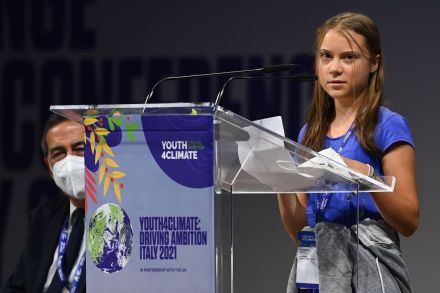
We aren’t serious about fighting climate change

“UN Global Climate Poll: ‘The People’s Voice Is Clear – They Want Action.’” So ran a typical headline in the British newspaper the Guardian in January. Yet this month, a poll released as world leaders met at the Glasgow Climate Change Conference prompted a very different Guardian headline: “Few Willing To Change Lifestyle To Save The Planet, Climate Survey Finds.” Huh? Yes, surveys are essentially universal in showing people worldwide are terribly concerned about Global Climate Change (GCC) and support efforts to mitigate it, often no matter how drastic. But those polls may reflect a false perception.

The rise of Indian cancel culture

From our UK edition

In 1975, India’s prime minister Indira Gandhi suspended democracy. The so-called 'Emergency' was largely of her own making, giving her the power to rule by decree. Hundreds of prominent writers and journalists, not to mention opposition leaders, were bundled off to jail. Remarkably, that was all it took for the rest to fall in line. Newspapers stopped printing stories that offended their ruler’s sensibilities. Shivarama Karanth, one of the doyens of the modern Indian novel, took off to ‘compose ballets with lilting music’ in the Canarese countryside. The Illustrated Weekly of India, meanwhile, began running acrostic love letters spelling the name of the premier’s balding, bovine son. How did the representative of organised media react?

China and India are right to keep coal

From our UK edition

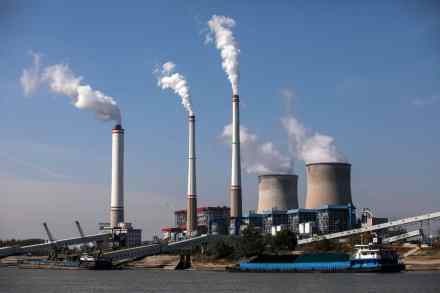
‘The end of coal is in sight’ declared Alok Sharma, president of this year’s climate summit, to delegates in Glasgow attending COP26. Sharma was heralding the fact that more than 40 countries had agreed at the conference to phase coal out in the coming decades. But (and it is a very big but) along with the US and Australia, two of the world’s largest producers and consumers of coal declined to sign: India and China. COP26 came to an end this week. But in the media coverage of the conference, there has been zero effort made to understand why two of the biggest consumers of fossil fuels have pushed back at attempts to reduce coal use. It is much more comfortable to run stories about how poor countries around the world are suffering instead.

India is going to keep polluting. They can thank China

From our UK edition

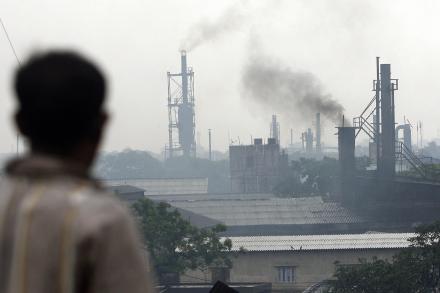
Mumbai India is the last major global polluter to set a date to go carbon neutral. In a surprise announcement on Monday, Prime Minister Narendra Modi told COP26 that his country will hit this target by 2070. That doesn't mean India is going to start cutting emissions any time soon. India’s ruling Hindu nationalist party, the BJP, believes it has the right to use coal to stimulate economic growth. The country argues that its per capita consumption of non-renewables is still a fraction of West's. Faced with the task of quadrupling its power output by 2050, the country's coal production is expected to increase by 28 per cent over the next ten years.

Welcome to the age of entropy

Americans and other westerners have long been accustomed to thinking that history has a clear direction. Sometimes the direction is contested, as it was during the Cold War. The future could have been capitalist or communist, or perhaps a blend of both systems — ‘convergence’ was a trendy notion for a time — but one way or another the alternatives were clear. After the Cold War, there were no alternatives. Capitalism, democracy and liberalism were here to stay, and soon they would be everywhere else too. All the Islamic world needed if it was to join us at the end of history was a nudge: regime change would speedily bring about social and economic change.

liberalism

Let’s hope the Third World prevails at COP26

From our UK edition

On Tuesday, I chaired a session at Policy Exchange addressed by Tony Abbott, the eloquent former prime minister of Australia, now an adviser to the British Board of Trade. Although he acknowledged severe recent difficulties, he declared himself optimistic that free-trading democracies, such as his country and ours, can combine to strengthen rules-based, transparent trade (i.e. the sort of trade China dislikes) across the world. I truly hope he is right.  One problem, though, which we barely touched on, is climate change. In the West, this is considered the great global challenge of our time. In developing countries, however, it is often seen as the West’s way of denying them the advantages which made us rich.

In search of Nirad Chaudhuri

The false sense of complacency in Washington DC, now restored as the imperial capital of the world, is only matched by a tone of utter bafflement. History has apparently renewed its march toward a progressive utopia, and the American cabinet seems as epidermally diverse as it is ideologically totalitarian. But there remains a sense of unease. The imperium suffered a systemic shock in 2016, one that needed and still lacks explanation. The shock was not limited to America. The Guardian struggles to comprehend that British Indians tended to support Brexit, and that members of their community such as Rishi Sunak and Priti Patel have risen to influence in the Conservative party and high office in the government.

chaudhuri

China is the latest victim of Pakistan’s Islamist problem

From our UK edition

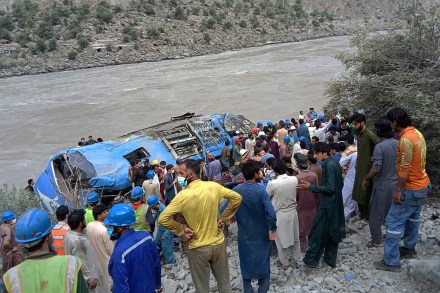
Nine Chinese engineers were killed in an explosion near Pakistan’s Dasu hydroelectric dam last Wednesday. The government initially said that their bus suffered a ‘mechanical failure’ after it plunged into a ravine, but officials eventually admitted that the incident was a terror attack after Beijing decided to send its own investigators. China has now postponed work on the $65 billion (£47 billion) China Pakistan Economic Corridor, a network of roads and infrastructure projects. The programme represents Beijing’s largest overseas investment and is a critical part of its Belt and Road Initiative.

Has India’s second Covid wave peaked?

From our UK edition

While the Indian variant continues to dominate the headlines, India itself seems to have dropped out of the news a bit. What is going on there?  It was reported yesterday that India notched up a record number of Covid deaths on Tuesday – 4525 – which indeed was the record of any country during the pandemic. However, that number needs to be put in the context of the country’s population of 1.3 billion. Grim as it is, it works out at 3.5 deaths per million. This is a fraction of the 27.6 deaths per million recorded in Britain on 20 January 2021. Tuesday’s figure is likely to be the high tide mark in India’s second wave of Covid Tuesday’s figure is also likely to be the high tide mark in India’s second wave of Covid.

The case for sending vaccines to India

From our UK edition

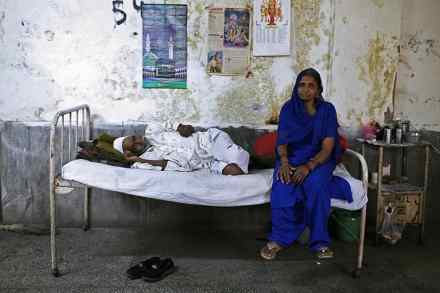
Hospitals in Delhi are openly pleading for supplies of medical oxygen, a commodity so scarce that it is now being sold on the black market for almost ten times the normal cost. Makeshift crematoria are being set up around the city to cope with the surge in the number of deaths. Richer countries are asking why India, with 20 million Covid cases now recorded, is so reluctant to lock down again. It is a good question. The answer lies in the disastrous effects of lockdown for so much of India’s population. Closing any society has serious consequences, but the results were always going to be worse in the developing world. I have been watching the pandemic unfold in India from Stanford University, where I’m a professor of medicine.