Imperialism

The banality of Hélène von Bismarck’s view of Britain is astounding

From our UK edition

Hélène von Bismarck twice quotes (in an officiously corrected version) Robert Burns’s lines: ‘O wad some Pow’r the giftie gie us/To see oursels as ithers see us!’ She is congratulating herself on assuming this role in writing a book about Britain as a German. There is no doubt that out of a mixture of self-regard, curiosity about other people’s points of view and the occasional outburst of ribald mockery, the British have long enjoyed accounts of themselves by visitors. Whether these narratives possess any accuracy or unusual perception is another question, but there seems no doubt that a British audience exists even for ones of the utmost mediocrity and banality.

What has the reparations movement ever done for victims of modern slavery?

From our UK edition

Slavery was – and importantly continues to be – a moral abomination. Its existence in the 21st century is a disgrace. Whole communities such as the Uighurs are subject to forced labour; two years ago it was estimated that 5.8 million people were living in slavery in China. And slavery is a problem much closer to home. Immigrants in the West are also at risk. A student of mine, an Indian national, enquired about the possibility of working at a Brick Lane curry house. He was told that they would ‘employ’ him, but that he would have to surrender his passport and sleep in a locked room on the premises.

The case for MAGA imperialism

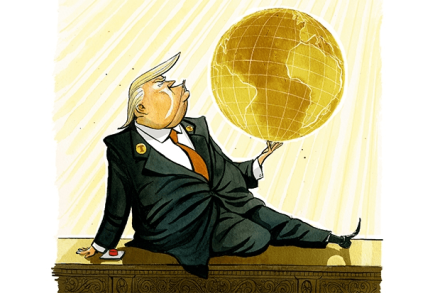
Empire has always been part of the American tradition. We are a sequel state to the greatest empire in world history. Our period of colonial tutelage under that empire taught the lessons of legitimate territorial expansion against French and Spanish rivals. Our continental aggrandizement after independence was necessary. Later overseas expansion, including periods of imperial apprenticeship in places such as Liberia, the Philippines and Panama, was further evidence of our colonial métier. Like it or not, imperialism and colonialism are congenital to the American experiment. This has been the case since 1779, when the Continental Congress branded a proposal to limit westward expansion an “intolerable despotism.

Imperialism

The crimes of Cecil Rhodes were every bit as sinister as those of the Nazis

From our UK edition

This is a brave and learned book. I would recommend it to anyone interested in the history of Africa; who has taken sides in the recent quarrel about ‘Rhodes Must Fall’, in Oxford or other parts of the world; or who wants to entrench themselves in contrary positions in our apparent ‘culture wars’. It is the biography of a vicar’s son, born in Bishop’s Stortford, Hertfordshire in 1853, who went as a teenager to Africa to join his elder brother who’d bought a plot of land in Natal. One day, walking past a stream by the side of a field, he noticed some pebbles gleaming especially brightly. They were diamonds. By the time Cecil Rhodes enrolled as an undergraduate at Oriel College, Oxford, aged 20, he had an annual income of £23,000 – the equivalent of about £1.

Imperialism still overshadows our intellectual history

From our UK edition

Peter Watson begins his survey of the history of ideas in Britain with the assertion that the national mindset (which at that time was the English mindset) changed significantly after the accession of Elizabeth I. His book – a guide to the nature of British intellectual curiosity since the mid-16th century – begins there, just as England had undergone a liberation from a dominant European authority: the shaking off of the influence of the Roman Catholic church and the advent of the Reformation, and the new opportunities that offered for the people. He describes how a culture based largely on poetry and on the court of Elizabeth then redirected the prevailing intellectual forces of the time.

Is it up to pop stars to save the planet now?

From our UK edition

‘Walking by the banks of the Chao Praya on a breezy evening after a day of intense heat,’ writes Sunil Amrith at the start of his melancholic new book, ‘I struggled to connect the scene before me.’ While the river that flows through Bangkok looked idyllic, ‘crowded with noisy pleasure boats festooned with lights’, Amrith was struck by the realisation that half of the city ‘could be underwater by the end of this century’. This thought was the latest stage in a process that he says has taken him time to work out: ‘I can no longer separate the crisis of life on Earth from our concerns with justice and human freedom that inspired me to become a historian in the first place.

Must-watch TV: Apple TV+’s Pachinko reviewed

From our UK edition

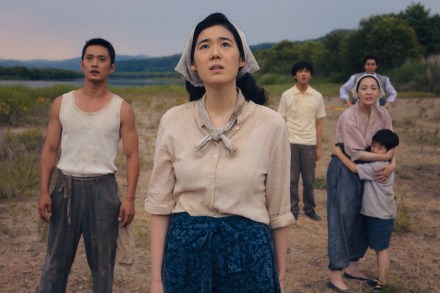
Pachinko is like an extended version of the Monty Python ‘Four Yorkshiremen’ sketch (‘I used to have to get out of shoebox at midnight, lick road clean, eat a couple of bits of coal gravel’) relocated to mostly 20th-century Japan and Korea. There’s so much misery it makes Angela’s Ashes look like Pollyanna. And there’s so little by way of laughter or a redemptive pay off you might be tempted to end it all like one of the numerous doomed characters do – off camera, fortunately – in the almost relentlessly catastrophe-laden season one.

A marriage of radical minds: the creative partnership of Fanny and Robert Louis Stevenson

From our UK edition

It is hard to imagine any Victorian man living a fuller life in a flimsier body than Robert Louis Stevenson – and he certainly wouldn’t have managed it without the support of his partner and wife of several decades, Fanny Van de Grift. Born in Edinburgh on 13 November 1850, Louis suffered from countless childhood illnesses that limited his activity to reading books, writing stories and staging ‘pasteboard theatre’ productions with his nanny, or else travelling to health spas in Marseille, Genoa and Naples. He strongly resisted his father’s efforts to enlist him in his own career as a lighthouse designer, and at Edinburgh University the only thing he excelled at was truancy.

A brief glimpse of secretive Myanmar

From our UK edition

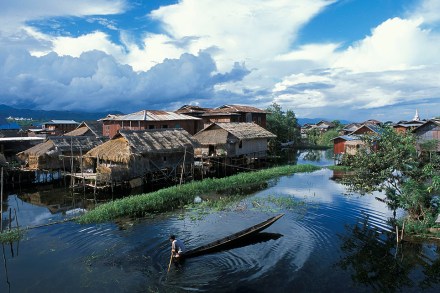
Were trains to blame for the travel writing boom of the 1980s? When Paul Theroux’s The Great Railway Bazaar was published in 1975, it sold 1.5 million copies and launched a publishing phenomenon. At first, long-distance train journeys conjured all the romance of the golden age of travel: leather luggage, first-class compartments and the billowing steam from an antique engine. But with each new imitator, the format became increasingly stale, and now train trips suggest the cushioned charm of Michael Portillo’s never-ending BBC series. Nevertheless, as Clare Hammond shows in On the Shadow Tracks, rail journeys can still take the traveller deep inside a country.

‘Enough to kill any man’: the trials of serving Queen Victoria

From our UK edition

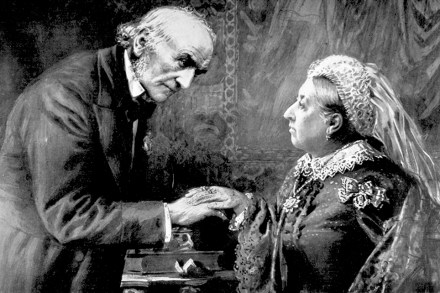
Monarchy was as characteristic of the 19th century as nationalism and revolution. The Almanach de Gotha was a better guide to power than the Communist Manifesto. Constitutional monarchy, in particular, was considered the panacea of the age. On the first morning of her reign, Queen Victoria announced: ‘I have promised to respect and love the constitution of my native country.’ The Times declared her ‘steeped in the spirit of the constitution’. Gladstone said: ‘All the principles of the constitution have been observed by the Queen... in a manner more perfect than has ever been known.’ In reality, as Anne Somerset’s magnificent, disturbing and innovative history of Queen Victoria and her prime ministers shows, this was untrue.

How ever did the inbred Habsburgs control their vast empire?

From our UK edition

In 1960, Felipe Fernández-Armesto and Manuel Lucena Giraldo tell us, Lucian Freud went to the Goya Museum in Castres in search of a particular painting. He wanted to create portraits that were character studies and ‘not mere likenesses’, and Goya’s collective portrait ‘La Real Compañía de Filipinas’,a study in human nullity that represented ‘absolutely nothing’, was just what he was looking for. Fernández-Armesto explains: The work belongs in the tradition of what might be called Spanish ‘anti-portraiture’, from Velázquez’s ‘Las Meninas’ to Goya’s own devastatingly candid royal family group, ‘Familia de Carlos IV’, moral as well as physical delineations of regal vacuity.

The complexities of our colonial legacy

From our UK edition

It happened by accident. In 1829 the naturalist Nathaniel Bagshaw Ward was trying to hatch a moth pupa. He placed it in a sealed glass container, along with some soil and dried leaves, and set it aside. Sometime later he was surprised to find that a fern and some grass had taken root in the soil, despite having no water. As Sathnam Sanghera writes in Empireworld, the discovery ‘revolutionised the logistics of international plant transportation’. Suddenly there was a means of securely transporting seeds and seedlings across vast distances. Empireworld is a sequel to Sanghera’s wildly successful Empireland. Where the latter examined the legacies of empire in Britain, this book seeks to apply that template to the world.

The hubris of the great airship designers

From our UK edition

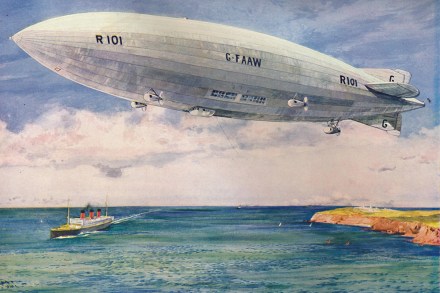
Tribal rivalries have existed from humanity’s beginning and have fuelled the creation of every prestigious monument ever built. By the Age of Science we were building not pyramids but ironclads and submarines fighting for ascendancy at sea, expanding our empires in spite of an ever-growing movement for colonial independence. The Spanish-American war of 1898 added the United States to the list of great nations believing it to be their destiny, even duty, to bring their kind of progress to the world. Many understood that achieving overwhelming technological power as a nation guaranteed that no antagonist would dare attack. Limited by agreements made after the first world war, Britain no longer ruled the waves.

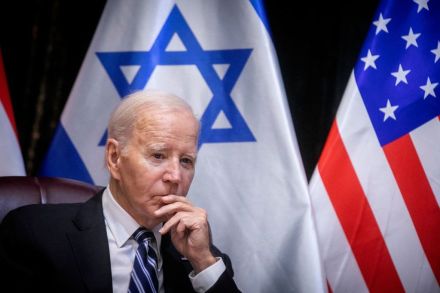
Israel’s imperial problem is ours, too

Israel will win its war against Hamas. But can it win the kind of war the United States lost in Afghanistan? Israel is facing today a dilemma that the West will face tomorrow. For more than sixty years, it has been easy for Western liberals to believe that imperialism is an unnecessary evil. When the US conquers and militarily occupies a foreign country, liberals don’t call it imperialism. It’s merely “regime change,” “nation-building” and “promoting democracy.” Such Newspeak has been powerless to alter the outcome of America’s wars in Iraq and Afghanistan, wars which after successful regime decapitations followed by decades of occupation and trillions of dollars spent on rebuilding failed to establish anything resembling secure liberal democracies in either land.

Israel

What ‘pax’ meant in Rome’s golden age of imperialism

From our UK edition

The Roman emperor Domitian began life as a spare. At the end of the 1st century CE, while his brother Titus was the heir to their father Vespasian, the younger boy’s ‘sense of resentment and frustration had festered’, writes Tom Holland. ‘Rather than stay in Rome, where his lack of meaningful responsibility was inevitably felt as something raw’, Domitian moved away with a wife whom his family disliked, ‘doomed forever to be a supernumerary’, paranoid, attracting gossip, avoiding any company in which ‘innocent mention of baldness’ might be viewed as ‘mockery of his own receding hairline’. In most judgments by posterity this Prince Harry of the early empire fulfilled all this lack of early promise. Big brother Titus became emperor only briefly.

belt and road initiative

China’s Belt and Road Initiative is neo-Imperialism

China’s Belt and Road Initiative (BRI) is touted by Beijing as an attempt at multinational economic cooperation and development, comprising everything from foreign direct investment to the development of infrastructure. However, the purpose of the BRI is not economic or cultural but strategic, and is an effort to mask the expansion of Chinese power. In its strategic intent, the BRI should be considered an imperial project alongside the likes of the British East India Company (EIC) or the Dutch East Indian Company, Vereenigde Oostindische Compagnie (VOC).  With the BRI, China is exercising the 'imperial excuse', just as the EIC and VOC did centuries ago.

The strange effort to ‘decolonize’ global health

"Global health” has emerged in the last decade or so as one of the growth areas in the medical and quasi-medical world. The CDC has a Center for Global Health which “works to protect Americans from dangerous and costly public health threats, including Covid-19, vaccine-preventable diseases, HIV, TB and malaria — responding when and where health threats arise.” Global Health “is a collaborative effort by technologists and researchers from leading international institutions to build a trusted, detailed and accurate resource of real-time infectious disease data.” The Global Health Corps is “a diverse community of health equity leaders.

global health

The reviled Woodrow Wilson

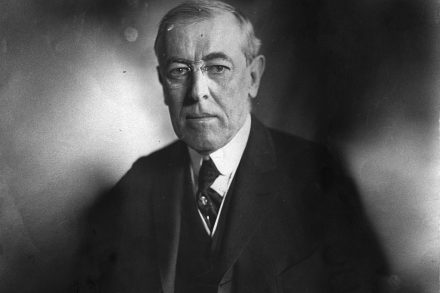
Woodrow Wilson can’t seem to catch a break. Since Princeton University’s 2020 decision to remove the name of the former president (both of the United States and the university) from its school of Public and International Affairs for his “racist thinking and policies,” other academic institutions have followed suit. An elementary school in Trenton, New Jersey, decided in May to drop his name because of Wilson’s “racist values.” Another school in San Leandro, California, made the same decision, as has a high school in our nation’s capital. There’s more than a little irony here. Wilson, racist though he was, was also a leading champion of the progressive, globalist worldview shared by our technocratic elites.

woodrow wilson

Don’t cancel John Donne’s poetry

All the way across the Atlantic, the British literary world has been seized by John Donne fever. Katherine Rundell’s biography of the metaphysical priest-poet has led to excitable chattering about his life and work. The book, Super-Infinite: The Transformations of John Donne, will be released in the US in September — a significant enough delay as to make the Declaration of Independence look like a mistake. Aside from radically different publication dates (again: would you rather have lower taxes and freedom from George III, or a brilliant Donne biography?), the specter of the far-off American continent has long since loomed large in Donne studies.

Maybe Hawaii should be independent

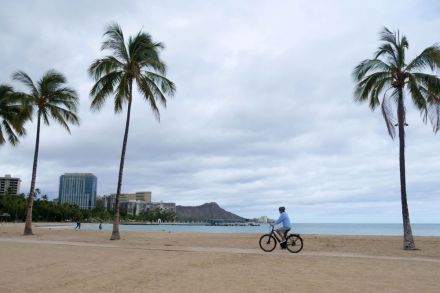
When you’re a writer, there’s no such thing as a vacation — there’s just visiting a new place with the potential to gather more material. Lucky for me, my most recent destination happened to be Hawaii. It’s a fascinating place, and if you didn’t already know it was a US state, it would be easy to mistake it for a distinct English-speaking country, albeit one with obvious and deep American influences. Oahu, the most urbanized island and home of the capital city of Honolulu, is shaped by an idiosyncratic mix of native Hawaiian, East Asian and midcentury American culture. Hawaii resembles a Pacific Island nation at least as much as it does the American mainland.