Huawei

Boris risks backbench rebellion if he doesn’t get Huawei right

From our UK edition

Tory MPs are not happy with the Huawei decision. Normally loyal MPs are expressing their bafflement at the announcement. As one of them put it to me yesterday: if they're not safe to be at the core of the network, how are they safe to be in any of it? The crucial determinant of whether this row continues or not is what this 35 per cent cap on ‘high risk vendors’ means. The government has said that these 'high risk vendors' should be: 'Limited to a minority presence of no more than 35 per cent in the periphery of the network, known as the access network, which connect devices and equipment to mobile phone masts.'...'The recommended cap of 35 per cent will be kept under review to determine whether it should be further reduced as the market diversifies.

Why we’ll regret the Huawei gamble

From our UK edition

It is apparently fine for China to ban western technology from its telecommunications network but quite unacceptable for us to prioritise our national security. The decision to allow Huawei into the UK’s 5G network is the first of many tough choices in the new technological era. And we've flunked it. Why is it a new technological era? Because we no longer simply buy goods in return for money. Increasingly we pay not just in coin, but in data as well; not just in a one-off transaction, but in a perpetual transfer of bytes back to the vendor. And when it comes to 5G, since it will underpin so much more of our lives than 4G, you need to trust that vendor. Huawei has been designated a ‘high-risk vendor’. So it is.

The West can only blame itself for failing to prepare for Huawei

From our UK edition

With Boris Johnson’s government deciding to allow Huawei into Britain’s 'non-core' 5G networks, London is charting a new path for Western nations dealing with Huawei. The UK is not the first European nation to accept Huawei as part of their national 5G systems, but it is perhaps the most significant. London’s success in limiting Huawei’s influence in the system, not to mention ensuring cyber security, will be the test of whether the world truly can live with Huawei, or whether resistance is futile against the dominant global telecommunications company. It also will force the American government to decide whether its current information-sharing arrangements with the UK are now at risk.

The contradiction at the heart of the UK’s Huawei decision

From our UK edition

There is a contradiction at the heart of today's government decision to allow UK telecoms companies to purchase kit from China's Huawei for their 5G and full-fibre broadband networks. It is that Huawei has been officially designated as a 'high-risk vendor' – because it is seen by ministers as subject to direction by an anti-democratic Chinese government and its surveillance apparatus. But – despite pressure from President Donald Trump for Huawei to be banned altogether from the UK's digital infrastructure – Boris Johnson and the National Security Council have not chosen to instruct Huawei to pack up their hi-tech kit and flog it in other parts of the globe.

The dangers of letting Huawei build our 5G network

From our UK edition

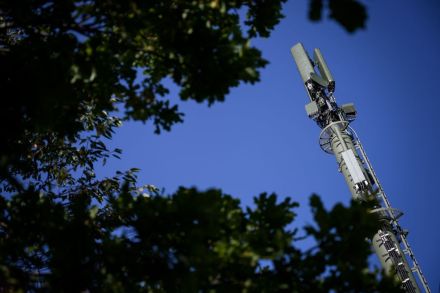
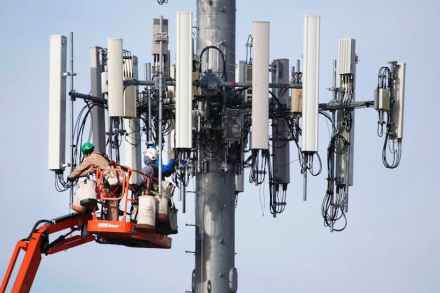
This afternoon Boris Johnson finally approved the use of equipment made by Huawei in building parts of Britain’s 5G network. The decision is a long time coming, having initially been kicked into the long grass by Theresa May last year, but it is also important. The decision will have profound strategic implications for the UK for years to come. Why such a big deal? 5G is the next generation of mobile phone technology. It is faster and more reliable than the 4G most of us are still using. And crucially, the technology isn’t just about improving our phones, as 5G chips will connect pretty much everything, from driverless cars, to electricity grids, to the emergency services.

Is this the week Tory divisions come to a head?

From our UK edition

It's decision time in No. 10. This week ought to be the week in which a decision is made on whether HS2 should proceed – and whether Huawei should be given access to the UK's 5G network. Whichever way the government moves on these issues, a chunk of the Tory party will be left unhappy. On HS2, the initial signs suggest the government is leaning towards giving the project the go ahead – at least in some form. No decision will be made until Boris Johnson meets this week with Sajid Javid and Grant Shapps, the Transport Secretary. However, on Sunday, Stephen Barclay – the Brexit Secretary – suggested on the Andrew Marr show that high speed rail was a key part of the government's promise to level up the country.

The brave new world of 5G

To those who understand it, 5G is the next exciting piece of technology and it is coming to your neighborhood soon. For the rest of us, it is a number and letter that mean almost nothing, but we talk about it as if we really do understand our future and how great it's going to be.The theory goes that 5G is a game-changing new generation of wireless technology, a little like the iPhone of today compared with the old rotary telephone. The scientists behind 5G believe it will, at last, deliver very high data speeds to every connected device and do so with extraordinary reliability.Today, 5G has been deployed in 20 American cities from New York to Atlanta with a further 10 coming online before the end of the year.

5g

Will China meddle in the 2020 election?

This article is in The Spectator’s inaugural US edition. Subscribe here to get yours. Vladimir Putin, as we all know, has become chief electoral strategist in the western world. When he wanted Donald Trump president, he merely set his army of trolls to action and the American public was fooled into backing a candidate who would never have got anywhere near the White House otherwise. That is what the media has been telling us since 2016, anyway. But the idea that Russia can swing a sophisticated electorate of 300 million people with the aid of a fake-news tweet factory in St Petersburg was always fantastical. Even the Mueller inquiry could not prove it — not for want of trying.

china 2020

Trump’s bad Huawei deal with Xi

Trump’s decision to lift the ban on US companies doing business with Huawei, the Chinese telecommunications company, is a stunning defeat for him. It’s also a major reversal for the US intelligence community, which has been concerned for years about what it considers to be Huawei’s wholesale theft of American technology.Lifting of the ban reinstates Huawei at the leading edge of China’s global spying. It undercuts months of private attempts to encourage America's allies to join in what the US hoped would be something close to a worldwide ban. And, over the long term, it also threatens America’s strategic advantage as a leader in new technologies.

huawei

Maybe it’s time to accept that Huawei is a Chinese intelligence front

Established in the southern Chinese city of Shenzhen in 1987, it didn’t take long for Huawei Technologies to become a top player in global telecommunications. Since 2012, it’s been the world’s biggest manufacturer of telecommunications equipment. Last year, Huawei displaced Apple as the world’s second-biggest smartphone maker, after South Korea’s Samsung. Active in 170 countries, Huawei matters – to China and to the global economy.Yet there have long been questions raised about the company, starting with the fact that Huawei’s founder and CEO, Ren Zhengfei, is a former senior technologist for the People’s Liberation Army.

huawei