Holocaust

Life after death | 2 November 2017

From our UK edition

According to the accountants’ ledgers, DVDs are dying. Sales of those shiny discs, along with their shinier sibling the Blu-ray, amounted to £894 million last year, which is almost a fifth lower than in 2015 and less than half of what was achieved a decade ago. And last week we finally said goodbye to the postal DVD service Lovefilm, too. The explanation for this decline is the explanation for many modern declines: digital is taking over. Nowadays, downloads and streaming services make more money than the old physical formats. But accountants don’t know everything. From a different perspective, through the bloodshot eyes of a cinephile, DVDs are thriving — and they’re doing better in Britain than in most other countries.

Brief encounter | 22 June 2017

From our UK edition

How do you follow a film like Shoah? The nine-hour Holocaust documentary, released in 1985 after 11 years of work and 350 hours of interviews — with survivors and perpetrators, saviours and collaborators, historians and bystanders — is considered one of the greatest films ever made. For decades, director Claude Lanzmann kept returning to the subject, raking over the same material, finding it impossible, maybe indecent, to move on. Of the five documentaries he has made since Shoah, four were substantial footnotes to the original, extended — and often extraordinary — out-takes from the acres of unused footage. But Lanzmann did have an answer to the question of what to do next — even though it sounded like a joke.

Cries and whispers | 15 June 2017

From our UK edition

There’s a moment in A Boy in Winter where a young Ukrainian policeman has to escort his town’s Jewish population to a churned-up field under the watchful eyes of his new Nazi masters. It’s November 1941 and Mykola has been told that all he has to do is relieve the Jews of their luggage and move them along. He assumes that they know what’s coming to them. In his mind, the Germans are ‘bastards’ but no worse than his former Soviet occupiers, who burned his family’s fields and grain stores as they fled eastwards. So Mykola has deserted the Red Army and joined the auxiliary police under the Germans, the only way to make a living in the occupied town.

Anti-Semitism is alive and well

From our UK edition

As the size of Nelson Mandela’s cell on Robben Island still haunts me, I had always rejected the idea of visiting Auschwitz because I feared my tears would make the trip about me and not the victims. But thanks to persuasion from my longtime friend Richard Glynn, a former CEO of the bookies Ladbrokes, I spent most of Thursday at the camps an hour from Krakow in Poland. Nothing prepares you for Auschwitz. The stats are stark: 1.1 million victims, mainly Jewish, perhaps 230,000 of them children. If you didn’t die in the gas chamber, you would die in the field, because the SS gave prisoners so little food that they would lose weight and be gone in three months. My abiding memory was the shoes. The little shoes. The large shoes. The dust-covered shoes.

What the papers say: Why Labour must give Ken the boot

From our UK edition

Ken Livingstone's Labour membership card remains valid - but for how long? The former Mayor of London avoided being booted out of the party following his comments about Hitler. But he was told by Jeremy Corbyn yesterday that he faces another investigation into remarks he has made since the party’s decision to suspend him. The newspapers are unanimous: this sorry mess is doing the Labour party no favours at all. We should be grateful, suggests the Daily Telegraph that Ken Livingstone reached for another dictatorial analogy yesterday rather than his usual choice. But his suggestion that being in the disciplinary hearing deciding his future place in the Labour party was like being in North Korea shows his 'almost pathological obsession with making unsavoury allusions’.

Diary – 16 March 2017

From our UK edition

In the NHS clinic where I work, adults who suspect they may have Asperger syndrome wait almost a year for a diagnosis. The clinic takes referrals from all over Cambridgeshire and Peterborough (a population of 860,000), but we have to see all of them in the hours of a single full-time doctor. And the clinic is not given funds to run a follow-up support service once someone has been diagnosed. These individuals struggle to socialise, are neurologically different, and are overlooked because their disability is invisible. Many have experienced bullying in childhood, underemployment in adulthood and exploitation because of their social naivety. Many are made to feel inferior despite their often considerable talents. No surprise that many develop depression.

Dramatic effect

From our UK edition

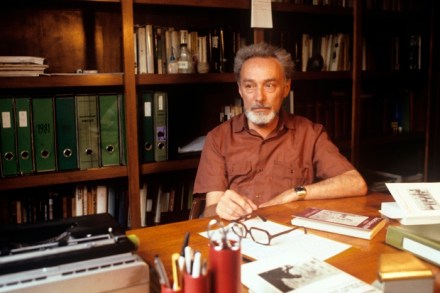
It was hard to believe that Monday morning’s introduction to the Italian writer Primo Levi on Radio 4 lasted for only 15 minutes. It was so rich, multi-layered, filled with meaning. Presented by Janet Suzman, it was intended as a fanfare for the 11-part adaptation of Levi’s most original book, The Periodic Table, in which he explores the chemical elements by equating them to episodes in his own story. Levi, an Italian chemist, was captured by the Nazis as a resistance fighter and a Jew, and at first detained and later sent to Auschwitz. His science training and his knowledge of German saved him from the gas chambers; and a timely bout of scarlet fever ensured he did not die on the death marches from Auschwitz that preceded its liberation.

Two little boys, one little toy

From our UK edition

Rose Tremain sets the true story of Police Captain Paul Grüninger, commander of the Swiss border force in Canton Saint Gallen, at the core of this powerful novel. Grüninger helped hundreds — some sources say thousands — of Austrian Jews fleeing the Nazis in 1938–1939 to enter Switzerland illegally. After a long trial he was dismissed in disgrace, deprived of his pension and forced to pay court fees. His family was destitute and treated as traitors. He died in 1972, penniless and forgotten. Tremain’s fictional Grüninger, Erich Perle, marries a simple peasant girl, who suffers a miscarriage and cannot forgive her husband for ruining her life for the Jews. He dies before the end of the war.

Laws that changed the world

From our UK edition

One of the things Philippe Sands clearly remembers from his grandparents’ Paris apartment — a rather sombre, silent place — is the lack of family photographs. There’s a single, framed, unsmiling wedding photo, and that’s all. There is no mood of bittersweet nostalgia, there are no nods to memory or history. Where did his grandparents come from? How did they end up as these people, whom he knew only towards the end of their lives? Retrieving that history, that deliberately unremembered story, is the beginning of Sands’s task in this remarkable book. Generically speaking, the story is familiar enough. Leon Buchholtz — Sands’s grandfather — was born in what was then Lemberg, in the very heart of Europe.

Filming the Final Solution

From our UK edition

In July 1986, nine months before he died, I met the Italian author and Auschwitz survivor Primo Levi at his home in Turin. He was in shirtsleeves for the interview and the concentration camp tattoo 174517 was visible on his left forearm. (‘A typical German talent for classification,’ he tartly observed.) If This is a Man, Levi’s chronicle of survival, offers a warning to those who deliver facile judgments of condemnation: only those who have survived the Nazi camps have the right to forgive or condemn. Attempts to recreate the Final Solution on screen were mostly a ‘macabre indecency’, said Levi.

No end to the Final Solution

From our UK edition

David Cesarani, Research Professor of History at Royal Holloway University of London, died at the age of 58 on 25 October 2015. The book now appears without its author, a kind of huge mausoleum for an astonishing enterprise. Cesarani wants to change our view of the Holocaust and to close the yawning gap between popular understanding of this history and current scholarship on the subject… to challenge the traditional concepts and periodisations … the term itself. He substitutes the ‘Final Solution’ for the Holocaust, but that Nazi term has become an alternative name for the Holocaust, which remains after 900 pages entirely unchallenged.

Sins of the fathers | 19 November 2015

From our UK edition

This is a documentary in which three men travel across Europe together, but they’re not pleasurably interrailing, even though there are often times they probably wished they were. For two of them, Niklas and Horst, the journey is about confronting their fathers, who were high-ranking Nazi officials responsible for the deaths of millions of Jews, while for the third, the eminent British human-rights lawyer Philippe Sands, it means visiting the place where his grandfather’s family was exterminated. This place, Galicia, which straddles the modern-day border between Poland and Ukraine, is the exact place my own grandmother’s family were murdered. Her father lost every one of his seven siblings. She lost every aunt, uncle and cousin.

The continent in crisis

From our UK edition

Sir Ian Kershaw won his knight’s spurs as a historian with his much acclaimed two-volume biography of Hitler, Hubris and Nemesis. He is now attempting to repeat the feat with a two-volume history of modern Europe, of which this is the opening shot.Inevitably, the figure of the Führer once again marches across Kershaw’s pages as they chronicle the years dominated by Germany’s malign master. First the Great War that gave Hitler his chance to escape obscurity, and then the greater one he launched himself. Opening with the continent’s catastrophic slide into generalised conflict in 1914, Kershaw apportions blame or the disaster more or less equally to all the combatant nations.

The brutal mask of anarchy

From our UK edition

In September 1939 Britain went to war against Germany, ostensibly in defence of Poland. One big secret that the British government didn’t know at the time — and not until much later — was that while the Anglo-Polish alliance treaty was being negotiated during the previous months, the Poles had been actively training and arming terrorists to kill British troops in the Middle East. I don’t normally believe in convoluted conspiracy theories, but this one happens to be true. In the 1930s the anti-Semitic government in Warsaw wanted rid of 3.5 million Polish Jews. Initially they tried to pack them off to Madagascar. But then the Poles hit on the idea of helping Jews create their own state in British-occupied Palestine.

Behind the Black Flag curtain

From our UK edition

So you’ve just popped out of town for the day on an errand. And when you get back, everyone has gone. Your wife, your kids, your nephews and nieces, your friends, your customers: they’ve all been kidnapped and dragged off to a place so barbarically horrible that really they’d be better off dead. Your daughter, for example. If she’s nine or over then she’s considered fair game. She’ll be sold as a slave in the market to the highest bidder — as ever, there’s a premium for blonde hair or blue eyes— after which her new owner can use her as she wishes. The very least she can expect is to have to spend her every day in the most restrictive clothing anywhere in the Muslim world.

‘It’s always wrong to starve’

From our UK edition

‘My mother and father named me Aron, but my father said they should have named me What Have You Done, and my uncle told everyone they should have called me What Were You Thinking.’ So begins, with bitter Jewish humour, this involving book set largely in the Warsaw ghetto. There is a hint of unnerving pastiche in this, but it is a sentence that finds an echo in the compassionate words of Jim Shepard’s hero, Janusz Korczak, in the final sentence of the book. Korczak was a real figure, a paediatrician who ran an orphanage in Warsaw, moved with it into the ghetto and, despite being offered several chances of escape, stayed with his charges when transported to the extermination camp at Treblinka.

The BBC’s latest Churchill documentary is an outrageous hatchet job

From our UK edition

Churchill: When Britain Said No BBC2 The 50th anniversary earlier this year of the death of Winston Churchill produced an international wave of commemoration. Churchill remains among the most widely admired – and most regularly quoted – political figures of the past century, especially in America. While Churchill’s role in history will be legitimately analyzed for centuries, there is a class of Churchill-bashers ('revisionists') for whom the adulation of the last few months (and decades) cannot pass without a spirited answer. And where better to do this than on Britain’s state-owned broadcaster. The revisionists’ first salvo was Jeremy Paxman’s programme ('all the dockworkers hated Churchill') on the January 1965 state funeral.

The lives of others | 14 May 2015

From our UK edition

‘I call Zelma Cacik who may be living in London,’ says the announcer, in the clipped RP accent of the BBC in the 1940s. ‘I call her on behalf of her 16-year-old cousin...’ The voice betrays no emotion, no feeling, it’s so matter-of-fact, but the script spares no punches as it tells the cousin’s story in blunt statements of fact. She was born in Poland, separated from her family when she was 12 and made to work in a munitions factory while her parents, her sisters and brother were sent to Treblinka extermination camp.

Normandy

From our UK edition

I am compiling a list of the best black puddings. It began in Spain when I encountered my first morcilla de Burgos, a rich, spiced black sausage bulked up with rice. I was smitten. No black pudding could compete with this, I thought. But then I moved to Cumbria and in the flat hinterland of the Solway plain I found a butcher who made trays of the black stuff, studded with nuggets of fat the size of a child’s thumb. A portion of this was a veritable slice of heaven. I’ve sampled Stornoway’s, of course, and a black-pudding Scotch egg, but nothing ranked alongside the twin fruits of Burgos and Great Orton.

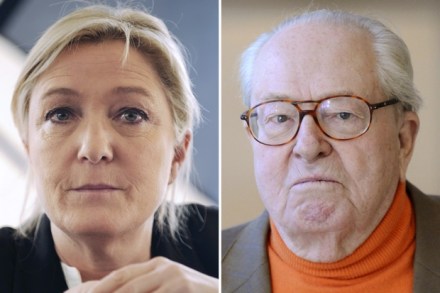
Marine Le Pen is now willing to sacrifice her father in order to defend French Jews

From our UK edition

Marine Le Pen, leader of the French Front National, really is determined to muzzle her father Jean-Marie Le Pen once and for all after his latest refusal to shut up about the Holocaust. On Monday, she won round one after it was revealed that her father would no longer stand in the regional elections. During the departmental election campaign last month, Monsieur Le Pen flouted his daughter’s orders and deployed his usual stock put-downs of the Holocaust as, for example, ‘a detail of history’. Marine was furious with her father, the founder and honorary president of the FN, and ordered him to appear before a party disciplinary committee at which, if no alternative were found, she would ensure he be banned from standing in the key December regional elections.