Holocaust

All that glitters is not gold

From our UK edition

Woman in Gold feels rather like a Jewish version of Philomena as this too is about an older woman seeking justice for what has been stolen from her in the past but, unlike the Jewish version of almost everything, this is not in any way superior, and may even be a dud. It is based on a true story, which is an excellent and fascinating story, but it’s the storytelling that counts, and the storytelling here is not only familiar and pedestrian, but so emotionally manipulative that it doesn’t come with one sentimental ending, but several in quick succession. ‘Oh good, it’s over,’ you will think to yourself, as you make to rise from your cinema seat, but what’s this coming at you? Yet another sentimental ending? Every character gets their own?

What did Ed Miliband’s new big donor mean about a ‘holocaust’?

From our UK edition

Millionaire hippy Dale Vince OBE has written Ed Miliband a cheque for a quarter of a million to counter the struggling Labour leader's business credentials. Worth some £107 million, Vince, who founded Ecotricity, claims 'there’s no way to my mind that the Labour Party is anti-business'. And that's not the only daft thing he has said. Asked by Daisy Green Magazine about whether he was a vegan for environmental or compassionate reasons, Vince replied: 'It's for both those reasons and also it's on health grounds (meat and dairy are bad for us) - and it's because the idea of treating animals in the way we do, subjecting them and their families to this incredibly violent and cruel 'holocaust' year in and out - is just so barbaric and immoral.

If we want to tackle anti-Semitism we must challenge hate speech, not censor it

From our UK edition

One month on from the Charlie Hebdo massacre, free speech is still under attack. The outpouring of public revulsion at the bloody silencing of ‘blasphemous’ cartoonists after the attack was inspiring. It was a visceral display of support for the right to speak one’s mind – as crudely, offensively and blasphemously as one chooses – that has been absent for some time. But deep-rooted ambivalences have remained – and now these look to be exploited by policymakers looking to institute blasphemy laws of their own. When it comes to cracking down on aberrant ideas, Europe has long been leading the way. Restrictions on hate speech are in place across Europe.

Tom Stoppard’s The Hard Problem review: too clever by half

From our UK edition

Big event. A new play from Sir Tom. And he tackles one of philosophy’s oldest and crunchiest issues, which varsity thinkers call ‘the hard problem’. How is it that a wrinkled three-pound blancmange sitting at the top of the spinal cord can generate abstract thoughts of almost limitless complexity? In real life Sir Tom is said to have such a flair for philosophical chitchat that he can fire off searching observations about Descartes, mind-body dualism, the nature of immateriality, being and non-being, the ‘cogito’ and so on, until those around him have slithered into a coma. Which is not rude of them.

Night Will Fall review: the Hitchcock film they didn’t want you to see

From our UK edition

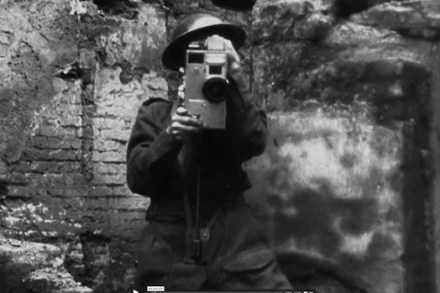
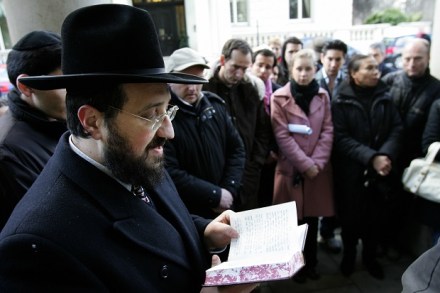
At the synagogue where I happened to be singing last Saturday, the rabbi wrapped up her regular notices with a timely exhortation to her congregants to try to watch the André Singer documentary Night Will Fall. In 1945, as the Allied forces fought their way across Europe, in the process uncovering the hideous network of Nazi death and slave-labour camps, film producer Sidney Bernstein was despatched by the Ministry of Information to lead a few dozen army cameramen tasked with documenting the astonishing extent of the German atrocities.

Adolf Eichmann hoped his ‘Arab friends’ would continue his battle against the Jews

From our UK edition

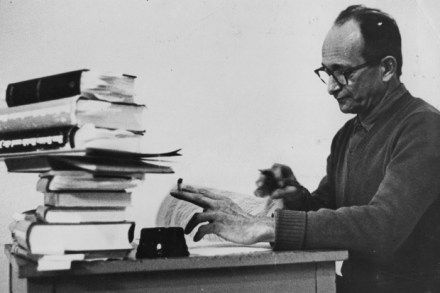
Over Christmas I finally got around to reading Eichmann Before Jerusalem by Bettina Stangneth.  I cannot recommend this book - newly translated from the German - highly enough.  It challenges and indeed changes nearly all received wisdom about the leading figure behind the genocide of European Jews during World War II. The title of course refers to Hannah Arendt’s omnipresent and over-praised account of Adolf Eichmann’s 1961 trial, Eichmann in Jerusalem: a report on the banality of evil.  I would say that Stangneth’s book not merely surpasses but actually buries Arendt’s account.  Not least in showing how Arendt was fooled by Eichmann’s role-play in the dock in Jerusalem.

The siege in a kosher shop in Paris proves why Israel needs to exist

From our UK edition

As I write a siege is ongoing in a Kosher shop in Paris.  In France, Belgium and across Europe in recent years, Jews have repeatedly been the targets of Islamist attack.  They always are.  Last year saw the largest upsurge of anti-Semitic hate crime on record even in the UK. But it is the continent that has seen the worst and growing litany of attacks.  In 2012 Mohamed Merah killed three Jewish children and a teacher at a Jewish school in Toulouse.  In May last year three people were shot dead by an Islamist gunman at the Jewish museum in Brussels. During the twentieth century Judaism on the continent of Europe was almost wiped out.  In twenty-first century Europe the remaining Jews are once again the target.

Germany is shackled in the immigration debate. But Britain isn’t so must lead the way

From our UK edition

Today Angela Merkel will meet David Cameron in Downing Street. She will tell him what she can do – and what she cannot do – to help keep Britain in the EU. Yet she might like to begin by telling him what she plans to do to keep her own people behind the EU project, for in Germany the Eurofederalist consensus is being challenged like never before. In Germany, as in Britain, the most emotive issue is immigration. In Germany, as in Britain, people are scared to discuss this issue frankly, for fear of being branded racists. And now a new movement has emerged to fill this vacuum: Patriotische Europaer Gegen die Islamisierung des Abendlandes, aka Pegida – Patriotic Europeans Against the Islamisation of the West. Who are Pegida? What do they want?

The Nazi origins of the Vienna Phil’s New Year’s Day concert

From our UK edition

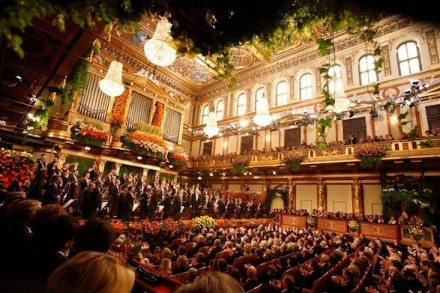
It may be the last water-cooler moment in world television. On the first morning of the year, at 11.15 Central European Time, in a place that considers itself the epicentre of Europe, a group of men in formal dress mount the Musikvereinssaal stage in Vienna to perform a ritual that passes for culture and tradition. It is, of course, neither. The music is strictly bar-room, written by members of the Strauss family as social foreplay for the soldiery and serving classes in low taverns. Like most forms of dirty dancing, the music rose vertically from barroom to ballroom and was soon performed as encores by symphonic orchestras to dowager purrs of wie schön. The New Year’s Day concert is an annual jellybox of waltzes, polkas, galops, marches and any old tritsch-trash.

Haunted by the Holocaust: Three novellas by Patrick Modiano

From our UK edition

Earlier this year Patrick Modiano won the Nobel Prize in Literature ‘for the art of memory with which he has evoked the most ungraspable human destinies and uncovered the life-world of the Occupation’. A prolific and celebrated novelist in France, Modiano is not well known in Britain or America, where only a third of his works have been translated and many are out of print. Yale University Press has a coup in these circumstances with Mark Polizzotti’s translation of three of Modiano’s novellas, commissioned before the Nobel announcement. The novellas originally appeared over five years: Remise de peine (Suspended Sentences) 1988; Fleurs de ruine (Flowers of Ruin) 1991; and Chien de printemps (Afterimage) 1993.

Howard Jacobson’s J convinced me that I’d just read a masterpiece

From our UK edition

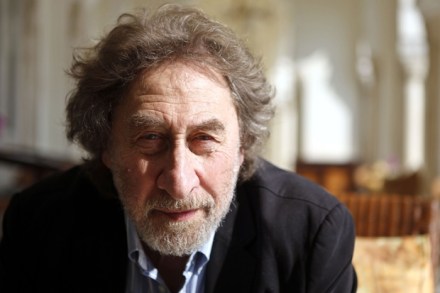
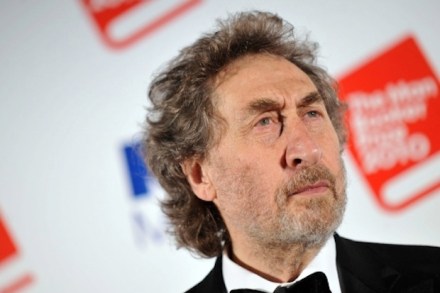
At first sight, J — which has beenshortlisted for the Man Booker Prize — represents a significant departure for Howard Jacobson. It’s set in a future Britain where some sort of apocalypse — known only as ‘WHAT HAPPENED, IF IT HAPPENED’ — has taken place several decades ago. It also contains virtually no jokes. Yet, from within this unfamiliar framework, some familiar concerns soon emerge. In 2010, The Finkler Question was hailed as the first comic novel to win the Booker since Kingsley Amis’s The Old Devils. But the book darkened considerably towards the end, with Jacobson unsmilingly warning his readers — and especially any fellow Jews who regard such warnings as ‘hysterical’ — about the continuing, potentially lethal dangers of anti-Semitism.

Is it really imaginable that the British people could rise up against the Jews?

From our UK edition

Howard Jacobsen’s J has been shortlisted for the 2014 Booker Prize today: At first sight, J represents a significant departure for Howard Jacobson. It’s set in a future Britain where some sort of apocalypse — known only as ‘WHAT HAPPENED, IF IT HAPPENED’ — has taken place several decades ago. It also contains virtually no jokes. Yet, from within this unfamiliar framework, some familiar concerns soon emerge. In 2010, The Finkler Question was hailed as the first comic novel to win the Booker Prize since Kingsley Amis’s The Old Devils.

The Zone of Interest is grubby, creepy – and Martin Amis’s best for 25 years

From our UK edition

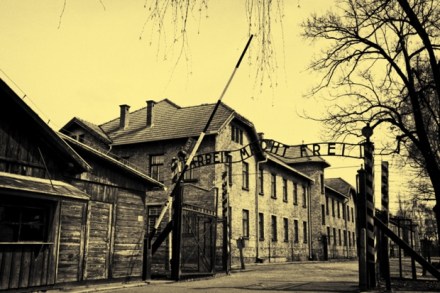
‘Everybody could see that this man was not a “monster”, but it was difficult indeed not to suspect that he was a clown,’ wrote Hannah Arendt of Adolf Eichmann, in Eichmann in Jerusalem. Indeed, Eichmann was certified as ‘normal’ by half a dozen psychiatrists. On more than one occasion in Martin Amis’s troubling new novel one of its main characters, the fictionalised commandant of a thinly disguised Auschwitz, declares himself ‘completely normal’. He also happens to be an oaf, a clown. We are dealing, then, with the banality of evil. Set in the months from August 1942 to April 1943, when it became clear that the Germans were going to lose the war and that the Final Solution had better be hurried up, the story is told in three voices.

Anti-Semitism in Britain makes me feel ashamed

From our UK edition

As silly seasons go, this August has been pretty rubbish, I have to say. Iraq heads the list of gloomy subjects, obviously, as 100,000 Christians and many more Yazidis flee from the genocidal maniacs of the Islamic State. And before anyone asks, yes I do support intervention there: this is not like other conflicts in the region, between two heavily-armed militias both hostile to the West, as in Syria; it is an unprovoked attacked by our enemies against defenceless civilians simply because of their religion, the very thing the post-1945 order was supposed to prevent. Gaza is also deeply depressing; obviously it's existential to the people of Israel and Palestine, but the events the conflict has triggered off in Britain and across Europe make my heart sink.

Before you talk about ‘Lessons from Rwanda’, read this

From our UK edition

In Rwanda I was an ant walking over the rough hide of an elephant — this time 20 years ago I had no idea of the scale of what I could see on the ground. Trekking with a column of rebels from the Ugandan frontier south towards Kigali, we came upon the early massacres of Tutsis, hysterical survivors, flames leaping above huts, mortars roaring down misty valleys. But we had seen a lot of this across Africa in the 1990s. We visited a Catholic pastor in his rectory and I suppose at that point I and my Tutsi guides still respected the priesthood and could not imagine their complicity in murder. As we drank tea with him, we failed to ask why he had the body of a woman with her brains bashed out sprawled on the steps of his church. And then it just went on and on.

When a survivor of Auschwitz asks for your story, what do you say?

From our UK edition

My aim as a hospital visitor is to cheer, befriend, have a chat, do something to disrupt the bleak monotony of the modern hospital day. Some patients talk amiably while others are grumpy, demented patients kept on wards for months and who won’t shut up. Many conversations lead nowhere. Some days the pillow talk is dull, so I paid attention when someone in the chaplaincy mentioned a lady who’d been in Auschwitz and still had the camp tattoo. I’d heard of Polish girls working in London cafés after the war showing numbers etched on their arms, but I’d never met anyone who had one. I taught English in Poland for a year and made friends with a student who came from the village of Oswiecim, which the Germans renamed Auschwitz.

How Denmark’s Jews escaped the Nazis

From our UK edition

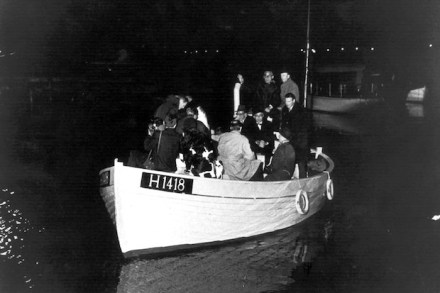
Of all the statistics generated by the Holocaust, perhaps some of the most disturbing in the questions they give rise to are the following. Of the Jews in Hungary, the Netherlands, Greece, Latvia and Poland, between 70 and 90 per cent died, while the corresponding figures for Estonia, Belgium Norway and Romania were between 40 and 50. In France and Italy somewhere around 20 per cent perished. In both Bulgaria and Denmark, however, just one. Bo Lidegaard’s Countrymen is the story of how Denmark to a great extent saved its  Jewish population from the labour and extermination camps, but it inevitably raises issues of equal relevance to the rest of Europe.

I’m proud to say The Book Thief couldn’t pull my heartstrings

From our UK edition

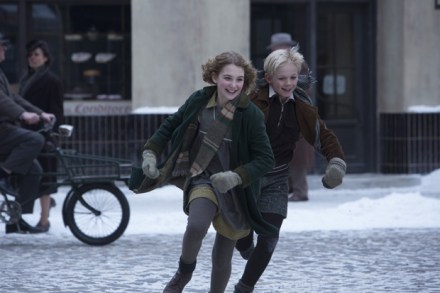
The Book Thief is based on Markus Zusak’s novel of the same name which, although written for young adults, appears beloved by many, judging from the readers’ reviews on the internet, and the frequent declarations of ‘it’s the best book I’ve ever read!’, and there is our first worrying clue, right there. Over the years, of which there have been more than enough — I am quite ready to shuffle off now — I have come to learn that when anyone declares a book ‘the best book I have ever read!’ it tends to be the only book they have ever read.

RIP Alice Herz-Sommer

From our UK edition

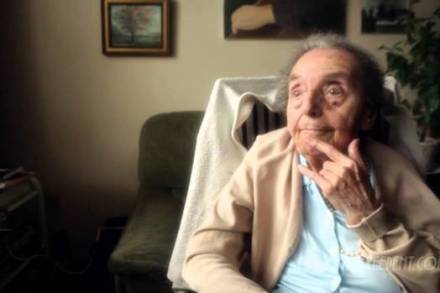
The 110-year-old pianist and oldest known Holocaust survivor, Alice Herz-Sommer, who was imprisoned in Theresienstadt concentration camp, has died. Her extraordinary life, which included childhood encounters with Gustav Mahler and Franz Kafka, latterly became the subject of several documentaries, the most recent of which, The Lady in Number Six, was this year nominated for an Oscar. A clip from it can be seen above.

The Spectator on Britain’s treatment of refugees

From our UK edition

The British government has said it will allow in some of Syria’s most vulnerable refugees. The Home Office hasn’t specified how many will be admitted but says it will probably be in the hundreds. The Syrian civil war has created 2.4 million refugees and 6.5 million internally displaced people, and looking through the archive, you get the sense that some of The Spectator’s former writers might have thought Britain could have offered more this time. The government’s attitude towards Jewish refugees in 1944 was ‘niggardly, bureaucratic, evasive and insincere’, according to the diplomat Harold Nicolson. We’ve historically been ‘proud to succour the oppressed and to defend the weak.