Holocaust

Why doesn’t Russia have a Yad Vashem for the gulag?

From our UK edition

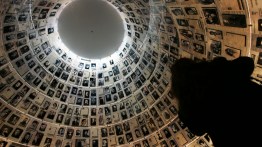
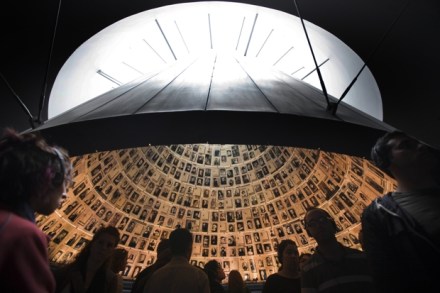
Yad Vashem, Israel’s vast Holocaust memorial complex, dominates a hillside above Jerusalem, surrounded by bare rock and pines. Vast though it is, it manages to be both harrowing and restrained; both rooted in the times it commemorates and thoroughly modern — not just in style, but in the way it harnesses the most advanced technology to its cause. As an enterprise, let alone a monument, it is impressive: a testament to the commitment of Israel and the survivors of Europe’s Jewry to ensure that what happened is never forgotten. But it aspires to more: to convey a sense of the communities that were destroyed and to memorialise, so far as possible, every last individual.
Is President Rouhani’s Iran serious?

From our UK edition

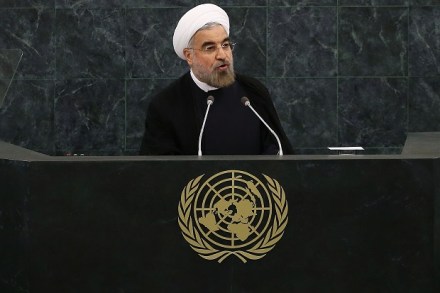
Is Iran serious? That is the question everybody has been asking for the last 24 hours since the new Iranian President went to the UN in New York and gave an interview to CNN. A colossal outbreak of wilful optimism has followed from policy makers, ex-policy makers and media. This has been based largely on the fact that an Iranian President may have just acknowledged that the Holocaust of European Jewry occurred. Well huzzah. For what it’s worth, President Rouhani didn’t quite say that. In the CNN interview he said that it was the job of historians to look at such things. And to the extent that he acknowledged that a ‘crime’ had occurred, Rouhani did so in order to put the Holocaust on an even pegging with the creation of the state of Israel.

In response to Peter Oborne on nuclear Iran

From our UK edition

I am pleased that Peter Oborne concedes that his co-author David Morrison was ‘foolish’ and ‘clumsy’ in his statements. Perhaps Morrison was indeed attempting ‘to be as accurate as he could about what he understood to be the facts’. But that is a statement about the understanding of Mr Oborne's co-author, not a statement about the facts. I still cannot see how anybody who accepts that President Ahmadinejad is a Holocaust denier could have said what Mr Oborne’s co-author said last week. To recap, over at the Telegraph last week David Morrison said: ‘I have never come across a statement from Ahmadinejad saying that the Holocaust didn’t happen.

Memo to Iran’s apologists: President Ahmadinejad has denied the Holocaust

From our UK edition

Has President Ahmadinejad ever denied the Holocaust? David Morrison, co-author with Peter Oborne of a new apologia on the Iranian ‘government’, appears to think that he has not. In a bizarre and disgraceful interview with the Telegraph, alongside his co-author, Morrison recites the main claim of their book – which is that the Iranian regime is not pursuing nuclear weapons. Oborne’s Telegraph colleague Con Coughlin too kindly skewers that claim as ‘delusional’. But even more alarming than that conspiracy theory of theirs is Morrison’s claim (uncorrected by Oborne, the Telegraph’s chief political commentator) that he has ‘never come across a statement from President Ahmadinejad saying that the Holocaust didn’t happen’.

David Ward, Israel and the Holocaust

From our UK edition

David Ward, a Liberal Democrat MP, is in trouble with his party bosses. He chose Holocaust Remembrance Day to indulge in a bit of anti-semitism, suggesting that the very Jews who suffered under the Nazis in death camps were now meting out the same treatment to the poor old Palestinians. I am not sure why he is in the doghouse: this sort of reflexive Jew-baiting lies just below the surface of most of the supposedly principled anti-Israeli posturing among his party colleagues. Not least those who feel the need to appease vast swathes of Muslim voters – Ward’s constituency is Bradford East. It’s good to get it out in the open now and again, so the rest of us can be sure we’ll never vote for them, had we ever been in any doubt.

From the archives: Remembering the Holocaust

From our UK edition

To mark Holocaust Memorial Day, here's a piece Sam Schulman wrote for The Spectator 12 years ago, on his fear that ‘Holocaustology’ will create a new form of anti-Semitism. Did six million die for this?, Sam Schulman, 1 January 2000 The Holocaust dominated the moral imagination of the 20th century. Before the rise of Hitler, anti-Semitism was a parochial concern of the Jews; after the war it was everyone's concern, and everyone regarded it with horror.  The cause of anti-Semitism is a mystery to most Jews and most Gentiles, but it was not a mystery to Isaiah Berlin. He blamed it on the New Testament. That is true of one kind of anti-Semitism, based on history and doctrinal differences. Another kind is more subtle and only a century or two old.

‘Let everyone live happily…’

From our UK edition

Created to remember one of the darkest chapters in mankind's history, Holocaust Day is for many people an occasion for unadulterated discomfort. Most of my family perished in the Holocaust and those who survived either hid in occupied Poland, pretending to be Catholics, fled to Uzbekistan in the then-USSR or, like Marcel Rayman, fought the Nazis. Today I re-read a letter Marcel sent to his family the night before he was executed by the Nazis for trying to kill the German commander of Paris: Little mother, When you read this letter, I'm sure it will cause you extreme pain, but I will have been dead for a while, and you'll be consoled by my brother who will live happily with you and give you all the joy I would have liked to give you.

Thank you, Nacia Anastazja Brodziak

From our UK edition

Today is Holocaust Day. A day to remember the horrors of the past. But it should also be an occasion to recall the moments of hope and the people - and peoples -  that personified that life-saving hope. Like Nacia Anastazja Brodziak who took in my fleeing grandparents, hid them from the Nazis in her tiny Warsaw flat and for five years pretended they were her Catholic cousins from the countryside. I went to see her more than a decade ago. I wanted to thank her. It is actually hard to thank someone without whom neither I nor my father would have been born. Today is a way to do so again - in one's prayers, or thoughts. It is also a day to thank peoples. The selflessness that individuals showed during World War II was also shown by a few nations.

A great historian with fascist tendencies has died

From our UK edition

A great historian has died. He joined the Nazi party in the 1930s, spurred by a fear of the communism which was then spreading through Europe. Although he survived for many decades to see the consequences of the ideology, he nevertheless remained nostalgic for, and loyal to, fascism. He also retained an active interest in the Conservative party and acted as a guru for a time to John Major, though he subsequently expressed disappointment at the direction of his leadership. In a statement the current leader of the Conservative party, David Cameron described the historian as: ‘An extraordinary historian, a man passionate about his politics and a great friend of my family’.

Interview: Bernard Wasserstein and the Nazi genocide

From our UK edition

As 1930s Europe moved towards the catastrophe of the Second World War, much of the greater part of the continent —  for Jews — was being turned into a giant concentration camp. Bernard Wasserstein’s On the Eve, The Jews of Europe Before the Second World War, captures the sorrows and glories of European Jewry in the decades leading up the Nazi genocide. From the shtetls of Lithuania, to the salons of Vienna, Jewish culture was already on the road to extinction. Wasserstein’s book also proves that contrary to received wisdom, there was a growing awareness that Jews were approaching a cataclysmic extinction. Bernard Wasserstein was born in London and has taught at Oxford, Sheffield, Jerusalem, Brandeis, and Glasgow Universities.

Can it be described?

From our UK edition

Where was God in the Holocaust? This question confounds even learned rabbis, so let’s not linger there. Where was God in the Holocaust? This question confounds even learned rabbis, so let’s not linger there. Was there a Holocaust? Until I began preparing this notice I had never looked into the claims of Holocaust deniers. What I found was a volume of assertions that the Holocaust never happened that might make Hitler and David Irving blanch. Very difficult in a different way is how to write about one of the greatest crimes ever and still tell the truth. Can an author who witnessed terrible things write about them while adhering to truth or fact? Here’s a tough example.

Reading between the lines

From our UK edition

‘Voltaire and the Sun King rolled into one’ is how Elizabeth Longford has described her Oxford tutor Maurice Bowra. If the promoters of the e-book have their way, personal libraries of the future will consist of intricate cyber-memories holding thousands of volumes conjured up at the touch of a finger, while the reader, bounded in an electronic nutshell, will count himself a king of infinite space. Gone will be the pleasures of sitting in a book-lined room watched by the ghosts of the garrulous dead, gone the unique feeling of companionship and awe that the accumulation of books over a lifetime can inspire. Gone too the harmless and prurient delight of peering through someone else’s shelves in order to catch a glimpse of his secrets and foibles.

Not for the faint-hearted

From our UK edition

‘You might be wondering how I end- ed up in the lace business . . . ’, so the hero of The Kindly Ones, a doctor of law and former SS officer, introduces himself to readers of his fictional memoirs. Dr Max Aue, an ingenious Nazi of Franco-German descent, has survived the war and assumed a false identity in order to escape ‘the rope or Siberia’. As Berlin falls to the Red Army he slips out of the city and makes his way to Paris disguised as a returning French STO, an enlisted worker. But the war has reduced him to ‘an empty shell, left with nothing but bitterness and a great shame’. And so he decides to write his memoirs.