Hollywood

Why are government unions never the bad guys?

If there is such a thing as a formula for making a hit film, it has something to do with giving audiences a new and unusual villain. Over the years, screenwriters have thrown their protagonists up against enemies as thuggish as boss Johnny Friendly in 1954’s On the Waterfront and as smooth as Olivier’s Crassus as in 1960’s Spartacus. “The more successful the villain, the more successful the film,” as Hitchcock himself once put it. Which is why Hollywood’s constant search for new and unusual bad guys has explored almost every conceivable milieu: corporate America (The Big Short), street gangs (The Warriors), hospitals (Coma), prisons (Shawshank Redemption), law firms (The Firm), and even the movie studio itself (The Bad and the Beautiful).

Ten films starring comedians

From our UK edition

The news that Dave Chappelle has the unwelcome distinction of being the second big-name stand-up comic to be attacked on stage this year has the worrying signs of a possible trend. The first of course was when Will Smith slapped Chris Rock after the comedian made a tasteless joke about Jada Pinkett Smith’s hair (or lack of it) at the 2022 Academy Awards. There is an odd twist of fate about these confrontations though. Back in 1996, Jada Pinkett (as was) played Carla Purty in the remake of Jerry Lewis’s The Nutty Professor. In one scene, she watches with tears of laughter in her eyes as boyfriend Buddy Love (Eddie Murphy) mounts the stage to beat up cruel night club comedian Reggie Warrington – Dave Chappelle. Spooky.

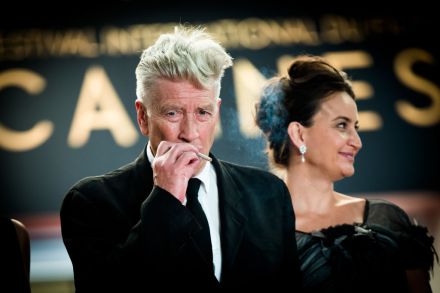
What is David Lynch up to now?

One of the most enduring images from the Oscars came two decades ago, at the 2002 ceremony, when director David Lynch revealed himself as one of the most courteous and pleasant figures in contemporary cinema. Ron Howard had just won the Best Director award for his work on the dishonest and ephemeral mental health drama A Beautiful Mind. As the beaming Howard — one of the most popular figures in Hollywood — headed onto the stage to collect his prize, two of his defeated rivals, Robert Altman and Lynch, embraced one another.

You had to be there

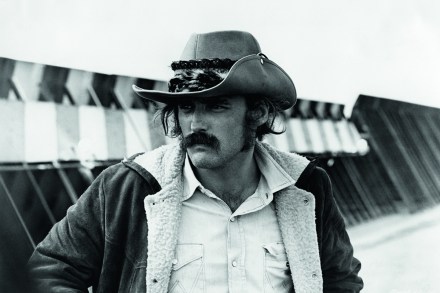
Do you worship Dennis Hopper? Do you get your kicks from sagas dedicated to the lives of the rich and famous? And do you eat up rehashed accounts of the far-out West Coast zeitgeist in the 1960s? If so, Mark Rozzo’s Everybody Thought We Were Crazy is the book you’ve been waiting for. Rozzo starts in medias res: it’s November 1961, and Bel Air is burning. As the firestorm approaches, Hopper and his unlikely wife, blue-blooded poor-little-rich-girl Brooke Hayward, grab her kids and abandon their house — but not before Hopper grabs a Milton Avery painting and throws it in the back of the car.

rozzo

Hollywood won’t say gay in China

Exactly when and where are our stunning and brave Hollywood stars prepared to take a stand for gay rights? Liberal actors and celebrities have a made a show of standing against Florida’s Parental Rights in Education Bill, signed earlier this month by Governor Ron DeSantis, a man progressives seems intent on making the next president. When activists and journalists realized they couldn’t stop the bill from becoming law, they deployed their new favorite tactic: demanding that corporations speak out against the bill (see also: how in response to Georgia’s new voting legislation, they insisted that Major League Baseball relocate the All-Star game).

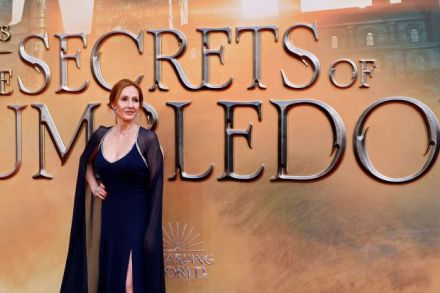
Time to slay J.K. Rowling’s ‘Fantastic Beasts’

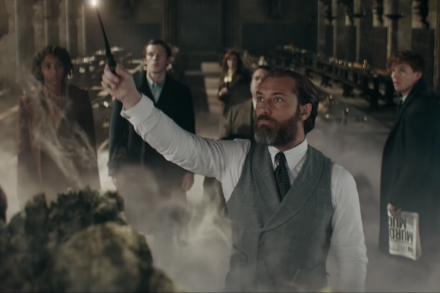
Next week marks the release of the third J.K. Rowling-scripted Fantastic Beasts film, a series that has overstayed its welcome. This latest iteration is subtitled The Secrets of Dumbledore. As if to wrong-foot those who would smirkingly speculate that one of Dumbledore’s secrets is his sexuality, the film opens with the old wizard and his former lover-turned-nemesis Grindelwald (now played by Mads Mikkelsen, replacing a disgraced Johnny Depp) mourning the end of their love affair, which at least makes the homosexual subtext hinted at in previous films explicit. But that, alas, is about it for any kind of coherence, or interest, or originality.

The art of the witty riposte

From our UK edition

One hundred or so years ago, a down-in-the-dumps Joseph Roth wrote to Stefan Zweig: ‘The barbarians have taken over.’ Later on, Zweig committed suicide and Roth drank himself to death. They were both talented writers depressed about the state of the world. Reading their correspondence last week I had to laugh. Neither Roth nor Zweig had experienced Hollywood, and obviously would have died much earlier if they had done so. Which brings me to what everyone is still talking about, how a trained seal smacked another seal half its size during the Academy Awards.

The bitter irony of Bruce Willis bowing out

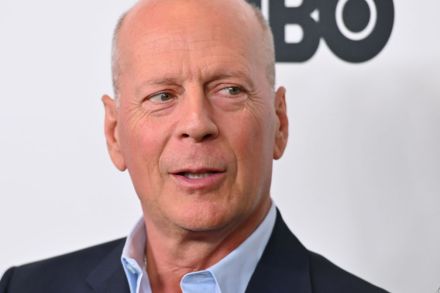
The news that Bruce Willis is to “step away” — rather than explicitly retire — from acting following a diagnosis of the brain disorder aphasia, is sad for both personal and artistic reasons. Even as a flood of stories emerge about Willis’s erratic and unpredictable behavior on film sets over the past few years, it is a bitter irony that, after a lengthy career as the tough guy hero — in Armageddon, he defeated no less an antagonist than a planet-threatening asteroid — the actor has finally been undone by his own brain. The news also makes the recent receipt of Willis’s Golden Razzie “award” for his performance in Cosmic Sin particularly cruel, not least because he was “honored” with a special category, “Worst Performance by Bruce Willis in a 2021 Movie.

Oscars diary: a jaw-dropping night

From our UK edition

Oscar week is intense – and it’s been a while since it’s been as intense. The red carpet is full of eager paparazzi and interviewers waiting for a photo opportunity or a quotable gaffe. My husband and I went to a couple of parties, but the most coveted is the Vanity Fair Oscar viewing dinner at the Annenberg Center. About 100 people are invited by editor Radhika Jones, and we were delighted to be among the chosen few. The ceremony was long and snoozy, and people were scrolling down their phones for entertainment when suddenly one of the most celebrated actors in Tinseltown, Will Smith, rushed to the stage and bashed the comedian Chris Rock in the face. You could almost hear the collective jaw-drops in the silence of that room.

Could today’s Hollywood stars have made it in ancient Greece?

From our UK edition

The Oscar frenzy spent, it is worth reflecting on how easy writers and actors have it these days. The ancient Greeks invented our idea of acted drama, and the conventions were tough. Here are the main ones. In myth-based tragedies, for example, all the speaking parts – young and old, male and female – were played, and occasionally sung too, by only three fully masked male actors (one play had 11 speaking parts – work that out!). There was also a ‘chorus’ – 12 or 15 actors, all masked, singing and dancing in unison between episodes, though the leader could converse with the main characters. Of low social status, they provided an alternative collective voice to that of their ‘heroic’ superiors.

Will Smith’s slap was a triumph

From our UK edition

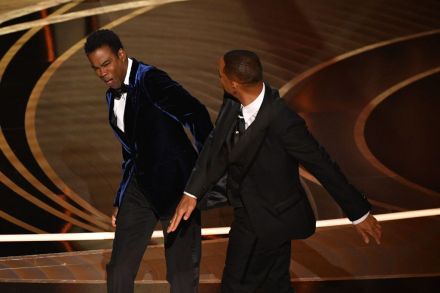
Will Smith’s straight arm slap of Chris Rock at the Oscars was, for my money, the most interesting event ever to have transpired at any awards show in history. It pips even my previous favourite, which was when Jarvis Cocker ran onstage during the 1996 Brits to reveal his buttocks in protest at Michael Jackson’s ludicrously overblown performance of Earth Song. Did Rock ask to be attacked for humiliating Smith’s wife, Jada Pinkett-Smith, on account of her alopecia? Yes, of course. But that was the point. The joke was predicated entirely on the comic getting away with saying the unsayable – a formulation of words intended to be deeply provocative – and for the audience to experience the attendant risk as electricity.

Will Smith’s slap saved a poor Oscars

The news stories regarding the 2022 Academy Awards were supposed to be about how it was the first time a film (Coda) produced by a streaming service (in this case, Apple TV) took the highest award at the Oscars. But moments earlier, Will Smith had marched on stage to slap Chris Rock — and everything changed in an instant. Without any doubt, the thirty seconds it took Smith to assault Rock, who had been making poor-taste jokes about Smith’s wife Jada Pinkett’s alopecia, and to bellow repeatedly, “Keep my wife’s name out your fucking mouth,”will prove to be game-changing, both for the Academy Awards and for Hollywood at large.

will smith

Hollywood, fist-fights and getting canceled

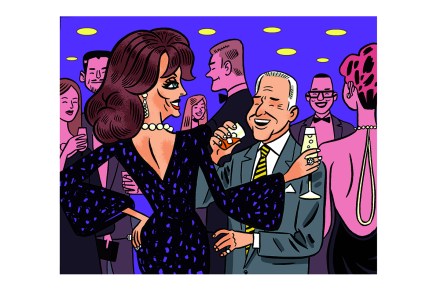
Introductions Scene: a drawing room in London. When the recording starts, Taki is already mid-anecdote... Taki: I was sent out to Monte Carlo to speak to Roger Moore. The Spectator offered to pay all my expenses. I said thank you, I’ll pay my own. I went and had a terrific drunken dinner with Roger who really spilled the beans, cos we were buddies. I came back. The tape was empty because I’d never turned the recorder on. Joan: I’d known Roger since I was fifteen, because my father was a big agent in London and I came back from school — oh, fourteen actually, because I left school at fifteen — and there’s the most gorgeous man I’ve ever seen standing there. He came over and said, “How do you do? You must be Joan, my name is Roger Moore.

Joan Collins
waugh

Waugh in Hollywood

The English author and curmudgeon Evelyn Waugh (1903-66) is today best known for his 1945 novel Brideshead Revisited. A luxuriant evocation of the beauties of pre-World War Two Oxford, coupled with a cautionary narrative about the destructive power of Catholic guilt, it has remained a constant favorite with everyone from college students to literature scholars. It was memorably filmed for British television in 1981, and it launched the careers of Jeremy Irons and Anthony Andrews as, respectively, the novel’s narrator Charles Ryder and the flamboyant aesthete Sebastian Flyte.

How to save the Oscars

From our UK edition

This Sunday’s Academy Awards will be a litmus test of whether Hollywood can uncouple itself from the political agenda of young woke radicals that is proving so unpopular in the US. Joe Biden had a stab at it during his State of the Union address, criticising the ‘defund the police’ movement for fear of a Democrat wipeout in the midterms, and the New York Times did an astonishing volte-face last week, publishing an editorial in defence of free speech. A bit rich from the paper that recently forced out its most distinguished science reporter at the behest of its junior staff for using the n-word in a discussion about the appropriate use of the n-word. But will the luvvies be able to resist trotting out all the usual fashionable platitudes about sex, race and gender?

William Hurt — a life in two acts

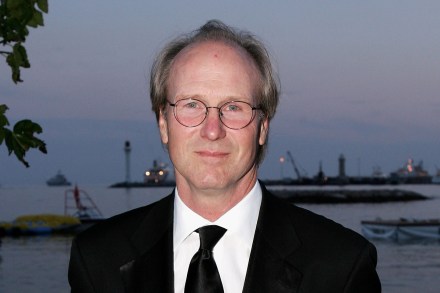
It is a depressing statement on the banality of the film industry that the death of actor William Hurt, at the age of seventy-one, was marked by at least one obituary stating, “Avengers star dies.” Hurt, who appeared in several Marvel films as the military character Thaddeus Ross in his latter-day career, did indeed appear in the mega-grossing Avengers films Infinity War and Endgame, and I very much hope that he received some tiny portion of the films’ enormous box office receipts in recognition of his appearance. But to describe Hurt’s life and work as defined by his Marvel roles reminded me of the great Alan Bennett line about his sexuality: “It’s like asking a man who has just crossed the Sahara whether he would prefer Perrier or Evian water.

william hurt

Why does Hollywood ruin literature’s best characters?

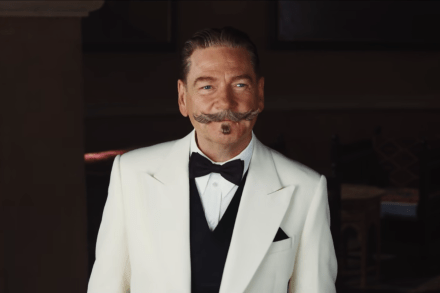
I remember enjoying Murder on the Orient Express a few years ago, when I took refuge from a real-life blizzard in a Jackson, Wyoming theater to watch Kenneth Branagh’s decadent take on Agatha Christie’s snow-covered murder mystery. It was memorably cast with big-name talent (Johnny Depp makes one heck of a sleazy bad guy) and exquisite, if sometimes over-the-top, costumes and décor. If memory serves, the movie ended as a suspenseful and satisfying cinematic treat. Death on the Nile, not so much. Branagh teased his next adaptation of an Hercule Poirot novel at the end of Orient Express, but I found his second attempt wasn't worth the five-year wait.

kenneth branagh poirot hollywood

The last stand for intelligent films?

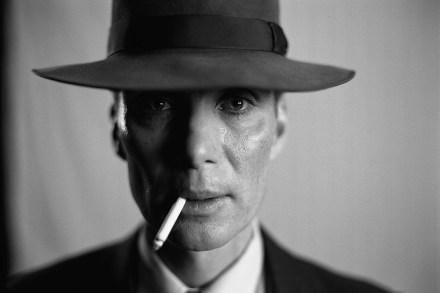
This week, Christopher Nolan’s new picture Oppenheimer began production. Its star-studded cast features everyone from Cillian Murphy as the theoretical physicist J. Robert Oppenheimer to Emily Blunt (as his wife Katherine) to Matt Damon (Manhattan Project director Leslie Groves) to Robert Downey Jr. (as Oppenheimer’s nemesis Lewis Strauss), with Florence Pugh, Rami Malek and Kenneth Branagh in support. Nolan has been granted a $100 million budget by his new studio, Universal, after angrily leaving Warner Bros. in a row over their decision to deny their 2021 pictures an exclusive theatrical release. The implication is clear: Oppenheimer will be a very big deal indeed. Nolan himself possesses a unique level of influence in contemporary Hollywood.

christopher nolan oppenheimer

The Oscar noms are out but does anyone care?

Lady Gaga fans, unite in grief. Their idol — who was widely expected to win the Best Actress Oscar this year for her performance as the murderous Patrizia Reggiani in Ridley Scott’s House of Gucci — has not even been nominated for the award. In her place are Kristen Stewart, Jessica Chastain and Nicole Kidman — who are recognized for playing real people, respectively Princess Diana, Tammy Faye Messner and Lucille Ball — as well as Oscar stalwarts Olivia Colman and Penélope Cruz. Any of them stands a decent chance of winning now that the Gaga threat has been removed. But this still represents the greatest volte-face in what is otherwise a largely predictable set of Academy Award nominations.

Hollywood awards shows have become boring

Recently, the Golden Globes were handed out in the most low-key fashion imaginable. Gone are the days of glitzy, alcohol-laden bashes, complete with Ricky Gervais making near-the-knuckle digs at Hollywood icons, who look as if they’d happily knock him down. Instead the results this year were announced in that most pandemic-friendly of ways: via the Hollywood Foreign Press Association’s social media feed. It was socially distanced, devoid of any potential for gossip or scandal — two qualities forever associated with the Globes — and deeply boring. The results themselves were mainly sensible.