History

Doomed to despotism

From our UK edition

Khomeini’s Ghost, by Con Coughlin The Life and Death of the Shah, by Gholam Reza Afkhami The fall of the Shah of Iran at the beginning of 1979 took the world by surprise. A self-confident autocrat, supported by a large, American trained and equipped army and a ubiquitous and powerful security service, he was driven from power in less than six months by a motley alliance of middle-class liberals, clerical fanatics and student demonstrators, without a blow being struck in his defence. The impression of sudden cataclysm was accentuated by the character of the Shah’s successor: a bearded Islamic ideologue, who flew in from Paris after 15 years in exile. All the signs are that the diplomatic and intelligence services of the West were as unprepared as every one else.

Reading between the lines

From our UK edition

‘Voltaire and the Sun King rolled into one’ is how Elizabeth Longford has described her Oxford tutor Maurice Bowra. If the promoters of the e-book have their way, personal libraries of the future will consist of intricate cyber-memories holding thousands of volumes conjured up at the touch of a finger, while the reader, bounded in an electronic nutshell, will count himself a king of infinite space. Gone will be the pleasures of sitting in a book-lined room watched by the ghosts of the garrulous dead, gone the unique feeling of companionship and awe that the accumulation of books over a lifetime can inspire. Gone too the harmless and prurient delight of peering through someone else’s shelves in order to catch a glimpse of his secrets and foibles.

In a class of his own

From our UK edition

‘Voltaire and the Sun King rolled into one’ is how Elizabeth Longford has described her Oxford tutor Maurice Bowra. As Fellow and then Warden of Wadham College from 1922 to 1970 and successively Professor of Poetry, Vice Chancellor of the University and President of the British Academy, this short, powerfully built, unbeautiful, but magnetic man for years gave the tone to the university. He was a brilliant wit and a challenging and imaginative college tutor. Late in his career, he fought an intelligent rearguard defence of the University’s independence. His biographer, Leslie Mitchell, well-known for his works on Whig history, has drawn on years of local Oxford knowledge and unpublished manuscript material for this penetrating portrait.

The end of the affair | 28 March 2009

From our UK edition

Given the anti-Americanism displayed on every possible occasion by the French since the days of De Gaulle, and the crudely expressed contempt with which Americans have responded, particularly over the past decade, it is easy to forget that the two nations once enjoyed a relationship even more ‘special’ than the supposedly exclusive one between Britain and the United States. That relationship, which began with Benjamin Franklin’s seduction of French society and Lafayette’s participation in the American revolution, blossomed into a love affair in the two decades following the Great War. Many Americans who had fought in it stayed behind. The comparatively low cost of living permitted penniless writers and artists, as well as society ladies, to congregate in Paris.

Rome on the skids

From our UK edition

The Fall of the West: The Death of the Roman Superpower, by Adrian Goldsworthy The Ruin of the Roman Empire, by James O’Donnell These two fat, well-sourced books about the decline of ancient Rome run, until they limp, in relay. Adrian Goldsworthy begins his leg from the end of the second century AD, the term of the Antonines (under whom Edward Gibbon could imagine himself happy, so long as he was a patrician), through the nervous three centuries which ended with the incursions — here seen more as forceful immigrations — of the Huns and the Goths.

Order out of chaos

From our UK edition

What got into them? For two decades in the middle of the 17th century, English- men transformed their world, overthrowing and eventually executing their king, abolishing bishops and the House of Lords, and incidentally slaughtering each other — and from time to time their Scottish and Irish neighbours — on a scale that approached the carnage of the first world war. Explaining these ‘English civil wars’ — the term Blair Worden gives to the sequence of conflicts that afflicted the country between 1640 and the Restoration in 1660 — has always been tricky.

A poisonous legacy

From our UK edition

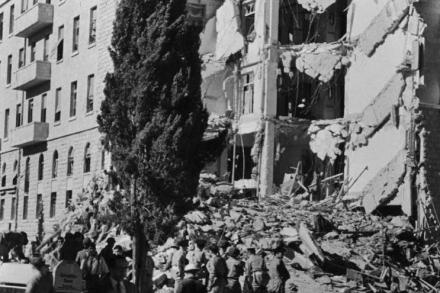
A Senseless, Squalid War: Voices from Palestine 1945-1948, by Norman Rose Major Farran’s Hat: Murder, Scandal and Britain’s War Against Jewish Terrorism, 1945-1948, by David Cesarani The second epigraph in Norman Rose’s eloquent, comprehensive and even-handed book, A Senseless, Squalid War, says it all, from Palestine in the late 19th century to Gaza right now. In 1891, the Zionist philosopher and poet Asher Zvi Ginsberg, wrote: From abroad we are accustomed to believing that the Arabs are all desert savages, like donkeys. But this is a big mistake. The Arabs, and especially those in the cities, understand our deeds and our desires in Eretz-Israel.

Not for the faint-hearted

From our UK edition

‘You might be wondering how I end- ed up in the lace business . . . ’, so the hero of The Kindly Ones, a doctor of law and former SS officer, introduces himself to readers of his fictional memoirs. Dr Max Aue, an ingenious Nazi of Franco-German descent, has survived the war and assumed a false identity in order to escape ‘the rope or Siberia’. As Berlin falls to the Red Army he slips out of the city and makes his way to Paris disguised as a returning French STO, an enlisted worker. But the war has reduced him to ‘an empty shell, left with nothing but bitterness and a great shame’. And so he decides to write his memoirs.

Pure, but never simple

From our UK edition

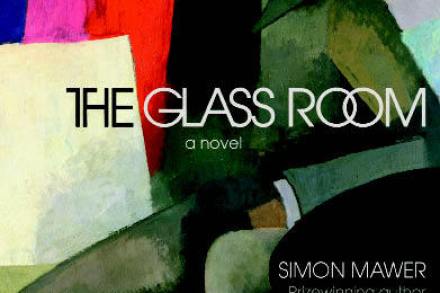
Here at last is a novel informed by exceptional intelligence. The blurb states that the author, Simon Mawer, was born in England, but it seems likely that his ancestry was Czech, since he is acquainted with the language and the customs of pre-war Czechoslovakia and has learned of its travails during the German and Russian occupations. And it is clear from his narrative that the country was both sophisticated and cultivated in its manifestations, influenced perhaps by its position at the heart of Europe and subject to both the best and the worst of its fashions. This alone would mark it as unusual: the clarity with which it is written is almost unfamiliar and certainly to be admired.

From palace to cowshed

From our UK edition

Madame de la Tour du Pin’s Journal d’une Femme de Cinquante Ans, with its vivid descriptions of her experiences during the French Revolution and the Napoleonic Empire, is one of the most enthralling memoirs of the age: a hard act, one would think, for a biographer to follow. Caroline Moorehead succeeds in doing so triumphantly in a rich and satisfying book which not only adds to our appreciation of her story but brings the whole tumultuous period and its characters to life. Born in 1770 into the highest reaches of the French nobility, Lucie-Henriette Dillon spent a lonely and unhappy childhood, brought up by a tyrannical grandmother after her mother’s death when she was 12.

A monumental achievement

From our UK edition

Like virtually everyone middle-aged and middle-class in this country, I am a beneficiary of the cult of Civilisation — Kenneth Clark’s ‘personal view’, stretching in 13 episodes from the Vikings to Van Gogh, which was broadcast on BBC2 in 1969 and on BBC1 two years later, as well as appearing as a sumptuously illustrated, best-selling book. Like virtually everyone middle-aged and middle-class in this country, I am a beneficiary of the cult of Civilisation — Kenneth Clark’s ‘personal view’, stretching in 13 episodes from the Vikings to Van Gogh, which was broadcast on BBC2 in 1969 and on BBC1 two years later, as well as appearing as a sumptuously illustrated, best-selling book. What was the source of the programme’s magic?

How different from us?

From our UK edition

The Ends of Life: Roads to Human Fulfilment in Early Modern England, by Keith Thomas The English past is not what it was, for professional historians anyway. The rest of us still talk about the Tudors and the Stuarts, about Renaissance and Reformation and the Augustan Age. But within the academy all these dynasties and eras are now bundled up into what is called the Early Modern period. The inhabitants of this huge stretch of time can only be made sense of, it seems, if we think of them as a rough, awkward prelude to Us. It is startling how rapidly Early Mod has flattened the competition, and flattened our island story into a tale with only two parts, Before and After Modernisation. For it is a quite recent coining.

Heartbreak hotel

From our UK edition

Here surely is what Joseph Conrad meant when he wrote that above all he wanted his readers ‘to see.’ In The Post Office Girl Stefan Zweig explores the details of everyday life in language that pierces both brain and heart. Born in 1881 into a rich Austrian-Jewish family, Zweig was the embodiment of pre- and inter-war Viennese intellectual life. A biographer, essayist, memoirist, short-story writer and the author of one finished novel, Beware of Pity, he delivered the oration at Freud’s funeral. During the Thirties, Zweig wrote The Post Office Girl, originally Rausch der Verwandlung (The Intoxication of Transformation). The English title is better.

Surviving the Middle Passage

From our UK edition

The Book of Negroes, an historical romance, creates an unforgettably vivid picture of the Atlantic slave trade and the philanthropists who sought to oppose it. The novel opens in Africa in the year 1745. Aminata Diallo, a midwife’s daughter, has been abducted from her village in present-day Mali and marched in chains to a slave ship, where she is sold to white traders. In the course of the two-month voyage to America, she witnesses a violent shipboard slave revolt, yet is miraculously able to survive the Middle Passage, before reaching Carolina. Plantation life in the American south, with its hierarchy of skin tones ranging from black to cinnamon to white, is precisely evoked by Lawrence Hill, himself a Canadian of mixed-race background.

A slow decline

From our UK edition

The Inheritance of Rome: A History of Europe from 400 to 1000, by Chris Wickham This outstanding book covers what used to be called the ‘dark ages’. Publishers rarely speak of the dark ages now. It does not sell copies. But the title still encapsulates the conventional view of the period: a civilised empire destroyed by barbarians and replaced by a world of anarchy and superstition, a universal monarchy superseded by a mosaic of statelets ruled by men with unpronounceable names, long hair and uncouth habits, an age of grim ignorance with few literary or administrative sources and those reflecting the enclosed prejudices of monks and priests. Geoffrey of Monmouth and Edward Burne-Jones are the only people who ever injected a touch of romance into this bleak picture.

Ending the Vile Traffic

From our UK edition

Sweet Water and Bitter: The Ships that Stopped the Slave Trade, by Siân Rees The narratives of slavery have, it’s safe to say, replaced the narratives of imperial adventure in our reading lives, and our moral compasses are orientated by indignation at suffering and exploitation rather than by the contemplation of our ancestors’ achievements. The slave trade, considered ‘relevant’ as well as a gruesome spectacle of human suffering on a colossal scale, is taught in schools and familiar to millions to whom ‘Nelson’ suggests only Mandela. And yet the abolition of the slave trade, over long, difficult decades, was one of the bravest and most serious endeavours of the British in the 19th century.

The true Stoic

From our UK edition

An early memory from the years we lived near Stowe was the sight of my father pushing our front door firmly shut in the face of one of its headmasters, who was attempting to force his way in and apologise for some misdemeanour. He had, I believe, tried to seduce my mother. Later on I shared a London flat with a Stoic, a dark, mysterious, gipsy figure who worked on Ready, Steady, Go but was principally a beautiful tennis player, mentioned here for having helped Stowe win the Public Schools Championship in successive years. Sometime after I left, he was found by the police dead in the bath. Nights there had been full of incident.

The origin of the theory

From our UK edition

Darwin’s Sacred Cause, by Adrian Desmond and James Moore Darwin: A Life in Poems, by Ruth Padel In 1858, on the brink of publishing his theory of evolution, which I discussed here three weeks ago, Charles Darwin took a hydropathic rest cure at Moor Park, near Farnham in Surrey. While walking on the sandy heath, he caught a glimpse of ‘the rare Slave-making Ant & saw the little black niggers in their Master’s nests’. A certain species of red ant kidnaps the young of a smaller black ant and rears them as unwitting slave workers in the service of the red queen. Darwin had heard about this phenomenon but had not till then seen it. Darwin’s upbringing had been steeped in the anti-slavery movement.

Behind the fighting lines

From our UK edition

M. R. D. Foot confesses that he has always endeavoured to follow Whistler’s counsel, ‘Not a day without a line’. His written output is impressive and his judgments severe on those who do not come up to his standards. Heinz Koeppler, his boss at a Foreign Office study centre, with his fawning on his superiors and bullying of his staff, turned out not to be a gentleman. Foot makes clear in his first chapter that he himself comes of gentleman stock and is proud of it. True, his father married a Gaiety Theatre chorus girl; but his grandfather had married an heiress, retired as a general from the army to set up as a country gentleman.

One-man triumph

From our UK edition

The Companion to British History (Third Edition), by Charles Arnold Baker Readers familiar with the first edition of The Companion to British History (Loncross, 1997) will already know that its value as a reference work proceeds from an inclusive attitude towards its subject. Besides providing the rudiments — monarchs, battles etc — the CBH was particularly strong on the constitution, law, local history, the Empire, anecdote, circumstance, and much else. It was also a useful stand-in for The Dictionary of National Biography. This third edition comes again with the glorious yellow jacket (which Routledge’s second edition discarded), but it has many more entries. We can read, for example, a crisp two-page summary of the Blair and Brown Government.