History

The difficulties of writing historical fiction

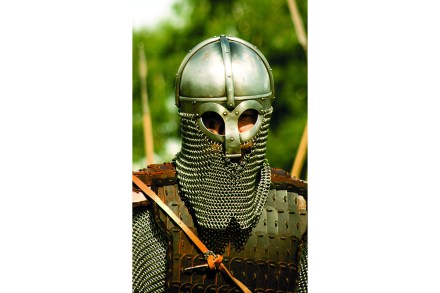
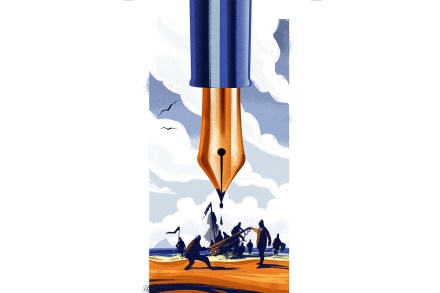
I was dozing, a little hungover, on the morning flight from Prague to London, when I saw them for the first time. Ten men on a beach, dragging a landing craft up the sands. Where? Can’t tell yet. When? The fourteenth century. Who? Don’t know, but they look like trouble. I woke up. Through my AirPods I heard the Blur singer Damon Albarn growling the final song from their 1997 album Blur. “In these towns, the English army grinds their teeth into glass / You know you’ll get a kicking tonight...” I opened my laptop and started making notes. The men came surprisingly well-formed. They were soldiers of fortune in the Hundred Years’ War. They already had names. Faces. Talents. Foibles. Yearnings. Secrets. I wrote down as much as they could tell me before the plane landed.
historical fiction

The dangerous myth-making in the Banshees of Inisherin

From our UK edition

I never made it to the end of Martin McDonagh’s The Banshees of Inisherin, which won four Baftas on Sunday and has been tipped for further success at the Oscars next month. Inisherin is a fictional place that apparently translates as 'Island Ireland'. I know it’s probably churlish of me, but, being Irish, I was turned off by the film’s maudlin sentimentality mixed with self-obsession, self-harm, child abuse, wanton violence, dead pets and suicidal ideation. It bothered me that the film trotted out as many Oirish stereotypes as were in Gone With the Wind, released in 1939. Let me list some of the most obvious of these at the outset.

How the British saved India’s classical history

From our UK edition

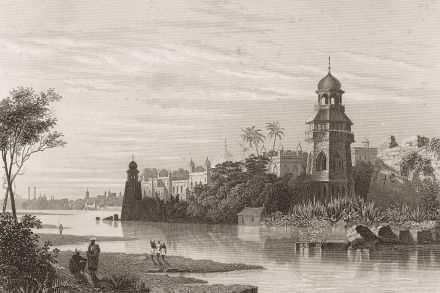
In India, a generation has been brought up on the academic Edward Said’s unhistorical prejudices towards the British and what he called the ‘colonial gaze’. In his eyes, British Orientalists were guilty of what is now termed ‘cultural appropriation’.  To his followers it therefore may come as a surprise to learn that it was British Orientalists who in fact rediscovered India’s classical history and heritage and made it available to the rest of the world.  Sir William Jones, a brilliant polymath, contributed more than any other individual to India’s national renaissance. Alongside his day job as a judge in Calcutta, Jones mastered Sanskrit, translated Indian classics and used it to unlock the glories of India’s long forgotten Hindu and Buddhist past.

Is this Britain’s most historic house?

From our UK edition

Hyperbole in estate agents’ brochures isn’t unusual – but when it comes to a write-up for Great Tangley Manor, which has gone on the market for £8.95 million, overkill is almost impossible. Believed to be the UK’s oldest continuously inhabited property – its Saxon foundations date from 1016 – the Grade I-listed moated manor house, in the village of Wonersh in the Surrey Hills Area of Outstanding Natural Beauty, comes with an extraordinary roll call of associated famous names. From the spheres of royalty, art, literature, garden design and even America’s Gilded Age, all have played their part in shaping secluded Great Tangley into a country house with a compelling story.

Titanic was the original White Lotus

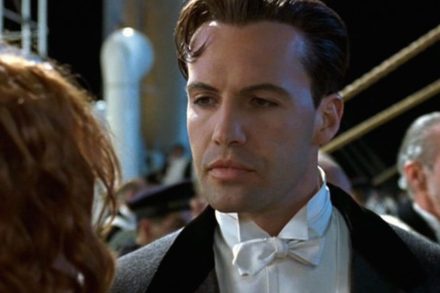
When James Cameron’s Titanic sailed into US theaters twenty-five years ago, smashing box office records in the process, it subversively made the argument that the villain in the film was not the iceberg, but its first-class passengers. While it wasn't a satire like The White Lotus, Cameron's film feels like one of the pioneers of the over-the-top "eat the rich" criticism that produced the viral "send them to White Lotus" memes. One of those memes should have included the cartoonishly repellent Cal Hockley, played perfectly by Billy Zane — the epitome of bourgeois arrogance.

titanic

Ancient Apocalypse and the end of history programs

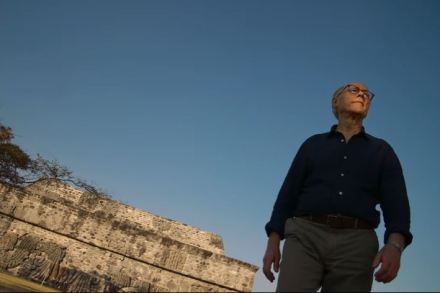
For those with a love of history who remember what the History Channel once was, its current state is a travesty. What was once populated with interesting documentaries is now home to Ancient Aliens and Swamp People. Despite the channel being quite literally called the History Channel, history was not bringing in the dough. Now Netflix is joining the party. In early November 2022, the streaming platform released Graham Hancock’s eight-episode series, Ancient Apocalypse. Hancock believes that there was an advanced civilization that was destroyed at the end of the last Ice Age, around 10,800 BC. Its members supposedly circumnavigated the globe, built wondrous feats of architecture, and may have left signs for future civilizations warning of coming catastrophes.

Why war museums matter

From our UK edition

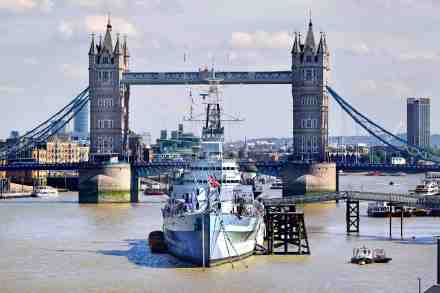
On Christmas Day 1942, the German battlecruiser Scharnhorst, along with five destroyers, left its Norwegian base and headed for a series of Arctic convoys, the British fleets transporting material and support to the Soviets. The townclass cruiser HMS Belfast, used to escort the convoys through some of the most dangerous seas in the world, played a vital role in the Royal Navy’s clever game of bait-and-blast that resulted in the destruction of the Scharnhorst, a monster that had already sunk a British carrier and two destroyers. Belfast, the most powerful cruiser in the Navy at her relaunch in 1942 (she hit a mine in 1939 and needed three years of repairs), now sits in the Thames by City Hall, a visitor attraction operated by Imperial War Museums.

Shamebridge: why is Cambridge so embarrassed about its past?

From our UK edition

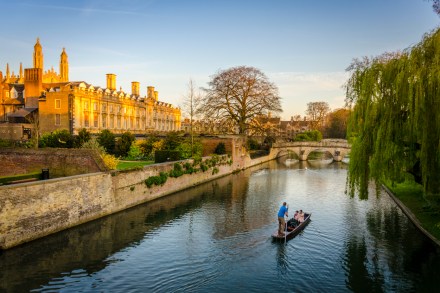
Finding Cambridge’s ugly side isn’t easy, but a walking tour of the city promises to show you it. Uncomfortable Cambridge, which bills itself as the ‘perfect introductory tour’ of the city, suggests tourists are wrong to think this is a place of beauty. Rather, Cambridge is a place we should be ashamed of – or at least feel a bit awkward about. The university is at the heart of the one-and-a-half hour tour, which costs £14 per person. Our guide begins by telling us that Cambridge isn’t as guilty as Oxford, which is good news – but it’s mostly downhill from there. St John’s College, where William Wilberforce and Thomas Clarkson studied, is the first target. Both men are commemorated with statues: Wilberforce’s is inside the chapel; Clarkson’s outside.

The pomp and pageantry of the Lord Mayor’s Show

From our UK edition

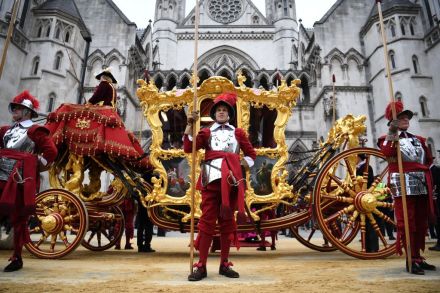
The Lord Mayor’s Show is a mix of traditional buttoned-up pageantry and let-your-hair-down carnival. A bit like the state opening of parliament without all the MPs, and Notting Hill without the jerk chicken. I am a Freeman of The Worshipful Company of Merchant Taylors, one of the ‘Great 12’ livery companies of the City of London. The Lord Mayor’s Show is an occasion in which the City’s livery companies – there are some 110 in all – have prominent place. What’s more, the incoming Lord Mayor has a special link to the Merchant Taylors as a member of the Company’s Court. Which is all a roundabout way of saying: I have been roped into today's show to ride atop a camel.

The truth about the curse of the pharaohs

From our UK edition

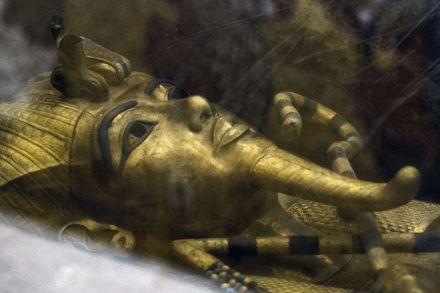
George Edward Stanhope Molyneux Herbert, 5th Earl of Carnarvon, was bitten on the cheek by a mosquito some time in early March 1923. The bite became infected. By April he was running a high fever, had pneumonia in both lungs and his heart and respiratory systems were failing. He died in a Cairo hospital on 5 April. His death came less than six months after Howard Carter, the Egyptologist whose excavations Carnarvon was funding, first discovered evidence that there was an undisturbed tomb in the Valley of the Kings in Thebes. That was on 4 November 1922 – 100 years ago this month. A few days later, Carter, Carnarvon and his daughter, Lady Evelyn Herbert, had squeezed through a roughly-hewn hole in the wall of the burial chamber of Tutankhamun, uncovering its glittering treasures.

What does Russia really want?

From our UK edition

The question of ‘why’ Russia invaded Ukraine has been forgotten amid war’s fog. Greed and malice partially explains it. History, geopolitics and culture reveals more. A country which has more land than anyone else on Earth is not grabbing territory for territory’s sake. Logically, Russia should be giving away land to anyone who might manage it better. But that’s not how Putin thinks. He is pursuing a dogged policy of annexations – first in Georgia, then in the Crimea, and now of four further Ukrainian districts.

Who was George Canning? (1973)

From our UK edition

Until Liz Truss, George Canning was the shortest-serving prime minister. He needn’t be forgotten by pub quizzers, general knowledge collectors and historians alike. In 1973, Richard Luckett reviewed a major biography of Canning’s life for The Spectator.

The last roadside ice cream stands in America

When I’m out on small New Jersey roads — sometimes Virginia roads, but I don’t see them there as often — I always take an extra second to look at ice cream stands. You know the place: a basic, boxy building with a little awning, an ornamented, angular front, one or two counters to order, and more often than not no inside seating or even a customer entrance. The staff are usually high-schoolers, maybe retirees. The prices, like everything, have crept up, but they’re still wallet-friendly. They’re refreshingly un-trendy, too. Nobody manhandles your ice cream on a frozen rock. I love these places. I have many fond memories of my parents pulling off the road for ice cream, sitting at a simple table on gravel under an awning and enjoying a treat. Simplicity. Contentment.

The case against a stripped-back coronation

From our UK edition

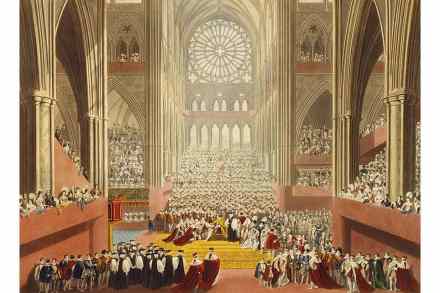
The last King Charles was crowned in 1661. Samuel Pepys attended the ceremony. He was captivated by ‘the sight of all these glorious things… sure never to see the like again in this world’. He later became so merry, he told his diary, that ‘my head began to turne and I to vomitt…Thus did the day end, with joy everywhere’. We live in a more decorous age, but I think Pepys imbibed the right spirit. The coming coronation of King Charles III should be joyful too. The paradox is that joy will not be achieved unless the ceremony is solemn and magnificent. Early signs give slight cause for concern. On Tuesday last week, the coronation was announced for 6 May, half the traditional time gap.

What Washington was like during the Cuban Missile Crisis (2002)

From our UK edition

On 27 October 1962, US Defense Secretary Robert McNamara stepped out of crisis meetings and looked up at the sky. ‘I thought it was the last Saturday I would ever see,’ he recalled.  This month marks 60 years since the Cuban Missile Crisis. In 2002, Peregrine Worsthorne wrote about what it was like to be in Washington during humanity’s closest shave. Forty years ago the Americans won what I hope will be the nearest thing to nuclear war between superpowers — of which only one is left — ever fought; and the fact that they won it without firing a shot should not diminish but rather increase the extent of the victory. What I am referring to is known, of course, as the Cuban Missile Crisis, which is how it will go down in history.

A visit to the Renaissance Faire

There exists a magical place where not only are you free to identify as who or whatever you wish, but you’re also encouraged to adopt a persona that defies reality. You aren’t restricted to the narrow LGBQTIA+ choices our unimaginative liberal elites have imposed, either. Nay, in this ultra-diverse, inclusive land, you’re expected to dream beyond this century — this planet even — and transition uninhibited into whatever strikes your fantasy. No, not the “metaverse”; I’m referring to the time-honored American tradition of the Renaissance Faire, where history buffs, fantasy nerds, down-and-out actors, and normal suburban families converge to create a giant freakshow that is innocent fun at its best.

renaissance

A lesson for Rupa Huq from the ancient Greeks

From our UK edition

The Labour MP Rupa Huq, of Pakistani heritage, has been suspended for suggesting that Kwasi Kwarteng, of Ghanaian heritage, was only superficially black and did not sound black on the radio. The ancients would have been baffled by her comment. They were fascinated by their world’s many different cultures, but colour held no significance for them. People’s beliefs, however, were a matter of great interest. The widely travelled Greek historian Herodotus (5th century bc) produced a fine example (among many others): while Greeks expressed utter revulsion at the Indian idea of eating their dead, an Indian tribe also did so at the idea of burning their dead. Conclusion: there was no right and wrong way to do it. It was simply a matter of custom.

Peta, Lysistrata and the comedy of a sex strike

From our UK edition

The German branch of the ‘green’ organisation Peta (‘People for the ethical treatment of animals’) is demanding that, until men stop eating meat – apparently they cause 41 per cent more pollution than female carnivores – women must deny them sex. The same sanction had its origin, of course, in Aristophanes’s comedy Lysistrata (411 bc), staged during the war between Athens and Sparta (431-404 bc), just after Athens had suffered a disastrous defeat in a failed attempt on Sicily. Naturally, an organisation like Peta might well think the play was in earnest. Was not Lysistrata proposing a noble, female-instigated sex-strike, by the women of both sides, to stop a war?

Augustus and a lesson in self-publicity

From our UK edition

The death of Her Majesty raises the question of a commemoration of her extraordinary years of service. Augustus ruled the Roman empire from 27 bc to ad 14 and was the longest serving of the roughly 70 emperors of the western empire (which ended technically in ad 476). He may have cracked a joke on his deathbed, asking those around him to applaud if he had played his part well in the comedy of life, but he was in deadly earnest about documenting in the first person a selective record of his own achievements (res gestae) for posting across the empire in both Greek and Latin. For example, he tells how he gave every Roman citizen 400ss. (nearly half a soldier’s annual pay) in 29, 24 and 11 bc and more than 1.2 billion ss. in handouts to soldiers.

The end of history

Read chronicles of ancient peasant life, or examine photographs taken a century ago. Behold castes, tortures, and endless annals of servitude and uncertain order. Backbreaking work and darkness fill short lives in a cruel world of grandees, subjects, and slaves. The injustices and trials of 21st-century life in this thing we call the US and West pale by comparison. Did this freedom and plenty just happen by accident? Or should we rethink what seemed to be political, economic and social triumphs as crimes against nature, and for good measure reimagine world history as a global casualty of Anglo-European rapacity? History is in trouble. Less-than-progressive staff at historical societies, archives, and libraries have been retired or purged.