Tom Chivers

Where will our inventions lead?

From our UK edition

When reviewers say that some new book reminds them of some famous old book, it often ends up as a blurb on the paperback edition, so I want to be clear: when I say that George Dyson’s Analogia reminds me of Robert Pirsig’s New Age classic Zen and the Art of Motorcycle Maintenance, I do not mean it exactly as a compliment. I don’t mean it as a dig, either. I just mean it has the same sense of dreamy, ambitious oddness, of trying to piece together some grand theory from disparate parts, from practical techne as much as academic logos. Pirsig’s book was a theory of philosophy dressed up as a memoir of a motorcycle trip; Dyson’s is a memoir of a strange childhood and youth, dressed up as a theory of —what? Intelligence?


The shape of things to come – from artificial wombs to suicide coffins

From our UK edition

It wasn’t until half way through Jenny Kleeman’s Sex Robots and Vegan Meat that I was able to put my finger on why it was making me uncomfortable. Sometimes you read a book where the author’s mindset is so alien to your own that you feel almost as though you’re translating from a foreign language; this was one of those times. But on page 143 I found the Rosetta Stone. Kleeman was talking about vegan meat — cultured steaks and burgers developed in a laboratory. She had met various scientists and entrepreneurs who were trying to make it happen (including some, it should be admitted, who come across as spivs and carnival barkers).

How close is humanity to destroying itself?

From our UK edition

Humanity has come startlingly close to destroying itself in the 75 or so years in which it has had the technological power to do so. Some of the stories are less well known than others. One, buried in Appendix D of Toby Ord’s splendid The Precipice, I had not heard, despite having written a book on a similar topic myself. During the Cuban Missile Crisis, a USAF captain in Okinawa received orders to launch nuclear missiles; he refused to do so, reasoning that the move to DEFCON 1, a war state, would have arrived first. Not only that: he sent two men down the corridor to the next launch control centre with orders to shoot the lieutenant in charge there if he moved to launch without confirmation.

How to message a Martian

From our UK edition

Apparently the first audio message broadcast into space with the ostensible purpose of communicating with aliens was the sound of vaginal contractions in ballerinas. According to Daniel Oberhaus’s Extraterrestrial Languages, the artist Joe Davis beamed the information from an MIT radar installation towards the stars Tau Ceti and Epsilon Eridani in 1985. A USAF colonel shut the transmission down when he discovered what the content was. Never mind the difficulties of communicating with aliens; sometimes it’s pretty hard to understand what’s going on in the minds of humans. The question of how we’ll talk to extraterrestrials, as and when we eventually find some, is an old one. Oberhaus, a writer at Wired magazine, finds examples as old as 1638.

Teenage fathers and mental health: a true story unfairly reported

From our UK edition

There's a difference between something being true, and something being fair, as I'm sure you realise. I'm going to look at a story that is, on the face of it, probably true, but because of how it's portrayed, less than fair. The story is that the children of teenage fathers are more likely to suffer from certain congenital health problems, including autism, schizophrenia and spina bifida. This is because, according to research published in the Proceedings of the Royal Society B and contrary to what has been believed, the rate of new mutations (which cause these problems) in sperm does not go up in a simple line as men get older.

Hyperbole about the dangers of ‘skunk’ won’t help those at risk – but a change in the law might

From our UK edition

Can I write an entire blog post about one sentence? I'd certainly like to. The sentence in question is 'The potent form of the drug, known as 'skunk', is so powerful that users are three times more likely to suffer a psychotic episode than those who have never tried it.' It's from a piece in the Mail on Sunday which claims in its headline that 'scientists show [not "research suggests", you notice] cannabis TRIPLES psychosis risk: Groundbreaking research blames 'skunk' for 1 in 4 of all new serious mental disorders.' The MoS is infuriatingly pleased with itself for having got hold of this research ahead of publication - they're pitching it as an 'exclusive leak', which sounds to me like a pretty grand way of describing breaking a PR embargo. It's infuriating for two reasons.

Bad news for the lazy – jogging isn’t actually bad for you

From our UK edition

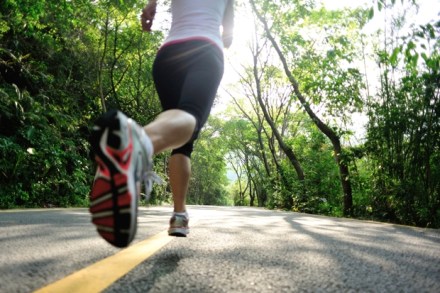
There's nothing the health editors of the nation love more than a counter-intuitive story. We've been over the red-wine-is-good-for-you, chocolate-is-good-for-you ones before (which tend to fall at various points on the spectrum between 'sort of true but misleading' and 'downright false'). But there is the reverse kind of stories, too: the 'exercise is actually bad for you' ones. The one that did the rounds this week was the news that 'too much' jogging is as bad for you as not doing any exercise at all. 'The study, which examined hours of jogging, frequency, and the individual’s perception of pace, found that strenuous joggers were as likely to die as sedentary non-joggers, while light joggers had the lowest rates of death,' reports the Daily Mail.

No, cats did not smell your cancer

From our UK edition

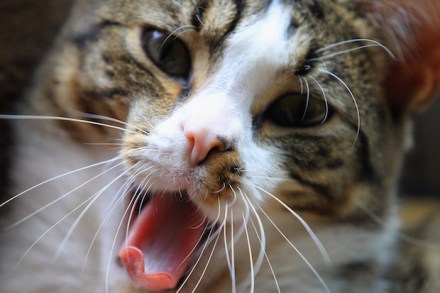
No, they bloody didn't. They just didn't. 'Cats detected my cancer', reads a headline on Mail Online. But, let's face it, they didn't at all. The ways in which this story is nonsense are obvious. Stephanie Doody, the woman in question, says (and, I'm sure, believes - and may even be right) that her three cats, whose names are not important but are dutifully reported in the story because of Human Interest, started behaving oddly and prodding her stomach. This, she also says and also no doubt believes (but in this case she is wrong) alerted her to the rare tumour on her appendix, a type which usually goes undetected until it is too late. Which is all very heartwarming and so on, but look. The cats apparently started acting oddly in February. She didn't seek medical attention until July.

Finally! A health story about cancer that doesn’t resort to hyperbole

From our UK edition

The lot of the snarky health-science debunker is not a happy one. It involves going to a lot of newspaper websites actively seeking out stories that will annoy you, and getting annoyed by them, and then writing about how annoyed you are. Look, here's a piece that claims some food or other makes you live longer, based on how some chemicals responded to some other chemicals in a petri dish. Look, here's a piece which claims substance X causes cancer in the headline, and then admits in paragraph 19 that it does no such thing. Look, here's a piece which takes the results of a trial in mice and reports it as though we're talking about humans.

How not to be taken for a mug by misleading health stories this New Year

From our UK edition

The Christmas/New Year period is always fun for health balls. Because we like drinking lots of wine and eating lots of chocolate around this time of year, newspapers like to pick up on weird little studies which purport to show that those things are good for us, while leaving out inconvenient details, stuff like ‘the study was on some tissue samples in a petri dish' or ‘the study was on a chemical which exists in wine in trace amounts but we’re pretending it’s about wine in general’ or ‘obviously chocolate isn’t good for you, for God’s sake’. So here are some hints and tips to avoid being taken for a mug.

The Daily Mail is wrong — homeopathy can’t cure Ebola

From our UK edition

Normally this blog is about relatively silly things, I'm happy to admit. Is red wine good for you? (No.) Are high heels good for you? (No.) I mean, it's worth debunking that sort of nonsense when newspapers print it, but I don't pretend that I'm fighting some moral crusade. Most of the time, anyway. But there is a basic moral point to all this. The things we do have consequences. If we didn't think, that in some way, the things we write affect people's behaviour, then why the hell do we do it?

Should old people start wearing stilettos?

From our UK edition

It must, I sometimes think, be exhausting, if you actually take health advice from newspapers; diligently eating eggs one week but not the next, avoiding mobile phones in case they irradiate your gonads, avoiding all foreign-looking people in case they've got that Ebola. I thought this particularly the case this week when I read the Daily Mail saying that wearing heels into your 70s can 'save you from deadly accidents'. The hypothesis is a fairly straightforward use-it-or-lose-it thing: if you wear heels, you're developing good balance, because heels require you to stand on a far smaller surface area than normal shoes; when you stop using them, your balance deteriorates, rendering you more likely to fall over. (The first line is 'When should a woman stop wearing high heels?

How does naturopathy work? A bit like a flying vacuum-cleaner to Mars

From our UK edition

Every so often you read a piece about alternative medicine that asks: how does it work? How does homeopathy work, how does acupuncture work, etc. There was a piece in the Telegraph recently that asked: how does naturopathy work? There was a complicated answer about 'healthy electromagnetic frequencies' and so on; 'bioresonance', 'modalities', and a marvellous quote about how 'Every cell in the body puts out a certain electromagnetic frequency, that can be measured – a healthy stomach cell sounds different to a healthy brain cell...' Presumably those words have some sort of meaning to someone. But the problem with this piece - and with an awful lot of other pieces on similar topics - is that there's no point answering the question 'how does X work?

The idiot diet – nonsense vs common sense in ‘Paleo’ nutrition

From our UK edition

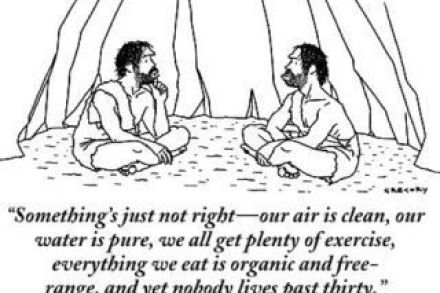
Looking for real power? Get a jump-start on the future of global fuel at The Spectator's energy conference on 1 December. Tickets are still available here. There's a great New Yorker cartoon - two cavemen, sitting in a cave, looking suitably homo habilis or something, all sloping foreheads and protruding jaw. The caption reads: 'Something's just not right - our air is clean, our water is pure, we all get plenty of exercise, everything we eat is organic and free-range, and yet nobody lives past thirty.' I think of it whenever someone trots out a living-close-to-the-soil, modern-lives-are-killing-us mantra about how we should stop eating cooked food or only wear natural fibres or whatever.

Lies, damn lies and health statistics – smoking is more deadly than serving in Afghanistan

From our UK edition

Basically nothing is as bad for you as smoking. Short of fairly obvious things like blunt-force trauma or falling out of buildings, anyway. That is a fact worth keeping in mind when you read newspaper headlines about health. On the front page of the Telegraph's print edition on Friday ran the headline: 'Lazy lifestyle can be as deadly as smoking'. The Mail runs the same story, saying: 'A lack of exercise is as dangerous as smoking.' Now, remember: Nothing that you do in your daily life, even if you are a lumberjack or an oil-rig diver or whatever, is as deadly as smoking. I pretty much promise you that. Serving with the British Army in Afghanistan is, on one admittedly superficial reading of the statistics, not as dangerous as smoking.

Smoking weed won’t make your kids smarter, but it won’t make them brain-dead, either

From our UK edition

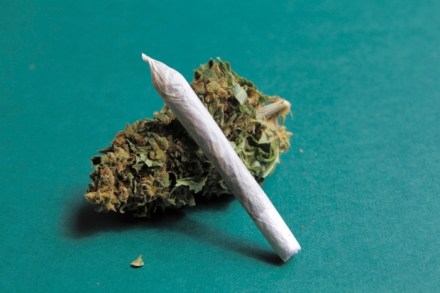
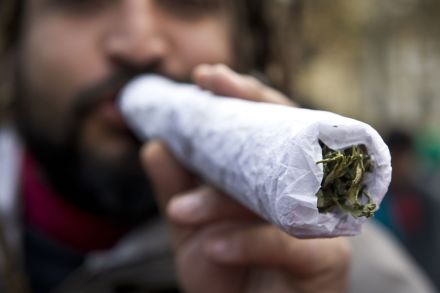
Lacking in pep? Looking for some extra zing as winter sets in? The Spectator recommends our energy conference on 1 December. Tickets are still available, sign up here. I don't want this to become the 'Tom Tells You To Get High' blog, so this will be the last time I write about cannabis for awhile, I promise. Unless there's something interesting in the news about it again. Anyway, pass the dutchie on the left-hand side and all that. The Daily Mail, the BBC and the Telegraph report that teenagers who smoke cannabis regularly do worse in their exams. Per the Mail: 'The findings. . . add to a growing weight of evidence that suggests cannabis is more harmful than legalisation campaigners would have us believe'. They're half right.

The limits of ‘superfood’ – debunking broccoli

From our UK edition

Over in my day job, I recently wrote a piece about 'superfoods' and the myths that a particular kind of food can protect you from illnesses. The only food advice for which there is consistent evidence is that you should eat a balanced diet with plenty of fruit and vegetables; all this stuff about how you should eat pomegranate to make your liver healthy, or whatever, is complete nonsense. One of the items that keeps cropping up was broccoli. It contains a chemical called sulforaphane, which supposedly helps with diabetes, lung disease and breast cancer. Naturally, the evidence for all this is lacking: the tests were all carried out with the chemical, extracted from broccoli, on cells in a petri dish, or on mice.

Of course marijuana isn’t ‘safe’ – but should it be illegal?

From our UK edition

Sometimes I read things that really get on my wick, and last week was one of those times. A new, 'definitive' 20-year study has 'demolished the argument that the drug [cannabis] is safe', according to the Daily Mail. Has it, though? There are various things wrong with that claim. One, no study is 'definitive'; two, the research was not a '20-year study', but a review of other studies carried out over the last 20 years. There are lots other things wrong with the coverage, too, including the startlingly ridiculous claim that cannabis is 'as addictive as heroin'. Even according to the research itself, less than one-tenth of people who try cannabis become addicted to it, compared to nearly a quarter for heroin.

Winter is coming: do you really need a flu jab?

From our UK edition

Winter is coming. You can tell because the days are drawing in, the light has that autumnal greyness, and the first bloody advent calendars are in the shops. Also, those of us who are old, pregnant or still in nappies are reminded reminded to take our flu jabs. The Telegraph, among other outlets, is reporting that two million UK children will be eligible for the new nasal-spray influenza vaccine this year; it's been extended to include four-year-olds as well as the two- and three-year-olds who were eligible last year.

The Pulse: Could red wine solve the world’s problems? Probably not…

From our UK edition

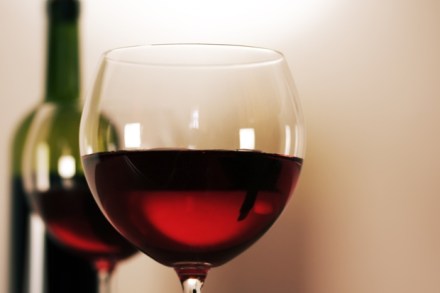
The Pulse is the Spectator's answer to media nonsense about health. Tom Chivers looks past the headlines and all the conflicting advice about health in the news to find out what is true, and what you need to know to stay healthy.  We all know, by now, the rule that if the headline is a question, the answer is probably no. ('Was the Mona Lisa painted by aliens?', 'Are immigrants eating YOUR begonias?', etc.) I wish to propose a corollary to that rule: if the headline begins 'Could red wine help…', the answer is definitely no. Usually the end of the sentence is 'cure cancer', or 'prevent heart disease'. But this time, it's 'Could red wine help improve your skin?'.