History

The Great War, viewed from all sides

From our UK edition

The historiography of the Great War is stupendous, the effects of the conflict being so far-reaching that even today historians are finding angles hitherto unexplored that they can make books out of; or, at the lower end of the scale, they are content to retell the old story in a different way. What we have been short of in the English canon is a view of the war not just from the other side, but from all sides: it was, as Colonel Repington termed it, ‘the first world war’, and not simply four years of carnage between the British and the Germans. Jörn Leonhard’s epic and magnificent work — unquestionably, for me, the best single-volume history of the war I have ever read — tries, with some success, to embrace everything.
Blood and bile

From our UK edition

Are books becoming an adjunct to TV? Both of these are good reads, but both feel influenced by — and yearning for — television. Medieval Bodies could be the script for a landmark BBC Four series, while the author of How to Behave Badly in Renaissance Britain came to prominence as farthingale consultant on programmes such as Tudor Monastery Farm. She can tell you everything you never wanted to know about codpieces. Medieval Bodies skips between English, Welsh, Hebraic and Islamic medicine with ease, touching on caliphs and kings, Mamluks and djinns. One gem here is the inventor Ismail al-Jazari, the Heath Robinson of 13th-century Baghdad.

Preachers, princes and psychopaths

From our UK edition

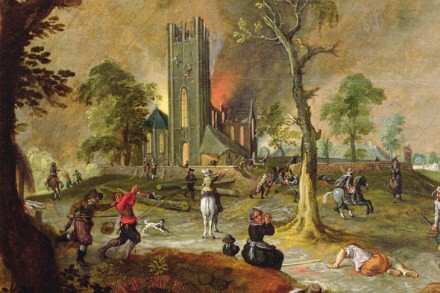
On 23 May 1618, Bohemian Protestants pushed two Catholic governors and their secretary through the windows of Prague Castle, in protest at the anti-Protestantism of Bohemia’s King Ferdinand, soon to be elected Emperor Ferdinand II. The defenestration was only injurious to dignity, and had farcical aspects, a rebel shouting: ‘We shall see if your Mary can help you!’, only to exclaim, ‘By God, his Mary has helped!’ when the men landed in a midden. This sparked what C. V. Wedgwood termed ‘the outstanding example in European history of meaningless conflict’ — the bloodiest campaign ever waged on German soil.

A heavy cross to bear

From our UK edition

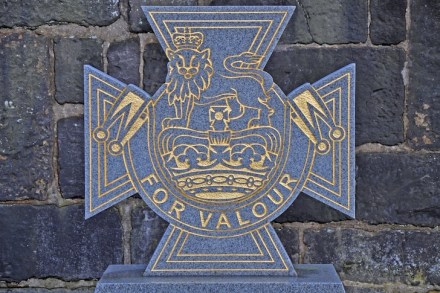
‘The Victoria Cross,’ gushed a mid-19th-century contributor to the Art Journal, ‘is thoroughly English in every particular. Given alike to the highest and the lowest in rank, but given always with a cautious and discriminating hand... the Victoria Cross is an epic poem’. Like all epic poems, the VC has its tragedies. For some that tragedy lay on the field of battle; for others, as Brian Izzard details in his often depressing new book, it lay in the life that followed. The original Royal Warrant by which Victoria instituted her eponymous medal stipulated that it was to be given only for service ‘in the presence of the enemy’ for some ‘signal act of valour, or devotion to country’.

Ghosts of No. 10

From our UK edition

If you associate Lord Salisbury more with a pub than with politics, here is Andrew Gimson to the rescue, with succinct portraits of every prime minister to have graced — or disgraced — No. 10 to date. You will find no trace of waspish mockery in his book. In a time when heroes are constantly being debunked, its kindly, intelligent tone appears refreshingly old-fashioned. The flamboyant Robert Walpole makes for an ideal scene-setter. In 1721 he invented the office of prime minister and held it for longer than any of his successors — a full 21 years. Plump, affable and crude, with an astute business sense, he managed to amass a fortune by ingratiating himself with the first two Hanoverians and getting out of the South Sea Bubble in the nick of time.

Vive la libération!

We all have our favourite period of Parisian history, be it the Revolution, the Belle Époque or the swinging 1960s (the cool French version, with Jean-Paul Belmondo and Françoise Hardy). Agnès Poirier, the author of this kaleidoscopic cultural history, certainly has hers: the turbulent 1940s, which saw the French capital endure the hardships of Nazi occupation before throwing off this yoke and embracing freedom in every aspect — sexual, political and intellectual. Leading the way was that maligned couple, Jean-Paul Sartre, the philosopher, political activist and father of existentialism, and Simone de Beauvoir, the brilliant pioneer feminist, who was his life partner, if often errant lover.

With Europe, but not of it

From our UK edition

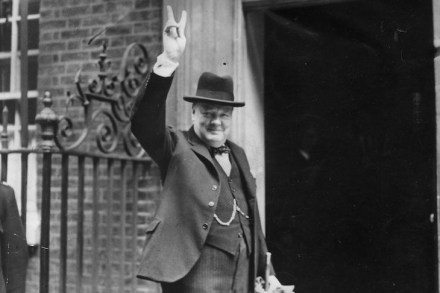
Dr Felix Klos is an extremely personable, highly intelligent American-Dutch historian who has undertaken much archival research, worked extremely hard and is an excellent writer. In trying to persuade us that Churchill favoured Britain joining a federal Europe, however, he comes up against several immovable obstacles. The most serious of these is that in the four years that Churchill was prime minister, between 1951 and 1955, he personally, regularly and decisively blocked all movement towards Britain joining any of the European federal institutions that existed. However engaging Klos may be, and however well written his book, he is utterly wrong in his central thesis.

Pleading with the emperor

From our UK edition

Yetemegn was barely eight years old when her parents married her off to a man in his thirties. Before she could become a spouse, he first had to raise her. Her education involved beatings when she left the house, even if it was only to borrow shallots from a neighbour. At 14, she gave birth for the first time. Successive pregnancies came like waves. Some of the children died or succumbed to diseases for which the only known treatment was prayer; most survived. She was a grandmother by her early thirties. In Ethiopia, it’s a story that ranks as utterly banal. Millions of women have lived it and millions will continue to do so, development programmes and government policy papers notwithstanding.

Fighting other people’s battles

From our UK edition

What’s the point of a cover if not to judge a book by? One look at the image on the dustjacket of From Byron to Bin Laden, one of my favourite statues in Rome — Anita Garibaldi, pistol in one hand, babe in the other, galloping side-saddle to escape an ambush — and I said ‘yes please’. This was clearly going to be an invigorating read. But the index proved to have just a single reference to Anita. And the text is not light on PhD-speak: ‘The shared characteristics and commonalities across the generations discussed here clearly illustrate that foreign war volunteering constitutes a distinct diachronic phenomenon.

Reconsider Phlebas

From our UK edition

So the Phoenicians never existed. Herodotus, that unreliable old fibber, made it all up in the Histories. Is this really what Josephine Quinn is saying, or is it just a cunning ruse to stir up a fuss and infuriate the dwindling band of Herodoteans out there? Because Quinn, a professor of ancient history at Oxford University, declares that her mission is not so much to rescue the Phoenicians from their ‘undeserved obscurity’ so much as to argue that there were no such people. ‘It is modern nationalism that has created the Phoenicians,’ she writes, citing 19th-century French, English and German historians who spoke of the Phoenician ‘people’ and ‘nation’ in the age of the nation state.

The germ of a revolutionary idea

From our UK edition

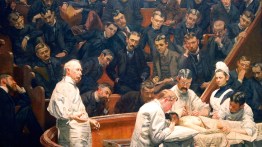
Every operation starts the same way. Chlorhexidine scrubbed under nails, lathered over wet hands, palm-to-palm, fingers interlaced, thumbs, wrists, forearms. A soothing routine accompanied by the sound of water hitting a steel trough sink. Washing is an act of safety but also humility. It acknowledges a doctor’s capacity to cause disease as well as cure it. More than once I have thought of Joseph Lister — the father of antisepsis (killing germs) and forefather of asepsis (excluding germs completely) — as I perform this hygienic set-piece. Not that he would have liked the idea of me, his sister’s great-great-great granddaughter, studying medicine.

Cannon law

From our UK edition

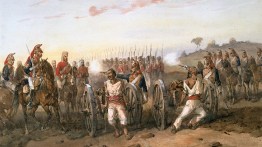
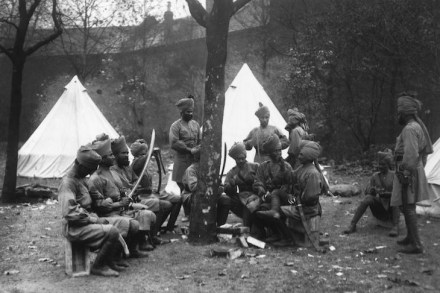
Many and various are the things one finds in Kentish pubs (I’m told); but few could top the sepoy’s skull discovered at The Lord Clyde, Walmer, complete with brief biography: Skull of havildar ‘Alum Bheg’, 46th Regt. Bengal N. Infantry... blown away from a gun. From this grisly starting point, Kim Wagner, lecturer in British imperial history at Queen Mary University of London, narrates how, in the swelter of mid-1857, following outbreaks throughout British India, native Bengal Army units at Sialkot mutinied, killing officers and civilians and looting the cantonment, and then set out for Delhi to join Bahadur Shah, the briefly-minted ‘Emperor of India’. They didn’t make it.

The greatest journeys ever made

From our UK edition

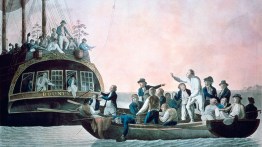
Many believed in Australia for 1,000 years before its discovery. There had to be a commensurate weight — somewhere Down Under — to counter the northern land mass; an ‘unknown Southland’ which was crucial to maintaining the balance of the world. To confuse matters, this theoretical continent was dubbed for a while Austrialia del Espiritu Santo — in honour of the House of Austria. A socially awkward Lincolnshireman, Matthew Flinders, in 1804, was the originator of Australia as the name for what had for centuries been called New Holland, but two French sailors, an aristocratic cartographer, Louis Freycinet, and a manipulative, one-eyed anthropologist, François Péron, showed for the first time the continent’s actual shape.

Hey nonny nonny

From our UK edition

After hundreds of densely packed pages on folk song in England — a subject for which I share Steve Roud’s passion — I am none the wiser as to why folk song collectors assumed that a man singing in a pub for free drinks in, say, 1890 or 1920 was de facto a folk singer? A singer of folk songs, yes. A folk singer, maybe not. Such men were ‘professional’ singers of popular songs. They sung what people wished to hear, for recompense: a pint.

Littering castles all over the land

From our UK edition

I rashly discarded this book’s dustjacket when I received it, and thus saw only the unlettered cover, a faded photograph of three generations of an aristocratic family, somewhat camera-shy in their silken breeches. Oh I see, I thought, this is one of those books on the foibles of the aristocracy, always an entertaining subject. How wrong can one be? Instead, it’s a polemic against crats aristo, auto, mono or pluto; and the author apparently yearns for any crat of a different stripe — not just demo and bureau, but mobo, neo and probably ochlo to boot. Naturally I went immediately to the index, to look up my family.

Easy on the hard stuff

From our UK edition

It’s one of the more mysterious features of human history that people of every era and in almost every place have regularly striven to reduce their intelligence, impair their reflexes and generally ensure that everything about them functions far less well. So what is about getting drunk that we love so much? According to Mark Forsyth’s breezy new book, the best answer comes from somebody not often thought of as a classic roisterer: William James, the American philosopher and brother of Henry. ‘Sobriety,’ James wrote, ‘diminishes, discriminates, and says no; drunkenness expands, unites, and says yes.’ And the way Forsyth tells it, drink has caused us to say yes to an awful lot.

Murder, fraud and bankruptcy

From our UK edition

Hamilton, created by the remarkable Lin-Manuel Miranda, has brought the financial musical to the London stage: a serious biography of a great man translated into rap. What comes next? Now we know. It is the story not of one individual but of a national institution — the life and times of the Bank of England. I can’t wait for David Kynaston’s new history to reach the stage. We may have to call on Tim Rice, a revolutionary himself in the world of musicals, to generate a libretto from the long original text. But there is a wealth of material in this fascinating book. Often seen as a rather traditional and staid institution, the Bank of England’s more than 320-year life has been remarkably eventful.

Cold comfort | 7 December 2017

From our UK edition

Mrs Thatcher once explained that she adored cleaning the fridge because, in a complicated life, it was one of the few tasks she could begin and end to total satisfaction. In this way are refrigerators evidence of our struggles, our hopes and our fears. Moreover, if you accept that the selection and preparation of food is a defining part of our culture, then you must acknowledge the primacy of the refrigerator in human affairs. In 2012, The Royal Society declared refrigeration to be the single most significant innovation in food technology since Fred Flintstone invented the barbecue. Me? I wrote these notes while chewing chilled sapphire grapes from Brazil, via Waitrose, messengers from our refrigerated global food chain. Your domestic fridge is your autobiography.

On with the new

From our UK edition

I grew up knowing 1947 as the year of my father’s birth, in a black-and-white faraway time. I was told about rationing and petrol coupons, as yet another chapter in the long book of ‘how good you have it now’ — along with chilblains, measles, castor oil and walking ten miles to school neck deep in snow, uphill both ways. The Swedish author Elizabeth Åsbrink presents the year as the fulcrum of modern history, when ‘everything seemed possible, as it had already happened’. Month by month, she shows us the year through the eyes of a disparate cast of characters. Some of them are well known (George Orwell, Simone de Beauvoir, Chuck Yeager, Primo Levi), some are passers-by who happened to be in history’s path.

… while Rome freezes

From our UK edition

Why did the Roman Empire collapse? It’s a question that’s been puzzling writers ever since Edward Gibbon wrote The History of the Decline and Fall of the Roman Empire in the late 18th century. One classicist — a German, inevitably — bothered to count up all the various hypotheses for the fall, and came up with 210. The conventional explanation is that, in 410 AD, King Alaric and his Visigoths sacked Rome. Across the Empire, from Hadrian’s Wall to Africa, legionaries folded their tents and deserted their posts. Several centuries of self-indulgent, over-reaching and in-fighting emperors had done for the whole shooting match, leaving the Eastern Roman Empire to stumble on until the fall of Constantinople in 1453. And so Roman history came to a full stop.