Herodotus

What Ovid in exile was missing

A notable recent trend in popular history is the revival of interest in the ancient world. Mary Beard, Tom Holland, Bettany Hughes and Peter Stothard are just some of the historians whose books and television series have cashed in on our thirst for knowledge of distant forebears and their civilisations. Now Owen Rees joins the merry band with a strikingly original take on the subject. He argues that our interest in classical history focuses almost entirely on the Graeco-Roman world, specifically on the capital centres of those cultures. We therefore miss much of what was going on at the periphery of empires, with their vibrant cities and peoples.

How the barbarians of the steppes shaped civilisation

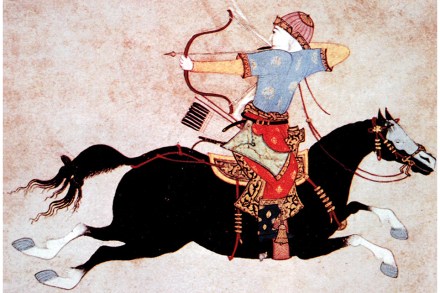
It’s boom time for nomad history. It started some eight years ago, when Bloomsbury published a study of central Asia from an Oxford academic. This might have been a fringe book, but the author’s breadth of knowledge and analysis was exceptional, the narrative was gripping, the cover was beautiful and the publisher had high hopes, in spite of my quibbling review. Their punt paid off. Peter Frankopan’s The Silk Roads has sold more than two million copies and counting. It has also helped renew interest in central Asia, which had mostly been the preserve of travel writers and niche historians, including the great René Grousset.

Travels with Herodotus

From our US edition

I am part of an informal reading group with a few friends and colleagues. At the moment, we are reading Herodotus’s Histories (or “Inquiries,” as he might have said had he been writing in English). It’s lots of fun, in part because it is also an excuse to conduct a little wine appreciation class, but also because that old denizen of Halicarnassus — Herodotus lived from around 484 to 425 bc — was possessed of such high-octane and companionable curiosity about the world: what happened when and to whom and with what result. He wanted to know; moreover, he wanted you to know. Herodotus is most famously a major source of our knowledge of the Persian Wars and such signal moments as the Battle of Marathon (490 bc), Thermopylae (480) and Salamis (also 480).

Herodotus