Health

Happy Excessmas: why shouldn’t we eat, drink and be merry?

From our UK edition

Christmas is coming and it isn’t only the goose that’s getting fat – so are you. That’s according to the skinny, pie-dodging miserable lot who make up the public-health lobby. For these people – who are living proof that a lack of sugar makes you cranky – the countdown to Christmas isn’t an opportunity to excite kids about Santa’s sack or splurge on gifts for loved ones; no, it’s an ideal time to freak people out about the dangers of eating and drinking too much. Every year it’s the same. It starts in November. An alcohol-awareness group (a fancy term for the neo-temperance movement) and obesity experts (a grand title for fat-shamers) rattle off press releases about the awful things we’ll do to our guts and livers.


Volunteers won’t save the NHS this winter

From our UK edition

Workers are balloting for industrial action, attending mass demonstrations and preparing to strike. A ferocious tug-o’-war between trade unions and employers is playing out across the country. Though striking RMT members have been accused of ‘ruining Christmas’, the country’s greatest fears should be reserved for the NHS, which will see ambulance workers and nurses walk out before January, when junior doctors in England cast their vote on industrial action. Is there a solution? A leaked briefing from the Department of Health and Social Care suggests that the government believes volunteers could act as a buffer while healthcare staff take action this winter.

How to end the permanent pandemic

Don't call it a comeback. Prior to the 2022 midterm elections, there were signs that if Republicans had success, Covid would be roaring back with all its former aspects of fearmongering from the Democratic media complex, requiring more spending, more regulation and the return of rules Americans previously found anathema. This would serve the purpose of said complex in numerous ways: helping them push back against Republican efforts to end those supposedly "emergency" authorities and bureaucratic programs that now must find ways to sustain themselves. Everything from proxy voting to government vaccine requirements to the handwaving justification for the student loan bailout would be at risk, if the fiction that we are in the midst of constant emergency could not be maintained.

cdc rochelle walensky permanent pandemic

For my 60th birthday, I’m taking up smoking

From our UK edition

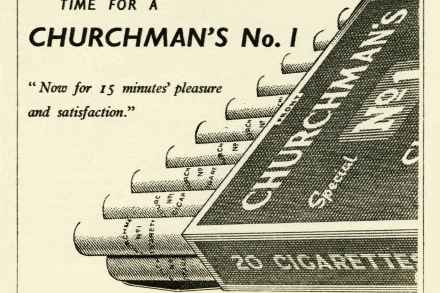
Next month I will be 60. It’s an unwelcome landmark birthday as far as I’m concerned but they say that taking up a new hobby or pastime is a good way to combat the advances of old age. So I’ve decided to take up smoking. It was either that or something physical such as cycling or jogging or walking football but, to quote Ronnie Barker in Porridge: ‘What, with these feet?’ Besides, older cyclists look ridiculous, serious runners tend to look ten years older than they really are and as for walking football… what’s the point? No, smoking is easier, more pleasurable, more relaxing and even allows me to multi-task. I can enjoy a Camel Blue while birdwatching, walking the dog or listening to Northern Soul – all of which I also plan to do more of in my sixties.

Letting John Fetterman debate was political malpractice

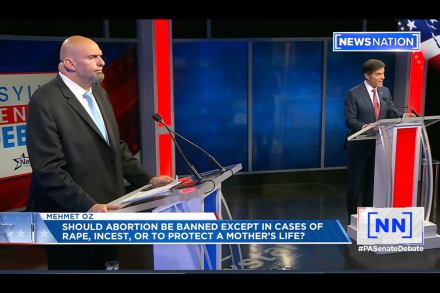
Like the proprietors of a gimp show at a carnival, Pennsylvania Democrats apparently get off on making the average viewer of their sideshow candidate feel deeply uncomfortable. Lieutenant Governor John Fetterman, hobbled by a stroke that has done significant damage to his capacity, was wheeled onto stage at the sole Pennsylvania Senate debate against Dr. Mehmet Oz where the performance was cringe-inducing to a point that it made you want to change the channel, as if upon returning perhaps the dark joke that this man could be a senator would be over. This was a travesty.

john fetterman

Why can’t I give blood?

From our UK edition

I read about the national shortage of blood last week with a feeling of gloomy inevitability. The brains of the nation are scrambled, Westminster’s insane, of course the country’s bleeding out. But at least, I thought, I can help a bit. I’ve given blood in the past and I enjoy it. There’s the feeling of warmth and purpose, and biscuits. I’d never fork out for a packet of custard creams, but like most English women and men I’m a sucker for one or two free on a saucer in a medical setting. Our blood donor scheme is actually all-round cheery. Each country has its own circulatory system, a flow out from the veins of donors, off to hospitals and into patients.

The mystery of chronic Lyme disease

From our UK edition

I struggled to pull myself out of bed in the morning. I slept for hours at lunch breaks and was having a hard time focusing. I was working six days a week as an editor at one of the world’s largest newspapers. I needed to concentrate. It was my first year there on a fixed-term contract. I didn’t have the security of knowing I would be hired afterwards; I had limited scope to make mistakes. Articles that required extensive fact-checking, style correction and careful proofreading felt like an insurmountable obstacle. What was wrong with me? I booked a doctor’s appointment to check my vitamin levels. I’m anaemic, so thought that could have been the cause.

Smoking is more hassle than it’s worth

From our UK edition

I gave up smoking one year ago this week, as part of a series of pitiful capitulations to the forces of coercive conformity. As far as I see it, the path to the grave is lined with compromise after compromise until, at the moment of the final rattle, one has become a travesty, physically and spiritually, of the person one used to be. Not that I would want to overdramatise the whole thing, mind. I more usually tend to present my dis-avowal of smoking as a kind of glorious epiphany. One moment I smoked, the next I didn’t. And in a sense that is true: no doctors were involved, there were no health scares, nor was I nagged to give up by those close to me. I went to bed one evening – at 23.

Is Coffey good for health?

From our UK edition

Even though Liz Truss won't start forming her government until after she has seen the Queen at Balmoral, many of the top roles are already nailed down. The latest dead cert is Thérèse Coffey, who will be Health Secretary and Deputy Prime Minister. The seniority of this role tells us a number of things. One is that Truss wants her strongest supporters close to her. Not only was Coffey pro-Truss from the outset, she is also one of her closest friends in politics. Linking the deputy and health jobs also signals that the new Prime Minister is taking the NHS backlog seriously. It would be a bizarre choice for a government to embark on yet another NHS reorganisation just 18 months before an election That backlog will consume Coffey's attention.

We still love our failing NHS

From our UK edition

A new poll about the NHS, the Sunday Times tells us, has discovered ‘a decline in support’ for the National Health Service. The story spoke of ‘wide dissatisfaction about the state of the health service’, under the headline: ‘Britain falls out of love with the NHS’. The figures from the poll itself tell a slightly different story. The headline finding was that three people in five are now not confident that they would receive timely treatment were they to fall ill tomorrow. But these three people in five aren’t necessarily saying they’ve ceased to approve of the NHS. It seems to me that they are simply affirming what they’ve read in the papers and heard about on telly and experienced, piecemeal, themselves.

How the ancients treated gout

From our UK edition

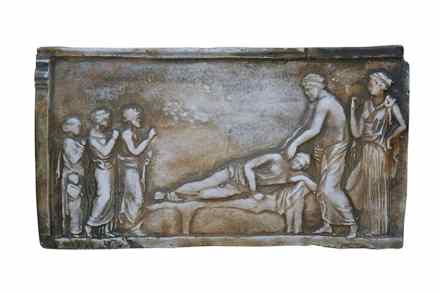
Medical problems come and go in the media, and at the moment the flavour of the month appears to be gout (from Latin gutta, a ‘drop’, seeping into a joint). For the Greek doctor Hippocrates, gout (Greek podagra, ‘foot-trap’) was the ‘fiercest, longest and most tenacious of all joint diseases’. But since the ancients did not know that excess uric acid, a natural product of the body, was its cause, their remedies were futile. Pliny the Elder claimed that wet seaweed was the answer. Scribonius Largus was at least original, the first to suggest electrification for medical purposes: he backed torpedo fish (an electric ray) for curing gout (some types put out 220 volts).

Why I donated a kidney to a stranger

From our UK edition

One year ago I walked into an operating theatre, dressed in a tiny surgical nightie. Over the next three hours, through various keyhole incisions in my belly, my left kidney was cut from its pillow of protective suet and extracted from below the belt line. The kidney was rinsed through, put on ice and boxed up. It was then zoomed by car from my Bristol hospital to Birmingham, where a surgical team was waiting with a prepped male patient. Over the next few hours, the kidney was plumbed into the groin of a man whose name I still don’t know. He was in his forties and extremely ill. That evening I was told by my transplant nurse that my kidney had begun its new life.

Yoga has become a hot cultish mess

From our UK edition

Ommm… are you in the lotus position? Then I’ll begin. The studio was literally Hades, four industrial heaters blasting in each corner. We were crouching on our knees, sweat dripping, foreheads to the floor. It was a weekday morning. Then our instructor said the six words I can never unhear. ‘Flower your anus to the sky,’ he ordered all the middle-aged WFH men in shorts and yummy mummies in crop tops in this crunchy-granola bit of north-west London. He jutted his rock-hard buns heavenwards as an exemplar of the uttana shishosana pose or, as I prefer to call it, ‘kneeling’. When did the lines blur and yoga become a hot cultish mess of sex and spirituality?

How we fell for antidepressants

From our UK edition

The French novelist, Michel Houellebecq, with his accustomed acuity about modern culture, titled his last novel but one Serotonin. By then, of course, this famous neurochemical had become the key to a perfect human existence, too little or too much of it resulting in all the little problems that continue to plague mankind. If only we could get the chemical balance in our brains right, all would be well, life would return to its normal bliss! After the commercialisation of Prozac, people started talking about the chemical balance in their brains in much the same way as they talked about the ingredients of a recipe. As Peter D.

Finally, some justice for the infected blood scandal’s victims

From our UK edition

Why has the greatest patient scandal in the history of the NHS rumbled on for so long before its victims even start to see justice? It shouldn’t have taken 40 years for there to be an answer Today the government awarded £100,000 in interim compensation to around 4,000 survivors of the contaminated blood scandal, as recommended by Sir Robert Francis, who published a report on the matter earlier this year. They have been fighting for 40 years for justice that, as yet, does not cover the bereaved parents and children of those who were infected with HIV and Hepatitis C when they were given dirty blood products for their haemophilia or blood transfusions. For that, they will have to wait until the conclusion of the public inquiry led by Sir Brian Langstaff later this year.

The small NHS failings that let down patients like my mother

From our UK edition

I would be the first to admit that the NHS has done a lot for my mother this year. It gave her the emergency blood transfusion that undoubtedly saved her life, followed by several iron infusions and umpteen scans and tests. It has treated a series of infected leg ulcers and provided consultations with senior medical figures and countless more outpatient appointments. It has supplied her with swanky new hearing aids and nursed her through Covid. During her four months in hospital, in two separate stays of nine and seven weeks, it came up with three meals a day, not all of them involving ravioli, mash and gravy, and a regime of (almost) daily physiotherapy. If my mum were American, I have reflected more than once, her money would have run out several rounds of ravioli ago.

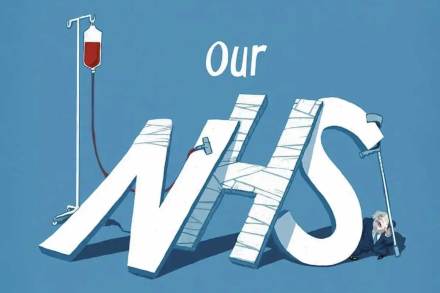
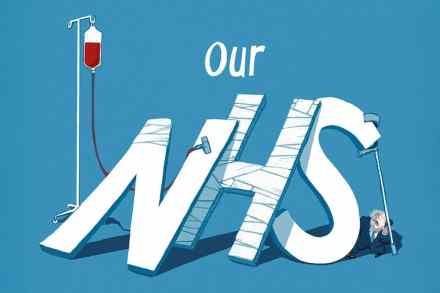
How to fix the NHS

From our UK edition

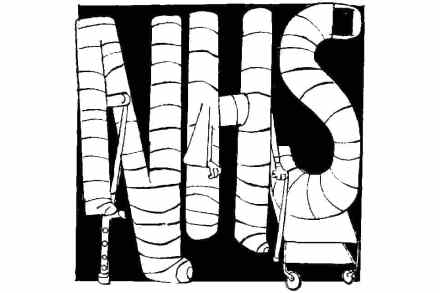
That the NHS is in intensive care appears to be beyond doubt. The health service in England needs 12,000 doctors and 50,000 nurses and midwives, and waiting lists are expected to rise to 9.2 million by March 2024. The question now is what to do. It’s a question that has been asked before, and the answers have been poor. One more heave at reform, a task force here, a task force there, another few billion all over the place and all will be well, so the defenders of the NHS claim. What they overlook, however, is that there have been more than a dozen major reform programmes over the past 30 years, yet our health outcomes remain dismal.

Why I won’t have a Covid booster

From our UK edition

In the news recently, we’ve heard from multiple Britons who’ve lost family members or sacrificed their own health to Covid’s not-really-vaccines. But anecdotes lack statistical heft. Sceptical viewers might too easily dismiss individual stories of the harms caused by the biggest inoculation rollout in history as freakish aberrations, mere coincidence (could relatives who happened to have been recently vaccinated really have died from something else?) or put it down to the cost of doing business at scale.

There’s little to celebrate on the NHS’s birthday

From our UK edition

Birthday celebrations for the NHS this year are relatively quiet. In recent years the health service has received multi-billion pound top-ups from the taxpayer, not to mention high praise from politicians across the political spectrum. This may be in part because the government has already seen to the big NHS pledges, including the 2.5 per cent National Insurance hike, split between workers and employers, which is bringing in roughly £6 billion to pay for Covid catch-up. But no doubt this year’s notable silence is also linked to just how bad that catch-up is going.

The NHS’s disturbing trans guidance for children

From our UK edition

Sajid Javid spoke some sense earlier this week when he said that the word ‘woman’ should not be removed from NHS ovarian cancer guidance. The Health Secretary was responding to the revelations that the NHS website had been stripping the word ‘woman’ from its advice pages. But fine words are only a start. The Health Secretary needs to get a grip on an NHS website that seems in thrall to magical thinking on sex and gender. The problem is wider than he might realise. Quite apart from the row over the advice to women seeking advice on cervical cancer and ovarian cancer, the NHS is currently hosting a page entitled, ‘Think your child might be trans or non-binary?