Health

I’ve turned 60 – but all is not lost

From our UK edition

By the time you read this I’ll be 60, having passed that milestone on Tuesday. My older friends tell me that turning 60 is like having to give a speech in public – the anticipation is worse than the reality. Once it’s in your rear-view mirror, you quickly forget about it and instead start looking ahead and thinking about the national speed limit. But as I write it’s looming like the horror of the shade, to quote William Ernest Henley. I’m loath to bellyache about this because I can imagine being incredibly irritated when, in 20 years’ time, I read a column by some young whippersnapper complaining about turning 60. ‘Call that old?’ I’ll think to myself. ‘Try dealing with rheumatism and gout and cardiovascular disease, you ungrateful little sod.
How do I know I’m an adult? I’m given unsolicited feedback

From our UK edition

Adulthood was once determined by age, but now we’ve extended childhood far beyond the teenage years. If the government gets its way, the next generation will never grow up: there are reportedly plans to ban cigarette sales to anyone born after 2009. This would mean that, come 2060, 50-year-olds could be begging their elders to pop into the local corner shop to buy them a pack of 20. We need a new metric of adulthood, and I have a proposal. The real mark is not an age or any particular milestone, it’s really when you receive your first piece of unsolicited feedback. It’s a grim but unavoidable rite of passage: having personal and outlandish comments directed your way, often in such a breezy or casual manner you’d think they were talking about the weather.

Could I be pregnant?

From our UK edition

At the age of 59 I thought it was time to get my body thoroughly examined. So last week I trotted off to a health clinic in west London. Not surprisingly, I got a mixed report. Mostly As and Bs, a couple of Ds, and several must-try-harders. The health check consisted of an hour with a man in green hospital scrubs, who I think was a nurse, followed by an hour with a female doctor. It was all trundling along nicely – my weight and BMI were both within the ‘healthy’ range – when something unexpected happened. After attaching electrodes to my body for the purposes of carrying out an ECG, the nurse asked me if I was pregnant. ‘I’m sorry?’ ‘Are you pregnant?’ he repeated.

How many Britons smoke?

From our UK edition

Puffed up Just 12.9% of Britons smoke cigarettes, figures out this week showed – the lowest on record. How does the UK compare? – The highest smoking rate is in Nauru (48.5%), the lowest is in Ghana (3.5%). – 24.5% of people in France are daily smokers compared with 11.5% in the US. – In Germany, the overall smoking rate is 34%, an increase from 26.5% in March 2020. For young Germans aged between 14 and 17, this has almost doubled between 2021 and last year, from 8.7% to 15.9%. – Maybe it’s the price of a pack. The average cost of 20 cigarettes in the UK hit £14.47 after the Budget in March. In France it’s £8.70, in Germany it’s even lower, at £5.68. Winning touch The Rugby World Cup is starting. Who do the bookies think will win?

How to train like Taki

From our UK edition

Gstaad Here’s a tip for you young whippersnappers: don’t get old, but if you do, you can fool Father Time by training the smart way. By this I don’t mean you should follow all that bull that floats around online. I don’t use social media, but I’m told that a system exists, which reaches millions across multiple platforms, that spreads misinformation about health, and then some. The wellness industry means big moolah, and is as phoney as Hollywood morality. Take it from Taki: all you need in order to feel good and be able to enjoy yourself is a little exercise before breakfast, and some semi-hard training in the afternoon. C’est tout, mes amis, as they say in gay Paree.

Why won’t my British friends see a GP?

From our UK edition

Having lived in the United Kingdom for almost my whole adult life, I like to think I’m well assimilated. I stopped trying to make pleasantries with strangers a long time ago. I skip dinner to stand outside the pub in the dark. Apart from my accent (though Americans tell me that’s changed, too) I think I can just about pass as British. But never for long. At some point, someone starts talking about a health worry or new ailment, and I tell them to see the doctor. Suddenly, the jig is up, and I’m an outsider again. I’m now very familiar with the British aversion to seeking medical care. Still, it horrifies me. I sound like a broken record around friends and colleagues, as I repeatedly tell them to go and get their problems checked out.

The rise of vampirism in Silicon Valley

From our UK edition

The Immortals, which begins on Radio 4 this week, is not for the faint-hearted. While it professes to be about the human quest for longevity and the elusive ‘cure’ for getting older, it focuses largely upon the transferral of blood plasma from healthy young people to reluctantly ageing people, or, as anyone with good sense might put it, the desperate descent from vanity to vampirism. I was on the verge of switching over to something more anodyne when a 46-year-old tech entrepreneur began talking about being injected with plasma from his 17-year-old son.

A new war on obesity is underway

Consume American media for more than five minutes, and sandwiched between advertisements for KFC $5 Fill-Ups and a dramatic Golden Corral short pondering the age-old question, “Chicken tenders or baby back ribs?,” you’re bound to behold at least a half-dozen ads for prescription drugs. They tend to last longer than the straight-to-the-glutton-button fast-food commercials, and they play over and over and over again (who doesn’t know the Oh, Oh, Oh, Ozempic! jingle by now?) — and airtime ain’t cheap. “When Oprah Winfrey’s bombshell interview with Prince Harry and Meghan Markle aired in March 2021, the British tuned in, and many were gobsmacked at the number of drug commercials they saw,” Vox reported earlier this year.

obesity
David bruce

David Bruce, a doctor in the vines

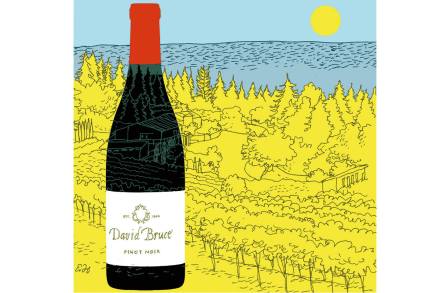
Every good vintner deserves a good origin story. David Bruce, the founder of the eponymous winery in the Santa Cruz hills, has one of the best. When he was at medical school at Stanford in the 1950s, he chanced upon Alexis Lichine’s classic book The Wines of France. Lichine said some fancy and evocative things about the great wines of Richebourg in Burgundy. Bruce padded down to a wine shop in San Francisco and collared a bottle of 1954 Domaine de la Romanée-Conti Richebourg. “The minute I opened this bottle of wine,” he recalled, “the whole room was pervaded by this floral, spicy aroma.” Here’s the kicker: “I remember thinking, I guess you get what you pay for.” Oh yeah? He paid $7.50 for the bottle.

The best alternatives to Diet Coke

From our UK edition

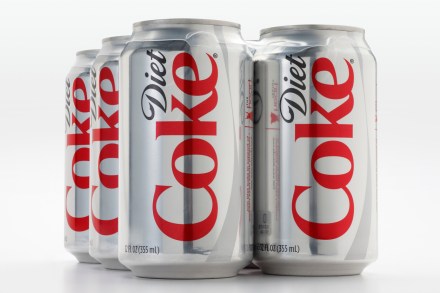
British media wouldn’t be British media without endless stories of possible health risks in food and drink. The news cycle turns and we land on whether butter is good or bad, or whether having a glass of red wine in the evening is toxic or therapeutic. Another long-running, oft-studied and frequently-discussed topic of debate is aspartame, the artificial sweetener found in the likes of Diet Coke and Coke Zero. The latter is a favourite drink of mine.  Aspartame has suffered its fair share of derision in the past, but it is now being officially declared a ‘possible’ cancer risk by the International Agency for Research on Cancer, a World Health Organisation body.

Let us pray for the NHS

From our UK edition

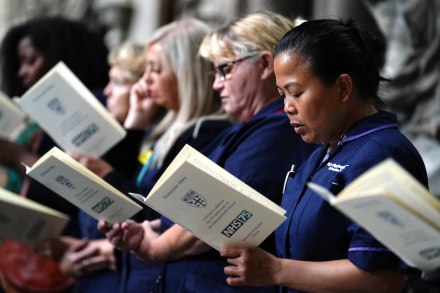
Why was there a service in Westminster Abbey thanking God for the NHS today? Some 1,500 NHS workers, many in uniform, packed into the Abbey along with politicians to mark 75 years of the service. As a celebration of the work those people have done, it was a good event: the Dean of Westminster, David Hoyle, paid tribute in his sermon to the ‘sheer bloody-minded persistence of tired, stressed, wonderful people in the NHS’. There were testimonies from healthcare workers who had treated sickle cell patients and children with cancer from Ukraine. And of course there were readings from Rishi Sunak and Keir Starmer and an address from NHS chief executive Amanda Pritchard.

Is the glucose monitoring craze really so healthy?

From our UK edition

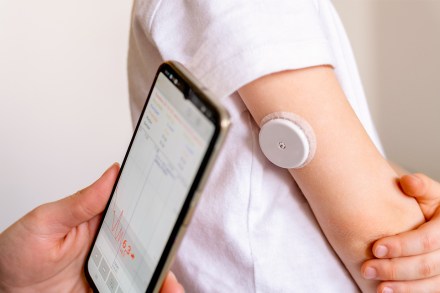
At £300 a go, the Zoe is a reassuringly expensive accessory. It has a recognisable logo and even had a 200,000-strong waiting list at one point. That wouldn’t be so unusual if Zoe was a must-have handbag or jewellery, but it is  a continuous glucose monitor that you stick to your arm. Some charities ask non-diabetics to donate their wearables to be reused by people who actually need them Continuous glucose monitors have been available to diabetics for a few years, but now non-diabetics without any particular reason to worry about their pancreas are also getting in on the act. Like the fear of gluten a few years ago, glucose levels have gone from something only those with a diagnosed medical condition ever think about to a widespread obsession.

Wuhan clan: we finally know the identity of the scientists in the lab linked to Covid

From our UK edition

That a pandemic caused by a bat coronavirus started in the city with the world’s largest programme of research into bat coronaviruses was always intriguing. That among the first people to get ill with allegedly Covid-like symptoms in the month the pandemic began were three scientists working in that lab was highly suspicious. Now that we know their names, we find one of them was collecting what turned out to be the closest cousins of Sars-CoV-2 at the time, and another was doing the very experiments that could have created the virus. These revelations make it almost a slam dunk for the coronavirus lab-leak hypothesis.

My life as a meth addict

From our UK edition

I’ve spent most of my adult life addicted to amphetamines, including crystal meth. I first tried speed when I was 17 at a techno party while visiting Germany. I had been struggling with my A-levels and always found school hard because I was constantly exhausted, sleeping for 12 hours a day and still falling asleep during lessons. I was depressed and sometimes felt like I didn’t want to live any more. Speed changed all that. For the first time ever, I was motivated, I could concentrate and I felt that I could deal with life. I went from failing school to becoming a straight-A student, and I honestly don’t think I would have graduated without speed. I took it like people drink coffee. On meth, you feel like you’re having an epiphany every minute.

Stop demonising cyclists

From our UK edition

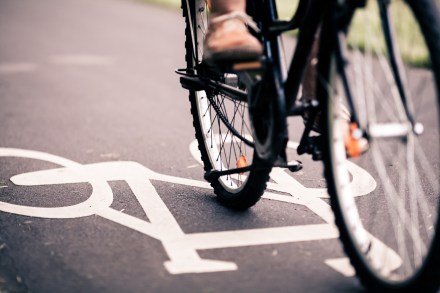
If you were to ask me how many bicycles I’ve had in my life, my response would be about as precise as Boris Johnson’s to the question of how many children he’s fathered. In my case, so many bikes have been stolen over the years – including one attached to a signpost (which vanished along with the bike) and another that I left unlocked for 45 seconds outside Nicolas on Holland Park Avenue. That turned out to be the most expensive bottle of wine I’ve ever taken to a dinner party. (In fact, that was the same bike that had previously been harvested of 90 per cent of its components after being tied up in the street one night, leaving only the bare frame.) So many bikes, but I persist.

The new war on weight

We’re getting fatter. We even have a whole day dedicated to it now, World Obesity Day. We are reminded about our expanding waistbands and inflated cheeks every time we walk down the street, or look at an XXL model stuck onto a magazine cover to make the rest of us chubsters feel empowered. I don’t feel empowered at all. I feel alarmed — and confused. In a time when such advanced medicine is at our fingertips, the obesity problem is worse than ever. In America, one person dies from cardiovascular disease every thirty-four seconds, making it the biggest killer in the country. Globally, the World Health Organization estimates that obesity is responsible for 2.8 million deaths each year. But what if there were a simple way to stop us from eating ourselves to death?

weight

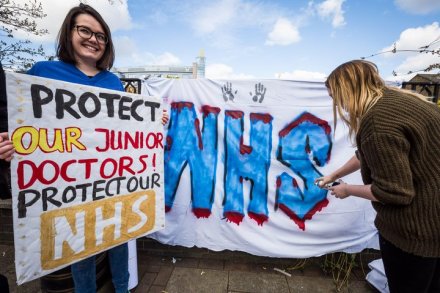
Will public sympathy extend to the junior doctors’ strike?

From our UK edition

Next month, junior doctors in England will walk out for three consecutive days after an overwhelming majority voted to strike over pay and conditions. Just under 50,000 doctors were entitled to vote in the British Medical Association ballot, and 78 per cent did. Of the votes cast, 98 per cent voted in favour of strike action. The term 'junior doctor' refers to newly qualified foundation doctors, as well as all those doctors ranked in between, up until and including senior registrars. These doctors are hoping for a 26 per cent pay rise – a figure they say would amount to ‘full pay restoration’ after the BMA concluded that junior doctors have seen their real-terms wages fall ‘by more than a quarter’ since 2008.

Surgeries are no ‘quick fix’ for childhood obesity

The American Academy of Pediatrics has released new guidelines on childhood obesity, advocating that children receive medication and even surgery as early as twelve years old to avoid long-term health consequences. The authors of the new guidelines argue against the historical belief that obesity can be overcome exclusively by lifestyle changes. They say that doesn’t adequately address “socioecological, environmental and genetic influences” that affect children. Childhood obesity rates, however, are higher than they’ve been in fifty years — and genetics didn’t cause the concerning rise. The most obvious changes in the Western lifestyle since then have included a massive increase in processed foods and the integration of the internet into everyday life.

childhood obesity

The Whale is a work of art

From our UK edition

If the 20th century was the age of the common man, the 21st is the age of the common man’s confounding. Between shambolic politics, culture wars and actual war, nothing is turning out quite as well as anyone expected. What was meant to be an era of freedom and enlightenment seems to have become the opposite.   Nowhere is this more evident than in the way we interact with one another. In what feels like the blink of an eye, discourse, and by extension society, has taken up residence on the internet. The pace of the outrage cycle has gathered such speed that we must always be finding something new to be incensed by. Social media has made us myopic, scrutinising everyone and everything until we find or invent reasons to clutch at our collective pearls.

The dark side of laughing gas

From our UK edition

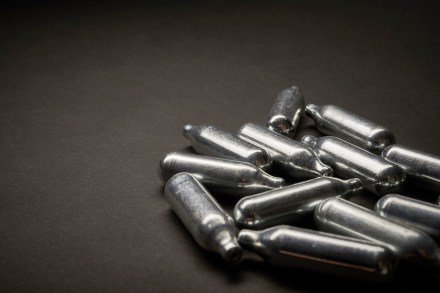
In his memoir Spare, Prince Harry has revealed he ‘enhanced his calm’ during the birth of his son Archie in 2019 by taking ‘several slow, penetrating hits’ of the canister of laughing gas in his wife Meghan’s hospital room. He described how when a nurse returned and tried to give Meghan a dose for pain relief, there was none left: ‘I could see the thought slowly dawning. Gracious, the husband’s had it all. “Sorry,” I said meekly.’ He is far from alone in enjoying the high that comes from laughing gas. Also known as nitrous oxide, it has become the second most popular drug (behind cannabis) among 16- to 24-year-olds, according to data from the Office for National Statistics. An astonishing 3.