Health

Good riddance to 2024

From our UK edition

January. When the assisted dying bill comes in, I’ll be first in the queue. Non-stop nosebleeds, Covid-esque symptoms, leg cramps, a cough resistant to antibiotics, and unremunerated press interviews for my Burton/Taylor book. In the old days I’d be in New York, running amok with publicity handmaidens, going on television and racking up bills in the Gramercy Park Hotel. Now everything is done from the back-bedroom here in Hastings, where I dwell in the slum district, my window overlooking immigrants doing their laundry. Paul Bailey went to the trouble of getting his name removed from my acknowledgements. That’s real hatred February. First anniversary of my myocardial infarction, when I collapsed in Morrisons car park.

Why didn’t I read the comments sooner?

From our UK edition

I adhere to a pretty iron-clad rule: not only do I avoid the bumper cars of social media, but I don’t read the comments after my columns. Many other journalists avidly lap up reader responses to their work, and there’s certainly something to be said for confronting detractors, thus learning to anticipate counter-arguments and to guard against misinterpretation. But for me – I doubt this makes me unusual – one scornful put-down has a more lasting effect than ten gushing compliments. Forbidding myself from hitting that bottom tab is a matter of self-protection. While writing, I don’t want to lose my nerve, and too keen an awareness of your (potentially hostile) audience can be inhibiting, as if someone is reading over your shoulder.

Wild Wes: Streeting is causing trouble for Starmer

From our UK edition

Avote on assisted dying was supposed to be one of the easiest reforms for Keir Starmer’s government. To many, including the Prime Minister himself, a law allowing terminally ill patients to choose to die would be a self-evidently progressive and historically significant change. It would mean Britain could transcend the objections of a religious minority and join Canada, the Netherlands and other countries in a modern, more enlightened era. In the assisted dying debate, the PM appears a mere onlooker, while Streeting is taking the lead Starmer didn’t want to have to order his MPs to vote for assisted dying. The strategy instead was to use a private members’ bill, brought by the Labour backbencher Kim Leadbeater.

The appalling truth about London’s ambulance service

From our UK edition

‘An old lady’s fallen down – quick! She’s bleeding. Come help.’ An elderly woman lay on the entrance steps of the block of mansion flats, food from a Tesco bag spilled around her, blood spreading on the stone. It was clear she’d tripped and banged her forehead, opening a large gash over her right eye. The courier had already tried to call an ambulance, but been put on hold. He had to continue his delivery run, so he’d begun ringing doorbells to summon assistance. The lady was groggy but awake. I asked her name – Daphne. I helped her sit up, slowly, and propped her against the doorway’s cold brickwork. Checking she wouldn’t keel over, I ran inside for a box of tissues. We wadded up handfuls and pressed them on the wound to staunch the bleeding.

Is Wes Streeting the Hamlet of the health service?

From our UK edition

Is Wes Streeting the Hamlet of the Health Service? Is this undoubtedly talented and thoughtful young Labour prince fatally irresolute when it comes to doing what he knows must be done? Few politicians have articulated so clearly the need for reform of our healthcare system. Streeting’s insistence that the NHS should be a service not a shrine angered all the right people, which is to say the BMA. It marked a welcome departure from the treacly displays of affection which have hitherto characterised ‘debate’ about the health service. More recently, the Health Secretary has frankly admitted that the NHS is letting patients down and acknowledged its manifold inefficiencies. The need for change has been recognised. The case for reform is urgent.

With Tim Spector

From our UK edition

27 min listen

Tim Spector is a leading professor of genetic epidemiology at King’s College London and a renowned expert in nutrition, gut health, and the microbiome. He is the founder of the Zoe Project, which focuses on personalised nutrition and how individual responses to food impact health. His new book, The Food for Life Cookbook, is out now. On the podcast, he tells Lara about his time growing up in Australia, how a skiing accident changed his view on nutrition, and why ham-flavoured crisps are his guilty pleasure. Produced by Oscar Edmondson and Joe Bedell-Brill. Click here for tickets to our Americano live event, with Nigel Farage.

What rats can teach us about the dangers of overcrowding

From our UK edition

The peculiar career of John Bumpass Calhoun (1917-95), the psychologist, philosopher, economist, mathematician and sociologist who was nominated for the Nobel Peace Prize and was the subject of a glowing article in Good Housekeeping, comes accompanied with more than its fair share of red flags. He studied how rodents adapted to different environments and specifically how the density of a population affects an individual’s behaviour. He collected reams of data but published little, and rarely in the mainstream scientific journals. He courted publicity, inviting journalists to draw from his studies of rats and mice apocalyptic conclusions about the future of urban humanity.

Whatever happened to Lionel Shriver?

From our UK edition

For many readers, my absence from these pages may have gone unnoticed. Those few who’ve detected my disappearance might have idly concocted theories: maybe Shriver crossed a line in her opposition to uncontrolled illegal immigration such that she finally got the sack. The explanation is more quotidian. Six years ago, I was diagnosed with the unwieldy sounding spondylolisthesis: a vertebra in my lower spine had moved out of alignment, squeezing the nerves to my right hip and leg. I’d been managing, but the situation was degenerative. By this summer, I could barely complete a 15-minute walk, and – the limit – I could not play tennis.

The adult ADHD trap

From our UK edition

I was on the bus recently and bored when I decided not to ignore but to answer one of those online questionnaires about adult ADHD. It was on Facebook, I think. Question 1) Am I easily distracted? Well, yes. 2) Am I often late? 3) Do I regularly forget appointments? Yes and yes. By the time I had arrived at work I had signed up to something called Impulse brain training. And in a few days I was quite sure that I’d been bravely suffering with undiagnosed ADHD for decades. I was half-caught in the adult ADHD trap, though I didn’t know it yet. Are you always late? Do you let people down? Don’t worry! Don’t sweat it! That’s just your ADHD I asked my brother and my friends what they thought and instead of laughing, they nodded sadly. Yes, yes.

How much do we spend on workwear?

From our UK edition

The first nimby Who coined the term ‘nimby’?  — The expression, from ‘Not In My Backyard’, entered the political sphere in Britain in 1989 when it was used by the then environment secretary Nicholas Ridley to describe people who were in favour of house-building in general, just not near where they lived. He was later ridiculed when it emerged that he had objected to a development next door to his own Gloucestershire home.  — But the term originated around a decade earlier in the United States, when it was applied to people who were opposed to the dumping of nuclear waste near their homes.

The anxiety-inducing world of wellness tech

From our UK edition

I first came across the Zoe programme when a bright yellow package arrived on my parents’ doorstep last year. My mother, like many, had been wooed by the TV personality Davina McCall into ‘living her best life’ by ordering a Zoe gut-health testing kit (at an upfront cost of £299, or £599 for the Plus plan).  Zoe is the invention of Tim Spector, the professor-turned-health guru who ran the Covid symptom-tracker app throughout the pandemic. It’s a personalised nutrition programme that promises to make you ‘feel’ healthier and improve your gut health, energy levels and even flatulence.

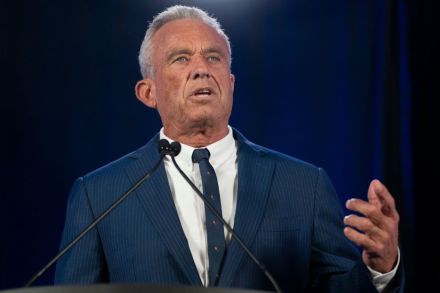
RFK thinks he’s the guy who can ‘Make America Healthy Again’

Robert F. Kennedy Jr. suspended his presidential campaign in swing states on Friday and officially endorsed former president Donald Trump in the 2024 presidential election. Electorally, this was a potentially pivotal moment: RFK was pulling about 5 percent of the total electorate, according to the RealClear average, and an even higher percentage in some swing states. If Kennedy was right when he told Dr. Phil that 57 percent of his voters would go to Trump if he left the race, then his exit and endorsement could prove a significant boost to Trump. Since RFK Jr. and another former Democrat, Congresswoman Tulsi Gabbard, endorsed Trump, both have been added to the former president’s transition team. Culturally, RFK Jr.

RFK

How would we handle an avian flu pandemic?

From our UK edition

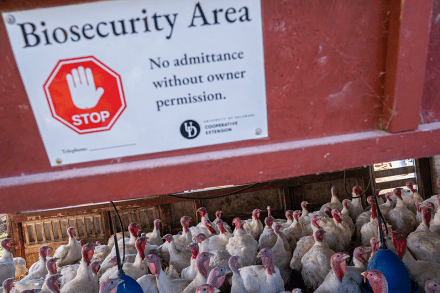
Concerns have been raised in recent months after an outbreak of avian flu caused by the virus H5N1 was detected in cattle in the US. To date, 139 affected herds have been identified, and four dairy workers have contracted the virus. The UK Health Security Agency, which previously believed there to be minimal risk of the virus evolving into a form which could spread among humans, now believes there is up to a one-in-three chance of it doing so. A factory in Liverpool has been busy manufacturing stockpiles of a ‘pre-pandemic’ vaccine which will be given to farm workers and others in occupations that bring them into close contact with bird flu. We have been here before with bird flu.

Reflections on two decades of yoga

Recently it occurred to me that I’ve been doing yoga for twenty years. This happened while I was doing yoga, which makes a lot of sense. My Buddha-worthy insight reminded me of a time when I’d only been doing yoga for three years and still gazed around at my surroundings wonderingly, like a toddler, which, in a yoga sense, I was. I’d traveled to San Francisco for a Yoga Journal conference, the vogue back in the Aughts. All the famous yoga teachers, and their willing dues-paying acolytes, gathered in the Brutalist basement of the downtown Hilton, not a particularly beautiful or Zen location. I took workshops all day, including a lousy, pretentious harmonium-soaked one from an emaciated master who looked like a yoga version of Iggy Pop, but with worse taste in music.

yoga

Oprah ditches WeightWatchers after shedding pounds with drugs

After twenty-five years battling her weight before a studio audience, Oprah has finally dropped those pesky forty pounds... with the help of weight-loss drugs. Now the media mogul has dropped WeightWatchers too.  Earlier this week, Oprah announced that she would be leaving the company after nearly a decade on its board of directors and starring in commercials.   “I look forward to continuing to advise and collaborate with WeightWatchers and CEO Sima Sistani in elevating the conversation around recognizing obesity as a chronic condition, working to reduce stigma and advocating for health equity,” said Oprah, who apparently no longer needs the weight-loss program.

oprah winfrey weightwatchers

Plogging: Europe’s bizarre eco-friendly fitness craze

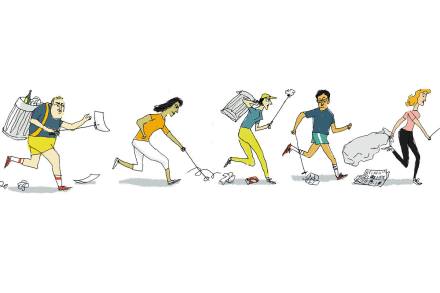
The first finisher crossed the line sweaty, tired and almost black with dirt, his white Decathlon shirt turned gray and his standard-issue blue gloves transformed into a deep midnight. He dragged behind him a refrigerator-sized plywood box, piled high with swollen rubbish bags and secured with a hooked rubber bungee cable — where he grabbed that, nobody knew. Yet José Luis Sañudo Lamela’s smile was wide, and he laughed heartily when onlookers and fans expressed amazement at his feat. But despite Lamela’s assuredness that he would take home top billing in the annual World Plogging Championships, one man outdid him — if not in diversity of goods, in pure heft.

plogging

Lloyd Austin’s mistake should be career-ending

The disappearance of defense secretary Lloyd Austin for a few days without notifying the White House, or even the second in command at the Pentagon, is more than a one- or two-day story.  It’s a much larger problem. It’s a problem politically for the White House, an opportunity for Republicans, a dilemma for congressional Democrats and a problem for the most powerful military in the world. And, of course, it’s a major problem for Secretary Austin’s future in the position. Let’s start with the problem for the military. It is absolutely essential that the military have a clear chain of command that is clearly specified and operational at all times. Within the military, that chain of command goes up to the senior-most officer in each service branch.

lloyd austin

Could a 100-bottle limit help me cut down on drinking?

From our UK edition

My New Year’s resolution is to cut down on my drinking. I’m not talking about bringing it within the NHS’s recommended limit, obviously. I’ve never met anyone who confines their alcohol intake to 14 units a week, which amounts to a bottle and a half of wine, ideally spread over many days. I’m thinking of something more in the region of two bottles a week. Why not simply stop altogether? Partly because I’ve tried that before and don’t have the willpower. The longest stretch I’ve gone without a drink was in the two years leading up to my marriage in 2001, because I didn’t think Caroline would go through with it if I didn’t take the pledge.

In search of a second epiphany

From our UK edition

When I go home to America next week for Christmas, I’ll go to church – the one my family and I used to attend every Sunday, a few towns over. I visit intermittently throughout the year when I’m back home, but I always go on Christmas Eve. The routine is the same: I sit quietly in the pews, sing along to the carols, and hope to have a second epiphany.   I had my first epiphany – that God exists – when I was a child. This, I’m sure, is the result of having two religious parents who raised me in the church. When I tell my British friends that I was brought up a Methodist, they tend to flash me a nervous look. I must assume that going to a Methodist church in the UK means something different than it does in liberal Connecticut.

Rishi’s smoking ban inspired me to light a cigarette

From our UK edition

What has Rishi Sunak’s government achieved in its first year? The highlights include a renegotiated Brexit policy and setting more practical net-zero deadlines. But Sunak asked the country to judge him on his ability to deliver his pledges set out at the start of the year. If polls are to be believed, voters are preparing to do just that. Inflation is falling, but that’s largely due to interest rate hikes announced by the Bank of England. The economy is growing, but barely. The NHS waiting list keeps rising – 7.6 million now in England alone. On this last point, no doubt the six-figure salaried consultants who keep striking deserve part of the blame. But to say the Sunak government is struggling to make good on its promises would be putting it rather gently.