Health

Actually, it’s not ‘OK’

‘It’s ok’ is a meme that enables lazy millennials across social media to bail on plans last minute in favor of wallowing in self-pity. It seemed to have already completed its meme rounds, having come to its satirical end in January. Now, however, ‘It’s ok’ has experienced a resurgence — thanks to Lord COVID.Social media has been even more drowned in comforting posts than normal. ‘It’s ok’ posts are in overdrive. Would-be influencers insist, ‘It’s ok to eat chips three meals in a row,’ ‘It’s ok to do literally nothing!

ok

Beware the COVID-19 nannies!

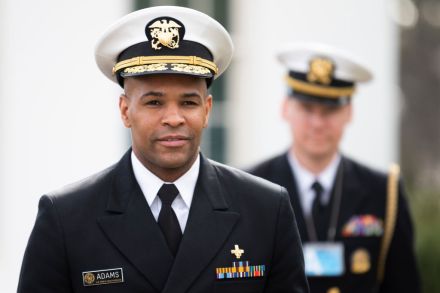
COVID-19 has suddenly made much of the western public health establishment effectively redundant. Unused to dealing with infectious disease, we have a legion of epidemiologists who have never studied an epidemic and a horde of public health professionals who are more comfortable discussing soda taxes than virology.If you’ve spent your career believing that drinking, smoking and obesity are the real epidemics, a potentially fatal virus forcing billions of people into hiding could make you question your priorities. But if the nanny state lobby was disoriented at first, it has quickly learnt to adapt. The public are temporarily willing to sacrifice a bit of liberty for safety and the lifestyle regulators sense fresh opportunities.

jerome adams nannies

Life and death in New York City

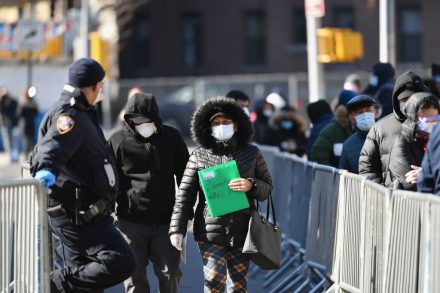
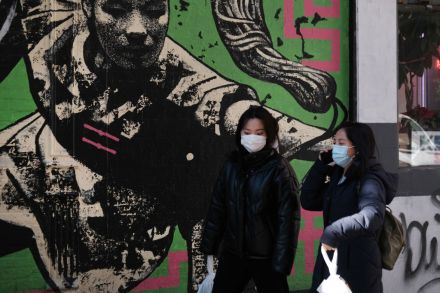
No matter where in the apartment I am, if I sit very still, I hear a siren. Over the 18 days I’ve spent in quarantine here, they’ve grown more frequent. I worked late yesterday and finished up at about 1:30 this morning. I pulled my headphones out and listened. There was the briefest moment of calm, before I heard the familiar squall. From what I could make out, it sounded like a convoy of ambulances, careering towards the hospital about a mile from me. Woodhull Medical Center is a block of brutalist concrete planted imposingly at the junction of Broadway and Marcus Garvey Boulevard. A tent outside is my closest COVID-19 testing site.

elmhurst new york

The curious age discrimination of coronavirus

From our UK edition

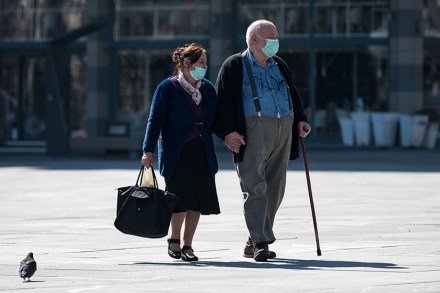
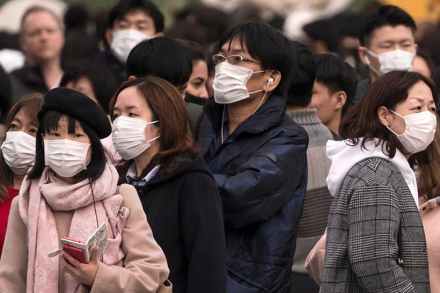
The generational effect of the corona-virus is cunning and baffling. By often being so mild in the young and healthy it turns people into heedless carriers. By often being so lethal in the old and sick, it makes carriers into potential executioners of friends and neighbours. The virus is very dangerous for people who have certain underlying illnesses, which is probably the main reason it is so serious for the elderly. It is almost as if it does not kill people by itself, just worsens other disorders. This is unlike flu, where children are as much at risk as old people. By contrast, in this case, young people in good health, even very young children, generally get such a mild coronavirus infection that they rarely have to seek treatment. An analysis of Chinese cases found that just 0.

The virus is not invincible, but it’s exposing who’s irreplaceable

In all the gloom and doom, and media-driven nihilism, there is actually an array of good news. As many predicted, as testing spreads, and we get a better idea of the actual number and nature of cases, the death rate from coronavirus slowly but also seems to steadily decline. Early estimates from the World Health Organization and the modeling of pessimists of a constant four percent death rate for those infected with the virus are for now proving exaggerated for the United States. More likely, as testing spreads, our fatality rates could descend to near one percent. There is some evidence from Germany and to a lesser extent South Korea, that it may be possible to see the fatality rate dip below one percent.

virus

After the coronavirus, who wins the recovery?

We are living through a gruesome case study in the irrationality of elites. COVID-19 is a serious disease, but the question of just how serious it is has hardly even been posed correctly, let alone answered intelligently. Yet already our leaders have assumed dictatorial airs and enacted policies that threaten to plunge the Western world into an economic crisis unmatched since the Great Depression. Eighty days into 2020, the official worldwide death toll from the coronavirus stands at somewhat over 10,000 lives. That includes fatalities from the final months of 2019 as well, when Chinese authorities initially tried to disguise rather than treat the outbreak of the new disease. The world was utterly unprepared for the virus as it spread from Wuhan.

donald trump recovery

Panic among the pigeons

Life is a risky business. Danger is everywhere. In New York, even the pigeons are a threat. A friend recalled a graduate school class in which he was told that some 20 people each year die from diseases contracted from pigeon dung. Twenty people! Why hasn’t Mayor de Blasio confiscated all the pigeons? Banned people from walking on the same streets where the pigeons congregate? Enforce a regimen of 'social distancing' among the birds? As of this afternoon, there are about 5,000 reported cases of the Wuhan flu in the US. Ninety-five people in this country have died from it. Ninety-five. Twenty-five of those, more than a quarter of the total, are associated with one place, the Life Care Center of Kirkland, Washington, a long-term, critical care facility.

panic

We’re all Chinese now

I didn’t know this was what they meant by ‘cancel culture’. Sports events, theatre shows, plane flights, weddings, funerals: everyone is in a mad rush to cancel everything. Governments are ordering citizens to remain indoors, with Spanish police even deploying drones to catch miscreants. I don’t know whether it is the best way of tackling coronavirus — the UK government, which has gone to greater lengths than others to explain the scientific modeling behind its decision-making, has come to the conclusion that banning things and forcing the entire population into lockdown will have minimal effect and may even be counter-productive, at least at this stage. But it is going to cause a global recession, if not depression.

chinese

How worried should we be about coronavirus?

From our UK edition

So are we all going to die or is it going to fizzle out? In Naples the police drive along streets with loudhailers, warning everyone to keep indoors; in Britain the government declines to close schools, call off sporting fixtures and persuade people out of the pub. Something feels not quite right: either there is huge overreaction or under-reaction to Covid-19. Health Secretary Matt Hancock has not helped calm fears by announcing that the government has been working on a worst-case scenario of 80 per cent of the population catching the virus and 500,000 dying from it. It isn’t easy for the scientists, either. In a fast-developing disease there is, inevitably, a shortage of up-to-date, peer-reviewed studies to give you an accurate picture.

What have we learned since the swine flu outbreak?

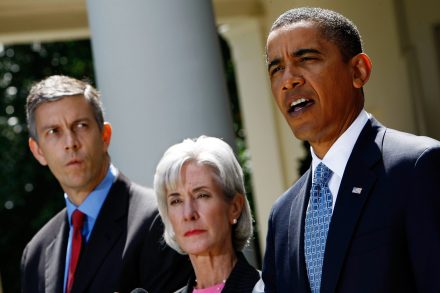
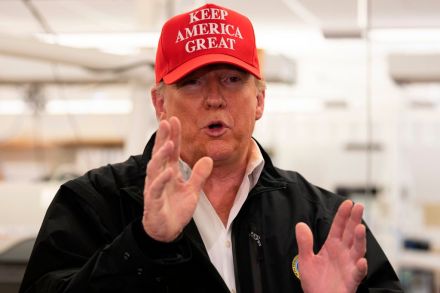
Donald Trump declared a national emergency on Friday over the spread of COVID-19, promising to dedicate $50 billion in funding for states to fight the virus. The order is the latest in a line of actions taken by the administration to try to stem the spread of the virus: major restrictions on travel from China and the European Union, convincing insurance companies to waive copayments on Coronavirus testing, and loosening FDA restrictions on testing, among others. 'We will overcome the threat of the virus,' President Trump said during a news conference in the White House Rose Garden.

Barack Obama swine flu

How do pandemics change the way we think?

It starts with seemingly insignificant numbers alongside little red blips on the world map. In a matter of days, the numbers soar and the red circles balloon to engulf an entire region. This pattern has repeated itself several times across the globe — notably in South Korea, Iran and Italy — as the number of confirmed cases of COVID-19 has surged since the virus first emerged in Wuhan back in December. Despite the Chinese economy coming to a grinding halt amid an unprecedented city-wide lockdown, the inevitable happened. The virus could not be contained within mainland China’s borders, and neither could its accompanying fear.Coronavirus has spread perniciously, causing 4,716 deaths worldwide and radically transforming life as we know it.

pandemics

Trump cannot defeat a virus

There are no atheists in foxholes, and no libertarians in a pandemic. As the spread of the COVID-19 virus in the United States starts to resemble the exponential outbreaks in countries where the pandemic is more advanced, the American public wants the kind of security that only government can provide. Donald Trump was elected to provide security, whether from the domestic challenge of outsourcing or the foreign challenge of a rising China. In recent days, he has failed in judgment, in leadership and in decision-making. Only after the World Health Organization declared a global pandemic did he address the nation and announce the closure of America’s borders.

trump

Trump’s lack of coronavirus concern is concerning

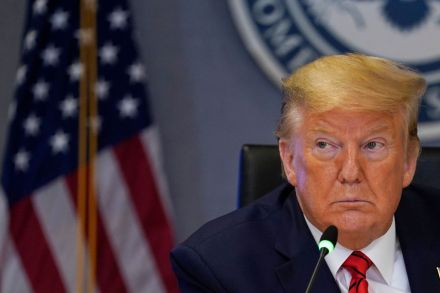
President Trump was asked about the coronavirus on Saturday. He responded, 'No, I'm not concerned at all. No, I'm not.' His lack of concern is becoming concerning.The stock market is tanking. The energy sector is cratering. The global economy looks like it could be headed for a recession, And China claims that it’s on the road to licking the virus.For Trump the political implications could end up being dire. The surge that Joe Biden is enjoying would be almost unthinkable absent the coronavirus. Biden will likely stomp all over Bernie Sanders in Michigan and elsewhere. There will be no contested Democratic convention. Instead, the party is unifying as rapidly as it can behind him.And Trump? As is his wont, he’s acting like this is another hoax, a crisis that’s no biggie.

donald trump coronavirus concern

My night in A&E left me worried about the NHS’s coronavirus response

From our UK edition

I wish I shared the Prime Minister’s confidence about the ability of the NHS to cope with coronavirus. ‘I have no doubt that with the help of the NHS and its incomparable staff, this country will get through it – and beat it,’ he said on Sunday. Not if my experience in A&E last week is anything to go by. I wasn’t keen to visit A&E in the midst of the current crisis, obviously, and had it been my own health I was worried about I would have stayed in bed. But it was Sasha’s, my 16-year-old daughter. She was pushed down some stairs at a party (not deliberately) and one of her fake fingernails got bent back, ripping her actual nail off its nail bed. She was complaining about the pain and it looked infected so I called 111 and asked what to do.

Coronavirus and the cycle of panic

From our UK edition

If you have just cancelled your trip to Venice and ordered your £19.99 surgical face mask from Amazon, how about this for a terrifying vision: by the time we get to April, 50,000 Britons will have succumbed to a combination of infectious disease and adverse weather. Frightened? If you are, don’t worry: you survived. It was two years ago. In 2017-18 the Office for National Statistics recorded 50,100 ‘excess winter deaths’. The explanation, according to the ONS, was probably ‘the predominant strain of flu, the effectiveness of the influenza vaccine, and below average winter temperatures’. Coronavirus (Covid-19) is a pretty virulent virus all right, but not in the way you might imagine.

Donald Trump vs corona hysteria

I like to keep a couple of books within easy reach of my desk to remind myself what sort of creature I am dealing with. As I often write about academics and academic administrators, one of these is Ralph Buchsbaum’s Animals Without Backbones: An Introduction to the Invertebrates, whose title perfectly captures the mushy, moist, moral manner of those matchless, modern martinets. Since I also often write about what Lionel Trilling called the ‘bloody crossroads’, where politics and culture meet, the other book within easy reach is Charles Mackay’s Extraordinary Popular Delusions and the Madness of Crowds.  The chief instigator of madness these days is Donald Trump. He is like that old-fashioned confection called Fizzies.

President Trump Holds Press Conference With CDC Officials On Coronavirus

In coronavirus quarantine

This article is in The Spectator’s March 2020 US edition. Subscribe here. I’ve been quarantined, like millions of others in China. It was bound to happen sooner or later. I traveled all the way from Beijing to the third-tier city of Jining in Shandong province, where anyone arriving from another region must be detained for 14 days. There’s no kind way to deliver the news, so a Chinese colleague broke it to me over WeChat in a gentle but firm tone. It felt like being fired or dumped. It could be worse. I’m free to leave my building, but not the walled housing compound surrounding it.

coronavirus

My Parkinson’s diagnosis has shown me how kind society really is

From our UK edition

Like Ozzy Osbourne, I was last year diagnosed with Parkinson’s disease, the degenerative condition that impairs the functioning of the body. In a series of recent interviews, Osbourne has spoken frankly about the impact of the neurological disorder. ‘That thing has knocked the shit out of me,’ he said, Brummie-style. I’m with Ozzy. It’s done the same to me. My difficulties began about 18 months ago, when my left leg developed an involuntary twitch, which soon extended to my other limbs. My gait became increasingly awkward, alternating between a strange quickstep and a longer, more laboured shuffle, complete with stoop and limp. The effect was like a cross between John Inman in Are You Being Served?

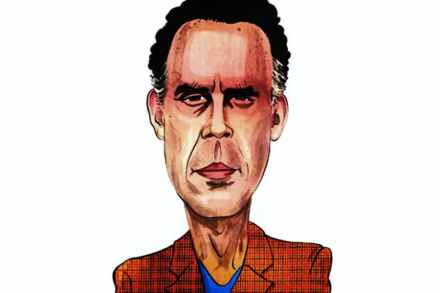
Does Jordan Peterson’s carnivore diet work?

From our UK edition

Jordan Peterson has spent much of the past few years eloquently torpedoing all that the liberal progressives hold dear, and he’s not done yet. Citing a profound health transformation, the bolshy Canadian psychologist is now piling into the opinion-saturated arena of diet, and the vegans aren’t happy. But Peterson’s latest revelation is not about culture wars or the eroding of free speech. This is about his own mental health, which has at times been unspeakably grim. Controversial as ever, Peterson is now claiming to have beaten away his regimen of antidepressants through the excessive consumption of a rather more rudimentary substance: meat.

Being mistaken for James Corden motivated my weight loss

Late night host James Corden had a viral moment over the weekend when he clapped back at Bill Maher for his comments about fatness. 'If making fun of fat people made them lose weight, there’d be no fat kids in schools,’ Corden said. 'And I’d have a six-pack right now.’ Well James, I’m here to tell you you're wrong. Fat-shaming can work. And I know. Because I was once mistaken for you. I was leaving an extremely busy pool hall in Manhattan's West Village with some friends one Saturday in early December last year. It was the kind of place where you had to collect a ticket from the bar in order to wait your turn for a table — and we had been waiting for over an hour.

james corden