Health

Organic food isn’t better for us – or the environment

From our UK edition

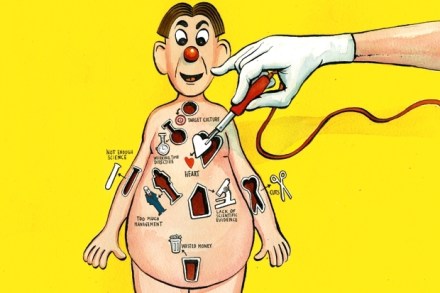
It is mystifying to me that organic food is still widely seen as healthier, more sustainable and, most absurdly, safer than non-organic food. Following the publication of part two of Henry Dimbleby’s National Food Strategy last week, the organic movement was quick to suggest that organic food and farming offer a way to achieve the strategy’s vision. ‘The recommendations of the National Food Strategy offer genuine hope that by embracing agroecological and organic farming, and adopting a healthier and more sustainable diet, we can address the climate, nature and health crises,’ said Helen Browning, chief executive of the Soil Association, Britain’s most vocal organic lobbying organisation.

What did the Romans ever do for us?

From our UK edition

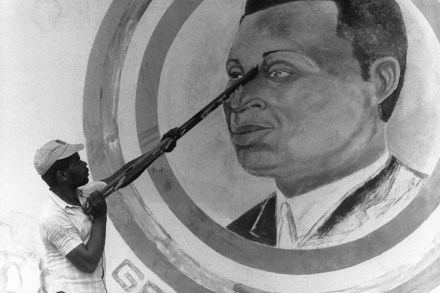
The mayor of London, Sadiq Khan, is planning to install a statue of John Chilembwe in Trafalgar Square. Mr Chilembwe was a Malawian Baptist famous for, among other things, leading an uprising where the head of a Scottish farmer was chopped off and put on a pole. He is much revered in his home country for all this and his face has appeared on banknotes. In truth, Mr Chilembwe didn’t incite the murder of many people, in the great scheme of things. If the mayor is searching for a murderer who did punch his weight, he could do worse than hoist up a statue of Francisco Macías Nguema, the former dictator of Equatorial Guinea.

Javid reveals his health priorities

From our UK edition

Effective cabinet ministers are ones who work out what they want to do in a department on arrival, and then stick to that very small set of priorities whatever the political winds and storms. Michael Gove had this approach in the Education department, setting himself three priorities and then focusing on getting them delivered. Not only did he then replicate this approach in his subsequent Whitehall briefs, but he also inspired other ministers to do the same. Jeremy Hunt, who largely modelled himself on Gove when he became health secretary, also gave himself a small list of things he wanted to do in his time overseeing that brief. Now, it seems Sajid Javid is following suit too.

Are Hancock’s health reforms doomed from the start?

From our UK edition

Are the Conservatives going to repeat their mistakes of a decade ago on NHS reform? If a week is a long time in politics, perhaps ten years is such a lengthy period that it erases the memory entirely. The current Health and Social Care Bill is due for publication any day now and contains much of the same potential for an almighty political row as the Andrew Lansley reforms of 2011. Senior Whitehall figures and MPs have predicted that Matt Hancock's new legislation could be 'Lansley mark ii', as I write in today's i paper. In talking to MPs across the Conservative party, from backbencher to minister, and from lockdown sceptic to restrictions enthusiast, I've found members fall into two groups on this reform.

A matter of life and death

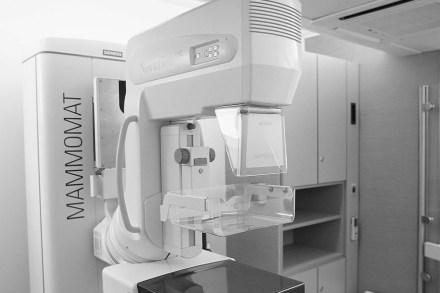
The ice on my right breast is a painful reminder of the limbo I currently find myself in: the anxiety-provoking space between a biopsy and the results. The time when you try to think positively — as if your magical thinking could change the results, the nature of whatever cells the needle procured. I’m simultaneously telling myself ‘worry is praying to the wrong God’ and repeating the word ‘benign’ over and over and over again. But the knot in my stomach is wondering if I’m about to enter a nightmare. You do your best to stay present but work falls through the cracks. You explain it away by apologizing and vaguely mentioning that you have some ‘health stuff’ you’re dealing with: nothing serious, just annoying.

Biopsy

Why are doctors still hiding behind Zoom screens?

From our UK edition

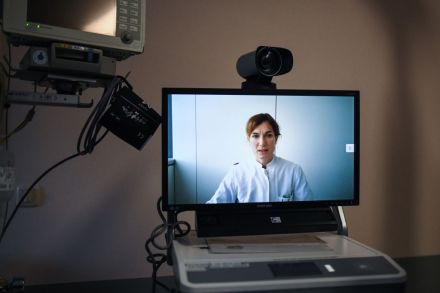
Where have all the GPs gone? Doctors were among the first to be double-jabbed, ahead of teachers in the queue precisely so they could resume seeing patients in the flesh. But while schools have long been back, GPs have retreated behind their laptops never to be seen again (at least not in the flesh). The stethoscope has been replaced by a headset — to the despair of patients with ailments that are hard to diagnose over the phone or via a laptop. In theory, GPs can claim normal service has resumed. In the pandemic the number of appointments almost halved to just over three million a week — in spite of attempts to keep healthcare running. The consequences of this drop can only be guessed at.

How does the ‘red wall’ story end?

From our UK edition

At Redwall Abbey Does fiction provide any guide as to the ultimate fate of Labour’s Red Wall? — Redwall Abbey was the setting for a series of children’s novels written by Brian Jacques between 1986 and his death in 2011. It revolved around the peace-loving creatures of Mossflower Wood who were forced to fight invading vermin. The first of the novels, called Redwall, featured an orphaned mouse who had become a novice monk and was forced to fight off an evil, one-eyed rat. At the end of the final novel, published posthumously, an otter and hedgehog emerged triumphant over the ‘vermin’ — a loose band of creatures which included rats, foxes, wildcats, magpies, rooks and crows. Critics complained that the plots were somewhat repetitive.

In defense of fat-shaming

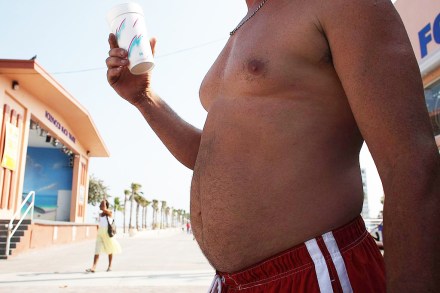
Your business may have closed, your kids still aren’t in school, nana hasn’t had a hug in 18 months, and your uncle drank himself to death from the crippling isolation — but the real tragedy of the COVID-19 pandemic is that the luckless fats are feeling stigmatized again. Over the weekend the Los Angeles Times detailed the tearful struggle of being grotesquely obese in the age of COVID-19. ‘Chrystal Bougon cried after the needle went into her arm. Not because her first dose of the Moderna vaccine hurt. But because, finally, being fat actually paid off,’ the article begins. ‘Her experience with medical providers has been one incident of size stigma after another, she said, like the time she went in with a scratched cornea and was told to lose weight.

fat america

Hospital wards are filling up again – with fakers

From our UK edition

How do I know that Britain’s Covid crisis is over? The fakers are back. The hypochondriacs, the psychosomatics, the pseudo-fitters, the attention-seekers and the lonely. They’ve started to return to the acute medical ward where I work. They’ve been gone so long I actually almost missed them. This collection of patients, who take up time and resources inversely proportional to the state of their physical health, simulate symptoms for gain (malingerers), simulate/induce their symptoms for the pleasure of the sick role (Munchausen’s syndrome) or genuinely experience symptoms such as pain, seizures or paralysis in atypical ways with no physically identifiable or treatable cause (now vaguely termed ‘functional disorders’).

Shame won’t make you quit smoking. Love might

My first memory of my Aunt Mary involves a rattlesnake and a meat cleaver. I was maybe seven years old when my cousins and I found the rattlesnake near a stack of cardboard boxes in her garage. It was barely 9 a.m. and we ran inside to find her already in full makeup and a silk housecoat, a cigarette dangling from her lips. She grabbed the cleaver and walked up to the recoiling viper — as entranced by her severe face and big red hair as we were — and chopped its head off with a nimble clank. ‘Wait till it stops wigglin’, then go toss it over yonder,’ she said through a cloud of smoke, and motioned toward an embankment at the end of the driveway. My last memory is from a little over a decade later.

smoking

Big Dope

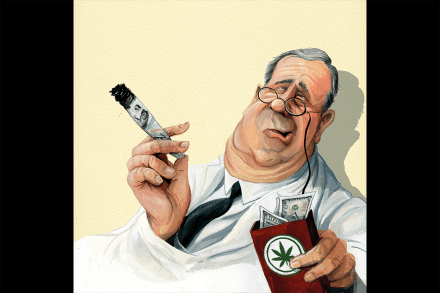
Young people are now more likely to consume marijuana than to smoke tobacco. The social acceptance of tobacco is falling, just as the popularity of weed is getting higher. A 2019 Gallup poll found that 12 percent of US adults (and 22 percent of those aged 18 to 29) said they smoke marijuana. It won’t be too long, I predict, before we look back in horror at the widespread acceptance of cannabis use. It’s easy to forget that anti-tobacco researchers had to plod on at tortoise pace for years before they were able to prove what they had long suspected to be true (and what we all now take for granted): the causal link between smoking and lung cancer. Big Tobacco was so rich and powerful that its lobbying suppressed the true dangers.

cannabis weed

The mysteries of ‘long Covid’

From our UK edition

Soon, as the rates of coronavirus deaths and infections plummet, we’re likely to focus more on those who suffer what is being called ‘long Covid’ — yet the truth is we know very little about what precisely it is. Long Covid began as a quiet murmur in the background: anecdotal stories about symptoms which extended beyond the predicted 14-day recovery time. There’s no agreed definition, so it’s hard to say how many sufferers there are, but a survey from the Office for National Statistics suggests it affects as many as one in ten of those who have had the virus. As the second wave retreats, the number of people left with long Covid may exceed those currently infected with the virus itself.

The NHS is still in desperate need of reform

From our UK edition

Along with many of my colleagues, I have been arguing for years that the current structure of the NHS cannot survive. Giving the health service endless money won’t make a significant difference, unless its core structures are changed. It is therefore very interesting to see that Matt Hancock, in the middle of the pandemic, has unveiled a package of major changes to healthcare, the essence of which is to reverse the Lansley reforms. One of the reforms the health secretary is taking aim at is the purchaser/provider split, which I have identified in the past as one of the ‘four crumbling pillars of the NHS’. The split involves regional panels commissioning various services, with hospitals and providers competing for ‘contracts’.

The power of cold showers

From our UK edition

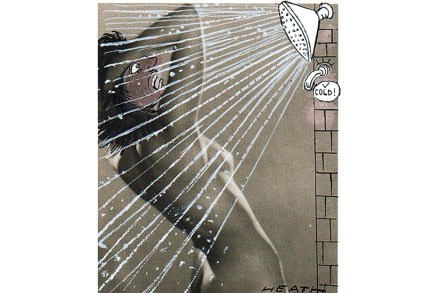
Hippocrates prescribed it to allay lassitude, James Bond favoured it as a token of his manliness, and in less indulgent times Gordonstoun school insisted on it: the cold shower. And now it’s having a moment with the wellness brigade. (The very word ‘wellness’ used to send me screaming from the room: a Californian import, I was sure. Then someone pointed out that the word has been in the English lexicon since the 17th century, so that told me.) The proven physical benefits of exposure to cold water are impressive. A boost to the immune system, improved circulation, and a wake-up call to the body’s brown fat, which is apparently A Very Good Thing.

My future hangs on the result of this blood test

From our UK edition

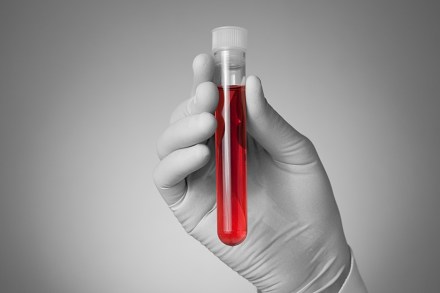
A new year and another round of medical treatments in the French health system. On Saturday morning, needing a blood test pronto, I drove to the local branch of a chain of commercial laboratories, arriving before daylight. I joined a queue of the worried and unwell that had already spilled out of the door and into the icy car park. Except for a old chap behind me trying to cough up a lungful of warm porridge, and someone else’s lilting accordion ringtone, we were a silent, stricken field. After shuffling forward for 20 minutes, I celebrated the achievement of reaching the outer door and passing through into the interior warmth with a double toot of hand gel from the public dispenser.

My cure for the common cold

From our UK edition

You really don’t want to know about my coughs and sneezes, particularly during the festive season, but bear with me because this it isn’t really about my sniffles. My argument applies to everyone, and it’s cheerful. All of us have a lifetime of experience of seasonal colds and flu, starting with the fact that they don’t always happen in winter. Mine is typical of many. Every year, often about this time, I get a fairly bad cold. Sometimes two in a year. I call it ‘flu’ and women call it ‘man flu’ but let’s not bandy names: it starts with a sudden sore throat and one or two uncomfortable nights. Within a few days this has passed and I feel better — but left with a hacking cough.

Should skin color decide who gets the vaccine first?

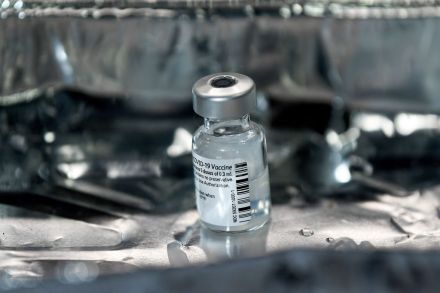
After eight months of frantic work, several coronavirus vaccines appear ready for launch. But there are 330 million Americans, and decidedly less than 330 million shots right now. So the great question America must ask is, who should receive the vaccine first?At least, it was supposed to be a great question. Mercifully, the New York Times has come forth like the Good Witch of the North to show us the way. Figuring out health policy is easy, it turns out: just decide the best policy based on race.That was the clear message of a Saturday article posing the question: 'The Elderly vs. Essential Workers: Who Should Get the Coronavirus Vaccine First?

vaccine

More Salem than Thanksgiving

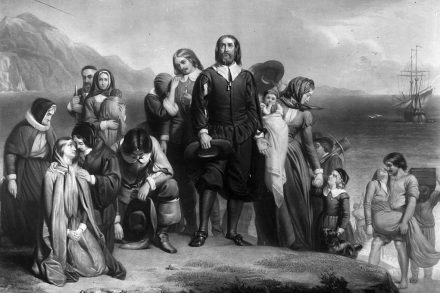
Had King James’s Privy Council contained a proto-Anthony Fauci in 1620, there might not have been a Thanksgiving holiday for the current-day Fauci and his peers to cancel four centuries later. The transatlantic voyage that brought the Pilgrims to Plymouth Rock would have been unthinkable under the ‘stay safe’ philosophy that now governs American life. Nearly half the 102 occupants of the Mayflower died in their first year of settlement at Plymouth, sometimes at a rate of three a day. Such a mortality rate was predictable. The earlier outpost at Jamestown, founded in 1607, lost 66 of its original 104 settlers in its first nine months.

thanksgiving

The (absent) ethics of lockdown

From our UK edition

Is it ethical to lock us down again? This is not a facetious question. Over the past eight months, we have heard a great deal about the policies used to manage the virus, but very little about the ethics. This is a mistake. We should be asking how we can critically and reasonably strike a balance between conflicting values and interests. Yet even now, with so much at stake, this basic question on the ethics of our policies is not being properly asked. When it comes to public health, the ethical balance is simply expressed: how do you achieve a certain public health goal with the fewest restrictions on individual rights? If the goal is to reduce obesity, for example, then is it justifiable to tax sugar — and if so, to what extent?

Don’t listen to the health fascists — drink up

It was always likely that once the killjoys had done their work on smoking they would turn their attention to alcohol. Sure enough, with the Dietary Guideline Advisory Committee going through its twice-a-decade revision of what, and how much, Americans ought to be eating and drinking in order to look after their health, drinking alcohol is being subjected to the same demonization process that was once applied to smoking tobacco. There is a campaign to lower safe drinking limits in the US, in the same way that they have been lowered in other countries. Worse, there is pressure to eliminate altogether the concept of a ‘safe level’ of alcohol consumption — and make out that every drop brings a drinker a little closer to his or her demise.

drink alcohol