Greece

Why I chose virtue over vice

From our UK edition

Patmos A funny thing happened on my way to this beautiful place, an island without druggies, nightclub creeps, clip joints or hookers. I stopped in Athens for about five hours in order to look over old haunts and just walk around places I’d known as a youth, when I noticed something incredible: none of the youngsters I encountered were texting, nor were they glued to their mobiles and bumping into people. Sure, some were on their phones, but the majority of them were talking and gesticulating like normal humans used to do before the technology curse rained down on us. Well, as they say, nothing lasts for ever, and once I was on Patmos friends informed me that what I had noticed in Athens was Alice in Wonderland stuff.

Where to find a taste of Greece in London

From our UK edition

Last time I visited Toronto, Canada, I stayed in Greektown, home to one of the largest Greek communities in North America. Several scenes from My Big Fat Greek Wedding were filmed here, and street signs are in Greek as well as English. On the day I arrived, jetlagged and disorientated, I happened upon a restaurant that was so authentically Greek I imagined I could smell the pine trees and hear the soft chirp of crickets. A couple of elderly men sat drinking ouzo at the bar, and rather than being led to a table I was taken into the kitchen where Maria (reader, that was her name, what can I do?) was stirring various pots, including a green bean and tomato dish (fasolakia giaxni) and meatballs (soutzoukakia).

Married in Meteora

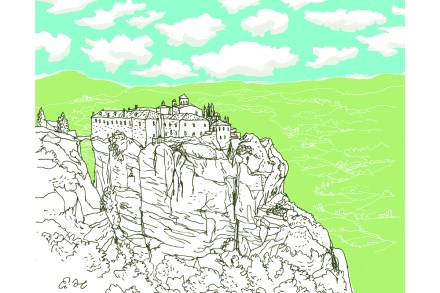
I first visited the Greek monastery of Agios Stefanos on the rocks of Meteora in the early spring of this year, one week after my baptism into the Orthodox Church. Greece was heavy with Great Lent fasts and preparations for Christ’s resurrection — Easter. I had just escaped the clutches of an extremely sweet but annoying young tour guide with whom my very Greek now-father-in-law had set my fiancé and me up for a tour of the ancient churches. I wanted nothing to do with this young man in a tour van who sounded like he was reciting words from a tape recorder. Later I found out he was, and had taught himself English by doing so (which is pretty endearing in hindsight).

meteora

Will The Parthenon Project seize the Elgin Marbles?

From our UK edition

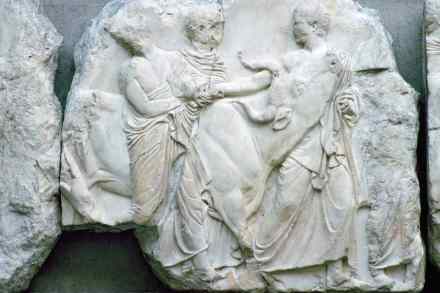
Thirty-five years ago, the late Christopher Hitchens published a book about the Elgin Marbles. Unsurprisingly, it was a polemical work; he was passionately campaigning for the return of the sculptures to Athens. But that was not the reason why I wrote a scathing review of it for The Spectator. Parts of it were plagiarised, as I showed, from the classic book by William St Clair; and in some places Hitchens dealt with the awkward fact that the evidence did not fit his claims by abbreviating the quotations, filtering out the unwanted bits. Hitchens replied with a thunderously disdainful attack on me in the letters page. I said to the then editor, Charles Moore, that I feared that if I met Hitchens at a Spectator party he would punch me on the nose.

The curse of the jet-ski

From our UK edition

An F. Scott Fitzgerald biographer by the name of David S. Brown refers to America’s promotion of deviancy (my words) as ‘the great post-Appomattox launch toward materialism’. I liked that line and was thinking about it as I left the boat in the early morning and walked into an almost perfect Greek village square for a coffee. There were some French people blabbing away with their usual hand gestures, Greeks discussing politics at high volume, and then an American couple, both quite attractive, each with a Mac in front of them and absolutely impervious to anyone or anything in their immediate surroundings. Talk about a launch towards materialism. The two of them never once looked up from their screens.

The Greek wildfires and the failings of the state

From our UK edition

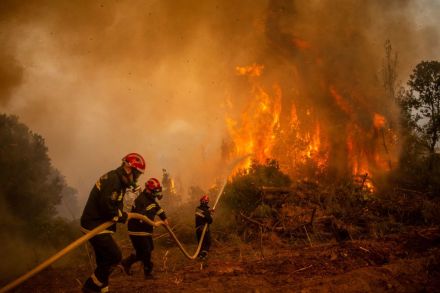
The wildfires raging across Greece for what is by now more than a week, show no sign of abating. High temperatures continue in what is the country’s worst heatwave in almost four decades. While no region of the country has been spared, the images coming from the northern part of Evia island are particularly striking. One, showing an elderly woman in despair – the grim atmosphere behind her painted dark red by fire and smoke, like a still from a post-apocalyptic film – became the prime example of what the new reality of extreme temperatures will look like. It was from Greece, but it could as easily have been taken in Turkey, Italy, Spain and other places around the Mediterranean sea that are fighting the same battle.

Why you should swap Mykonos for Milos

From our UK edition

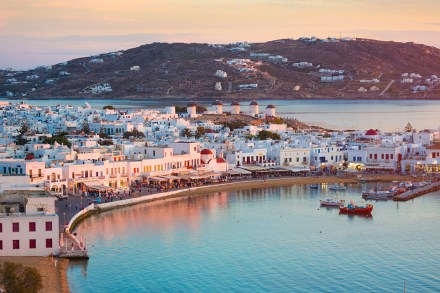
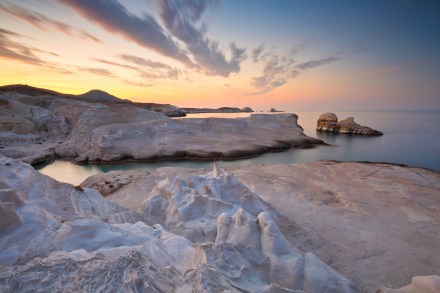
Choosing an island in the Cyclades is a familiar summer conundrum for those who love Greece. The array of choice is so dizzying that many opt for the safety of well-known options: Santorini and Mykonos. But if you’re seeking something off the beaten track, why not venture away from the tourist centrals? With a population of roughly 5,000, Milos strikes the perfect balance between adventure and unspoilt natural beauty. Situated between Piraeus and Crete, the 150km2 horseshoe-shaped island is the rising star of this group of well-trammelled islands. It gained significant attention from tourists in the last decade, with 2019 recognised as its best year before the inevitable shake-up of the pandemic, a local says.

In praise of Greek royalty

From our UK edition

New York Prince Pavlos, heir to the Greek throne, turned 55 recently and I threw a small dinner for him. Pavlos is a hell of a prince, father, husband and businessman. He’s tall, good-looking, a gent in every way, intelligent, hard-working and has never put a foot wrong. Neither has any member of his immediate family. Compared with them, the rest of European royals seem wanting, but then I’m prejudiced. The Greek royals are Danes, and the oldest reigning clan of Europe. Unlike another royal family whose name escapes me – it is the Platinum Jubilee issue after all – the Hellenic one has had no divorces, no scandals, and if physical looks mattered, the Greek royals would be the ruling family of Europe. At present Pavlos comes to the dojo after work and trains hard.

The tiny Greek island beloved by Athenians

From our UK edition

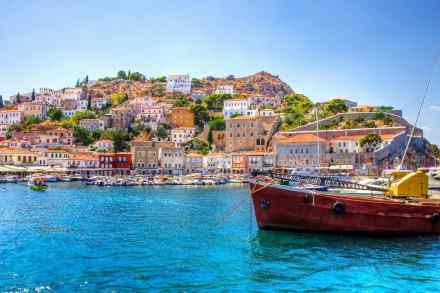
Hydra is where well-heeled Athenians go for weekend breaks. It’s what Long Island is to New Yorkers, or Île de Ré to Parisians. For, while Corfu is a 12-hour ferry ride away and Santorini six, Hydra can be reached in as little as 1hr20 on the regular scheduled boats out of Athens. And – unless you own your own yacht – there’s no other way to get there: there’s no air or heliport, there aren’t even any cars. We tacked a day trip to Hydra onto a weekend city break that was otherwise full of the classical antiquity you'd associate with Athens.

Souvlaki with graffiti

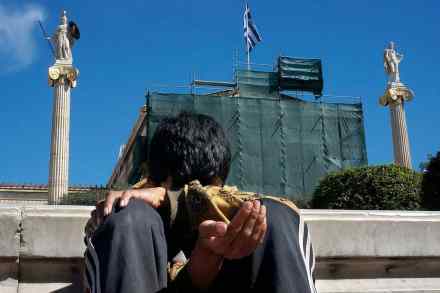
I’m drawn to sketchiness but even by my sketchy-drawn standards, the state of Athens is deflating. The cradle of Western civilization now appears to be the graffiti capital of the Western world. The luridly colored scrawls are everywhere; Greek grannies air their carpets over balconies marred by multicolored tags and swirls. The Parthenon temple still looks mighty grand atop the ancient Acropolis citadel, but down in the modern city a lot of people look hard-up and downtrodden: lined faces, permanent frowns, hastened aging, disheveled clothes. Wandering through central Athens, I passed two shuttered shops set back from the street. About twenty homeless people lounged in the alcove, amicably passing round substances to smoke and ingest.

Athens

Greece’s beauty masks untold poverty

From our UK edition

I’ve long been drawn to sketchiness. In the Ethiopian capital Addis Ababa, I always preferred the dodgy and slightly dangerous old-town Piazza area to the trendy and sanitised Bole area next to the international airport. But even by my sketchy-embracing standards, it was hard not to find the grim state of Athens deflating. After all, this is the cradle of Western civilization. Now it appears to be the graffiti capital of the Western world. The luridly coloured scrawls are everywhere; Greek grannies air carpets over balconies marred by multi-coloured tags and swirls.

America is a nation divided

From our UK edition

New York Imagine a European country today in which a newspaper in its most populous city launches a mendacious project reinterpreting its past. The practice was perfected under the old communist system that ruled Romania, Hungary, Poland and the rest of the Soviet satellites. But it is no longer possible in that part of the world now that the old continent has rediscovered freedom. It is taking place elsewhere, though, right here in New York, marinated by the Bagel Times which has invented a nation predicated on racism and enforced racial inequality. The 1619 Project is based on delusion and is a sweeping assault on the American way of life that spreads racial and gender discord.

After a lifetime in nightclubs, now I party at home

From our UK edition

New York   It’s party time in the Bagel, and it’s about time, too. Good restaurants and elegant nightclubs are now a thing of the past, at least here in New York, so it’s home sweet home for the poor little Greek boy, for dinner, drinks and even some dancing at times. Here in my Bagel house my proudest possessions are my three Oswald Birley pictures. One is enormous and covers the whole wall of the entrance hall. The other two are a self-portrait and one of a rather grand lady. They are masterfully executed portraits, with aesthetic as well as psychological realism, an extremely difficult goal for an artist to achieve. Birley is more than equal to contemporaries such as Augustus John and John Lavery.

All Greek to us

We are traveling through a shower of Greek anniversaries, triumphant and calamitous. Last year marked the 25th centenary of the Battle of Salamis in 480 BC, when 300 Greek warships defeated a Persian armada four times larger and ended the Persian empire’s expansion into Europe. This year marks the bicentenary of the beginning of the Greek War of Independence from the Ottoman empire in 1821, which resulted in the first European nation-state to be founded on the Enlightenment values of the American Constitution. Next year will mark the centenary of Greece’s defeat in Asia Minor in 1922, which ended the modern Greek state’s aspirations to absorb all the lands where Greeks lived and had lived since antiquity, an event still referred to as ‘the catastrophe’.

greek

Is this Greece’s finest wine since Homer strummed his lyre?

From our UK edition

We were in deepest Dorset, l’Angleterre profonde. The weather was also typically English: inundations followed by counter-attacks from the Indian summer. Despite those, and even under a still blue sky, it was just too nippy to eat outside — or at least, that was what the less well-insulated members of the party insisted. Fear no more the heat of the sun. It has gone south with the swallows. But there was mellow fruitfulness, in this season which offers a delicious choice between grouse and partridge (unless you are Nicholas Soames, and have both). When it came to accompanying bottles, we were eclectic. Our hosts are good friends of Giugi, Marchese di Sesti, who makes superb wines in Montalcino, amid the splendours of Toscana profonda.

The real Greek: Lemonia reviewed

From our UK edition

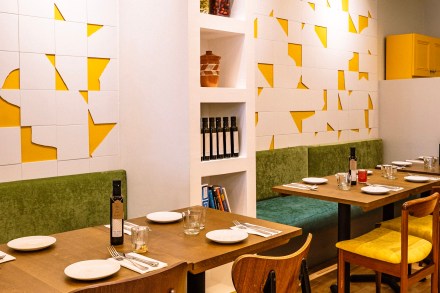
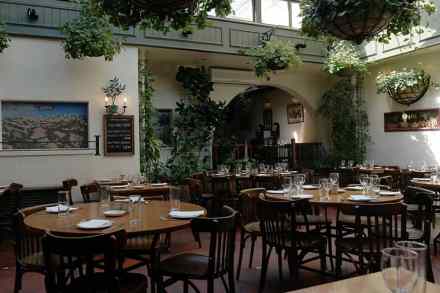
Lemonia lives in the old Chalk Farm Tavern in Primrose Hill, which is better known as the set of Paddington. It is not surrounded by fields filled with duellists under a hill of primroses these days, but it is still vast, pale and beautiful: a survivor in the sprawl. There has been a tavern on this site for so long — it was first recorded in 1678 when a corpse was carried to it — that it is possible John Keats drank here. I hope so. It is not a beaker of the warm south – it is slightly too near Camden and its stink of pigeon and bleach for that — but it is close enough. Some restaurants hold memories of pleasure: this is one such place.

Paying the ferryman in Greece

It was not an auspicious start. Arriving at JFK the specified three hours before my departure to Athens I was met with a check-in line stretching out the door. The man behind me, in traditional dress and with a shocking amount of luggage for a single traveler, kept shouting ‘Senegal!’ Two hours later, check-in for my flight was closing. I was still at least half an hour away from the desk and so I shamelessly cut the line, earning myself a tongue-lashing from a dyspeptic German but also a boarding document one minute before the flight closed.

greece

My roots burnt with Greece

From our UK edition

On 11 March this year my father passed away from prostate cancer after several weeks in a hospital in central Athens. As we sat around his bed, I remember thinking that I was watching 3,000 years of Greek history slowly perish before my eyes. My father was an only child, and I am British. His line of Greeks is at an end. Now fires have ravaged Greece and the olive trees that stood in my ancestral village for centuries have burnt to the ground. This year has seen the almost literal burning away of my roots: because if I am British, I am also a Greek — of sorts. This much is inescapable. My name is Patrikarakos, Pa-tri-ka-ra-kos, which falls — like a slab of Cycladic marble — between me and those I meet. So luminously foreign, so palpably un-English.

The Olympics have become a celebration of human frailty

From our UK edition

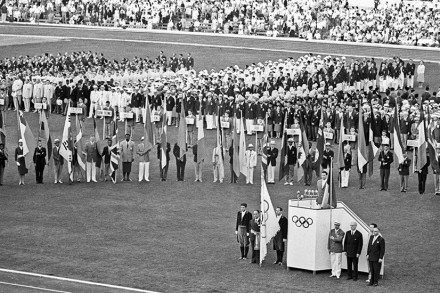
Coronis Embracing one’s vulnerability seems to have replaced the higher, faster, stronger ethos of the Olympics. The very frailty that makes us human appears to have triumphed over the need to excel, or so the Games sponsors tell us. Not that I watched any of it. Not a single second, so help me you-know-who. I liked Sebastian Coe’s remark in last week’s Speccie about taking advice from Djokovic, who quit the mixed, thus leaving his partner in the lurch. I’ve always liked and admired Coe and always mistrusted the Serb, but then I’m a small-timer where sport is concerned. One thing I’ve never done is quit, however, and I did compete at a high level in tennis, karate, even polo.

An elegy on yachting

From our UK edition

Patmos A very long time ago I wrote in these here pages that spending a summer on the Riviera or the Greek isles without a boat was as useless as a eunuch in a cathouse. That was then and this, alas, is now. The French and Greek seas are the same, if a little bit more crowded, but the people with boats are very, very different. Back then one knew almost everyone worth knowing — that is, everyone with a smart sailing boat, and a few with gin palaces that were graceful. These modern horrors that look like refrigerators on steroids, with top-heavy superstructures from bow to stern, helicopters, jet skis and even submarines on board, chartered to celebrities with hookers included, have killed elegant yachting and then some.