Graphic novels

Emily Carroll’s new graphic novel plays on our deepest fears

From our US edition

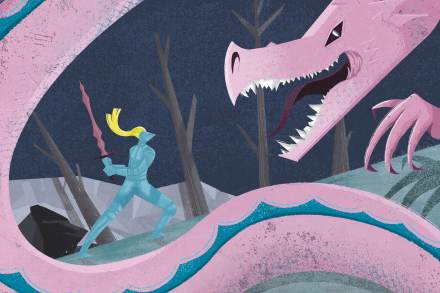
Emily Carroll’s new graphic novel, A Guest in the House, is an involving, beautifully plotted study of the madness of isolation, steeped in the tropes of fairy tale and horror. And, as all good fairy tales do, it confidently deals in the imagery of the unconscious. Narrated via an innovative combination of text and cinematic, sweeping illustration, it concerns the boundaries of the imagination, and the dynamics of a small family as it threatens to fall apart. Abby is a young wife, listless and bored, who has married an older man (David, a normal kind of guy, with that most humdrum of jobs: dentistry). The setting, depicted with haunting precision in muted tones, is 1990s Canada.
carroll

The serious business of graphic novels

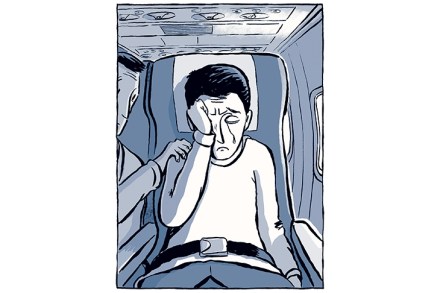
One of the running jokes about ‘serious’ graphic novels is that so many seem to consist, one way and another, of comics about how lonely, miserable and socially inept comic book creators are. Adrian Tomine leans into the trend, but with great charm, in The Loneliness of the Long-Distance Cartoonist (Faber, £16.99). Here is an autobiographical anthology of humiliation in chronological order — a series of wan vignettes taking the artist from inadequate-feeling schoolboy comics nerd to... inadequate-feeling New Yorker-published middle-aged comics superstar.

Tacky and incomprehensible: The Sandman audiobook reviewed

Listening to the tacky and incomprehensible audio-adaptation of Neil Gaiman’s graphic novel series Sandman, I couldn’t stop thinking about the 19th-century Swiss artist Rodolphe Töppfer. Did Mr Töppfer realise what he was doing when he one day decided to draw a narrative in sequential panels with captions underneath? His satirical novel in pictures, Histoire de M. Vieux Bois, was published in 1837, and made its way to America five years later as The Adventures of Mr Obadiah Oldbuck. ‘Mr Oldbuck drinks ass’s milk’ reads one caption, and then overleaf: ‘His physician recommending exercise, he buys an Arabian courser.’ Riding the courser, ‘Mr Oldbuck increases his speed, advancing at the rate of ten leagues an hour.

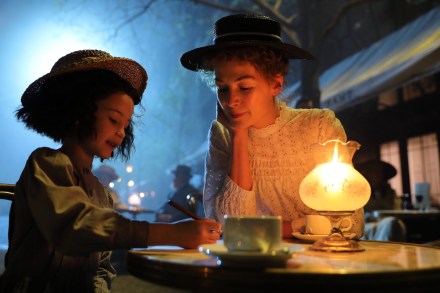
The director of Persepolis talks about her biopic of Marie Curie: Marjane Satrapi interviewed

The problem with making an accurate film about science is that science is rarely exciting to watch, explains director Marjane Satrapi. Movie convention tends to insist on the climax of the eureka moment and the fiction of the solitary male genius, who doggedly closes in on his discovery in the same way that a detective might doggedly close in on a killer. ‘It doesn’t happen this way,’ says Satrapi. ‘It’s a result of lots and lots of work, which most of the time is repetitive and most of the time you know you don’t know where you’re going, and it’s lots of collaboration.’ Satrapi studied mathematics in her birthplace of Iran, and has a scientist’s intolerance for dramatic licence.