Gordon brown

Road to perdition

It is another black day for Gordon Brown. The financial news from America, contrasted with continuing decline here, indicts Brown’s recession strategy. Playing the long game, Osborne is being vindicated, and Guido is correct that the ongoing UK recession negates Labour’s attack line on Osborne: the novice has trumped the alleged master. More damaging though is the resurfacing of Damian McBride and the ‘omerta’ of Brown’s inner circle, with its sordid and cynical connotations. The news that Nadine Dorries will receive £1,000 from McBride reflects poorly on the Prime Minister. Worse still, there is possibly more to come – Dorries has two suits outstanding, against Number 10 and Derek Draper respectively.

Once again, Britain stands alone

It’s fortunate that pluck and stoicism are fundamental British characteristics and that we are at our best when backs are to the wall. Figures published today suggest that the US economy grew by an annualised 3.5 percent in the third quarter. Britain is now alone among developed countries in fighting a shrinking economy. So much for Mr Brown’s confidence last autumn and Alistair Darling’s growth forecasts. Even Italy is doing better. One crumb of comfort for Labour is that the American consumer has regained confidence thanks to government stimulus: sales of manufactured goods, such as cars covered by the government scheme, are up by 22.3 percent. This should have global consequences that benefit Britain.

Dave misses his opportunity

Does Cameron fluff PMQs on purpose? Some theorists say he lets Brown off the hook in order to keep the weakling in his job. I don’t buy that. A politician’s natural instinct makes him want to win every session, every question. But Brown sometimes sneaks through intact because Dave rarely varies his tactics. He doesn’t prepare ambushes. He never ponders what Brown wants to hear least. Today the Tories had a great opportunity. Brown’s recent flip-flop over the training of TA soldiers for Afghanistan was inspired, in part, by Dave himself, who raised the issue a fortnight ago. But Dave’s tone was wrong. He thought he was the point - not the soldiers.

PMQs Live Blog | 28 October 2009

Stay tuned for live coverage from 1200. 1159: Still waiting for the main event.  You can watch it here, by the way. 1203: And we're off.  Brown starts by paying tribute to British troops in Afghanistan, as well as aid workers killed in Kabul 1204: First question from Stephen Hepburn on whether pleural plaque victims will get compensation. 1205: Here's Cameron now.  As expected, he leads on Brown's embarrassing U-turn of TA cuts; an issue the Tories have been pushing for the past couple of weeks.  Cameron asks hopw Brown could have thought about cutting training during wartime. 1206: Strange.  Brown responds by repeating his condolences - it's basically a carbon copy of his opening statement.  Seems like he's using it to defuse Cameron's point.

Who’s lobbying for Blair?

Isn't it funny how things change?  A few years ago, Brown could barely stand to talk to Blair.  But now, according to the Guardian, he's got civil servants lobbying on the former Prime Minister's behalf in Europe: "Gordon Brown has asked two of his most senior civil servants to lobby discreetly within Europe for Tony Blair to become its new president amid warnings from allies in government that the former prime minister will lose his chance unless he launches a dynamic campaign. John Cunliffe, the prime minister's most senior Europe adviser, and Kim Darroch, Britain's EU ambassador, are taking soundings at senior levels. David Miliband, meanwhile, has also intensified Britain's campaign for Blair to become the first president of the European council.

An untrumpeted change

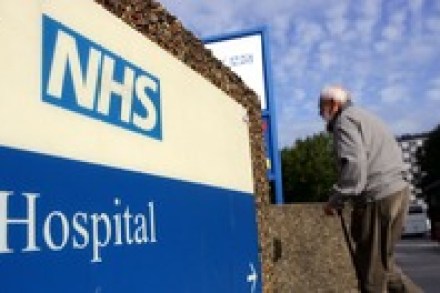
John Rentoul rightly flags up the story in this morning’s FT that about 100,000 NHS patients have gone private and had the state pick up the tab, the private hospitals have had to agree to do the work at the NHS price. For those of us who would like to see the NHS move towards a model where the state pays for healthcare but it is provided by a whole panoply of providers, this is an encouraging step. This kind of consumer-focused reform is hard to reverse. The story, as John notes, hasn’t got as much coverage as it should. John blames this on the press’s lack of interest in policy stories. But it is also the case that the Brown government, which is currently slowing down if not reversing Blair’s NHS reforms, hasn’t chosen to trumpet this story.

The Tories now have a monopoly on the language of optimism

So how big a blow was the news that we're still in recession to Gordon Brown?  Well, compare and contrast his latest podcast on the Downing Street website with David Cameron's article in the Sunday Times.  Brown's effort is necessarily defensive.  Gone is the "we're leading the world" bombast of a few weeks ago, to be replaced with a crude "pledge" to get the economy growing again by 2010: "My pledge to you is to make reform of the financial sector a reality, and to see Britain's economy return to growth by the turn of the year." While Cameron's effort is considerably more agressive, and concentrates on outlining a "pro-growth, pro-enterprise agenda".

Get ready to feel worse about our political class

If you want an idea of how resistant MPs might be to the proposals of the forthcoming Kelly review into expenses, then I'd suggest you wander through to page 13 of today's Sunday Times.  There you'll find a story about how MPs are planning to counter Kelly's expected ban on employing relatives.  Their ideas stretch from employing each others' relatives ("a giant wife swap") to taking legal action. In this particular case, I think there's something attractive about the compromise revealed by James on Wednesday: that MPs be allowed to employ one relative each.  But, even if that compromise is made, it still only defuses one sub-section of Kelly's review.

So where does this leave Brown?

Most people expected this morning's official GDP statistics to show that the economy has come out of recession.  But they didn't.  In fact, they had the economy shrinking by 0.4 percent in the third quarter of this year.  So the downturn continues – and it's the longest on record. We've always maintained on Coffee House that coming out of recession won't do much good for Brown.  But, obviously, staying stuck in one has far more dangerous implications for him (not to mention the country).  Obviously, the government won't be able to deploy the green shoots strategy now.  But with other major economies already out of recession, they'll struggle to deploy it in future.  You imagine the Tories will have a field day with this.

Nothing doing | 21 October 2009

A poor showing by Dave today. All he managed was a spot of outmoded Labour-bashing and a biscuit joke that didn’t exactly take the biscuit. He attacked the PM over the postal strike and quoted a minister of state admitting that union militants had been emboldened by the government’s indecision over part-privatisation. ‘This trade union,’ said Cameron, ‘can sense weakness and they see weakness in this prime minister and this government.’ Brown got huffy – but not very. He accused Cameron of cynically trying to drag the strike ‘into the political arena,’ It’s already there, said Cameron, ‘not least because the communications workers pay half his bills.

Brown’s lose-lose position will prevent our broken politics from being fixed

An intriguing item in today's Telegraph, which suggests Brown is planning to offer MPs a pay-rise to stem backbench anger over both the Legg and Kelly reviews into expenses.  The idea is to boost the standard MP's salary by about £3,000 and pay for it by cutting ministers' salaries – so there'd be no further cost to the taxpayer.  But you imagine even that fact won't rally much public support for this idea. As I've written before, proposals to raise MPs' pay shouldn't be dismissed out of hand.  But it's dispiriting that these latest plans are all about saving Brown's hide, and have come about without consulting voters.  It's also indicative of the position our PM finds himself in.

Brown’s Northern Ireland settlement is to be commended

Gordon Brown has just told the House of Commons that he is offering Stormont a financial settlement to increase funds for policing and judicial administration in Northern Ireland. Crucially, future emergency security costs in future will be met by the Treasury, and elements of the complicated settlement will stand until at least 2014.  Northern Ireland has been badly hit by the recession. Power sharing became increasingly fraught as arguments escalated over budget allocations and the timing of judicial devolution. It is not an exaggeration to suggest that the recent escalation of violence might be related to rising unemployment and open political tension.

A few honest men

Right, wrong, or somewhere in between?  I imagine that a few people who were fervently behind the Legg letters started having second thoughts when Frank Field announced his opposition to them over weekend.  After all, it's one thing when the usual, venal suspects start whining, but quite another when Field – one of the decent men* of Westminster – starts to murmur.  If you haven't read his blog post on the subject, then I'd suggest you do so here.   And it's also worth reading through Bruce Anderson's related article in the Independent today.

Sheerman on the offensive

Just what was in Barry Sheerman's coffee this morning?  So far today, the schools committee chairman has used a couple of media appearances to a) call Ed Balls a "bully", and b) criticise all three party leaders – including Brown – for their "cowardly party leadership" over the Legg review.  Punchy stuff, which makes you wonder whether he'll be the de facto "Get Gordon Out" candidate for PLP chairman, after all.

5 Labour ‘refusenik’ MPs threaten to resign over Legg letters

Paul Waugh reports that 5 ‘refusenik’ Labour MPs are threatening to trigger by-elections over Brown’s reluctance to curb Sir Thomas Legg’s retrospective cap. Clearly, Brown is in an invidious position – it is conceivable that Labour will lose these by-elections in any event, but Brown would be committing very protracted and very painful electoral suicide if he demanded that Sir Thomas retract his demands. Brown is indecisive when the sun is shining and the wind is blowing in his favour, so God knows what agonies the Hamlet of Kirkcaldy is wrestling with at the moment, and I suspect most of us would have died of old age if the refuseniks were not going to make the decision for him.

Brown the Reformer: er, good luck with that

Brace yourselves. According to the Guardian, Brown is about to sell himself as a Great Reformer: "Brown, the cabinet sources say, decided in the past few weeks to adopt a tougher pro-public sector reform stance, in order that his defence of the state in the face of recent attacks on big government by David Cameron does not become confused with complacency about the current performance of the public sector." Despite the sensibleness of the reform argument, I can't imagine that Brown will make much headway with this. For starters, he has that "Roadblock to Reform" label, and Labour's patchy record on public service reform, hovering over him like the proverbial albatross.

Harriet now more dangerous for Gordon

The once-daft (but now rather good) Labour List has a very interesting story about Harriet Harman. Apparently, she will tell Andrew Neil on this weekend's BBC Straight Talk that she won't stand for the leadership in any circumstances and has no leadership ambitions.  This is very bad news for Gordon Brown. This may seem like a strange thing to say, but in several conversations with Labour MPs and activists I have heard a version of the following: "We can't get rid of Gordon because Harriet would win the election to replace him."  With Harriet gone, the way is now clear for a genuine challenge.  The likelihood is that this won't happen.

A sombre scene and a shift in power

Poppy day came early to Westminster today.  Brown began proceedings by reciting the names of the 37 men killed in Afghanistan over the summer. This took two minutes. The house was silent, funereal, almost awe-struck with the solemnity of the occasion. Brown looked like a man deeply moved by personal grief as he worked his slow way through the deadly list. Ann Winterton punctured the mood with the first question, suggesting that once the Lsibon treaty is ratified the government's first duty will be 'to further the objectives of Europe in preference to those of Britain'. Brown denied this again referenced the Afghan conflict in response. When his trun came, Cameron had no choice but to add his sympathies and to engage constructively in the debate about the war budget.

What do the Legg letters mean for the Kelly Review?

As the Legg controversy continues along its unedifying course, I can't help but wonder what it all means for Sir Christopher Kelly's review of the expenses system, due for publication in a few weeks' time.  The plan is that the government will go through its recommendations, adopt any it likes, and then put them to a vote in the Commons.  But will Brown now back away from the more radical proposals, from fear of aggravating the Parliamentary Labour Party even further?  Will MPs now be more tempted to dismiss Kelly's ideas out of hand?  This is, after all, yet another independent review, commissioned by Brown, which will contain suggestions you imagine will be less-then-popular with our political class.