Gordon brown

The Budget is a bigger opportunity for the Tories than for Labour

Last night's Dispatches programme was a concentrated double blow for Labour.  Not only did the limelight burn more unflatteringly on their party, but it has also undermined their careful Budget operation.  For the next few days, at least, it's possible that broken politics may trump the broken economy in the public mind.  And Alistair Darling is going to have a difficult, if not impossible, task in bridging that chasm of "distrust and disbelief" with his prescriptions tomorrow.

Cab for Hire: Dispatches and the Moral Collapse of the Political Class

I am still reeling from Antony Barnett's Dispatches investigation into MPs and lobbying. Truly brilliant TV. Horribly watchable. Exquisitely awful. I watched half of it from behind my hands. This was Curb Your Enthusiasm meets the Office: political Dr Who for grown-ups. Why is it always the Blairites who get themselves into these messes? Is it simply because they bought the New Labour compact with the market more fully than the rest of the party? Or is that they waded so far into unfamiliar territory that they lost their moral compass? None of this completely explains what is going on here.  There was something rather sad about watching Stephen Byers wade so deep into a sewer of his own making. In the post-Blair world he seems utterly without direction.

Byers, Hewitt and Hoon suspended from the Labour party…

...according to the Beeb just now.  And if you watched tonight's Dispatches programme, you'll know exactly why. Nick Robinson comments that the "Labour leadership" will delight in "taking revenge" on three figures who have ruffled Brown's feathers on multiple occasions – so it continues to look like backbiting and politicking will take priority over geniune reform.  A grubby Parliament just got considerably grubbier.

Both Labour and the Tories need to get stuck into Vince

The public remains infatuated with Vince Cable. A Politics Home poll reveals that 31 percent want Cable to be chancellor. It’s a crushing endorsement: Don’t Know is his nearest rival on 24 percent, followed by Ken Clarke on 16 percent. Cable’s reputation rests on his sagacious airs and an apparent contempt for party politics. His eminence is baffling. Fleet-footed fox-trotter he may be; economic guru he is not. Andrew Neil's interview shattered Cable’s invincibility. The Sage of Twickenham admitted to changing his mind over the HBOS Lloyds merger and his constantly shifting position on cuts was exposed. Add to that the ill-thought out Mansions Tax and Cable begins to look leaden. The Tories and Labour should emphasise Cable’s intellectual shortcomings.

Introducing the Nelson tax

In the News of the World today, I propose a new tax on the rich: specifically, on ex-ministers who go on to earn a crust advising companies how to avoid the regulations with which they have saddled the British economy. I proposed this before the news broke about Byers and Hewitt etc, but their appalling story makes it all the more pertinent. The Nelson tax should be above the top rate, and imposed on any activity such as giving speeches to the Chinese, lobbying, consultancy, etc. - anything which trades from contacts or reputation built up while serving the taxpayer. It would not be levied on activities which the ex-minister could plausibly claim he would have taken on anyway. So if Blair were to return to law, his earnings would be taxed at the normal rate.

Osborne steps up his game

George Osborne must have changed breakfast cereals, or something, because he's suddenly a different man.  After the Tories muddied their economic message to the point of abstraction a few weeks ago, there's now a new clarity and directness about the shadow chancellor's languange.  Exhibit A was his article in the FT last week.  And Exhibit B comes in the form of his article for the Sunday Telegraph today. It sets out five deceptions that we can expect from the Budget this week, and are all punchy and persuasive in equal measures.  But it's the first which, as I said on Friday, is the most important: "The Chancellor might be so brazen as to claim he has a 'windfall' because it turns out he has to borrow a few billion pounds less than he forecast in the autumn.

Ed Miliband’s new investment vs cuts battleground

Ed Miliband certainly isn't one for holding back, is he?  In an interview with today's Guardian he discusses what we might expect from the Labour manifesto, and there's some pretty noteworthy stuff in there: a People's Bank based around the network of Post Offices; an increase in the minimum wage; a reduction in the voting age to 16; things like that. But, as Sunder Katwala suggests over at Next Left, the most eye-catching passage is when Miliband discusses Free School Meals for all: "The manifesto could well include a pledge to provide free school meals for all children, Miliband says. 'I think a lot of people would like free school meals.

Why Cameron must never say “deficit”.

Listening to BBC news, it's striking how they are still using Labour's politically-charged vocabulary. When the universities are kicking off about their budgets being cut, the BBC newsreaders are told to talk about "investment" in higher education, rather than spending. Why, though? An "investment" would be to put £1 billion of taxpayers’ money into an Emerging Markets fund, and hope it grows. Giving it to universities - many of which serve neither students nor society - is not an investment. But using the word "investment" is Labour code for "good spending". There is one particularly frequent example if this: the BBC regularly confuse the words "deficit" and "debt" - a bugbear of mine, and something James Forsyth deals with in his column in this week's magazine.

Strike-a-rama<br />

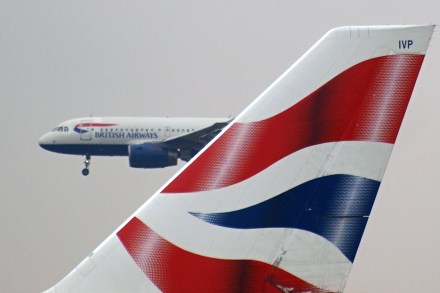
So there we have it: talks between the BA management and Unite have collapsed, and the strike is back on for midnight tonight.  Throw in the news that railway workers have also voted in favour of strikes, and it looks like there will be more transport trouble ahead. Politically-speaking, the government won't enjoy operating against a backdrop of industrial unrest as the election approaches.  Sure, last year's postal strikes had no discernible effect on the polls.  But, this time around, the Brown premiership has closer ties with the striking party – and those ties are already front-page news.  Involving Charlie Whelan in Labour's election campaign is now looking like an even more toxic manoeuvre.

The cost of Brown’s propaganda splurge

Gordon Brown has been shameless in using the tools of state to advance his party political objectives – to him, government is electoral war by other means. Anyone who has turned on a commercial radio station recently will have worked out his latest trick: a mass propaganda splurge before an election campaign. Get on a bus, and it can be 100 percent state adverts – advising how Big Brother will help you get a job, buy a car, see off door-to-door salesmen, give you a job in the prison services – anything you want. We at The Spectator have tracked down the figures that show the extent of all this. State advertising was £13 million in December – yet surged to £34 million last month.

Piers for Parliament?

Could you vote for Piers Morgan? In an interview with Freddy Gray in The Spectator tomorrow, he says he's tempted to stand for Parliament - and it's not such a surprise. He has weirdly inserted himself in the political process in recent weeks, defining Nick "no more than 30" Clegg and giving Gordon Brown probably the best piece of television coverage he will receive - ever. Now he is even considering standing for election. 'I am tempted to run on a ticket of openness and frankness about the problems of this country and not being afraid to deal with them,' he says. He doesn't have much time for Cameron, describing him as 'a spivvy snake-oil salesman who has got a load of his Old Etonian mates and they're all on a bit of a jolly to take over the country.' But here's the thing.

Miracle at SW1

He did it. We saw him. It actually happened.  History was made at PMQs today as Gordon Brown finally gave a direct answer to a direct question. Not only that, he admitted he'd been wrong about something. Tony Baldry (Con, Banbury) informed the PM that his assertion before the Chilcot Inquiry that defence spending has risen, in real terms, every year has been contradicted by figures released to the Commons library. Up got Brown, looking like a wounded old teddy-bear, and offered this epoch-making concession. 'I accept that in one or two years real terms spending did not rise.'   What a union of opposites. Brown and the truth. It was alarming, almost unnatural, to witness. Like Santa in a scuba suit or the Pope playing pinball.

Two blasts from the past

Michael Savage observes that Cameron’s denunciation of Brown’s 'weak' premiership recalled Tony Blair’s famous savaging of the ‘weak, weak, weak’ Major government . Here it is: After watching that, I chanced upon an exchange between Blair and Cameron, dated November 2006. Their subject? NHS budget cuts. The first two minutes of the clip reinforce just how complicit the Conservatives were in Brown and Blair’s free for all. Cameron was aghast that "budgets were being raided to solve financial deficits".

PMQs live blog | 17 March 2010

Stay tuned for live coverage from 1200. 1201: And here we go. Brown starts with condolences for fallen troops, and also for the late Labour MP Ashok Kumar and his family.  For the first question, Tony Baldry takes on Brown over his claim that defence expendintue has risen in real terms under Labour.  A note from the House of Commons library has since shown this to be "incorrect".  Brown says that he is already writing to Chilcot to correct this.  Brown: "I do accept that, in one or two years, defence expenditure did not rise in real terms" - but it did rise in cash terms.  Not a good start for the PM. 1203: The Tories are up in arms about Brown's jibe, in response to the second question, that they'd cut SureStart centres. 1205: Cameron now.

The Tory campaign is getting back on track

Whisper it quietly, but there is a sense that the Tory campaign is getting back on track. The Tories have had three good days in a row, have Labour on the back foot over Unite and the polls appear to be moving in their favour. Certainly, Tory morale is better than at any point since the start of the year. One thing raising Tory spirits is Cameron’s own performance. As Iain Martin points out, on Sunday Brown met the voters and was incapable of finding the right tone. Cameron, by contrast, is at his best among ‘real’ people as Monday’s event demonstrated. Another thing bolstering Tory morale is their campaign against Unite’s influence. After taking a kicking over Ashcroft for more than a week, CCHQ staff are delighted to be the ones on the offensive.

Clarke and Osborne are working well

The Daily Politics featured a telling exchange between Stephen Timms and Ken Clarke. Their arguments were unclear and their hypotheticals relentless - they were debating deficit reduction. A football phone-in DJ had been invited onto the programme to adjudicate. After 7 minutes he broke his befuddled silence and declared, understandably, that Clarke and Timms were a turn-off to ordinary voters. Immediately, Clarke responded clearly and directly, making a case for reducing the deficit with reference to the chillingly close reality of Greece’s collapse. He avoided patronising, homespun economics; and simply delivered bald analysis and a statement of intent with his characteristic gusto. By contrast, Timms remained silent. Clarke is the Tories’ prize-fighter.

The Tories open fire on Unite

So, the Tories have declared war on Charlie Whelan and Unite – what Eric Pickles calls the "great untold story of British politics". He was joined by no less than two more shadow frontbenchers – Michael Gove and Theresa Villiers – at a briefing attacking the union's political influence this morning. And that's not all: the Tories have produced a document detailing how Unite is funding Labour and opposing reform, and there's even a new digital poster campaign to go along with it.  The gloves are well and truly off.

Brown faces the horror of the petrol pumps

Yes, I know, cause and correlation aren't the same thing – but Mike Smithson's latest graph over at Political Betting is still incredibly striking.  It shows that the Tories' strongest poll position over the last few years coincided with a high in the petrol price.  It also shows that the smallest gap between Labour and the Tories coincided with when petrol prices were at their lowest.  Which all makes today's Telegraph story about petrol potentially hitting a new high of 120p a litre, as the election approaches, very resonant indeed. The problem for the government is twofold.  First, rising petrol prices are something which millions of people will understand and feel, so much more so than abstract talk about cuts, deficits and the like.

Brown sets the stage for a scorched earth Budget

Gordon Brown must be feeling generous today, for he did the Tories two favours on Woman's Hour earlier.  David has already mentioned the first one: Brown saying that he would "keep going" as party leader even if Labour loses the next election, which ups the potential for more summertime Sturm und Drang on his own side.  But the second, as Ben Brogan points out, is his claim that the state of the economy makes it difficult for the government to detail any spending cuts.  The Tories will happily seize on that to justify their own "wait until we see the books" approach. More broadly, Brown's claim also sets the stage for next week's Budget.  The obvious insinuation is that it won't contain much by way of cuts or new deficit reduction plans.