Google

What the papers say: Why Google deserves its record £2.1bn fine

From our UK edition

Google’s profits have soared in recent years. Now the company has been slapped with a fine to match, with the European Commission ordering the company to pay out £2.1bn, having ruled Google favoured its own shopping services in customers' searches. Despite the huge fine, there’s little sympathy for the company’s plight in today’s newspapers: The Sun has a surprise in store for readers today - an editorial praising the European Union. The paper backs the European Commission’s fine as both ‘long overdue and richly deserved’.
Big money, big data and the dead cat strategy

From our UK edition

In his new book Move Fast and Break Things, the American academic Jonathan Taplin makes a decent case that, democratically speaking, the internet has gone awry. Tools and freedoms which originally promised to allow individuals to challenge the powerful, he argues, are instead exploited by the powerful to dodge the demands of society. He’s writing about copy-right and tax, mainly. But he could have been writing about political advertising. On the radio last weekend, my friend and colleague Lord Finkelstein (I don’t actually call him Lord Finkelstein) was talking about the skills of Sir Lynton Crosby, the Tory election mastermind. ‘Lots of election campaigns are taking place where you can’t see them.

What the papers say: Are tech companies doing enough to tackle terror?

From our UK edition

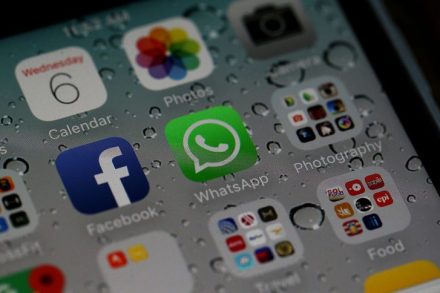
Amber Rudd has vowed to ‘call time’ on tech companies who are giving terrorists ‘a place to hide’. The Home Secretary's comments come after it emerged that Westminster attacker Khalid Masood was sending encrypted message on WhatsApp in the lead-up to the attack; Rudd is ‘right to read them the Riot Act’, says the Sun, which ups the criticism of WhatsApp in its editorial this morning. The paper says that if tech companies don’t start behaving then ‘there will be no alternative’ but for the Government to bring in new legislation to force them to co-operate with the security services.

Portrait of the week | 23 March 2017

From our UK edition

Home Theresa May, the Prime Minister, said that on 29 March she would send a letter to Donald Tusk, the president of the European Council, under Article 50 of the Lisbon Treaty, triggering the process of the United Kingdom’s departure from the European Union. A summit of EU leaders was convened for 29 April, with the aim of briefing its negotiator, Michel Barnier. Nicola Sturgeon, the first minister of Scotland, elicited the support of the Scottish Parliament for her policy of seeking a second referendum on Scottish independence ‘within a short time of’ Brexit. Mrs May had dismissed her request, saying: ‘Now is not the time.’ Ms Sturgeon said an independent Scotland would seek membership of the EU and use sterling as a ‘starting point’.

Google still needs to try a lot harder to do the right thing

From our UK edition

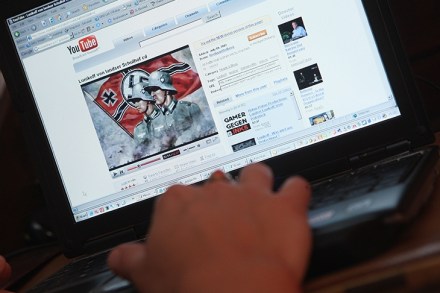
Shortly before agreeing, early last year, to pay token back taxes on a decade’s worth of UK-generated profits, Google also abolished its global slogan ‘Don’t be evil’. Instead it adopted a code of conduct that urged employees to ‘do the right thing’ — but at least in one important respect, they didn’t. Marks & Spencer, HSBC, Audi and numerous other top brands found their banner adverts displayed alongside a variety of YouTube hate videos which Google had failed to exclude, apparently because it did not have sufficient resources to monitor all the video content that was being uploaded at the rate of 400 hours per minute. For fear of losing a chunk of its UK ad revenues, the company has apologised and promised to do better.

Is this the American Houellebecq?

From our UK edition

I Hate the Internet is not so much a novel as a wildly entertaining rant. Jarett Kobek is a self-published former software engineer who has been hailed as the Michel Houellebecq of San Francisco — a city whose tech-era hypocrisies he doesn’t so much as satirise as carpet-bomb with excrement.

Google’s commitment is good news for Britain. But it doesn’t have much to do with Brexit

From our UK edition

Google’s decision to employ an extra 3,000 people in London is undoubtedly great news for Britain. But it's nonsense to try and tangle the company's plans as being all - or, indeed, anything - about Brexit. Of course, it was only a matter of time before Google’s announcement was glimpsed through the Brexit prism. Everything is these days. Some have said the new jobs promised by Google and the firm's £1bn investment is ‘despite’ the outcome of the referendum. In their coverage of the announcement, Bloomberg said tech firms had been left wondering ‘whether they’ll still be able to hire workers from overseas…after the country leaves the bloc’.

Contours of the mind

From our UK edition

In Australia, I have been told, the female pubic area is sometimes known as a ‘mapatasi’ because its triangular shape resembles a map of Tasmania. And since we are discussing cartography and the nether regions, it is wonderful to find in the British Library’s new exhibition, Maps and the 20th Century, that Countess Mountbatten wore knickers made out of second world war airmen’s silk escape maps. Maps certainly colonise our imaginations in many different ways. The allies in Iraq had a ‘road map’ rather than a strategy. So much of personal value can be lost in the creases and folds of our own ‘mental maps’.

What’s Twitter really worth?

From our UK edition

Can Twitter be worth more than Deutsche? On Tuesday, as rumours swirled of possible bidders for the microblogging site, the market was valuing it at $20 billion, compared to $18 billion for the troubled German bank. That might be a reasonable assessment of their relative prospects, or it might be confirmation that social media valuations are always bonkers. You’ll gather from my tone that I’m no Twitter devotee, and am unconvinced by its attractions as a business: it has never made a profit in a decade of existence, has plateaued at around 300 million users (Facebook has 1.7 billion), done little to develop its original offering beyond attracting a global army of trolls, and is threatened by hot competitors such as Snapchat.

If Deutsche Bank goes down without a bailout, I really will eat my hat

From our UK edition

'Can anyone seriously imagine the German state and corporate establishment allowing the bank that bears their country’s name to go down?’ I asked in February, adding rather bravely, ‘Of course they won’t.’ And that, I fear, makes my next question, ‘Am I about to eat my hat?’ Shares in Deutsche Bank have plunged to their lowest level since 1992 as the US Department of Justice seeks to impose a $14 billion fine relating to Deutsche’s issuance of mortgage-backed securities before the 2008 crisis, and rumours say Chancellor Angela Merkel has ruled out a state bailout. Deutsche boss John Cryan says the bank hasn’t asked for her help to fight its US battle and is in compliance with all its capital ratios, both of which may be true.

Dancing with robots

From our UK edition

Back in 2012, a team at Google built a state-of-the-art artificial intelligence network and fed it ten million randomly selected images from YouTube. The computer churned through them, and announced that it kept finding these strange things with furry faces. It had, in other words, discovered cats. Artificial intelligence has, all of a sudden, become the next big thing again. It is not so much sweeping across our world as seeping into it, with a combination of enormous computing power and the latest ‘deep learning’ techniques promising to give us better medical diagnoses, better devices, better recipes and better lives. Soon, it might even be able to give us new Beatles songs.

The Spectator podcast: The memory gap. Is technology taking over our minds?

From our UK edition

Smartphone ownership is predicted to hit 2.5 billion by 2019 and 60 per cent of internet traffic now comes through our mobile devices. But does the world becoming more reliant on handheld gadgets to guide us in day-to-day life come at a price? In her cover piece this week, Lara Prendergast claims that we are outsourcing our brains to the internet and that technology is taking over our minds. On this week's Spectator podcast, Lara is joined by Isabel Hardman, Charlotte Jee, Editor of Techworld, and Professor Martin Conway, head of psychology at City University.

Google isn’t racist – but it is filthy

From our UK edition

Is Google racist?  That is the charge made in a short video in which someone types 'three white teenagers' and 'three black teenagers' into the Google images and finds that while the former brings up images of happy, smiling students, the latter brings up what appear to be police mugshots. https://twitter.com/iBeKabir/status/740005897930452992 Given that Google searches do to a certain extent reflect a user’s own past search history, I am not entirely sure what the video, which has gone viral, is supposed to prove. When I repeated the experiment it pulled up some mugshots of black teenagers – though no obviously police images – but it also brought up a large number of images of happy, smiling students – Barack Obama’s daughters included.

PMQs Sketch: Osborne managed to fight off Labour’s pocket Boadicea

From our UK edition

The only MP who doesn’t want Angela Eagle to be the next Jeremy Corbyn is Jeremy Corbyn. He was away today -- thank Gawd! -- leaving Eagle to take on George Osborne who replaced the PM. Eagle is quality. Her low stature, her kindly, nunnish face and her merry eyes give her a huge advantage in debate because she appears to be without defences. What weapon could this sweet-natured tinky-winky milkmaid possibly wield? A roll of grease paper? A warm scone? A rubber duck? When she strikes, as she does, the blow arrives invisibly. She has a slangy northern tongue that can easily make an Oxbridge toff look like a waste of school fees. Today many Tories were secretly hoping to see their chilly, entitlement-oozing chancellor getting biffed about by Labour’s pocket Boadicea.

PMQs: After a strong start, Angela Eagle lost her way

From our UK edition

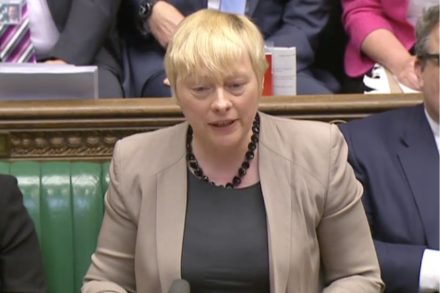
It was George Osborne v Angela Eagle at PMQs today, with David Cameron at the G7 in Japan. Eagle, who is a far better despatch box performer than Jeremy Corbyn, started off by contrasting Osborne’s handling of Google’s tax affairs with the French authorities raiding the company’s Paris office. She then went on to do what Jeremy Corbyn won’t, or can’t do, exploiting Tory divisions over the EU referendum. She asked Osborne if he agreed with Priti Patel or Len McCluskey on the EU and workers’ rights. But after this Eagle lost her way, her questions turned into mini-speeches and Osborne batted them away with increasing ease. By the end of their exchanges, the Chancellor had the upper hand.

What’s the point of the driverless car?

From our UK edition

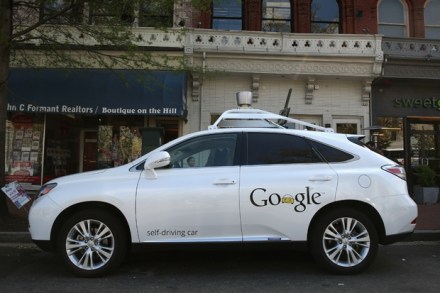
A first last week: a Google driverless car in autonomous mode was partly at fault in a collision, interestingly one involving a bus. The car was merging into a lane of faster-moving traffic to dodge a pile of sandbags in a collapsed drain and nudged in ahead of the bus on the assumption that its driver would give way. He didn’t. I suspect this may be a failure of social intelligence. Human drivers, for all their faults, can intuitively read the behaviour of other road users very well. We instinctively know that bus drivers are less likely to give way than car drivers. Understanding humans is always going to be easier when you know what it’s like to be one: in reading human emotions, even the best technology still lags far behind the typical domestic dog.

Today in audio: HMRC boss Lin Homer plays down her tax expertise

From our UK edition

It was a bad day in front of the Public Accounts Committee for Dame Lin Homer. Despite being the outgoing boss of HMRC, Homer admitted she was no tax expert: Meanwhile, Google boss Matt Brittin also had a miserable time in front of the committee. He was laughed at during the hearing after appearing to forget how much he earned: Met Police chief Bernard Hogan-Howe went on the defensive as he came up against John Humphrys on the Today programme. He dismissed Humphrys's claim about the police publicizing specific details of their investigation into Lord Bramall as 'nonsense': Jeremy Hunt vowed to impose new contracts on doctors following yesterday's strike.

Googlewhacked? Why humiliating the search giant isn’t enough

From our UK edition

It was never going to be an enjoyable experience trying to defend Google in front of the Public Accounts Committee following the recent row over their tax arrangements. But the company's European President Matt Brittin came in for a particularly torrid time as he was quizzed by Meg Hillier today. As well as appearing to forget how much he was paid, Brittin refused to give anything away about the company's tax arrangements in other European countries. He also got laughed at for telling the committee their Dublin office was set up for business rather than tax reasons. Brittin told MPs when asked about his salary: 'I don't have the figure. It's a salary, I will provide the figure privately.

Portrait of the week | 28 January 2016

From our UK edition

Home Donald Tusk, the president of the European Council, prepared a paper on the four areas of concern between Britain and the European Union, as formulated by David Cameron, the British Prime Minister, for the EU to chew on at a summit in February. Nicola Sturgeon, the leader of the Scottish National Party, said that to hold a referendum on the EU in June would be ‘disrespectful’ to elections being held in Scotland. Tony Blair, the former prime minister, said he thought Scotland would leave the Union if the United Kingdom voted to leave the EU. Lord Parkinson, who as Cecil Parkinson was party chairman when the Conservatives won a landslide in 1983, died, aged 84. Lieutenant-Colonel Henry Worsley died aged 55 after being rescued from his attempt to cross Antarctica unsupported.

More Google woes at the Treasury

From our UK edition

Oh dear. It's not turning out to be a great week for staff at the Treasury. After George Osborne declared that a £130m tax settlement they had reached with Google was a 'major success', he faced a cross-party backlash as it was pointed out that the internet giant had only paid a tax rate of three per cent. As anger grows over the arrangement, both Google and the Treasury have been attracting negative publicity on a daily basis. Now Treasury staffers have been dealt another blow. Mr S hears that internet at the Treasury cut out on Thursday morning for a number of hours -- meaning staff couldn't even use Google. 'You could call it Karma,' mutters Mr S's disgruntled government mole.