Google

Google vs governments – let the new battle for free speech begin

From our UK edition

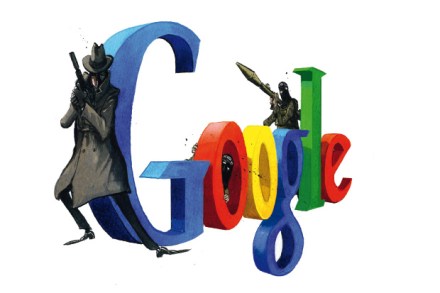
[audioplayer src="http://traffic.libsyn.com/spectator/TheViewFrom22_27_Nov_2014_v4.mp3" title="Hugo Rifkind and James Forsyth debate the clash between geeks and spooks" startat=37] Listen [/audioplayer]Imagine there was one newspaper that landed all the scoops. Literally all of them. Big news, silly news, the lot. When those girlfriendless, finger-wagging freaks in Syria and Iraq opted to behead another aid worker, it would be reported here first. Likewise when nude photographs of a Hollywood actress were stolen by a different bunch of girlfriendless freaks. Hell of a newspaper, this one. Imagine it. After a while, imagine that western governments began to realise that this newspaper had sources that their own security services just couldn’t rival.
David Cameron’s not the only one in trouble over morris dancing

From our UK edition

Dirty dancing David Cameron was accused of causing racial offence by posing with blacked-up Morris dancers, though it was pointed out that the tradition dates from 16th-century jobless labourers covering their faces with soot. Other Morris dancer controversies: — In 2011 the Slubbing Billys were thrown out of a pub in Durham for breaking a rule against music. They weren’t dancing, just drinking, but had bells on their trousers. — In 2013 officials from Lancashire County Council accused the Britannia Coconut Dancers of breaching health and safety rules when their dance strayed onto the road. Forget me, forget me not? Where have people been most successful at persuading Google to remove links they claim infringe their ‘right to be forgotten’?

Why the real winner from George Osborne’s ‘Google tax’ could be Nigel Farage

From our UK edition

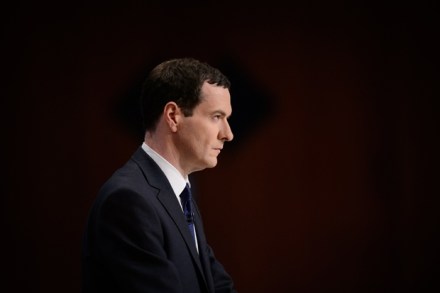
George Osborne’s promise to crack down on multinational companies’ avoidance of UK taxes by the use of impenetrable devices such as the ‘Double Irish’ and the ‘Dutch Sandwich’ certainly has the support of this column. I have long argued that the ‘fiduciary duty’ (identified by Google chairman Eric Schmidt) to minimise tax bills within the law for the benefit of shareholders has to be balanced against a moral duty to pay at least a modicum of tax in every profitable territory.

Uber is for Londoners. Black cabs are for tourists

From our UK edition

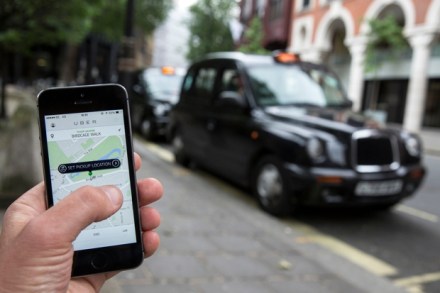
Black cab drivers are striking in London today because they are angry that Uber – a rival taxi service supported by Google – is undercutting their market. They will argue that Uber’s drivers are using a smartphone app to calculate fares, despite it being illegal for private vehicles to be fitted with taximeters. I couldn’t care less about the intricacies of this argument (the High Court can figure that one out). All I care about is getting home safely and it not costing too much. Uber offers me that. I’m wary of jumping into unlicensed minicabs. As those spooky tube adverts remind you, ‘If your minicab's not booked, it's just a stranger's car’. But with Uber, they are booked.

How user-friendly is your house?

From our UK edition

Old Glaswegian joke: ‘Put your hat and coat on, lassie, I’m off to the pub.’ ‘That’s nice — are you taking me with you?’ ‘No, I’m just switching the central heating off while I’m oot.’ Late last year we bought a little holiday flat on the Kent coast. After I had furnished it with all the essentials — fibre-optic broadband, a large television, a Nespresso machine and a couple of random chairs — I looked for an excuse to buy some new gadgetry which I hadn’t tried before.

In praise of cyberchondria

From our UK edition

There’s something perversely satisfying in discovering that your children have inherited your vices. That’s why I was so quietly pleased the other evening when Boy came to see me petrified that the huge fat spider with the sinister body-markings on the wall above his bed was in fact a deadly false widow with a bite — so the internet tells us — whose symptoms can range from ‘feelings of numbness, severe swelling and discomfort to various levels of burning or chest pains’. Though I’m not personally scared of spiders, I could most certainly claim proud authorship of the catastrophist tendencies Boy was displaying here. Also — being a fellow cyberchondriac — I was more than happy to indulge his urge to go straight onto the web (ho! ho!

Knowing things isn’t ‘20th century’, Justin Webb. It’s the foundation of a successful life

From our UK edition

It’s scarcely possible to open a newspaper or magazine these days without reading an article about how the latest technological gizmo has rendered traditional education obsolete. According to Justin Webb, a presenter on the Today programme, it’s no longer necessary to commit any facts to memory thanks to the never-ending miracle that is Google. ‘Knowing things is hopelessly 20th-century,’ he wrote in the Radio Times. ‘The reason is that everything you need to know — things you may previously have memorised from books — is (or soon will be) instantly available on a handheld device in your pocket.’ The same view was expressed by Ian Livingstone CBE, one of the pioneers of the UK games industry.

How to tell a tech bubble from a tech revolution

From our UK edition

There are two major schools of technology investing. The first believes that all investments these days are fundamentally technology investments. Every big company relies to a greater or lesser degree on the innovations and efficiencies of technology to replace the high costs and laggardly habits of human beings. The faster they do this, the higher their returns. The second school covets the pop and fizz of the new. It rejects the tedium of earnings-based valuations in favour of the helium of potential. It piles into the latest new share offerings and regards Twitter as the future of mobile advertising, not a punchline. One school feels like traditional, copper-bottomed investing, the other like a long night in Las Vegas. Each attracts investors with very different risk profiles.

I was forced on to the internet in the 1980s. I still don’t belong there

From our UK edition

With regard to modern technology, I find that people of around my age — by which I mean people in their seventies or over — are divided into two camps. There are those who have embraced the digital revolution with embarrassing enthusiasm, knowing much more about it than it is decent to know; and then there are those who, almost as embarrassingly, take pride in knowing nothing about it whatsoever. The former seem determined to show that they are not past it, that they are in tune with the modern world, and, like teenagers, are never parted from their computers, emailing and tweeting as the day is long. The latter claim to see no point in email or any of the social media and talk nostalgically about the days when people used to write each other letters in long hand.

The American economy vs gravity

From our UK edition

The American economy always feels better when the Super Bowl is on. Ads for trucks and beer fill the airwaves. It’s steak and cigar season for the corporate bigwigs, not a time for the calorie conscious. For a few days, they can forget about foreign labour and cratering emerging markets and wallow in the fantasy that America is still about men in faded jeans and worn baseball caps, doing practical things with their hands. Now the pigskin has been locked away until autumn, however, one can take a colder look at the behemoth. No doubt, it has been a fine few years to be rich in America. The crash of 2008 turned out to be an epic buying opportunity, and you didn’t even have to use your own money.

The Olympian smugness of the anti-Sochi gay protests

From our UK edition

Now look, as Tony Blair would say, homophobia is bad. Very bad. But does that mean we have to turn the Sochi Winter Olympics into a sort of global gay pride event, simply because Russia has passed a not very pleasant law against teaching children about homosexuality? Apparently it does. Every right-thinking hack on earth, it seems, has expressed their disgust at Putin's bigotry. Politicians are also desperate to let on, though they can't say so publicly, that they really don't approve of Russia. And Progressive media companies are using the opening of the Games today to show off their moral superiority to those backward Russians. Google has turned its logo into a rainbow. The Guardian has done the same to the G on their online masthead.

Hypocrisy alert: big tech firms complain of data intrusion

From our UK edition

It’s time to reform government surveillance, so say the internet's tech giants. Following the stream of NSA spying revelations from The Guardian; AOL, Apple, Facebook, Google, LinkedIn, Microsoft, Twitter and Yahoo have joined forces to urge Barack Obama and the US Congress to tighten the laws regarding spying on individuals. In an open letter released today, they state: ‘We understand that governments have a duty to protect their citizens. But this summer’s revelations highlighted the urgent need to reform government surveillance practices worldwide. The balance in many countries has tipped too far in favor of the state and away from the rights of the individual — rights that are enshrined in our Constitution. This undermines the freedoms we all cherish.

David Cameron’s crackdown on child porn is not over yet

From our UK edition

Parliament returns from a three day break today, but the headlines this morning are dominated by the international crackdown on online images of child abuse on the 'dark internet'. Technology companies have made significant progress since July, when David Cameron urged them to do more to eradicate these ‘depraved and disgusting’ images. For example, 200 employees of Google have been targeting 100,000 search terms in order to locate pictures of child pornography. YouTube engineers have found a way to identify videos created by and for paedophiles, and Google and Microsoft have been collaborating to identify pictures of child pornography.

Hugo Rifkind: What is Facebook? 

From our UK edition

I’d never noticed that there aren’t any tits on Facebook. The place always seems brimming with right tits to me. But no. According to this week’s mumbling bien-pensant scandal, the world’s largest social network has decided to allow newsy videos of murder and beheading and all the rest, but still not tits, and this is an outrage. Strangely enough, it’s mainly regarded as an outrage by the sort of people who are normally to be found slamming publications such as men’s mags and the Sun because they minimise the proper news and have tits all over the place. Honestly. Anybody would think these people just like to be cross, or something. In fact there’s very little to get properly cross about on Facebook.

Google is part of the free press. So hands off, Prime Minister

From our UK edition

It is not quite clear what Google did to David Cameron, but the Prime Minister seems to be exacting some sort of revenge. First, he wanted them to keep records of their customers’ emails just in case his officials wanted to snoop later. Now he wants the British government to be the first in the free world to censor internet search results. The causes he invokes are undoubtedly popular ones: confronting terrorists, for example, and thwarting pornographers. But it is precisely in moments of populist outrage that liberties are sacrificed — and only later do we realise what we have lost. The digital age is bewildering for governments, especially those not constrained by a constitution. How to respond to the explosion of ways in which citizens can express themselves?

Porn, porn everywhere. But will David Cameron’s proposals actually work?

From our UK edition

Has the Prime Minister been too naïve in cooking up plans to tackle unadulterated online access to porn? Today’s Daily Mail is totally ecstatic at the proposals, but fails to take into account how difficult regulating the Internet can be. Unless David Cameron decides to go for the totalitarian Great Firewall of China approach — which filters every tiny piece of traffic, known as packets — the proposals will have a similar effect to alcohol prohibition. Porngraphy will go even deeper underground; into the encrypted untraceable bowels of the web which are nigh impossible to infiltrate. Some of Cameron’s proposals are not entirely useless.

Anne Applebaum’s diary: Spies, terrorists and an undercover ham sandwich

From our UK edition

I am trying very hard to understand why everyone is shocked — shocked! — by news that the US government helps itself to the massive data flows generated by Google, Facebook and Twitter. I have always assumed that something placed into an internet database is no more secret than something written in a letter. We all know that those pop-up advertisements — so amazingly compatible with what we searched for on Facebook ten minutes ago — aren’t there by accident. But if we aren’t bothered when ruthlessly efficient multinational corporations troll through our data in order to earn billions for their teenage CEOs, why are we bothered when the comparatively inept US government does the same while searching for terrorists?

Google isn’t really evil, but our tax system is a muddle that breeds avoidance

From our UK edition

‘You are a company that says you “do no evil”,’ Margaret Hodge told Google’s Matt Brittin a fortnight ago, ‘I think that you do do evil.’ It was a soundbite of the kind we’ve come to expect from grandstanding select committee chairmen. Since then — I won’t labour the point — we’ve seen an example in Woolwich of what evil really looks like. But Mrs Hodge’s no doubt scripted jibe was enough to set off an argument that has been rumbling incoherently around Westminster ever since. Was it, as she also accused, ‘devious, calculated and… unethical’ of Google to book in low-tax Ireland the advertising deals sold to UK clients by UK-based sales reps?

Good on you, Google – in praise of tax avoiders

From our UK edition

Anyone who googled ‘tax avoidance’ this week will have been confronted (between adverts for accountancy firms) with endless stories about Google’s own tax avoidance schemes. If the company’s reputational management team was striving to stem the flood of bad publicity, it was not succeeding. Salvation for -Google arrived only when Apple’s tax avoidance became the big story instead. That is what the internet has created: a sometimes frightening, uncontrollable world in which information flows from place to place almost instantly and (mostly) unimpeded. Few would deny, however that the internet has had a benign and enriching influence on our lives overall.

The View from 22 — Osborne’s property bubble, the ongoing Tory wars and Google’s taxing issue

From our UK edition

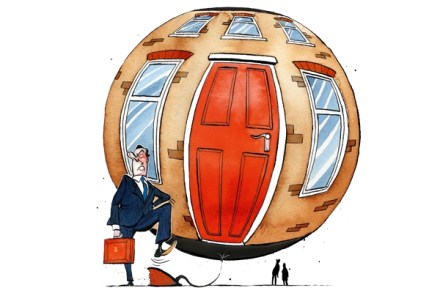
Will George Osborne's manipulation of the property market cause catastrophe? In this week's Spectator cover feature, Merryn Somerset Webb argues the Chancellor's recycling of cheap debt through his Help To Buy and Funding for Lending schemes will jack up house prices and increase demand to a dangerous point. Norman Lamont agrees in his diary this week, suggesting that 'some day this bubble will meet a pin'. On the latest View from 22 podcast, Fraser Nelson and Isabel Hardman discuss the monetary and political implications of the Chancellor's housing motives. Why is the government so keen to increase home ownership? Are ministers willing to relax their stance on planning regulations? And what does this mean for families desperate to get on the property ladder?