Germany

EU officials find that most of the ‘refugees’ are not refugees. What a mess

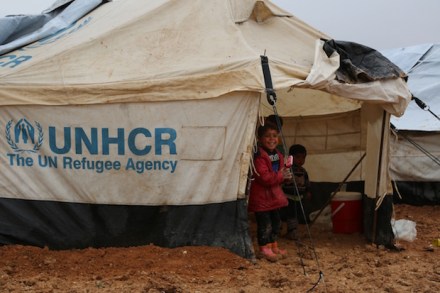
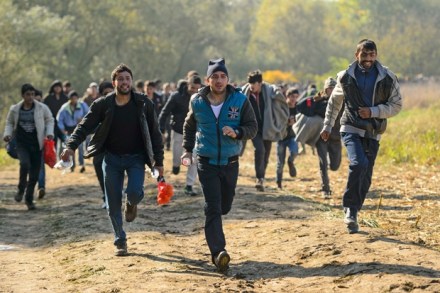
Even EU officials are now finally admitting that a lot – or, rather, most – of the people we have been calling ‘refugees’ are not refugees. They are economic migrants with no more right to be called European citizens than anybody else in the world. Even Frans Timmermans, Vice President of the European Commission, made this point this week. In his accounting, at least 60pc of the people who are here are economic migrants who should not be here -  are from North African states such as Morocco and Tunisia. As he told Dutch television:- "These are people that you can assume have no reason to apply for refugee status.

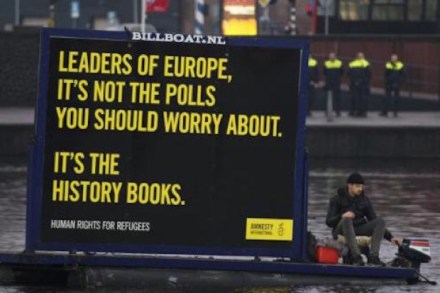
Our leaders should read history books – but not just ones about the Nazis

If I was in charge of the Home Office I’d employ someone whose sole area of expertise was Hitler’s Germany and whose only job was to keep an eye out for any vague echoes of Nazism, however fatuous, in the working practices of the government or its contractors. This would have avoided Monday’s controversy over asylum seekers being made to wear red wristbands in order to receive free meals, because being asked to wear ID to qualify for things is exactly like being a Jew in Hitler’s Germany. A chilling echo, as many people commented.

By downplaying social problems, multiculturalists help extremism to flourish

Ross Douthat’s 10 points about immigration is recommended reading for anyone sitting on the fence or who tends towards the open border position; even if you disagree, you’ll at least have an idea of what the opposition believe. Personally I agree with it all anyway and my opinions on the subject are as frozen in aspic as my musical tastes and haircut. Not that many people are likely to change their minds, of course, this being a subject more of the heart than the head, on both sides of the debate. I’d go as far as to say it that immigration has become a sacred idea, and that many believe multiculturalism to be a moral good in itself, whatever the end result.

Taharrush Gamea: has a new form of sexual harassment arrived in Europe?

The Swedish and German authorities say they have never encountered anything like it: groups of men encircling then molesting women in large public gatherings. It happened in Cologne and Stockholm, but is it really unprecedented? Ivar Arpi argues in the new Spectator that it may well be connected to a phenomenon called ‘taharrush gamea’, a form of group harassment previously seen in Egypt. So what is taharrush gamea, and should Western police be worried? Here’s what we know. ‘Taharrush’ means sexual harassment – it’s a relatively modern word, which political scholar As'ad Abukhalil says dates back to at least the 1950s. ‘Gamea’ just means ‘collective’.

Sweden’s shameful cover-up

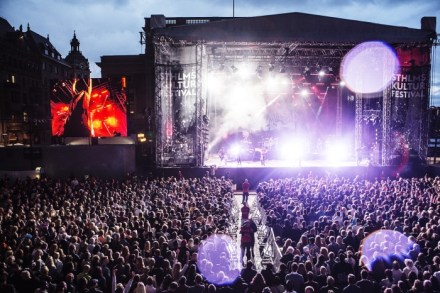
   Stockholm It took days for police to acknowledge the extent of the mass attacks on women celebrating New Year’s Eve in Cologne. The Germans were lucky; in Sweden, similar attacks have been taking place for more than a year and the authorities are still playing catch up. Only now is the truth emerging, both about the attacks and the cover-ups. Stefan Löfven, our Prime Minister, has denounced a ‘double betrayal’ of women and has promised an investigation. But he ought to be asking this: what made the police and even journalists cover up the truth? The answer can be discovered in the reaction to the Cologne attacks. Sweden prides itself on its sexual equality and has even pioneered a feminist foreign policy.

Team Corbyn left red-faced over Berlin hostel Twitter ‘hack’

Over the weekend a number of strange tweets were emitted from Jeremy Corbyn's Twitter account. The Labour leader appeared to be taking his call to attack the Tories -- and not other members of Labour -- to new heights when he tweeted 'Davey Cameron is a pie' along with 'Here we... here we... here we f---ing go!!!'. While the tweets were swiftly deleted and put down to the account being hacked, new information has now come to light surrounding the incident. The Times Red Box reports that the 'hack' occurred in a hostel in Germany. One of Corbyn's staff was enjoying a break in Berlin when the orders came to tweet from Jeremy Corbyn's account. To do this, they logged onto a hostel computer.

Portrait of the week | 7 January 2016

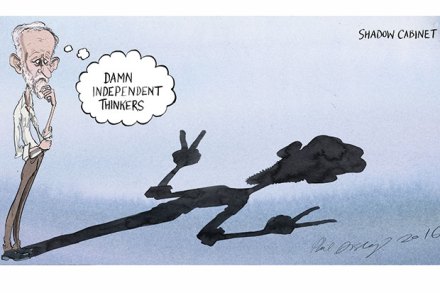
Home David Cameron, the Prime Minister, decided to allow ministers to campaign for either side in the referendum on membership of the European Union, once his negotiations had been concluded on Britain’s relationship with the EU. The government said it was commissioning 13,000 houses to be built by small builders on public land made available with planning permission. Junior doctors decided to go on strike after all, starting with a day next week, after talks between the government and the British Medical Association broke down. In an extraordinarily drawn-out reshuffle, Jeremy Corbyn, the leader of the Labour party, replaced Michael Dugher as shadow culture secretary with Maria Eagle, who was replaced at defence by the Trident-hating Emily Thornberry.

Why are feminists refusing to discuss the Cologne sex attacks?

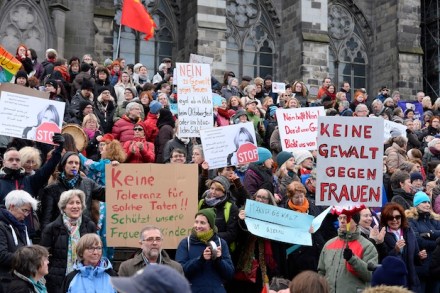
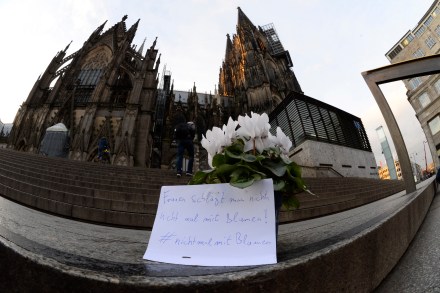
Regardless of the background of the men who carried out the attacks in Cologne on New Year's Eve, it is a pretty horrific story. A series of sexual attacks took place in the city centre by a group of around 1,000 men. More than 150 women have filed criminal complaints, three-quarters of them for sexual assault. Two cases of rape have been reported. It is the kind of story that should make headlines - and should provide ample fodder for writers who like to tackle feminist topics head on. After all, surely this is the very definition of 'rape culture'? And if the actual attacks aren't enough to merit a reaction, then how about the suggestion by Cologne's female mayor that women should adopt a 'code of conduct' to prevent future assault.

A German politician points out the obvious about refugees and the terror threat

Happy New Year. Sorry about my absence. I’ve been away for a couple of weeks and then, when I returned, there was no internet access and those hardworking people from BT spent ten days mulling over the problem before they tried to put it right. What a wonderful organisation. So, anyway, well done Lutz Bachmann – a German politician from the Pegida party. He tweeted that all those Germans who had said 'refugees welcome here' should make their way down to Munich station – closed on New Year’s Eve because of bomb threats. https://twitter.

Meet Jeremy Corbyn’s German doppelganger

Labour’s Jeremy Corbyn has a socialist doppelganger in Germany. Her name is Sahra Wagenknecht and she serves as co-chairperson of the largest opposition party in the German Bundestag—The Left Party. Her remarks blanketed the German media on Tuesday because she equated Islamic State terrorism in Paris with Britain’s aerial campaign designed to help destroy the terrorist organisation in the Syrian and Iraqi theatres of war. 'Of course it is no less a crime to murder innocent civilians in Syria with bombs than it is to shoot them in Parisian restaurants and concert halls. One is individual terrorism, the other state-sponsored,' Sahra Wagenknecht, an admirer of the now-defunct East German communist state and Stalinism, told the Bundestag on Monday.

How the Germans made Glyndebourne

This is hardly the time of year for picnics on the lawn, but I have nevertheless had a week dominated by Glyndebourne. First I went to London to see David Hare’s play The Moderate Soprano, about the creation of the Glyndebourne opera festival by John Christie in 1934; and then to a Glyndebourne production in Milton Keynes of Mozart’s opera Die Entführung aus dem Serail. John Christie was an extraordinary man. A rich country landowner, who served bravely in the first world war, he returned home to his house in Sussex to pursue his interest in music. He purchased a colossal organ, perhaps the biggest in England outside a cathedral. He put on little opera performances in the organ room.

Sins of the fathers | 19 November 2015

This is a documentary in which three men travel across Europe together, but they’re not pleasurably interrailing, even though there are often times they probably wished they were. For two of them, Niklas and Horst, the journey is about confronting their fathers, who were high-ranking Nazi officials responsible for the deaths of millions of Jews, while for the third, the eminent British human-rights lawyer Philippe Sands, it means visiting the place where his grandfather’s family was exterminated. This place, Galicia, which straddles the modern-day border between Poland and Ukraine, is the exact place my own grandmother’s family were murdered. Her father lost every one of his seven siblings. She lost every aunt, uncle and cousin.

Helmut Schmidt, 1918 – 2015: Germany’s man of balance

Helmut Schmidt, who served as West German Chancellor from 1974 to 1982, has died aged 96. The following review by George Walden of a book about Schmidt by Jonathan Carr was published in The Spectator on 2 February 1985.  On a visit to the German Chancellery in Bonn, I remember once admiring the collection of paintings installed by Helmut Schmidt in the corridors. But at the back of my mind was still the image of the armoured cars surrounding the squat, fortress-like building as we came in. It was art — and specifically the German Expressionist painting denounced as 'degenerate' by the Nazis — that evoked Schmidt's first political stirrings.

Hayek was right: you can’t understand society without evolution

In December the controversial satellite TV channel ReallyTV launches its Christmas season with a flagship reality show called From Homs to Hamburg. A dozen refugees, accompanied by their families, will be given a budget of $500 and two-days’ water in a race to cross the German border using any form of transport. The prize for the winning family is a car and a two-bedroom flat in -Billstedt. The show follows the success of the US reality TV show Monterrey to Monterey,in which Mexican families compete to cross the Rio Grande by hiding in shipping -containers. Now, before you recoil in disgust, I should just point out that nothing like this programme will be appearing this Christmas, because I made the whole thing up. ReallyTV does not exist.

Christmas markets

Why the fuss about German Christmas markets? Surely they’re just schmaltzy shanty towns, full of stuff you’d never dream of buying at any other time? This tends to be my point of view until Advent… when I yearn to be back in Germany. Its motor industry may be mired in scandal, its football team may have lost to Ireland (Ireland!) but at least Christmas is one thing my cousins still do best. So where and when to go, and what to buy? Well, most markets run from the end of November until Christmas Eve. They’re great for handmade decorations and festive food and drink, but for Germans a weihnachtsmarkt isn’t just about shopping. It’s a place to meet up for a mug of glühwein and a bite to eat.

George Osborne adds meat to Britain’s EU reform demands

George Osborne is speaking in Germany today, where he will apparently tell a business conference that Britain does not want ‘ever-closer union’ and the other EU member states will have to respect and work with this, if they don’t want to see a Brexit: ‘Remain or leave, is the question our democracy has demanded we put because, quite frankly, the British people do not want to be part of an ever-closer union. ‘We want Britain to remain in a reformed European Union, but it needs to be a European Union that works better for all the citizens of Europe - and works better for Britain too. It needs to be a Europe where we are not part of that ever closer union you are more comfortable with.

The Australian example

For many years, Australia has been turning away boats filled with migrants. From a remove, this looks cold--hearted — a nation built by immigrants showing no compassion for others who want a better life. But it is precisely because Australia is an immigrant nation that it understands the situation: if you let the boats land, more people come. People traffickers will be encouraged, migrants will be swindled, and their bodies will wash up on your shores. Any country serious about immigration needs a more effective and robust approach. Tony Abbott, the former Prime Minister of Australia, made that point clearly this week on a trip to London.

Germany’s dark night of the soul

As Angela Merkel approaches her tenth anniversary in power, Germans are talking about a possible Kanzlerinnendämmerung — a ‘twilight of the chancellors’. Anger is growing at Merkel’s handling of the migration crisis. Germany, which has only recently reconciled itself to the idea that it is a ‘country of immigration’, must now integrate vast numbers of asylum seekers, beginning with the million who are expected to arrive this year. At the same time, the country has been hit by two huge corruption scandals, involving Volkswagen and the DFB, the German football federation. The odds are that Merkel will survive — it’s hard to see at the moment who can replace her.

The new East-West divide: multiculturalism vs sovereignty

We all know that relations with Russia are at their lowest ebb since 1991, when Boris Yeltsin brought down Communism during one of his alcoholic blackouts. What’s becoming increasingly clear, though, is that there is a new ideological cold war – and I’m not sure we’ll win this one. The German approach to dissent over these past few months has been revealing. Earlier this month, a leading eurocrat chided the Hungarians for refusing to accept that ‘diversity is inevitable’, using that strange Marxist language these people love. Another accused that small central European country of being ‘on the wrong side of history’. Meanwhile Angela Merkel compared those who lock others out to the Communists who once locked their own people in.

Hitler’s émigrés

Next week Frank Auerbach will be honoured by the British art establishment with a one-man show at Tate Britain. It’s a fitting tribute for an artist who’s widely (and quite rightly) regarded as Britain’s greatest living painter. Yet although Auerbach has spent almost all his life in Britain, what’s striking about his paintings is how Germanic they seem. Born in Berlin in 1931, Auerbach was only seven when he came to England (his parents subsequently perished in the Holocaust). By rights, he should stand alongside British artists such as Peter Blake and David Hockney, yet his work feels far closer to German painters like Georg Baselitz or Anselm Kiefer. Auerbach is a one-off, a unique painter with a unique vision.