German history

The roots of 20th-century German aggression

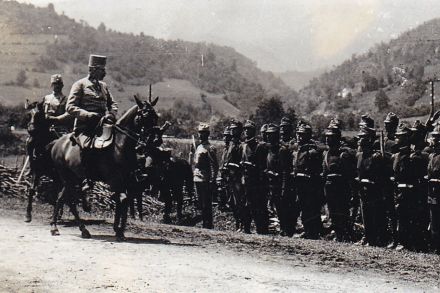
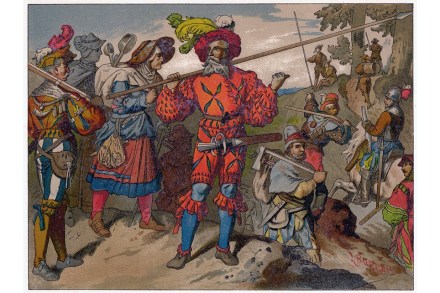
It is the contention of Peter Wilson, professor of the history of war at Oxford University and the author of an acclaimed history of the Thirty Years’ War, that military historians have focused too much on the German wars of the 20th century in trying to understand German ‘militarism’ as a distinctive characteristic – a ‘genius for war’ imitated by others. As he points out, Germany and Austria lost the first world war, and Germany, with Austria now attached, lost the second as well. A ‘genius for war’ evidently needs some rethinking. Wilson wants to place these modern wars in perspective, stretching back to the 15th century.

Berlin has always been a Faustian metropolis

From our US edition

Each time I return to Berlin, the wonderful, awful city where I spent the best days of my misspent youth, I pay a sentimental visit to Grolmanstrasse, where my German grandparents used to live. There isn’t much left to look at. Their apartment block was destroyed in 1945 in the Battle of Berlin. The site where it stood is now occupied by a children’s playground. For me, that empty space seems to symbolize the way Berlin has changed — mainly for the better, but at enormous human cost. So much has vanished — not just the buildings, but also the people who inhabited them. For my children’s generation, Berlin is a party town. For me, it’s a city full of ghosts. It is these ghosts that keep bringing me back to Germany’s battered, bombastic capital.

berlin

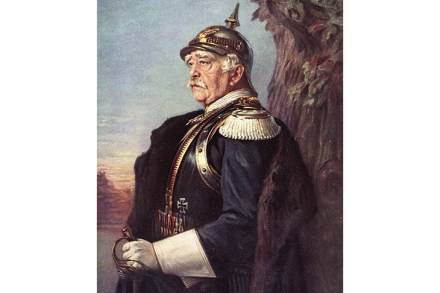
Whitewashing Bismarck just won’t wash

The reviewer’s first duty is to declare any skin he may have in the game, so here goes: I write this in a bone-chillingly old house filled with portraits of Prussian Junkers, ancestors of my third son, the oldest of them still wearing steel plate about chest and shoulders, the more recent armoured only by expressions of ineffable superiority. What a lot of them there are. Somehow their Lutheran Prussia — dirt poor by the standards of France and Britain but uniquely militarised, its spiritual heart so far east as to be now in Russia — managed, in the second half of the 19th century, to annex the entire human and industrial strength of wealthy, advanced, largely Catholic western Germany for their ancient ‘drive to the east’.

American Weimar or American Hapsburg?

From our US edition

Aaron Sibarium has written a fascinating article for American Purpose on the parallels between the current American republic and the Weimar republic. It’s worth reading on its own merits as a history lesson, as a reminder that no people is immune to time and tide, as a reflection on how democracy can turn into disaster. It’s worth reading even if you disagree, as I do.

hapsburg