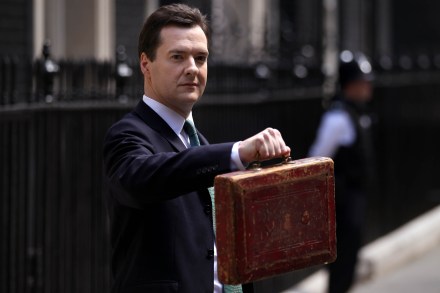
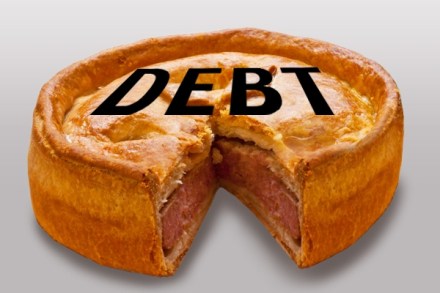
George osborne

Spending isn’t the answer. But how do we explain that?

From our UK edition

One of the things I love about being a classical liberal is that I’m always on the right side of every argument. I’m pro: freedom, jobs, self-determination, cheap energy, higher living standards, academic excellence, property rights, an even better future, Michael Gove MP, wine, women, song. (So long as the song is not by Maroon 5 or Bruno Mars.) And I’m anti: arbitrary authority, nanny-statism, money-printing, tyranny, despair, almost all war, poverty, prohibition, disease, squalor, uncleaned-up dog poo, meddling busybodies, crap capital projects based on massive lies (that means you HS2!), corrupt officials, civil war, totalitarianism, hyperinflation, injustice, Tim Yeo MP.

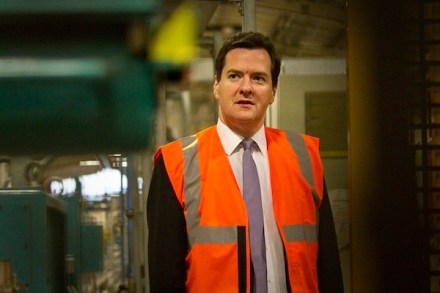
George Osborne to Tory MPs: I hear you on fuel duty

From our UK edition

George Osborne spent an hour in front of the 1922 this evening. 40 Tory MPs took the opportunity to promote their own Budget ideas to him. From what I understand, the tone of the meeting was cordial with Osborne in relaxed form. A big theme was the cost of living with three MPs including Rob Halfon pushing the Chancellor on fuel duty. Osborne’s responses were non-committal but significantly he didn’t say that binning the fuel duty rise scheduled for September was unaffordable. Instead, a distinct vibe was given off that these MPs concerns would be accommodated. Two other MPs-- Steve Brine and Henry Smith—made the case for a cut in air passenger duty, something that the influential chairman of the ’22 Graham Brady has been a public advocate of.

AAA credit rating: George Osborne gives Labour a (revisionist) history lesson

From our UK edition

George Osborne was playing historian today as he responded to Ed Balls' urgent question on the credit rating downgrade, charting Labour's role in the UK's loss of the AAA rating; particularly the deficit it bequeathed the Coalition. But he was in revisionist mood when it came to his own stance. As Ed Balls repeatedly leant across the despatch box and tried to hand the Chancellor a copy of the Tory 2010 manifesto in which the party lists 'we will safeguard Britain's credit rating' as the first of its eight benchmarks, George Osborne told MPs that what he had always said was important was the confidence of the markets. MPs were largely in a tribal mood.

Will the UK keep its AA1 rating until 2015?

From our UK edition

Labour has been granted an urgent question in the Commons on the loss of the AAA credit rating this afternoon, and we can expect George Osborne to reiterate his comments over the weekend that this downgrade was a 'clear message that Britain cannot let up in dealing with its debts'. But will he suggest that the UK can hold onto the AA1 status that it now holds with Moody's until the end of this Parliament? Announcing the downgrade, the agency said it didn't expect any changes in the rating over the next 12-18 months. But it added: 'However, downward pressure on the rating could arise if government policies were unable to stabilise and begin to ease the UK's debt burden during the multi-year final consolidation programme.

AAA loss is politically difficult for Osborne

From our UK edition

The United Kingdom’s triple A rating is now lost with one credit rating agency, Moody’s. This is a politically difficult moment for George Osborne. Back in February 2010, he set keeping the triple A rating as one of the key tests of a Conservative government’s economic policy. His opponents will delight in pointing out that he has failed the test he has set himself, while nervousness on the Tory benches about the coalition’s economic strategy will be heightened by this news. Economically, though, I doubt that this will have much impact. In recent weeks, Britain’s debt has been trading more like that of France, which has lost its triple A rating, than Germany, which still has it.

Why Britain lost its AAA rating

From our UK edition

Even the pessimistic analysts had given Britain until September to lose its AAA rating. That it has happened now, before the Budget, shows just how fast things are moving. Moody's has tonight downgraded Britan from AAA to AA1 and has also told us why. Don't expect economic hell to break loose as a result: these ratings tend to follow, rather than lead, the markets. But this is politically devastating for George Osborne, given that he has asked us to judge him by the preservation of this rating (and made it a manifesto pledge). So what went wrong? 1. The markets now doubt that Osborne has a credible debt strategy. The below graph, released earlier today from Citi, shows how things have gone pear-shaped. It shows debt as a share of GDP, which has risen as growth has evaporated.

Chancellor caught in the headlights on fuel prices

From our UK edition

George Osborne is getting used to the twice-yearly battle that precedes an autumn statement or a budget when motorists, newspapers and some of his own MPs start haranguing him on fuel. It's the Times' splash today, with petrol prices expected to rise to their highest-ever levels, and campaigners calling once again for the Chancellor to cancel September's fuel duty increase when he makes his Budget statement next month. As I reported back in January, Tory MPs want this Budget to be another cost-of-living statement, which, like the autumn, allows the Coalition to demonstrate that it is doing all it can to hack away at the major pressures on voters' wallets.

Deficit latest: Still £5 billion higher than last year

From our UK edition

Today's borrowing figures show that the government had a surplus of £11.4 billion in January. But before we get too excited, a bit of context is in order. There's (almost) always a surplus in January, thanks mainly to self assessment and capital gains tax receipts. And today's figure includes £3.8 billion transferred from the Bank of England's Asset Purchase Facility to the Treasury. Stripping that out gives a £7.6 billion surplus — an improvement on the £6.4 billion surplus in January 2012, but not enough to make up for higher borrowing in the rest of the year. Total borrowing in the ten months of the year so far is £97.6 billion (excluding the Royal Mail pension and APF transfers) — £5.3 billion higher than in the same period last year.

Disappointing 4G auction income is bad news for Osborne’s deficit plans

From our UK edition

Oh dear. George Osborne's claim in December's Autumn Statement that 'the deficit is coming down this year, and every year of this Parliament' was already looking hubristic, even before today's news that the 4G mobile spectrum auction raised just £2.3 billion, rather than the £3.5 billion that the Office for Budget Responsibility had forecast. As Fraser blogged in November, there were hopes that Britain would — like Ireland — raise even more than expected from the auction. At the Autumn Statement, the OBR predicted that borrowing (once you strip out the effects of various one-off accounting changes, such as the transfer of Royal Mail pensions) would fall ever-so-slightly this year, from £121.4 billion in 2011-12 to £120.3 billion in 2012-13.

Mr Micawber Goes to the Treasury

From our UK edition

John Rentoul draws attention to a new ComRes poll that goes some way towards explaining George Osborne's predicament when it comes to managing government finances. Put simply, the public is not interested in public spending cuts. On the contrary, British voters want to see public spending increase. Sure, they might agree that, all things being equal and in the broader scheme of matters, it might be a good idea if the government balanced the books but all things are rarely equal and as soon as you get into the narrow, particular view of these matters it becomes clear that, actually, the only departmental budget voters want to decimate is that small portion of government spending devoted to foreign aid.

Selling RBS

From our UK edition

The state owning banks is not a good thing. It is, as the annual row over bonuses at RBS demonstrates, very difficult to keep politics out of the running of the business. So, it’s encouraging news that the Treasury is moving to sell the government’s 82 percent stake as soon as possible. Today, the Mail and The Independent report that George Osborne is considering simply handing over the shares to taxpayers, who would then be able to sell them when they at a time of their choosing. As I wrote earlier this month, Osborne is very keen to avoid a row over RBS bonuses in February 2015, just three months before the general election.

The Tory 2015 message: times are tough, but they’d be worse under Labour

From our UK edition

Today's PMQs was not, as James says, a tricky one for David Cameron. He had some good jokes and embarrassing gossip to poke Ed Miliband with, even though the Labour leader chose to attack on the thorny issue of living standards. The key to the next election will be whether voters feel their lives have improved under the Coalition far more than it is about the latest ONS release on GDP. And the key challenge for the Coalition is to be clear that though things won't be rosy - as Miliband pointed out, the squeeze on living standards will still be taking place when polling day arrives - they would be worse under Labour.

The Daily Telegraph’s verdict: Osborne isn’t working.

From our UK edition

The Daily Telegraph is more supportive of the Conservative Party than any British newspaper, which is why its leader today – urging George Osborne to change course - is important. “The coalition’s economic policy is not working” it says, and goes on to urge a rupture with the failing policy. Its central recommendation is that corporation tax drops below Irish levels so Britain offers the lowest company tax in the European Union. Osborne could announce this on his 20 March budget. And he could spend 21 March listening to the sucking sound as companies started relocating to Britain.

Why are the Afriyie plotters bothering?

From our UK edition

David Cameron clearly rated Adam Afriyie's 'stalking horse' plot as a sufficiently ridiculous threat to make a joke out of it at Prime Minister's Questions this week. After their premature outing in the papers last weekend, the plotters might sensibly have gone to ground for some time while Afriyie fended off lunch invitations from journalists trying to get the measure of him. But according to the Mail and the Guardian, they're still at it, now with George Osborne in their crosshairs. They're clearly a determined bunch, plotting to deliver an ultimatum to the Prime Minister in May to replace his Chancellor if the Budget fails to revive the economy. That's quite some ask.

George Osborne urged to drop Google boss as business adviser

From our UK edition

Starbucks had a go at David Cameron on Sunday for his 'cheap shots' at the coffee chain's tax arrangements in the UK. The company felt it was being unfairly singled out in comments about companies legally avoiding tax needing to 'wake up and smell the coffee'. So what about other firms known to be avoiding tax? Coffee House has learned that the former Lib Dem Treasury spokesman Lord Oakeshott is writing a rather scathing pair of letters to David Cameron and George Osborne about the government's dealings with Google, which paid only £6 million in corporation tax in the UK in 2012 by funnelling £6 billion worth of transactions through the tax haven of Bermuda. Google's executive chairman, Eric Schmidt, currently sits on the government's Business Advisory Group.

Backbenchers want a cost of living Budget

From our UK edition

Aside from Ed Balls' attack on George Osborne for going 'on the piste' in Davos, Treasury question time in the Commons today was interesting not for what Labour did or didn't have to say, but for some of the pushes from the Tory backbench on helping those on low incomes. Sometimes it's the pattern of the questions that matters more than the individual answers. Many of the questions were pitches for the Budget, which also gave ministers the opportunity to not really answer them. Robert Halfon asked about reintroducing the 10p income tax rate, to which Greg Clark said he noted the MP's bid for the Budget, adding: 'But he will know that we have taken people out of tax, which has been important in restoring incentives and the rewards people have for going back to work.

HS2 announcement ignores airport problem

From our UK edition

George Osborne, Patrick McLoughlin and Simon Burns have been flying the flag for the second phase of High Speed Rail 2 this morning. Politically, Osborne and Co see rewards in a project aimed at closing the North/South divide, rewards clearly so great that the Chancellor doesn't mind the second half of the route zipping through his own constituency and irritating local councillors and campaigners. Osborne was careful to underline this when he appeared on breakfast television this morning, saying: 'Our country has become so unbalanced and for the last 15 years as a country we gambled on the City of London and its prosperity and look where that got us.

Why The Guardian has got it wrong – on cuts and on Boris.

From our UK edition

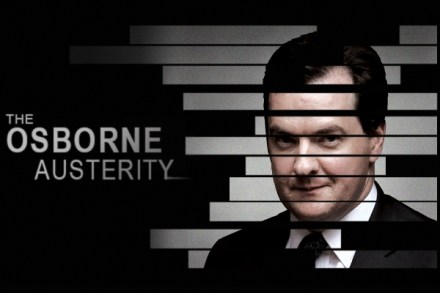
'George Osborne is under pressure to tear up his austerity programme after Boris Johnson called on the government to drop its ‘hair-shirt, Stafford Cripps agenda,' reports the delighted Guardian today. Even Boris is against it! Even he can see that the obvious solution to our debt crisis is even more debt! Except, as you’d expect, it’s all nonsense. Kamal Ahmed at the Telegraph got it right: Boris’s problem is with Osborne’s language: talking about pain, rather than recovery. He quotes Boris: 'We need to junk the rhetoric of austerity and be confident.

Worst recovery in history: British GDP shrinks by 0.3 per cent

From our UK edition

Now we know why David Cameron delivered his Europe speech on Wednesday. It’s time for bad headlines again: the GDP figures just announced show that the British economy is contracting yet again — by 0.3 per cent in the final three months of last year (see above graph). Now, you’ll hear a lot of people tell you today that quarterly data does not matter. The ONS say this is a fallback from the Olympics, which sucked economic growth forward. And they’re right: the ONS usually revises quarterly data, often dramatically. What matters more is the long-term trend, and this is pretty appalling. It now seems inarguable that Britain is going through the worst recovery in history. Slower and longer even than the 1930s.

After party political porky pies, Number 10 admits debt is rising

From our UK edition

Finally: Number 10 admits that far from 'dealing with debt', the government is seeing it rise. This morning the Prime Minister's spokesman was grilled on the party political broadcast that horrified Fraser last night in which the Prime Minister said 'we are making progress. We're paying down Britain's debts.' Fraser has explained the reality - that Cameron is in fact increasing Britain's debt by 60 per cent - in this post with two unnerving graphs, and the Prime Minister's spokesman conceded that 'the debt as a percentage of GDP has risen'. Asked whether the Prime Minister understood the difference between the debt and the deficit, he said: 'Yes, he does.