George osborne

Osborne’s pitch to Sun-reading voters caught up in Leveson row

From our UK edition

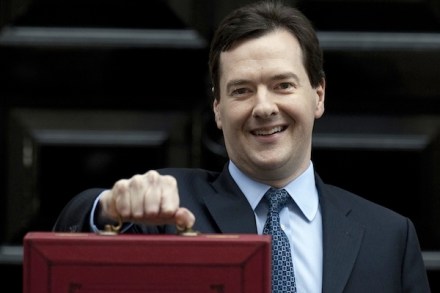
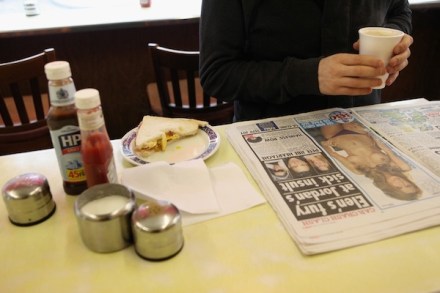
If this was a Budget for Sun readers, then it hasn't quite worked out as well as George Osborne might have hoped. The newspaper sounded pretty cheery this morning with its story about the beer duty escalator. But here's the front page for tomorrow's edition: Now, this is clearly as much about Leveson and the newspaper's industry disgust that it wasn't consulted when the lobbying group Hacked Off was invited to the late night negotiations as it is about the measures announced today. But there's also the point that Fraser makes tirelessly on this blog that politicians like to be lazy at best when it comes to talking about debt and the deficit. One of the bullet points reminds readers that the government isn't 'paying down its debts' as David Cameron has said before: 'Debt!
Budget 2013: Osborne’s empty budget

From our UK edition

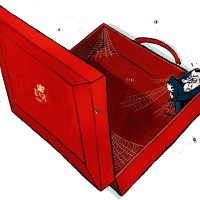
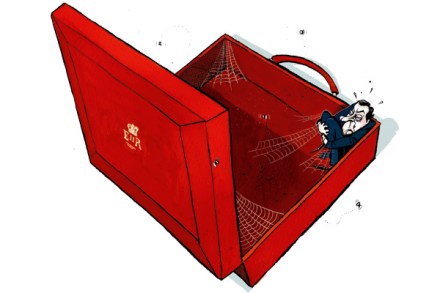
This was, as I suspected, an empty budget. There was the usual whale spray of policies: a penny off beer duty here, petrol tax reduced there. Nowadays, we don’t have to wonder if the Budget will make a blind bit of difference: the Office for Budget Responsibility sees the figures in advance and does the sums. It concludes that the Budget will have 'no impact on level of GDP at the end of the forecast horizon'. To Osborne’s credit, he didn’t try to spin this. The recovery has stalled and he has run out of ideas about how to start it again. It’s difficult to put a gloss on this basic fact. As always, the small steps that Osborne did take were in the right direction. Extending the corporation tax for a year, so it hits 20pc in 2015, is a good idea.

Budget 2013: It’s all about the ‘aspiration nation’

From our UK edition

So did he do it? This was a budget with a strong narrative about the 'aspiration nation', and the Chancellor certainly did everything he could to nod to two of those three groups that James identified last week. He had two distinct sections on making Britain competitive in the global race and tackling the cost of living, while dismissing 'those who would want to cut much more than we are planning to - and chase the debt target'. The cost of living section was a careful attempt to please Sun readers who had been so irritated by last year's Budget. And Osborne also took care to spell out the tangible benefits of scrapping the fuel duty increase and the beer duty escalator. He said: 'Today, I am cancelling this September's fuel duty increase altogether.

Budget 2013: George Osborne’s statement in full

From our UK edition

Mr Deputy Speaker, this is a Budget for people who aspire to work hard and get on. It’s a Budget for people who realise there are no easy answers to problems built up over many years. Just the painstaking work of putting right what went so badly wrong. And together with the British people we are, slowly but surely, fixing our country’s economic problems. We’ve now cut the deficit not by a quarter, but by a third. We’ve helped business create not a million new jobs, but one and a quarter million new jobs. We’ve kept interest rates at record lows. But Mr Deputy Speaker, despite the progress we’ve made, there’s much more to do.

Budget 2013: what the papers say

From our UK edition

The Treasury has largely managed to maintain discipline in the run-up to the Budget, with only controlled briefings in the past few days, rather than last year's public row over tax cuts. Yesterday we were told about the additional departmental spending cuts to fund infrastructure: the pain has already been briefed so that today the £2.5billion raised from cuts can be painted more as gain. There are also some carefully-placed stories on the front pages this morning, too. Last year's Budget didn't have much in it for Sun readers: the pasty and caravan taxes did for any suggestion that the government was on their side while it cut the top rate of tax. And after the Budget, the newspaper sent a model to hand out pasties on the steps of the Treasury.

Adam Afriyie on Budget 2013: Prepare for ‘bitter disappointment’

From our UK edition

For many people, Budgets are when you find out if your pint of beer or bottle of wine is going up in price. It’s the day you fill up your car just in case fuel goes up again. It’s the day you hope to see a tax cut that puts some more cash in your pocket or helps your business grow. Generally it’s a day the average person lives in hope and prepares to be disappointed. That’s the nature of Budget day. This year is different. They say that this Budget will be highly political. If so, as soon as the doors open, the Commons’ corridors will be buzzing with people feverishly trying to unpack each policy and reverse engineer it. Who was it aimed at? What reaction is it designed to elicit, and from whom?

Voters: It’s not Plan A, it’s Osborne

From our UK edition

A fascinating poll result from Ipsos MORI today. They ask, essentially, whether people agree with the government's 'Plan A' or Labour's 'Plan B'. Specifically, they ask: 'People have different ideas about the best way of dealing with Britain’s economic difficulties. Which of the following do you most agree with? A1: Britain has a debt problem, built up over many years, and we have got to deal with it. If we don’t, interest rates will soar. That’s why tackling the deficit and keeping interest rates low should be our top priority. OR B1: Without growth in our economy, we are not getting the deficit down and are borrowing more. We need more government spending on investment to kick-start our economy and a temporary cut in taxes to support growth.

Forget 50p — scrap the 60p tax rate

From our UK edition

Imagine if a Chancellor stood up and announced that those earning up to £100,000 would pay a 40p tax rate, those earning £100,000 to £112,950 will pay a 60p rate, and those earning above £112,950 will pay the 40p rate, and then the top earners will pay a 50p rate. That'd be crazy, right? But that's exactly what Alistair Darling announced in his 2009 Budget. So how did he get away with it? By delivering his announcement in code. Instead of talking about marginal tax rates, he described the move as withdrawing the personal allowance for those with incomes over £100,000. The language may be different — and may sound much more reasonable — but the effect is exactly the same.

MPs get last chance to push Osborne on Budget

From our UK edition

It's the last Treasury questions before the Budget today, and MPs will have a final chance to push the Chancellor on what it is that they want from the Budget. There are those who are instinctively loyal to the Tory leadership and want a Budget that comes and goes without fireworks or failures. 'Just steady as she goes, please,' one loyalist says. Within that group are MPs who are desperate for a cost of living Budget. Then there are those MPs who are not loyal, and who, even if they don't admit it, would quite like a messy Budget that shows George Osborne up. A wider group of backbenchers includes those who are nervous that Osborne isn't quite the strategic genius he's often sold as.

Liam Fox shows David Cameron how to lead the Tories to a historic defeat

From our UK edition

I think it is fair to say that Dr Liam Fox has never been one of David Cameron's chief chums. The former Defence Secretary has, as Paul Goodman notes, been closer to George Osborne. Be that as it may, his speech today is a fine reminder of Dr Fox's political limitations. This is the kind of stuff - and the kind of man, frankly - that helps explain why the Conservative party has not won a general election majority since 1992. Think on that and think on how much Britain has changed these past 21 years and how little the Tory party has. Dr Fox ignored all this, delivering a call to arms like it was 1981 All Over Again. But it is not. According to Fox, however: The great socialist coup of the last decade was making wealth an embarrassment. It is not.

Five ideas for George Osborne’s 2013 budget

From our UK edition

The idea of an ‘empty budget’ later this month is disappointing those who backed George Osborne in the hope of his fixing the problems he so eloquently outlined in opposition. If Brown proposed cutting the deficit by 33 per cent over two years, newspapers who criticised him at the time for lacking ambition — as Osborne did — can hardly be expected to applaud the Chancellor for cutting it by just 25 per cent over three years. Faster progress is needed: on the deficit, and on economic growth. There are many tools that can be used and the Sunday Telegraph describes a few of them today in its leading article. It’s an important contribution to the debate. Here are its main points, and my take: 1. Cut taxes, especially corporation tax.

Five things you need to know about the EU’s bonus cap

From our UK edition

1. The plan: To limit the bonuses that can be paid to bankers to the level of their salary. Any higher bonus would need the approval of shareholders (65 per cent of votes cast if a quorum of 50% of shareholders is reached; 75 per cent of votes cast otherwise) and a quarter of it would have to be deferred for five years — and even then the bonus could not exceed double the salary. 2. Where does the proposal come from? The European Parliament. MEPs insisted on the cap to be included in a package of banking reforms.

Budget 2013: How George Osborne ran out of ideas

From our UK edition

Before every Budget, George Osborne always seeks the advice of various MPs. He usually doesn’t heed it but it’s a good way, he thinks, to keep the troops happy. As the economic headwinds have strengthened, this advice has tended to be increasingly radical and in a recent meeting with the Free Enterprise Group of Tory MPs, the Chancellor made clear he was in no mood for it. ‘Look,’ he told them, ‘I tried radicalism in last year’s Budget, and I had blowback for it. So I’d take quite some persuading to do something radical this time.’ The MPs left with the clear impression that he is now preparing what will be, in effect, an empty Budget. If Osborne were planning to change course before the next election, he’d have to do it now.

David Cameron needs Willie Whitelaw. He has Nick Clegg

From our UK edition

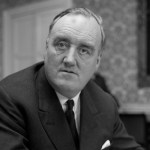
David Cameron needs a Willie. So say the ministers who work most closely with No. 10. It is not a call for shock-and-awe radicalism, but for someone who can help the Prime Minister as the late Willie Whitelaw helped Margaret Thatcher — gliding around Whitehall, pushing forward the Cameron agenda, smoothing over difficulties and ensuring that Downing Street’s writ runs in every department. Whitelaw did the job superbly for eight years; it is no coincidence that things started to go wrong for Lady Thatcher after a stroke forced him to give up his role. But Cameron doesn’t have a Willie. He has the opposite of a Willie: a Deputy Prime Minister who has his own interests to look after, his own policies to pursue and his own party to lead.

George Osborne’s only plan is to pray for recovery

From our UK edition

What sort of Budget will George Osborne unveil on 20 March? In this week's Spectator, Fraser Nelson predicts that it will be an empty one, devoid of radicalism. The piece outlines one meeting in which the Chancellor explained why he is feeling so cautious: Before every Budget, George Osborne always seeks the advice of various MPs. He usually doesn’t heed it but it’s a good way, he thinks, to keep the troops happy. As the economic headwinds have strengthened, this advice has tended to be increasingly radical and in a recent meeting with the Free Enterprise Group of Tory MPs, the Chancellor made clear he was in no mood for it. ‘Look,’ he told them, ‘I tried radicalism in last year’s Budget, and I had blowback for it.

Revolting, Panic-Stricken Tories are doing Ed Miliband’s job for him

From our UK edition

Panic, once let loose, is hard to corral. And there seems to be plenty of panic on the Tory benches at Westminster. The Eastleigh by-election result, the stagnant economy and the rising sense that the Prime Minister has somehow lost his way all contribute to this. Each fresh setback - or perceived setback - now has an impact disproportionate to the actual size or importance of the problem. These things are no longer measured on a linear scale. Read, for instance, Ben Brogan's analysis in today's Telegraph and you will perceive an under-current of deep panic presently afflicting the Tory tribe in London. Similarly, when Paul Goodman is writing - correctly, I think - that a post-2015 leadership campaign has already, if quietly, begun you can sense the fear in Tory ranks.

Budget 2013: whatever happened to the recovery?

From our UK edition

The 2013 budget promises to be a milestone for David Cameron's government. George Osborne is under pressure to avoid the 'omnishambles budget' of last year. As well as satisfying his increasingly-militant ministers, angry backbenchers and coalition partners, the window for making a real difference in time for the next election is closing. Any seismic shifts planned by Osborne and Cameron will have to be made soon. Coffee House will be providing extensive coverage throughout the day but we're delighted to offer something special. On the evening of 20 March, the Spectator will be hosting a special event in central London with Fraser Nelson and James Forsyth.

The Tory branch of the National Union of Ministers says cut welfare, not our budgets

From our UK edition

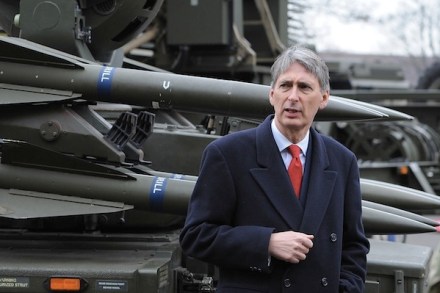
Philip Hammond is a cautious and loyal politician. He is not a boat rocker. This is what makes his interviews in the Telegraph and The Sun today so noteworthy. He would not have started conducting spending negotiations in public unless he felt he had to and that he had a chance of success. Hammond tells The Sun his case is this, ‘You take half a percent out of the welfare budget, you’ve solved the problem in defence — HALF a percent. There is a body of opinion within Cabinet that believes we have to look at the welfare budget again.’ In truth, the argument about the 2015-16 spending round is not a conventional spending row: it isn’t the Ministry of Defence versus the Treasury.