George osborne

Exclusive: George Osborne on GOV.UK winning Design of the Year

From our UK edition

One of the government’s lesser known reforms, the GOV.UK website, has just been named as the 2013 Design of the Year. Before the coalition, the public sector was represented online by nearly 1,000 websites. Under the auspices of the Government Digital Service — a newly recruited band of nerds based outside of Whitehall — GOV.UK has been an attempt to reboot the government’s web presence with a slicker site under a single unifying brand. This award suggests that the project has been a success. Up against tough competition from the Shard and Olympic cauldron, the win is a triumph for the GDS.

The Tory modernisers are Margaret Thatcher’s true heirs

From our UK edition

Margaret Thatcher’s death has inevitably prompted intense reflection among Tories about what lessons the party should learn from her time in office. ‘We must finish the job’ is the refrain on the lips of Thatcherite ministers, and there are more of those today than there were a year ago. The experience of office has had a radicalising effect on the Cameroons. To be sure, today’s circumstances are not the same as those of 1979 or ’89. Her exact policy prescription is not what is required. This is something that Thatcher, a politician who relished fresh thinking, would have appreciated. But what the party does need is the spirit of Thatcherism, that understanding of what a centre-right party should be in the modern age.

Olli Rehn bosses George Osborne around

From our UK edition

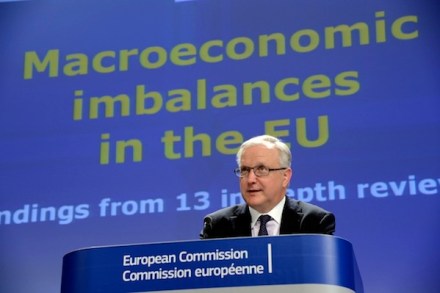
Olli Rehn, the European Commissioner who is in charge of economic affairs, called in the Brussels press corps this afternoon to announce the conclusion of his ‘in-depth review of the macroeconomic imbalances in 13 member states.’ I sat through the launch, and the questions and answers, noting that at no time did Rehn or any of the reporters approach the fundamental question: what exactly is a macroeconomic imbalance and why do we think that Rehn – whose full title includes European Commissioner for the Euro – is the man anyone would trust with analysis of anything macroeconomic? And before you ask, the reason I didn’t ask is that I ration any questions that I know the spokesmen who run these press conferences will consider obnoxious.

I hate to admit it, but Ed Miliband has a point about welfare and language

From our UK edition

In his Mail on Sunday column today, James Forsyth gives a fascinating insight into what both main parties are thinking as we move from welfare wars into local election campaign mode. His piece is, as usual, full of gems - but one in particular caught my eye. Several of those closest to [Ed Miliband] tried to persuade him to use the term ‘benefit cheat’ in a speech soon after he became leader. They believed that Miliband, the son of an academic, needed to speak in the way that voters do. But Miliband refused. He’s determined not to take the tactical approach to the issue beloved by the triangulators of New Labour. Instead, he wants to position himself as a ‘one nation’ politician capable of uniting the whole country.

Liam Byrne tries to answer Labour’s welfare question

From our UK edition

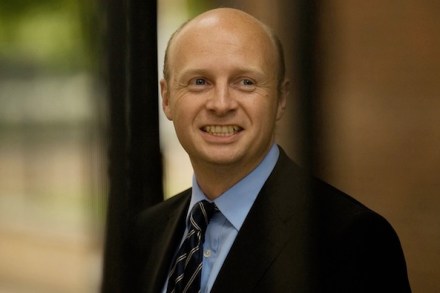
One can’t help but feel sorry for Liam Byrne. He is a fish out of water in Ed Miliband’s Labour party, something he implicitly acknowledged when he announced his intention to run for Mayor of Birmingham. But then Birmingham voted against having a mayor so he had to stay in the shadow Cabinet, albeit having lost control of Labour’s policy review. In The Observer today, Byrne floats the idea of increasing the contributory element in welfare. Now, Labour keep musing about this without setting out any details. I suspect this is because it’ll be very expensive if it simply leads to higher payments for those who’ve paid in over the years.

The Philpotts – what happened to Labour’s view that we should be tough on the causes of crime?

From our UK edition

Several Labour MPs have expressed their disapproval of George Osborne’s comments about the taxpayer funding Mick Philpott's lifestyle. For example, Andy McDonald, MP for Middlesbrough, said that welfare is a ‘completely separate discussion, it should not be had in the context of the most appalling crime of a father killing his six children. It just demonstrates how out of touch George Osborne is. He may as well make adverse comments about the entire population of a town or a religion, it’s absolute nonsense.’ The obvious problem with this is that Osborne acknowledged that they were separate issues.

George Osborne dips Mick Philpott into the welfare debate

From our UK edition

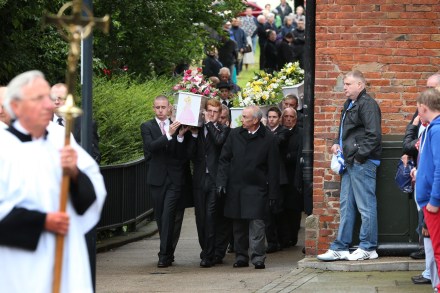
The Chancellor of the Exchequer has just made a statement about Mick Philpott; the man convicted of the manslaughter of 6 of his children; the man who also lived off enormous benefit hand outs, banking the equivalent of £100,000 salary in benefits from various sources if reports are to be believed. George Osborne said: ‘There’s a question about the welfare state, and taxpayers who pay, subsidising lifestyles like that’ This is a careful statement. Osborne avoids the mistake of saying that the system created Philpott’s evil. In fact, he says nothing. He merely raises the question about a system that allowed Philpott to live as he did for so long at your expense. Asking the question, of course, invites his opponents to answer.

Frontline Tories to Cameron: ‘We don’t want to look nasty and we don’t want to look mad.’

From our UK edition

Just before Easter, writing for the Times, I talked to 30 of the 40 Conservative MPs with the most marginal constituencies. My aim was to get a sense of how they think their party should position itself. I explored their opinions on a range of vexed policy areas. Finally I asked whether David Cameron’s leadership was a help or hindrance. The broad conclusion was that most marginal MPs took a decidedly and sometimes passionately ‘softline’ position on most controversial issues, European ‘interference’ in domestic human rights questions offering the nearest thing to a hardline consensus. And all considered Mr Cameron a plus, though more weakly in the Midlands and North. I wrote up my results in some detail, my focus being to make a factual report.

6 steps to out-fox local government’s Sir Humphreys

From our UK edition

Shortly after the 2010 general election I attended an event where mandarins complained of 'swingeing cuts'. Then one NHS boss admitted that he had so much cash sloshing around he was having trouble spending his multi-hundred million budget. Local government, which accounts for one quarter of government spending, has the same mindset. Despite the rhetoric of cuts, little has actually changed. I have watched Sir Humphrey Whitehall and local government (both as a private contractor and as a councillor), and each year we witness a rush before the financial year ends to spend money which, if cuts were actually deep, would not exist. Fraser Nelson spelt out this reality before the budget. Public spending increased by sixty per cent during the last government.

George Osborne’s benefits speech – full text

From our UK edition

George Osborne’s speech is below. As you will see, it is a bold defence of the government’s policies on tax and welfare, including the 50p rate cut. There was a clear moral tone to Osborne’s words, which may go some way to challenging the notion that he is an insubstantial political figure. It was, he implied, wrong to delay deficit reduction, wrong to penalise work, wrong to condemn people to poverty. There was bald politics too as he sought the votes of ‘hard-working families'. He attacked the ‘vested interests’ which were on the wrong side of the debate, goading them to carry on complaining and alienate themselves.

Two versions of Osborne’s benefits speech

From our UK edition

The Times' Sam Coates picked up on a couple of discrepancies between the text of George Osborne's Morrisons speech sent out by CCHQ, and the one published by the Treasury. Here's the CCHQ text: 'In 2010 alone, payments to working age families cost £75 billion. That means about one in every seven pounds of tax that working people like you pay was going on working age benefits.' But the Treasury version reads: 'In 2010 alone, payments to working age families cost £90 billion. That means about one in every six pounds of tax that working people like you pay was going on working age benefits.' Osborne actually delivered the Treasury version, and that does seem to be the more accurate one.

George Osborne launches welfare counter-attack

From our UK edition

The petition to get Iain Duncan Smith to live on £53/week has amassed more than 122,000 signatures. And counting, quickly. The petition was inspired by IDS remarking, on yesterday’s Today programme, that he could live on such a welfare settlement. The secretary of state could not have said anything else; yet these incidents always create media firestorms. The IDS blaze still burns this morning; but that may not unnerve the government: from its perspective, news bulletins devoted to IDS’ gait are preferable to those devoted to the vulnerable. After a gruelling, though not unsuccessful, 24 hours warring over welfare cuts, the government is mounting a flanking counter-attack.

Osborne and IDS promise a ‘better deal’ for working families. But a better deal is not necessarily a good deal

From our UK edition

As Fraser says, the welfare changes, cuts to legal aid and so forth, which have come into force today, have got a universal thumbs-down in the left-wing press. I expect that the barrage of negative headlines will please No.10 (you cannot make an omelette etc.). It also has the comfort of knowing that the public is broadly in favour of reform. But the government might be disgruntled at the comparatively muted reaction of the right-wing press. The Telegraph’s coverage is intriguing. It concentrates on the Tories’ clash with the church over benefit cuts, which was mentioned by Christian Guy in a post yesterday.

George Osborne won’t be moved

From our UK edition

Today’s Sunday Telegraph front page has sparked off a flutter of speculation about whether George Osborne might be moved as Chancellor. I suspect that the short answer to this question is no. Osborne and Cameron are inextricably linked and to move him would be akin to the Prime Minister declaring that both his political and economic strategies have been wrong. He would not long survive such an admission. I also sense that Osborne’s stock in the parliamentary party is recovering from the battering it took with last year’s Budget. The fact that this year’s Budget was doorstep-ready, has survived the Labour and media onslaught and gone down relatively well with the voters has helped him with MPs.

Budget 2013: The public’s verdict

From our UK edition

We've got the first post-Budget polling from YouGov, and it brings mixed news for George Osborne. Certainly, this Budget doesn't seem (so far) to have dented the Chancellor's reputation the way last year's did — but nor has it yet enhanced it as his 2011 Budget seemed to. And on the question of which would make the better Chancellor, Osborne maintains the six-point lead over Ed Balls he has held since November 2011. And on the all-important criterion of 'fairness', Wednesday's Budget scores relatively well. 39 per cent think it's fair, while 31 per cent say it isn't. That's a big improvement on last year, when 32 per cent said the Budget was fair and 48 per cent declared it unfair.

Why Scary Graphs help the Tory plotters

From our UK edition

Without wanting to dwell too much on those Scary Graphs from the IFS yesterday, there's one political point that's worth mulling about the ones that charted the future of departmental spending. George Osborne knows that his 'pain tomorrow' approach means the years after 2015 are going to see even more cuts to public spending. He's not the only one: it's something that those Tory MPs who love a good plot believe is a key selling point for backbenchers who aren't involved in the Coalition in any way, such as Adam Afriyie.

The empty Budget

From our UK edition

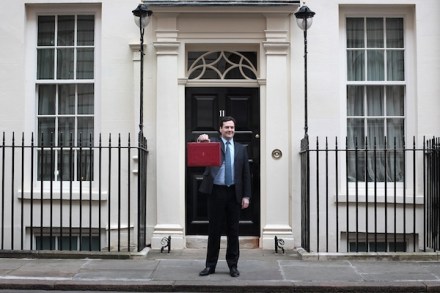
Dangerous, unfair, verging on kleptomania: the bailout deal proposed by the EU at the weekend and rejected by Cyprus MPs on Tuesday is everything it has been described as over the past few days, and worse. Now it has been established that the EU views bank depositors as a potential piggy bank to be raided at whim, it is hard to see why anyone would keep significant quantities of cash on deposit in European banks. We are back where we started in 2007, with the threat of Northern Rock-style bank runs across the Continent. Yet the proposed raid in Cyprus is really only different in perception from what is being imposed by stealth on British savers. In his Budget, George Osborne admitted how badly his plans are going: he’s spending far more than he intended and receiving far less.

IFS: Osborne’s austerity means more pain, not jam, tomorrow

From our UK edition

George Osborne's critics like to deride him as the 'jam tomorrow' Chancellor. But according to the post-Budget briefing the Institute for Fiscal Studies gave this afternoon, he's the 'pain tomorrow' Chancellor instead. It's not that things really aren't getting better, but that the bulk of the pain in terms of spending cuts and tax rises isn't just not over, it's not even here yet. The IFS team gave a series of presentations (in case you hadn't sunk into a pit of misery after Fraser's six scary graphs yesterday) showing that yesterday's Budget will lead to big tax increases and spending cuts from 2016 onwards. Paul Johnson, IFS director, said there was a 'heavy hint' that the consolidation needed would come from tax: 'There are other changes too which might frighten Whitehall departments.

Just cutting spending isn’t enough. Osborne needs to invest as well

From our UK edition

Economic growth for the next year is predicted to be lower than 1.0%. I can’t think, offhand, or a more obvious indication that the Chancellor is gripped by some sort of weird paralysis which will result, for the rest of us, in continually declining standards of living. I have no great objection to many of the cuts he has made; and believe, à la Dr Fox, that he could be still more stringent. However, he should also be investing heavily in stuff which will see our economy grow – science, engineering, what used to be called 'public works'. Simply cutting spending will not promote growth. Simply investing in the productive parts of the economy will not clear our debt. We need to do both, no?

For once, Osborne will be glad not to be the story

From our UK edition

A few years ago George Osborne would have bristled at the idea that one of his budgets wouldn’t be the biggest event of the political week. His ability to conjure rabbits out of hats had already prevented electoral defeat for the Tories once (his 2007 inheritance tax pledge, now consigned to history, scared Gordon Brown out of calling an election he would have won). But this week a low-key Budget was just what Osborne wanted — and delivered. One imagines, though, that he can’t be happy with the careless way that Downing Street managed to alienate almost the entire press just 72 hours before he got up to deliver it. I understand that an inquest is now under way at No.