George iii

New York is built on the remnants of its past

From our US edition

When I walk across the Wakefield Avenue Bridge, high above the Bronx River, the Metro-North Railroad tracks and a long-abandoned patch of woods, I always stop to marvel. Fifty feet from the ground, the skeleton of a child’s bicycle hangs, its frame embedded deep in the tree trunk. Once upon a time, some little boy left his bike in the weeds and a seedling tree on its way skyward simply absorbed it. There’s a technical name for this: edaphoecotropism. It turns out the omnivorous tree beneath the Wakefield Bridge is not alone. A website devoted to “Trees Eating Things” – road signs mostly, but junked cars and even a rifle – serves a “community” of people who celebrate this diet. New York, like most cities, is built on the remnants of its past.

The King is still our Trump card

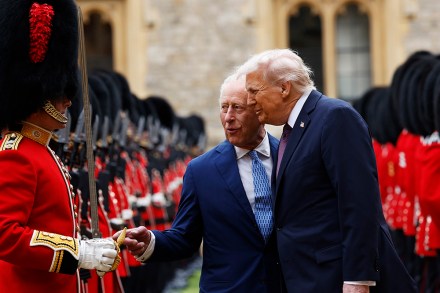
George III has not been well remembered on either side of the Atlantic. Despite reigning for almost 60 years, in Britain he is known, if at all, for losing the Thirteen Colonies and his madness in his later life. But in America, he is the villain of the national story; in Thomas Jefferson’s phrasing, the ‘Prince, whose character is thus marked by every act which may define a Tyrant’. The Declaration of Independence is a lurid list of his alleged crimes against his American subjects. But 250 years after that document was signed by the Founding Fathers, George III has been going through a renaissance. In recent biographies, Andrew Roberts and Jeremy Black have argued that he was a much-misunderstood monarch.

The myth of collective wisdom

After 250 years of American independence, a nation home to many of the smartest and most talented people in the world may have to choose as its leader one of two people, each of whom is in many ways worse than His late Majesty George III, the man whose role the entire system was designed to replace. It is dangerous to assume that the more people who are involved in a decision, the better the outcome will be The absurdity emerges from the nature of the system – which, like many such systems, works very well right up to the point where it suddenly doesn’t. Faced with an unexpected combination of events, even good systems can produce an outcome far sillier than any sane individual would choose when acting alone.

An American remembrance of the Queen

From our US edition

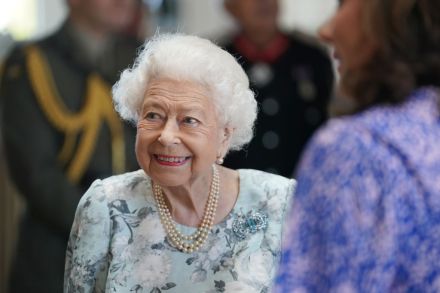
I write as an American patriot who is also a confirmed Anglophile. So when I got the sad news this morning that the Queen’s health had taken so dangerous a turn that the palace had summoned her family to Balmoral, I steeled myself for bad news. Alas, the bad news has now been confirmed. Queen Elizabeth II has died. It says a lot that when I say “the Queen” even American readers know I can mean only one person. The ninety-six-year-old had just celebrated her platinum anniversary this summer — seventy years on the throne, the longest of any English monarch. Elizabeth was far and away the most admired head of state in the world. Her good sense, her generosity of spirit, her thoughtful but active reticence have made her one of the most successful monarchs in history.

The Madness of George III is much easier to like than King Lear

The longest interval in theatre history continues. Last week the National Theatre livestreamed a 2018 version of The Madness of George III produced by Nottingham Playhouse with Mark Gatiss in the title role. The script, written by Alan Bennett as a response to King Lear, is much easier to like than the original. An engaging family comedy, with a sad bit in the middle, it benefits from a wonderfully happy ending. The good king is cured, the bad doctors are vanquished, order is restored. A real crowd-pleaser. Bennett’s research gives it the feeling of a documentary drama as he examines the difficulties faced by monarchs who wielded real political power. Family feuds spilled over into public affairs, and if the king happened to run an empire the consequences could be global.